第11章イスラームとカリフ国家の台頭The Rise of Islam and the Caliphates
Section Summaryこの節のまとめ
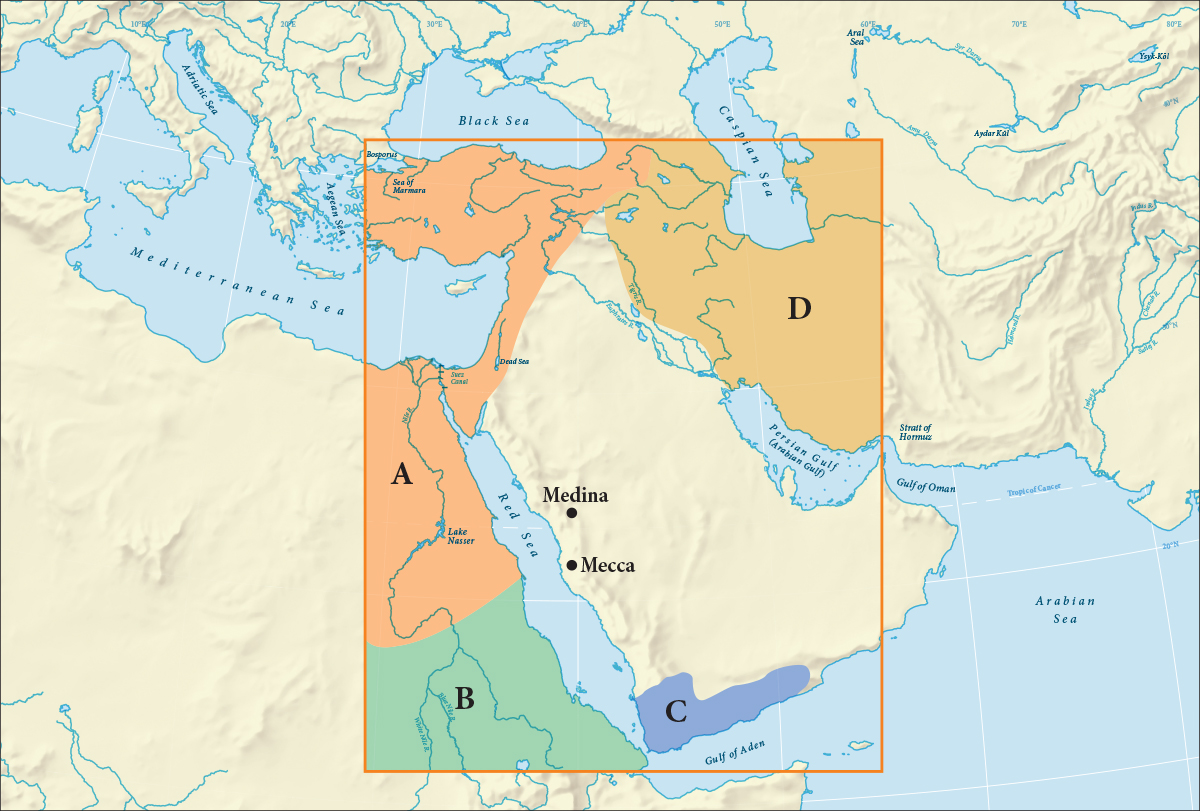
While the Arabs of northern Arabia were uniting as a capable fighting force looking for opportunities to expand, the Byzantines and Sasanian Empires were at a low ebb. In the early seventh century, the Byzantine Empire had won a long and costly war against the Sasanians, sometimes fought on both sides by proxies from northern Arabia, but now the combatants were exhausted and financially drained. Meanwhile, Muhammad’s historic unification of the majority of Arab tribes under the single leader of a monotheistic faith was only the beginning of the story of Islam. After Muhammad and his followers were forced to flee Mecca for Medina in 622, fighting between the two communities continued for several years before those in Mecca converted to Islam, and Muhammad made a triumphant return to the city. The stage was now set for a significant shift in the balance of power in the region.
英語のヒント
北アラビアのアラブ人が、拡大の機会を探る有力な戦闘勢力へまとまりつつあったころ、ビザンツ帝国とサーサーン朝は衰弱していた。7世紀初め、ビザンツは、サーサーン朝との長く費用のかかる戦争に勝利した。この戦争では、双方とも北アラビアの代理勢力を戦わせることがあったが、戦った者たちは疲弊し、資金も尽きていた。そのころムハンマドは、一神教の一人の指導者のもとにアラブ部族の大半を統合するという、歴史的な事業を行った。だがそれはイスラームの物語の始まりにすぎなかった。622年、ムハンマドと信徒がメッカからメディナへ逃れざるを得なくなった後も、両共同体の戦いは数年続いた。その後メッカの人々がイスラームへ改宗し、ムハンマドは勝利の帰還を果たした。地域の勢力均衡が大きく変わる舞台が、こうして整った。
Review Questions復習問題
- the Mughal and the Sasanians
- the Byzantines and the Sasanians
- the Byzantines and the Aksumites
- the Himyarites and the Holy Roman Empire
- ムガル帝国とサーサーン朝
- ビザンツ帝国とサーサーン朝
- ビザンツ帝国とアクスム王国
- ヒムヤル王国と神聖ローマ帝国
- Muhammad was the first in a long line of monotheistic prophets.
- Moses, Jesus, and Muhammad were the same person.
- Muslims worship the same God as Jewish people and Christians.
- Islam is a polytheistic faith.
- ムハンマドは、長く続いた一神教の預言者たちの最初の人物だった。
- モーセ、イエス、ムハンマドは同一人物だった。
- ムスリムは、ユダヤ教徒やキリスト教徒と同じ神を崇拝する。
- イスラームは多神教である。
- Quran
- Torah
- Bible
- Kaaba
- クルアーン
- トーラー
- 聖書
- カアバ
- the use of the Arabic language and service to the Byzantine Empire
- the belief in one God, Muhammad’s leadership, and mutual defense
- previous membership in the Jewish faith
- residence in the city of Mecca
- アラビア語の使用とビザンツ帝国への奉仕
- 唯一の神への信仰、ムハンマドの指導、相互防衛
- 以前ユダヤ教を信じていたこと
- メッカの町に住んでいること
Check Your Understanding Questions理解を確かめる問題
(attribution: Copyright Rice University, OpenStax, under CC BY 4.0 license) · CC BY 4.0
Application and Reflection Questions応用・考察の問題
Abrahamic faiths
アブラハム系宗教
the religions of Judaism, Christianity, and Islam, which all trace their origins through a common ancestor, the prophet Abraham
共通の祖先である預言者アブラハムを通じて起源をたどる、ユダヤ教・キリスト教・イスラームのこと。
hajj
ハッジ
the Islamic pilgrimage to Mecca
イスラームにおけるメッカ巡礼。
hijra
ヒジュラ
an Arabic term meaning “emigration” that describes a defining moment for early Muslims as they fled Mecca for Medina in 622 CE
「移住」を意味するアラビア語。初期のムスリムが西暦622年にメッカからメディナへ逃れた、画期となる出来事を指す。
Quran
クルアーン
the holy scripture of Islam, which Muslims believe was given to humanity by God through Muhammad
イスラームの聖典。ムスリムは、神がムハンマドを通じて人類に与えたと信じている。
ummah
ウンマ
the community of Muslims
ムスリムの共同体。