第13章ローマ後の西欧と十字軍運動The Post-Roman West and the Crusading Movement
The lord was required to protect the serfs, resolve their disputes, and administer their work. Serfs owed their lord a set number of days of service a year (these were many) and could not leave the land, marry, or undertake other work without the lord’s permission. Under manorialism or the manor system, named for the manor house occupied by the lord, serfs (or other varieties of servile, unfree workers) were brought together into villages where their labor could be cooperative. They tended both their own and their lord’s land, sharing draft animals and farm implements to undertake the planting and harvesting of crops. Women tended smaller livestock and vegetable gardens near their homes. Although cities on the coast often maintained commercial or networking ties with each other, society in western Europe was overwhelmingly rural, and production was largely at the subsistence level. People produced what they were going to consume, and surplus went to the lord or the church as a mandatory tax, usually 10 percent, called the tithe.
英語のヒント
領主には、農奴を保護し、その争いを解決し、仕事を管理する義務があった。農奴は、毎年決められた日数を領主のための労働に充てた。その日数は多かった。また、領主の許可なく土地を離れたり、結婚したり、別の仕事をしたりすることはできなかった。領主が住む館にちなんで名付けられた荘園制のもとで、農奴などの不自由な従属労働者は、協同して働けるよう村に集められた。農耕用の家畜や農具を共有し、種まきや収穫を行いながら、自分たちの土地と領主の土地の両方を耕した。女性は、家の近くで小型の家畜や菜園の世話をした。沿岸の都市は互いに商業や人的なつながりを保っていることが多かったが、西ヨーロッパの社会は圧倒的に農村中心で、生産の大部分は自給の水準にとどまった。人々は自分たちが消費するものを生産し、余剰は、通常10%の十分の一税という義務的な税として、領主や教会に納められた。
This system of social obligations and ties between the serfs and their lords, and the lords and the kings, framed the economic and political world of the Middle Ages. By the tenth century, the old Roman Empire was largely forgotten by the general population, while medieval kings and nobles had reimaged and transformed the idea of the Roman Empire to serve and legitimize their own purposes. A new society began to emerge based on a combination of Roman, Christian, and Germanic traditions.
英語のヒント
農奴と領主、領主と王の間にある、こうした社会的義務と結び付きの制度が、中世の経済と政治の枠組みとなった。10世紀までには、かつてのローマ帝国は一般の人々からおおむね忘れられていた。その一方で、中世の王や貴族は、自分たちの目的に役立て、その正当性を示すため、ローマ帝国の理念を新たに思い描き、作り変えていた。ローマ、キリスト教、ゲルマンの伝統を組み合わせた、新しい社会が現れ始めた。
Religion and Society in Medieval Europe中世ヨーロッパの宗教と社会
While Christianity had developed in an atmosphere of antagonism to the Roman state, by the fifth century, the church had become the preserver of classical Greek and Roman law, literature, and philosophical ideas. Language and cultural differences existed between the eastern and western churches, and in the eighth century, their political and theological ties became strained. One dispute was over the use of images in Christian worship, which the popes supported but some emperors rejected. The popes had also been building up an argument for their supremacy over the church, based partly in scripture and partly in tradition. Early medieval popes like Leo I laid the groundwork for the power of the Bishops of Rome, a power the eastern churches largely rejected or ignored. Once they had made an alliance with the Frankish kings, however, the popes looked to western Europe for the church’s future.
英語のヒント
キリスト教は、ローマ国家との敵対の中で発展した。しかし5世紀までには、教会は古典期のギリシア・ローマの法、文学、哲学思想を守る存在になっていた。東西の教会には言語や文化の違いがあり、8世紀になると、政治的・神学的な結び付きにも緊張が生じた。争点の一つは、キリスト教の礼拝に図像を用いることだった。教皇たちは支持したが、一部の皇帝は拒んだ。また教皇たちは、聖書と伝統を根拠に、教会全体に対する自らの最高権威を主張する議論を積み上げていた。レオ1世のような中世初期の教皇は、ローマ司教の権力の基礎を築いた。東方の教会は、その権力をおおむね拒むか、無視した。しかしフランク王たちと同盟を結ぶと、教皇たちは、教会の将来を西ヨーロッパに求めるようになった。
The papacy was not the only church institution in Europe; local traditions and needs shaped a variety of Christian beliefs and practices in the early Middle Ages. There were three ways in which the church helped transform the old Roman world into the new. First, the institutional church, often under the guidance of the popes, worked to convert the Germanic peoples to Christianity. Second, it helped to preserve the classical tradition. Finally, it worked with the new rulers to help legitimize their rule and Christianize their populations.
英語のヒント
ヨーロッパの教会組織は、教皇庁だけではなかった。中世初期には、地域ごとの伝統や必要に応じて、さまざまなキリスト教の信仰や慣行が形作られた。教会が古いローマ世界を新しい世界へ変えるのを助けた方法は、三つある。第一に、教会組織は、多くの場合は教皇の指導のもとで、ゲルマン人のキリスト教への改宗に努めた。第二に、古典の伝統を保存した。第三に、新しい支配者たちと協力し、その支配に正統性を与え、住民にキリスト教を広めた。
Missionary work was undertaken by men and women devoted to Christian beliefs and intent on incorporating new peoples into the society of Christian nations. Pope Gregory (also known as Gregory the Great) commissioned monks from Italy, led by Augustine of Canterbury, to convert the Anglo-Saxons. (Monks are men who do not marry, often live in community with each other, and devote their lives to serving God. Their female counterparts are called nuns.) The laity (nonclergy) often engaged in missionary work, and the wives of kings were especially influential in promoting widespread conversion to Christianity. Contemporaries noted the success of Clothilde’s persuasion in the conversion of her husband King Clovis, and Bertha, the wife of King Ethelbert of Kent, likewise encouraged her husband to convert. Both supported the efforts of the missionary (and later bishop) Augustine of Canterbury. Missionaries often worked closely with Christian rulers, whose conversion could be critical in expanding the frontiers of Catholic Christianity.
英語のヒント
伝道活動を担ったのは、キリスト教の信仰に身を捧げ、新たな人々をキリスト教諸国の社会に迎え入れようとする、男性と女性だった。教皇グレゴリウス、すなわちグレゴリウス大聖人は、カンタベリのアウグスティヌスが率いるイタリアの修道士たちに、アングロ・サクソン人を改宗させる使命を与えた。修道士とは、結婚せず、多くの場合は共同生活を営み、神への奉仕に生涯を捧げる男性である。女性の場合は修道女と呼ばれる。聖職者ではない一般信徒も、しばしば伝道に関わった。特に王妃は、広くキリスト教への改宗を促すうえで、強い影響力を持った。同時代の人々は、クローヴィス王の改宗に際し、妻クロティルダの説得が成功したことを記した。ケント王エセルバートの妻ベルタも、同じように夫に改宗を勧めた。両者は、伝道者で、後に司教となるカンタベリのアウグスティヌスの活動を支えた。伝道者は、キリスト教の支配者たちと密接に協力することが多かった。支配者の改宗が、カトリックのキリスト教世界を広げるうえで、決定的な意味を持つ場合があった。
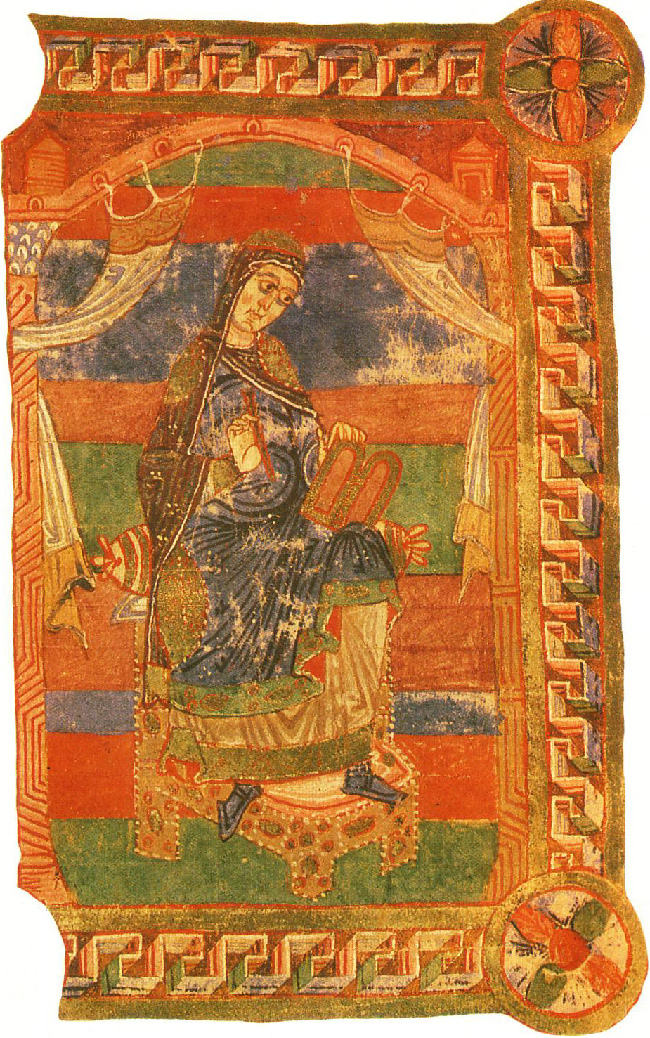
Monasticism (the way monks live and their communal institutions) had developed in the Mediterranean world and flourished in western Europe among religious men and women. The most influential monastic leader was Benedict of Nursia, who composed a guidebook or “rule” for monastic life that stressed moderation, a balance between prayer and useful work, the self-sufficiency of communities, and enough education for monks to copy out books in Latin. Many communities were “double monasteries,” containing a community of men and a community of women and often operating under the regulation of an abbess. Monasticism gave women a role in society that was not based on their relationship to a father or husband, and some women enjoyed considerable influence as abbesses. Radegund was a Frankish queen who fled the court when her husband murdered her brother. She became famous as the founder and abbess of the Monastery of the Holy Cross in Poitiers and was widely venerated as a saint after her death. Women like Radegund found religious life preferable to the intrigue of the court and the whims of a violent husband (Figure 13.9).
英語のヒント
修道制、すなわち修道士の生活様式と共同生活の制度は、地中海世界で発展し、西ヨーロッパの信仰深い男女の間でも栄えた。最も影響力のある指導者は、ヌルシアのベネディクトゥスだった。修道生活の手引きとなる「戒律」を著し、節度、祈りと有益な労働の釣り合い、共同体の自給自足、ラテン語の本を筆写するのに十分な教育を重視した。多くは「男女合同修道院」で、男性と女性の共同体をそれぞれ含み、女性の修道院長の統率下で運営されることも多かった。修道制は、父や夫との関係だけに基づかない社会的役割を女性に与えた。女性の中には、修道院長としてかなりの影響力を持つ者もいた。フランク王妃ラデグンドは、夫が彼女の兄弟を殺したとき、宮廷から逃れた。ポワティエの聖十字架修道院の創設者で院長として知られるようになり、死後は聖人として広く崇敬された。ラデグンドのような女性は、宮廷の陰謀や暴力的な夫の気まぐれよりも、修道生活の方を望ましいと考えた(図13.9)。
Queen Radegund.王妃ラデグンド
(credit: “Saint Radegonde” by Poitiers Municipal Library/Wikimedia Commons, Public Domain) · Public Domain
Figure 13.9 This eleventh-century image shows Radegund, queen of the Franks and later founder of a monastery, seated with a book, demonstrating her learning and piety. Religious women like Radegund were influential in the Middle Ages. (credit: “Saint Radegonde” by Poitiers Municipal Library/Wikimedia Commons, Public Domain)
図13.9 11世紀に描かれたラデグンド。フランク王妃となり、後に修道院を創設した彼女が本を持って座る姿は、その学識と信仰心を表している。ラデグンドのような信仰に生きる女性は、中世に影響力を持った。(出典:Poitiers Municipal Library/Wikimedia Commons「Saint Radegonde」、パブリックドメイン)
Monastic communities were often critical to the preservation of learning in the post-Roman world. There, monks copied out books by hand to foster the work of missionaries and preserve knowledge they thought was useful from the ancient world. Monasteries also served as refuges in times of crisis and could become valued centers of administration and nodes in communications networks. They were often the only place for the training of priests to serve newly converted peoples. While bishops were the undisputed authorities, especially the bishop of Rome (the pope), monasticism was equally crucial for both missionary work and the development of a Christian population.
英語のヒント
修道院共同体は、ローマ崩壊後の世界で学問を守るうえで、しばしば決定的な役割を担った。修道士たちは手で本を写し、伝道活動を支え、古代世界から受け継いだ、有用と考える知識を保存した。修道院は危機の際の避難所でもあり、重要な行政の中心地や、連絡網の結節点になることもあった。新しく改宗した人々に仕える司祭を育てる、唯一の場所である場合も多かった。司教、特にローマ司教である教皇の権威は揺るぎないものだったが、伝道とキリスト教徒の社会の発展には、修道制も同じほど欠かせなかった。
Finally, Christianity helped legitimize new rulers. Germanic kings could better integrate themselves with their Roman population once they converted to the Catholic Christianity their subjects practiced. Bishops could serve as administrators, and monasteries were places of education for the new elite. One issue raised by the career of Charlemagne, though, was the relationship between rulers and the papacy. Leo III had crowned Charlemagne, and clergy often performed an anointing ceremony when a king was invested with the symbols of office.
英語のヒント
最後に、キリスト教は新しい支配者たちに正統性を与える助けとなった。ゲルマン人の王は、臣民が信仰するカトリックのキリスト教に改宗すると、ローマ系の住民と、よりよく一体化できた。司教は行政官として働き、修道院は新しいエリートの教育の場となった。しかしカール大帝の経歴が提起した問題の一つは、支配者と教皇庁の関係だった。レオ3世がカール大帝に冠を授けた。また王に地位を象徴する品々が授けられるとき、聖職者はしばしば、聖油を塗る儀式を行った。
Aside from the rivalry between the eastern and western churches, an important non-Christian religion was present in the form of Judaism, which was given latitude by the Romans on account of its antiquity. With the collapse of Rome and the growing dominion of Catholic Christianity, however, Jewish communities faced new challenges as clergy and kings instituted restrictions on their behavior and practices. Christians often viewed Jewish people as outsiders no matter how long they may have lived in a given area. The mistaken belief that Jewish people were to blame for the death of Jesus led to rumors that they wanted to harm Christians. In some cases, as in Visigothic Spain, Jewish residents faced the threat of either converting to Christianity or being expelled from the kingdom. Hostility was never uniform, however, and kings like Louis the Pious granted Jewish people considerable freedoms. Rulers might also feel compelled to protect Jewish communities because of their connections, especially trade connections, to other communities across the Mediterranean. Still, the position of Jewish communities in the Middle Ages was often precarious.
英語のヒント
東西の教会の対立とは別に、重要な非キリスト教の宗教として、ユダヤ教が存在した。古くからの宗教であるため、ローマ人は一定の自由を認めていた。しかしローマが崩れ、カトリックの支配が強まると、聖職者や王が行動や宗教実践に制約を設け、ユダヤ人共同体は新たな困難に直面した。キリスト教徒は、ユダヤ人がその土地にどれほど長く暮らしていても、外部の人間とみなすことが多かった。イエスの死にユダヤ人の責任があるという誤った信念は、ユダヤ人がキリスト教徒を害そうとしているといううわさを生んだ。西ゴート王国のスペインなどでは、ユダヤ人の住民は、キリスト教に改宗するか、王国から追放されるかという脅威にさらされた。しかし敵意は一様ではなかった。ルイ敬虔王のように、ユダヤ人にかなりの自由を認める王もいた。ユダヤ人共同体が、地中海の各地の共同体と、特に交易の面で結び付いているため、保護する必要があると考える支配者もいた。それでも、中世のユダヤ人共同体の立場は、しばしば不安定だった。