第12章インド・インド洋世界・東アジアIndia, the Indian Ocean Basin, and East Asia
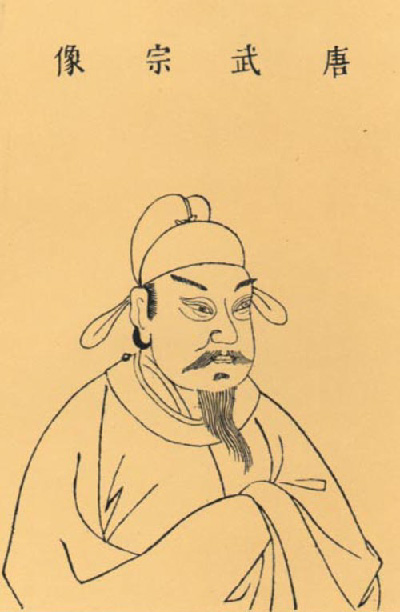
Buddhism’s popularity became a flashpoint for violence in Tang China, however. In the mid-ninth century, the Tang Empire cracked down on what it perceived as the threat that hundreds of thousands of Buddhist monks and nuns posed to its Confucian and Daoist leaders, who argued that Buddhism represented an alien influence on the state. Although this prompted the active suppression of Buddhist monasteries and the confiscation of their wealth, it was not enough. Blatant persecution unfolded under Emperor Wuzong, resulting in the destruction of some forty thousand temples and shrines, the closure of more than four thousand monasteries, and the forced secularization of hundreds of thousands of Buddhist monks and nuns. Culturally, the state moved to expunge the impact of Buddhism by reviving classical prose styles and the teachings of Confucius and his followers (Figure 12.12).
英語のヒント
しかし唐の中国では、仏教の人気が暴力の火種にもなった。9世紀半ば、唐帝国は、何十万人もの僧尼が儒教・道教の指導者たちに与えるとみなした脅威を取り締まり始めた。これらの指導者たちは、仏教を国家に対する異質な影響と主張した。仏教僧院の積極的な抑圧と財産没収が行われたが、それだけでは終わらなかった。武宗のもとで露骨な迫害が進み、約4万の寺や祠が破壊され、4000以上の僧院が閉鎖され、何十万人もの僧尼が強制的に還俗させられた。文化面では、国家は古典的な散文の文体と孔子やその門人たちの教えを復興させ、仏教の影響をぬぐい去ろうとした(図12.12)。
Emperor Wuzong.唐の武宗
(attribution: Copyright Rice University, OpenStax, under CC BY 4.0 license) (credit: modification of work “Emperor Wuzong of the Tang dynasty” by Baidu/Wikimedia Commons, Public Domain) · CC BY 4.0 + Public Domain
Figure 12.12 Emperor Wuzong, represented in an ink drawing from a Chinese encyclopedia of the early seventeenth century, engaged in widespread persecution of Buddhist monks and nuns in ninth-century China. (attribution: Copyright Rice University, OpenStax, under CC BY 4.0 license) (credit: modification of work “Emperor Wuzong of the Tang dynasty” by Baidu/Wikimedia Commons, Public Domain)
図12.12 17世紀初めの中国の百科事典に墨画で描かれた武宗。9世紀の中国で、仏教の僧尼に対する広範な迫害を行った。(帰属:© Rice University、OpenStax、CC BY 4.0。画像の出典:Baidu/Wikimedia Commons「Emperor Wuzong of the Tang dynasty」を改変、パブリックドメイン。)
The Tang period also produced a great deal of poetry, much of it influenced by the prevalent religious and philosophical traditions. For example, in the eighth century the poets Wang Wei, Li Bai (Li Bo), and Du Fu were influenced by Buddhism, Daoism, and Confucianism, respectively, and many people could recite their poems from memory. Along the Silk Roads during this period, poetry spread along with China’s religious and philosophical traditions, first to Korea and from there to Japan. Neither area had a written script of its own yet, so admirers learned the poets’ works in Chinese.
英語のヒント
唐代には多くの詩も作られ、その多くが当時広く行われていた宗教・哲学の伝統の影響を受けた。たとえば8世紀の詩人、王維、李白(Li Boとも表記)、杜甫は、それぞれ仏教、道教、儒教の影響を受けており、多くの人々が彼らの詩を暗唱できた。この時代、詩は中国の宗教・哲学の伝統とともにシルクロードを伝わり、まず朝鮮へ、次いで日本へ広がった。どちらの地域にも、まだ独自の書記用の文字がなかったため、愛好者は詩人たちの作品を中国語で学んだ。
Entrance into the Tang bureaucracy was based on passage of a merit-based exam administered every three years. This civil service exam, the first fully written such exam in history, had been developed from the Sui dynasty and tested sophisticated literary skills and knowledge of Confucian and Daoist classics. In theory it was open to all; in practice, however, until the late Tang period, women, the sons of merchants, and those who could not afford a classical education were excluded. Most laborers were also excluded because of their circumstances, as they could not take time away from their fields to study. In the end, people became government officials thanks to their literary achievements or the influence of their prestigious families.
英語のヒント
唐の官僚となるには、3年ごとに行われる能力本位の試験への合格が基準となった。科挙というこの官吏登用試験は、歴史上初めて全面的に筆記で行われた同種の試験で、隋以来発展してきた。高度な文章能力と、儒教・道教の古典についての知識を試した。理論上はすべての人に開かれていた。しかし実際には、唐の後期まで、女性、商人の息子、古典教育を受ける余裕のない人々は排除されていた。労働者の多くも、勉強のために畑仕事を離れる時間を取れないという事情から除外された。結局、官僚になれたのは、文芸面の業績をもつ人々か、名門の家の影響力に支えられた人々だった。
Tang China also witnessed contradictory trends in personal behavior and relations between the sexes. In 665, Emperor Gaozong, infirm and sickly, handed power to his second wife, Wu Zetian. Following Gaozong’s death in 683, Wu ruled as empress dowager and regent for her son, though she held all the real power of the state. A devout Buddhist, she declared Buddhism the state religion, ordered scholars to write biographies of famous women, and in 690 took the extraordinary step of founding her own dynasty, the Wu Zhou (not to be confused with the much earlier Zhou dynasty). Three years later, Wu assumed the Buddhist title “Divine Empress Who Rules the Universe.” Although she was an intelligent and competent ruler, the founding of her own dynasty and the adoption of imperial titles felt to many like usurpation. Resistance soon followed, prompting her abdication and the restoration of the Tang dynasty.
英語のヒント
唐の中国では、個人の行動や男女関係にも相反する動きが見られた。665年、体が弱く病がちだった高宗は、2人目の妻の武則天に権力を委ねた。683年に高宗が死去すると、武則天は皇太后として、また息子の摂政として統治したが、実際には国家の全実権を握っていた。熱心な仏教徒だった彼女は、仏教を国家の宗教とし、学者に著名な女性の伝記を書かせた。そして690年には、自らの王朝である武周を創始するという異例の行動に出た。これは、それよりはるか昔の周王朝とは別のものである。3年後、武則天は「宇宙を治める神聖な女帝」という意味の仏教的な称号を名乗った。知性も能力もある支配者だったが、独自の王朝を作り皇帝の称号を採用したことは、多くの人にとって簒奪と感じられた。まもなく抵抗が起こり、彼女の退位と唐王朝の復活につながった。
Wu’s reign was remarkable in China’s male-dominated society. Still, the Tang Empire has been described as a “golden age” for women in China, perhaps because lingering contact with the nomadic peoples of the north and their relatively egalitarian society encouraged a somewhat similar view among the Chinese. As evidence of the increased prominence of women, historians also point to a flourishing culture of poetry written by courtesans, the careers of Empress Wu and her daughter-in-law Empress Wei, and the practice of using diplomatic marriages of Tang daughters to prominent foreign officials to forge political alliances. However, sumptuary laws dictated what women could and could not wear, elite men kept concubines, and the Tang legal system considered women property.
英語のヒント
男性中心の中国社会にあって、武則天の治世は特異だった。それでも唐は、中国の女性にとって「黄金時代」だったと評されることがある。北方の遊牧民とその比較的平等主義的な社会との接触が続き、中国人の間にもいくらか似た見方を促したためかもしれない。女性の存在感が増した証拠として、歴史家は、遊女たちの詩作文化が栄えたこと、武則天やその息子の妻である韋皇后の活動、唐の皇族の娘を有力な外国の官人に嫁がせて政治的同盟を築く外交婚姻の慣行を挙げる。しかし奢侈禁止法は女性が着てよい服と着てはいけない服を定め、上層の男性は妾をもち、唐の法制度は女性を財産とみなした。
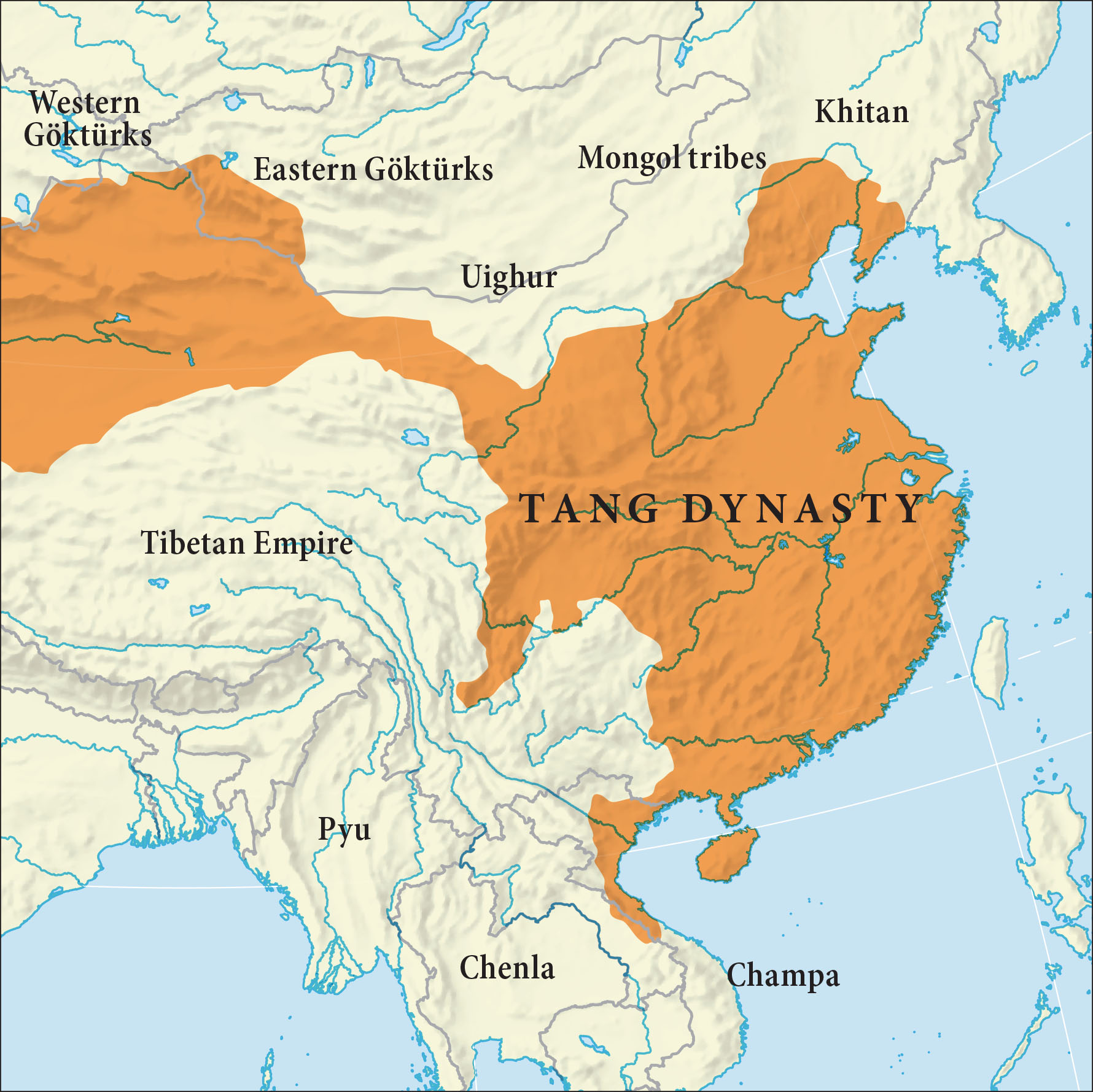
The Tang Empire reached its zenith in the early eighth century (Figure 12.13). By mid-century, however, internal and external challenges had set in motion the empire’s terminal decline. Externally, the Tang were defeated at the Battle of Talas River in 751. There, Tang forces were beaten by the combined Turkic and Arab armies of the Abbasid Caliphate, which was expanding the frontiers of the Islamic empire deep into central Asia after overthrowing the Umayyads. Internally, China faced revolts in Korea, Yunnan (in extreme southern China), and Manchuria, which distracted and weakened the state.
英語のヒント
唐帝国は8世紀初めに絶頂期を迎えた(図12.13)。しかし同世紀半ばまでには、内外の課題が、帝国を最終的な衰退へ向かわせていた。対外的には、唐は751年のタラス河畔の戦いで敗北した。唐軍を破ったのは、アッバース朝のテュルク系とアラブ系の連合軍だった。アッバース朝はウマイヤ朝を倒した後、イスラーム帝国の境界を中央アジアの奥深くへ広げつつあった。国内では、朝鮮、雲南(中国南端)、満州の反乱に対応を迫られ、国家は力をそがれ、弱体化した。
The Tang Dynasty.唐
(attribution: Copyright Rice University, OpenStax, under CC BY 4.0 license) · CC BY 4.0
Then, in 755, the Tang Empire was rocked by the massive An Lushan rebellion. Some 150,000 frontier troops led by the Tang commander An Lushan revolted against Emperor Xuanzong and the decadent court at Chang’an. It took eight years for the Tang to crush the rebellion, by the end of which China was both militarily and economically exhausted. The empire carried on in an enfeebled state, but over the ensuing decades, Chang’an ceded much military and civil authority to provincial warlords. In 906, following additional civil wars, the Tang dynasty collapsed, leading to a period of disunity until the Song rose to dominance in 960.
英語のヒント
755年、唐帝国は大規模な安禄山の反乱に揺さぶられた。唐の将軍・安禄山に率いられた約15万人の辺境の兵が、玄宗と長安の退廃した宮廷に反旗を翻した。唐が反乱を鎮圧するまでに8年を要し、その終わりには中国は軍事的にも経済的にも疲弊しきっていた。帝国は弱った状態で存続したが、その後数十年にわたり、長安の朝廷は軍事と行政の多くの権限を地方の軍事指導者に明け渡した。さらに内戦を経て906年に唐は崩壊し、960年に宋が優勢となるまで、分裂の時代が続いた。