第12章インド・インド洋世界・東アジアIndia, the Indian Ocean Basin, and East Asia
East Africa and the Indian Ocean Trade東アフリカとインド洋交易
East Africa played a large role in the Indian Ocean trade network that connected it with the Middle East, China, and East and Southeast Asia. Trade in East Africa first centered on the Red Sea. After all, Egypt had been a Hellenistic and then a Roman-controlled territory, making exchange with Greece and Rome especially important and lucrative. Luxury goods such as ivory, furs, and spices like frankincense and myrrh were traded with the Roman Empire. However, following the Roman Empire’s collapse, other groups from areas such as Arabia began to take over this trade. As trading ports sprang up farther down the east coast of Africa and as Bantu-speaking Africans moved into the region, a new and sophisticated culture arose on the Swahili coast, expanding its role in the Indian Ocean trade network, establishing powerful city-states, and connecting with the African interior via trade.
英語のヒント
東アフリカは、中東、中国、東アジア、東南アジアと結ぶインド洋交易網で、大きな役割を果たした。東アフリカの交易は、当初は紅海を中心としていた。エジプトはヘレニズム世界の一部で、次いでローマの支配下に入った地域だったため、ギリシアやローマとの交換はとりわけ重要で、利益も大きかった。象牙、毛皮、乳香や没薬などの香料といった奢侈品がローマ帝国と取引された。しかしローマ帝国の崩壊後、アラビアなどの他の集団が交易を引き継ぐようになった。アフリカ東岸のさらに南に貿易港が生まれ、バントゥー語系の言葉を話すアフリカ人が移住してくるにつれて、スワヒリ海岸には新しく洗練された文化が育った。インド洋交易網での役割を広げ、強力な都市国家を築き、交易を通じてアフリカ内陸とも結び付いた。
Aksum and Ethiopia in the Middle Ages中世のアクスムとエチオピア
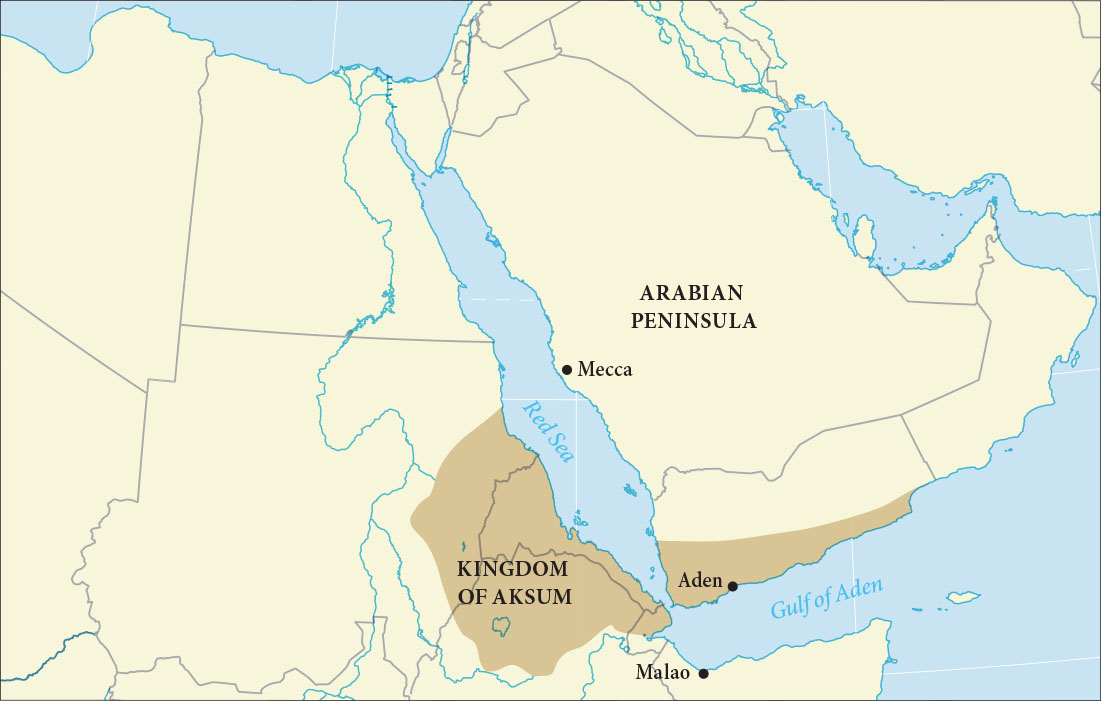
During the period of the Roman Empire, trade between Rome and China crossed central Asia on the Silk Roads. However, there was also a demand for goods from the Indian Ocean, Arabia, and Africa. The route for this trade centered on the Red Sea for a time and was controlled by the Kingdom of Aksum (Figure 12.22).
英語のヒント
ローマ帝国の時代、ローマと中国の交易は、シルクロードで中央アジアを横断していた。しかしインド洋、アラビア、アフリカの品物への需要もあった。この交易の経路は、一時期紅海を中心とし、アクスム王国が支配していた(図12.22)。
The Kingdom of Aksum.アクスム王国
(credit: modification of work “Map of the Sassanid Empire just before the Arab conquest of Iran” by “DieBuche”/Wikimedia Commons, Public Domain) · Public Domain
Figure 12.22 This map shows the Kingdom of Aksum at its greatest extent in the early sixth century CE. Though it appears to separate Africa and Arabia, the Red Sea was in fact a conduit of regular cultural exchange and movement of goods and people throughout the premodern period. For most of Aksum’s existence, however, the kingdom did not control the fertile lands of southern Arabia, which today form part of Yemen. (credit: modification of work “Map of the Sassanid Empire just before the Arab conquest of Iran” by “DieBuche”/Wikimedia Commons, Public Domain)
図12.22 6世紀初め、領土が最大だった時期のアクスム王国。紅海はアフリカとアラビアを隔てるように見えるが、実際には前近代を通じ、日常的な文化交流や物・人の移動をつなぐ通路だった。ただし王国の歴史の大半において、現在のイエメンの一部に当たる、アラビア南部の肥沃な土地はアクスムの支配下にはなかった。(出典:“DieBuche”/Wikimedia Commons「Map of the Sassanid Empire just before the Arab conquest of Iran」を改変、パブリックドメイン)
The Red Sea connects the Gulf of Suez and the Sinai Peninsula with the Indian Ocean. In the third century CE, traders from Saba, the Yemeni area of the Arabian Peninsula, crossed the Red Sea to the coast of Eritrea. They began focusing much of their trade in the city of Adulis, which became the most important port of the Kingdom of Aksum. The city of Aksum, the capital of the kingdom, was eight days’ journey south from Adulis, over a mountain range to the Ethiopian plateau.
英語のヒント
紅海は、スエズ湾とシナイ半島をインド洋へ結ぶ。3世紀、アラビア半島のイエメン地域にあるサバから、交易商が紅海を渡ってエリトリアの海岸へ来た。彼らは交易の多くをアドゥリスに集中させるようになり、この町はアクスム王国の最重要港となった。王都アクスムは、アドゥリスから南へ8日、山脈を越えてエチオピア高原へ入ったところにあった。
The Kingdom of Aksum owed its power to this Red Sea trade, particularly in the fourth century CE. Traded goods included gold, silver, iron tools, cotton cloth, tortoise shells, and, above all, ivory and spices such as frankincense and myrrh. The fourth-century king Ezna expanded the kingdom to its farthest extent through conquering peoples south of Egypt and north of Ethiopia. In 350, toward the end of his reign, Ezna was converted to Christianity by the Syrian missionary Frumentius. Frumentius was later appointed bishop of Aksum by the patriarch in Alexandria, which meant the kingdom followed an Egyptian Coptic form of Christianity that held that Jesus had only a divine and not a mortal body.
英語のヒント
アクスム王国の力は、特に4世紀には、この紅海交易に支えられていた。交易品には金、銀、鉄製工具、綿布、カメの甲羅、なかでも象牙や乳香・没薬などの香料があった。4世紀の王エザナは、エジプト南方とエチオピア北方の人々を征服して、王国を最大の範囲へ拡張した。在位末期に近い350年、シリア出身の布教者フルメンティウスによって、エザナはキリスト教へ改宗した。フルメンティウスは後にアレクサンドリアの総主教からアクスムの司教に任命された。そのため王国は、イエスの身体は神的なもので、人間的なものではないとする、エジプトのコプト系キリスト教に従った。
During the reign of Ezna, caravans traveled from the interior to take part in the trade at Adulis, creating a constant stream into and out of the port city. The Kingdom of Aksum became increasingly wealthy and powerful. However, in the sixth and seventh centuries, all began to change. In 528, the Aksumites expanded their control as far as Yemen and were said to have reached the gates of Mecca in 571. However, they had evidently overextended themselves. With the help of the Sasanids from Persia, the king in the region of Yemen, Sayf ibn Dhi Yazan, rose up and pushed the Aksumites out of the peninsula.
英語のヒント
エザナの治世には、内陸から隊商がアドゥリスの交易に参加するために訪れ、港町には絶え間ない往来が生まれた。アクスム王国は富と力を増していった。しかし6~7世紀になると、状況は変わり始めた。528年、アクスム人は支配をイエメンにまで広げ、571年にはメッカの門まで達したといわれる。しかし明らかに、力を伸ばしすぎていた。ペルシアのササン朝の援助を得たイエメン地域の王サイフ・イブン・ズィー・ヤザンが蜂起し、アクスム人を半島から追い出した。
In the seventh century, the Sasanids were in turn conquered by the Arab Muslim population, particularly the Umayyads. Arabs quickly expanded their control over the peninsula and into North Africa, especially Egypt, and thus access to the Red Sea naturally came into their hands. Particularly as Islam expanded to the Sindh region of northern India, the Persian Gulf became increasingly important for oceangoing vessels, which began bypassing the Aksumite port of Adulis.
英語のヒント
7世紀には今度はササン朝が、アラブのムスリム、特にウマイヤ朝に征服された。アラブ人は半島全体と、特にエジプトを含む北アフリカへすばやく支配を広げ、紅海へのアクセスも自然とその手に入った。とりわけイスラームが北インドのシンド地方へ広がるにつれ、外洋を航行する船にとってペルシア湾の重要性が増した。船はアクスムの港アドゥリスを通らずに航海するようになった。
Simultaneously, internal problems, some of them environmental, racked the Aksumite Kingdom. For centuries, if not longer, trees had been chopped down and agricultural fields planted, and the land was becoming increasingly barren due to soil erosion. Given this threat to the food supply and the decline in Red Sea trade, which is evidenced in the archaeological record by the reduced number of Aksumite coins used in this period, groups in the interior such as the Beja peoples began to rebel. The Aksumite Kingdom quickly collapsed into a smaller entity centered on the capital city of Aksum. Slowly the Kingdom of Ethiopia incorporated this area, and Aksum became an agricultural community ruled by a landed aristocracy.
英語のヒント
同時に、国内の問題もアクスム王国を苦しめ、その一部は環境に関わるものだった。何世紀もの間、あるいはそれ以上にわたり、木は伐採され、畑が開かれてきた。その結果、土壌侵食で土地はますますやせていった。食料供給への脅威と紅海交易の衰えを背景に、ベジャ人など内陸の集団が反乱を起こし始めた。交易の衰退は、当時使われたアクスム貨幣の数が減るという考古学的記録からも確認できる。アクスム王国は急速に縮小し、王都アクスムを中心とする小さな政体となった。エチオピア王国が徐々にこの地域を取り込み、アクスムは地主貴族に治められる農業共同体になった。
Culturally, Ethiopia combined traditional pre-Islamic Jewish traditions with polytheistic ones and, as of the fourth century CE, with Christianity. Owing to its important location and support of long-distance trade, East Africa would prove to be a thriving cultural hub with proud heritage and history that linked them to the many peoples who traveled to and through the region. The legendary Christian kingdom led by Prester John was said to be hidden there, for example. And, until the 1970s, tradition held that Ethiopia’s rulers were descendants of both the Queen of Sheba and King Solomon of Jerusalem and had even brought the treasured Ark of the Covenant to Aksum. Thus, while the economic power of the region may have declined, its cultural significance continued well into the modern era.
英語のヒント
文化面では、エチオピアはイスラーム以前からのユダヤ教的伝統と多神教的な伝統を結び付け、4世紀からはキリスト教も取り入れた。重要な位置にあり、遠距離交易を支えたため、東アフリカは繁栄する文化の中心となった。その誇りある遺産と歴史は、この地を訪れ、通り過ぎる多くの人々と結び付いていた。たとえば、プレスター・ジョンが率いる伝説のキリスト教王国は、ここに隠れているといわれた。また1970年代まで、エチオピアの支配者はシバの女王とエルサレムのソロモン王の双方の子孫であり、貴重な契約の箱をアクスムに運んだとさえする伝統が保たれた。したがって、地域の経済力は衰えたかもしれないが、文化的重要性は近代に至るまで続いた。