第5章古代のアジアAsia in Ancient Times
The Mauryan Empireマウリヤ朝帝国
The initial spur to Buddhism’s migration across Asia occurred with the rise of the Mauryan Empire (326–184 BCE). This entity grew out of the smaller Indian kingdom of Magahda once its ruler, Chandragupta Maurya, managed to unify much of north India from a capital near the city of Patna and pass it on to his descendants, founding the Maurya dynasty. A Greek historian named Megasthenes visited the seat of Chandragupta’s power around the end of the fourth century BCE, marveling at its palaces replete with grottoes, bathing pools, and gardens filled with jasmine, hibiscus, and lotus.
英語のヒント
仏教がアジアへ広がる最初のきっかけは、マウリヤ朝帝国(前326~前184年)の興隆に伴って生じた。この国家は、インドのより小さなマガダ王国から発展した。その支配者チャンドラグプタ・マウリヤが、パトナ近郊の首都から北インドの大部分を統一し、子孫へ受け継がせることに成功して、マウリヤ朝を開いたのである。前4世紀末ごろ、メガステネスというギリシアの歴史家がチャンドラグプタの権力の中心を訪れた。彼は、洞窟状の庭園設備や浴池、ジャスミン・ハイビスカス・ハスに満ちた庭園を備える宮殿に驚嘆した。
Ruling over a population nearing fifty million, Chandragupta’s successors conquered all but the southern tip of the subcontinent in a series of military campaigns. The Mauryan Empire’s political structure employed a large and well-run army, administered by a war office with branches for a navy and for raising horses and elephants for cavalry warfare. A civilian bureaucracy ran the ministries overseeing industries such as weaving, mining, and shipbuilding as well as organizing irrigation, road construction, and tax collection. The Mauryan rulers lived in constant fear of assassination and intrigue against their rule, however, which forced them to rely on an elaborate network of spies to monitor officials throughout the empire.
英語のヒント
チャンドラグプタの後継者たちは、5000万人近い人口を支配し、一連の軍事行動によって、亜大陸の南端を除くすべてを征服した。マウリヤ朝帝国の政治機構は、大規模でよく運営された軍隊を擁し、海軍の部門と、騎兵戦のために馬や象を育てる部門を持つ軍務機関が、それを管理した。文官の官僚機構は、織物・採鉱・造船などの産業を監督する官庁を運営し、灌漑・道路建設・徴税も組織した。しかしマウリヤ朝の支配者たちは、暗殺と統治に対する陰謀を常に恐れていた。そのため、帝国全域の官僚を監視する、精巧な密偵網に頼らざるをえなかった。
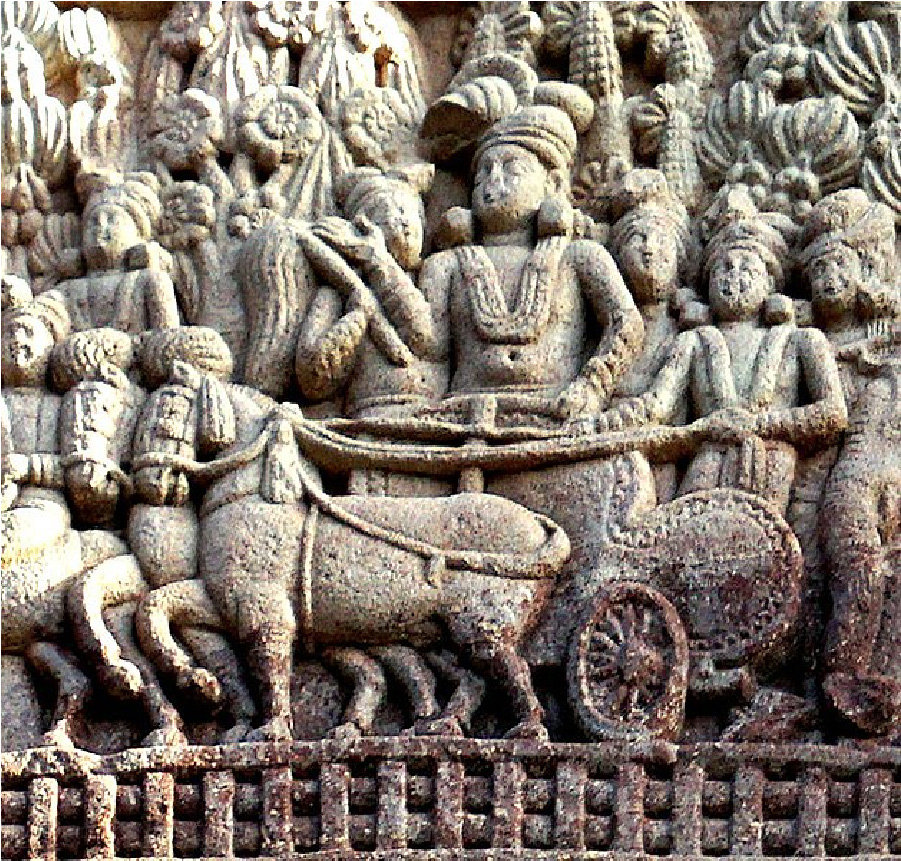
The high point of Mauryan greatness came with the ascension of Emperor Ashoka in approximately 268 BCE, opening a period of monumental architecture that left its mark on the ancient world. Ashoka’s personal grandeur came from the story of his transformation from a ruthless warrior general to a devout man of peace with a universal mission (Figure 5.22). As the head of the Mauryan army laying siege to the kingdom of Kalinga, he won a great battle that caused an estimated 100,000 deaths. The carnage brought an awakening that led Ashoka to Buddhism and to reforms intended to promote harmony and compassionate rule throughout India. To that end, he supported missionary efforts to spread Buddhism to Burma and Sri Lanka. His new law code gave protections to the vulnerable—the ill and diseased, the poor and powerless, and travelers making their way across the empire. His ministers put their sovereign’s will into action by building hospitals, digging wells, setting up rest-houses along India’s roads, and sending out traveling magistrates to resolve disputes and bring justice to remote areas.
英語のヒント
マウリヤ朝が最盛期を迎えたのは、前268年ごろ、アショーカ王が即位したときだった。古代世界に足跡を残す、壮大な建築の時代が始まった。アショーカ自身の偉大さを形作ったのは、冷酷な武将から、普遍的な使命を担う敬虔な平和の人へ変わったという物語である(図5.22)。カリンガ王国を包囲するマウリヤ朝軍の指揮官として、彼は約10万人が命を落としたとされる大きな戦いに勝った。この殺戮は目覚めをもたらし、アショーカを仏教へ、そしてインド全土で調和と思いやりのある統治を進めるための改革へ向かわせた。そのため、ビルマとスリランカへ仏教を広める布教活動を援助した。新しい法典は、弱い立場の人びと—病む者、貧しく力のない者、帝国を横断する旅人—を保護した。大臣たちは、病院の建設、井戸掘り、インド各地の街道沿いへの休憩所の設置、紛争を解決し遠隔地にも公正をもたらす巡回官の派遣によって、君主の意志を実行に移した。
Ashoka in Splendor.威厳に満ちたアショーカ。
(credit: modification of work "King Asoka visits Ramagrama" by Anandajoti Bhikkhu/Flickr, CC BY 2.0) · CC BY 2.0
Figure 5.22 This stone representation of the Mauryan ruler Ashoka visiting a Buddhist pilgrimage site with his entourage is from a large commemorative monument begun in his lifetime to house relics of Buddha. It illustrates the many strategies he adopted to magnify his rule. (credit: modification of work "King Asoka visits Ramagrama" by Anandajoti Bhikkhu/Flickr, CC BY 2.0)
図5.22 従者とともに仏教の巡礼地を訪れる、マウリヤ朝の支配者アショーカを表すこの石彫は、ブッダの遺骨を納めるため、アショーカの生前に着工された大きな記念建築にある。その統治の威光を高めるために、彼が用いた多くの方策を示している。(出典: 原作品を加工:"King Asoka visits Ramagrama"/Anandajoti Bhikkhu/Flickr, CC BY 2.0)
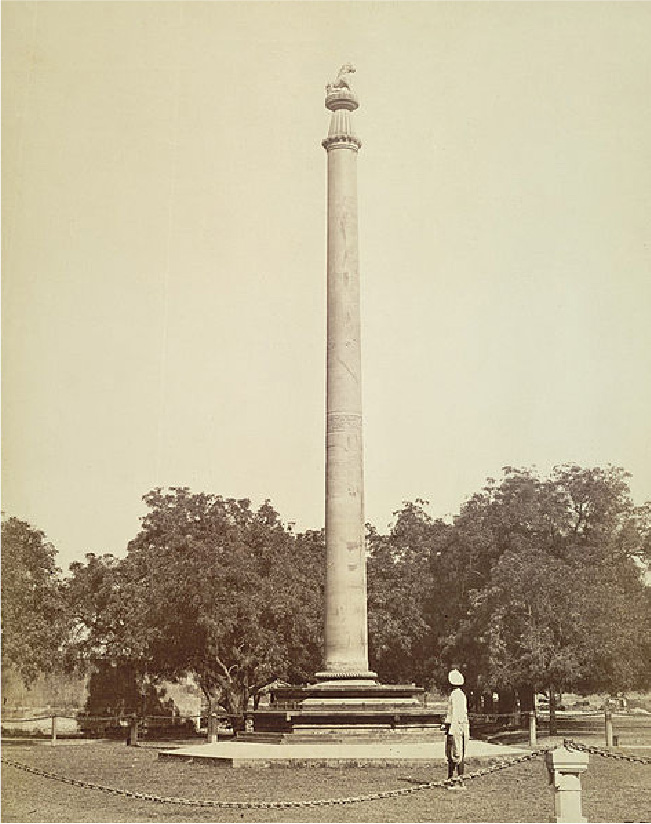
Ashoka also had a lasting influence on the world of art. He decreed that his sayings and teachings on morality be inscribed on stone pillars erected throughout India (Figure 5.23). The Pillars of Ashoka demonstrate the Indian empire’s character as a spiritual and political system. Through Buddhism, patronage of the arts, and monumental architecture, the Mauryans wished to demonstrate morality and benevolence to their subjects and exercise less direct rule. Leaders such as Ashoka hoped the people’s loyalty and duty in turn would be motivated by admiration of their achievements, if not by the money and other gifts given to reward the virtuous and charm supporters. The Pillars of Ashoka also demonstrate the flexibility of the Mauryan system of rule. Those closest to the capital were inscribed with detailed summaries of the Mauryan codes for behavior and an orderly society. Farther away, in newly won territories, the pillars promoted very simple teachings, a mark of the ruler’s intent to allow room for local autonomy and customs to prevail as long as his subjects met certain universal norms and tax obligations.
英語のヒント
アショーカは美術の世界にも永続的な影響を及ぼした。自らの言葉と道徳上の教えを、インド全土に建てた石柱へ刻むよう命じたのである(図5.23)。アショーカ王柱は、精神的かつ政治的な仕組みとしての、インドの帝国の性格を示している。仏教、美術の庇護、壮大な建築を通じて、マウリヤ朝は臣民に道徳と慈愛を示し、直接的な支配をより少なくしようとした。アショーカのような指導者は、人びとの忠誠と義務の履行が、善行を褒賞し支持者を引きつけるために与えた金銭や贈り物によってでなければ、自分たちの功績への敬意によって促されることを望んだ。アショーカ王柱は、マウリヤ朝の統治の柔軟性も示す。首都に近い柱には、行動と秩序ある社会についてのマウリヤ朝の規範が、詳しく要約されて刻まれた。離れた、新しく獲得した領土では、ごく簡単な教えが柱に掲げられた。これは、臣民が一定の普遍的規範と納税義務を満たす限り、地方の自治や慣習が存続する余地を認めるという、支配者の意図を示している。
The Pillars of Ashoka.アショーカ王柱。
(credit: “Asoka’s Pillar, Monolith in Fort, Allahabad” by Thomas A. Rust/Wikimedia Commons, Public Domain) · Public Domain
Figure 5.23 The incised stoned pillars with Ashoka’s decrees about morality were erected throughout the Mauryan Empire and demonstrate how his message and role as sovereign were conditioned by local customs. (credit: “Asoka’s Pillar, Monolith in Fort, Allahabad” by Thomas A. Rust/Wikimedia Commons, Public Domain)
図5.23 道徳についてのアショーカの命令を刻んだ石柱は、マウリヤ朝帝国の各地に建てられた。王の言葉と君主としての役割が、地方の慣習によってどう形作られたかを示している。(出典: “Asoka’s Pillar, Monolith in Fort, Allahabad”/Thomas A. Rust/Wikimedia Commons, パブリックドメイン)
At the end of Ashoka’s reign, the Mauryans left a legacy for future generations of Indian rulers to try to emulate so as to rule a diverse society. When the Mauryan Empire finally collapsed in 185 BCE, India entered another period of fragmentation and rule by small competing states and autonomous cities and villages. By the early centuries of the common era, it was a multitude of smaller regional kingdoms that shared with each other a common culture linked by Hinduism, Buddhism, a canon of Sanskrit texts, and the caste system.
英語のヒント
アショーカの治世の終わりに、マウリヤ朝は、多様な社会を支配するため、後世のインドの支配者たちが模範としようとする遺産を残した。前185年にマウリヤ朝帝国がついに崩壊すると、インドは再び分裂し、競合する小国家と、自立した都市や村によって治められる時期に入った。紀元後の初めの数世紀までには、インドには多数の小規模な地方王国が存在した。これらは、ヒンドゥー教・仏教・サンスクリット語の典籍群・カースト制度によって結ばれた、共通の文化を互いに分かち合っていた。
The Gupta Dynastyグプタ朝
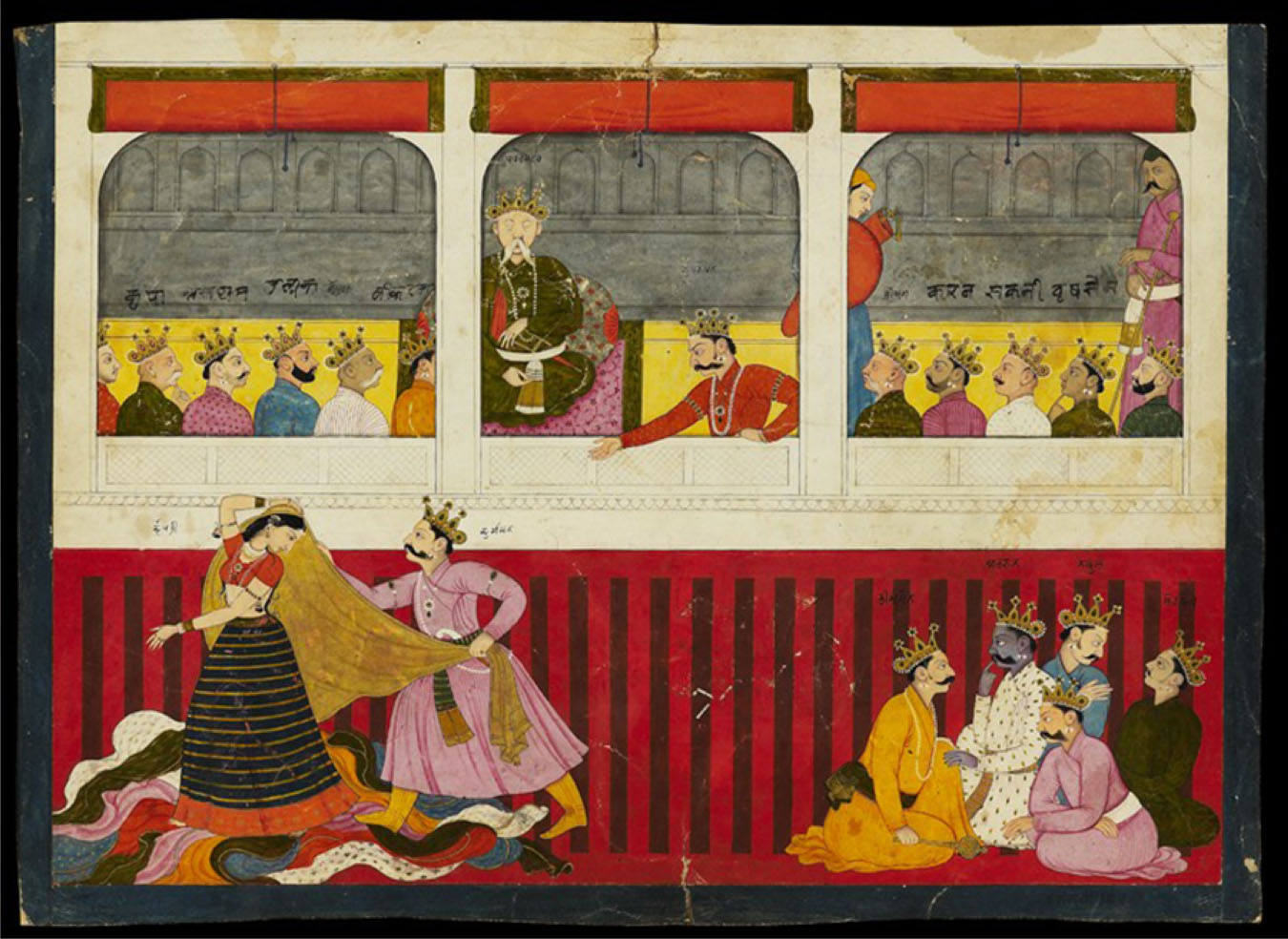
From the fourth to the seventh centuries, an empire founded by the Gupta dynasty (320–600 CE) ruled over northern India. As revealed by the name he took, Chandragupta, the founder, emulated the Mauryans and its famous founder, Chandragupta Maurya. He hired scribes working in Sanskrit to promote learning and the arts, and during this age, Sanskrit became the basis for a classical literature that influenced generations of Indians and the world. Texts such as the Mahabharata and Ramayana glorified ideas about duty, valor, and performing a proper role in society (Figure 5.24). The first was a collection of thrilling poems featuring feuding rulers and powerful families, the other an epic tale of a warrior prince’s journey to recover his honor.
英語のヒント
4世紀から7世紀にかけて、グプタ朝(320~600年)が築いた帝国が北インドを支配した。創始者チャンドラグプタは、その名が示すように、マウリヤ朝と、その著名な創始者チャンドラグプタ・マウリヤを手本にした。彼は学問と芸術を奨励するため、サンスクリット語で仕事をする書記を雇った。この時代、サンスクリット語は、何世代にもわたるインド人と世界に影響を及ぼす古典文学の基礎となった。『マハーバーラタ』や『ラーマーヤナ』などの作品は、義務・武勇・社会で適切な役割を果たすことを理想としてたたえた(図5.24)。前者は、争う支配者や有力な一族を描く心躍る詩の集成であり、後者は、武人である王子が名誉を取り戻す旅を描いた叙事詩的物語だった。
The Humiliation of Draupadi.ドラウパディーの屈辱。
(credit: “The disrobing of Draupadi” by Howard Hodgkin Collection, Purchase, Gift of Florence and Herbert Irving, by exchange, 2022/Yousef Jameel Centre for Islamic and Asian Art/Wikimedia Commons, Public Domain) · Public Domain
Figure 5.24 The Mahabharata is possibly the longest poem even written, with over 200,000 verse lines describing the lives and conflicts of several noble families. One of the main women featured in the stories is Draupadi, known for her beauty and morality. This eighteenth-century watercolor painting depicts a story in the epic when Draupadi’s enemies attempt to humiliate her by stripping her naked. However, she’s saved by the Hindu god Krishna who miraculously clothes her anew each time her dress is removed. (credit: “The disrobing of Draupadi” by Howard Hodgkin Collection, Purchase, Gift of Florence and Herbert Irving, by exchange, 2022/Yousef Jameel Centre for Islamic and Asian Art/Wikimedia Commons, Public Domain)
図5.24 『マハーバーラタ』は、おそらく史上最長の詩であり、20万行を超える韻文で、いくつかの高貴な一族の生活と争いを描く。物語の主要な女性の一人が、美しさと徳で知られるドラウパディーである。この18世紀の水彩画は、敵たちが彼女の衣を剥ぎ、裸にして辱めようとする、叙事詩の一場面を描く。しかし彼女は、衣を脱がされるたびに奇跡的に新たな衣を与える、ヒンドゥー教の神クリシュナによって救われる。(出典: “The disrobing of Draupadi”/Howard Hodgkin コレクション。Florence と Herbert Irving の寄贈品の交換による購入、2022年/Yousef Jameel Centre for Islamic and Asian Art/Wikimedia Commons, パブリックドメイン)
In Ramayana, Rama, an avatar for the Hindu deity Vishnu, triumphs over the demon Ravana on the island of Sri Lanka and rescues his wife Sita before going on to found a perfect Indian society from his capital of Ayudha. His noble virtues and ideal society became models for Hindus to aspire to as rulers and aristocrats, while his exploits were retold for centuries in countless paintings, sculptures, carnivals, plays, and shadow theatres.
英語のヒント
『ラーマーヤナ』では、ヒンドゥー教の神ヴィシュヌの化身であるラーマが、スリランカ島で魔王ラーヴァナに勝利し、妻シーターを救い出す。その後、首都アユダを拠点に理想的なインド社会を築く。彼の高潔な徳と理想社会は、ヒンドゥー教徒が支配者や貴族として目指す模範となった。その功業は、数世紀にわたり、無数の絵画・彫刻・祭り・演劇・影絵芝居で語り直された。
The Sanskrit classics Mahabharata and Ramayana soon spread far and wide in Southeast Asia, where they became part of the cultural fabric for a multitude of non-Indians as well. Other intellectuals of the Gupta era proved themselves in the field of mathematics by using decimals and a mark to denote the concept of zero for precise measurements and recordkeeping. Among the more notable was the astronomer Brahmagupta, who in the seventh century CE pioneered the use of multiplication and division and the idea of negative numbers.
英語のヒント
サンスクリット語の古典『マハーバーラタ』と『ラーマーヤナ』は、まもなく東南アジアの広い範囲に伝わり、インド人でない多くの人びとの文化にも織り込まれた。グプタ朝期のほかの知識人たちは、正確な測定や記録のために、小数と、ゼロの概念を示す記号を用い、数学の分野で力量を示した。その中で特に著名だったのが天文学者ブラフマグプタである。彼は7世紀に、乗法・除法の使用と、負の数という考えを切り開いた。
In politics the Guptas were innovators as well. In return for their loyalty, rulers granted tracts of land as gifts to powerful families, Brahmans, and temple complexes, guaranteeing these followers a share of the harvest and consolidating their own control. In return, the Brahmans elevated the Gupta rulers to new heights in rituals honoring Vishnu and Shiva. Yet as these deities became more important, worship among the commoners turned more personal and private; singing as a form of prayer and ritualism inside the home became essential to daily lives. Many Indians began to believe in the sanctity of bhakti, a direct personal relationship between a follower and the deity. This idea bypassed the role of Brahmans as intermediaries, displeasing the Brahmans but gaining popularity in southern India, where poems written in the Tamil language became foundational to the new practice of personalized worship among Hindus.
英語のヒント
グプタ朝は政治でも新機軸を打ち出した。支配者は忠誠への見返りとして、有力な一族・バラモン・寺院組織へ広大な土地を贈り、これらの支持者に収穫の一部を保証するとともに、自分たちの支配を固めた。その見返りに、バラモンはヴィシュヌやシヴァをたたえる儀礼を通じ、グプタ朝の支配者をいっそう高い地位に押し上げた。しかし、これらの神々の重要性が増すにつれ、庶民の礼拝は、より個人的で私的なものになった。祈りとして歌うことや、家の中で儀礼を行うことが、日常生活に欠かせなくなった。多くのインド人が、信者と神との直接的で個人的な関係であるバクティを、聖なるものと信じるようになった。この考えは、仲介者としてのバラモンの役割を迂回したため、バラモンを不快にさせた。しかし南インドでは人気を集め、そこでタミル語で書かれた詩が、ヒンドゥー教徒の新たな個人的礼拝の実践の基盤となった。
The Gupta’s dynasty marked a flourishing of art and religion and the heyday of Buddhism in India. Painted caves with beautiful sculptures found in the Ajanta caves illustrate the sophistication of the artists patronized by the dynasty. While Hinduism remained the official religion of the state and the Guptas, Buddhist universities such as Nalanda were among the first of their kind in the ancient world and attracted throngs of students and pilgrims from China. India’s educated classes ranked among the most learned and knowledgeable of the ancient world, and at times they turned their attention from math and morality to explore the depths of passion, love, and eroticism. During this period, the Kama Sutra, a treatise on courtship and sexuality, became a seminal piece of Indian literature, inspiring and titillating generations worldwide ever since.
英語のヒント
グプタ朝は芸術と宗教の開花、そしてインド仏教の全盛期を画した。アジャンター石窟の美しい彫刻や壁画は、この王朝の庇護を受けた芸術家たちの高度な技量を物語る。ヒンドゥー教が国家とグプタ朝の公的な宗教であり続けたのに対し、ナーランダーのような仏教の大学は、古代世界でこの種の機関の最初期のものに数えられ、中国から多くの学生や巡礼者を引きつけた。インドの教育ある階層は、古代世界で最も学識豊かな人びとの中に数えられた。彼らは時に、数学や道徳から、情熱・愛・性愛の深みの探究へ関心を移した。この時期、求愛と性についての論考『カーマ・スートラ』は、インド文学のきわめて重要な作品となった。それ以来、世界の何世代もの人びとに着想を与え、好奇心や欲望をかき立ててきた。
The opulence and stability provided by the Guptas dissipated under the threat of invaders from the north known as the Huns. While northern India fractured into smaller states after this point, southern India’s ties and trade with South Asia deepened and matured. By the eleventh century, the region’s profitable exports of goods such as ivory, pepper, spices, Roman coins, and even animals like the peacock had led to the formation of notable southern kingdoms, such as the Tamil Chola dynasty. But the most influential exports from India to the rest of South Asia—Hinduism, Buddhism, and the art and learning each inspired—long outlived these states.
英語のヒント
グプタ朝がもたらした豊かさと安定は、フン族と呼ばれる北方からの侵入者の脅威の下で消えていった。その後、北インドがより小さな国家へ分裂したのに対し、南インドと南アジアとの結びつきや交易は、深まり、成熟した。11世紀までに、象牙・コショウ・香辛料・ローマの硬貨、さらにはクジャクのような動物を輸出する、この地域の有利な交易は、タミル人のチョーラ朝など、南部の著名な王国の形成につながっていた。だが、インドから南アジアのほかの地域への最も影響力の大きい輸出品—ヒンドゥー教、仏教、そして各宗教が生み出した芸術と学問—は、これらの国家よりも、はるかに長く存続した。