第4章古代オリエントThe Near East
Section Summary節のまとめ
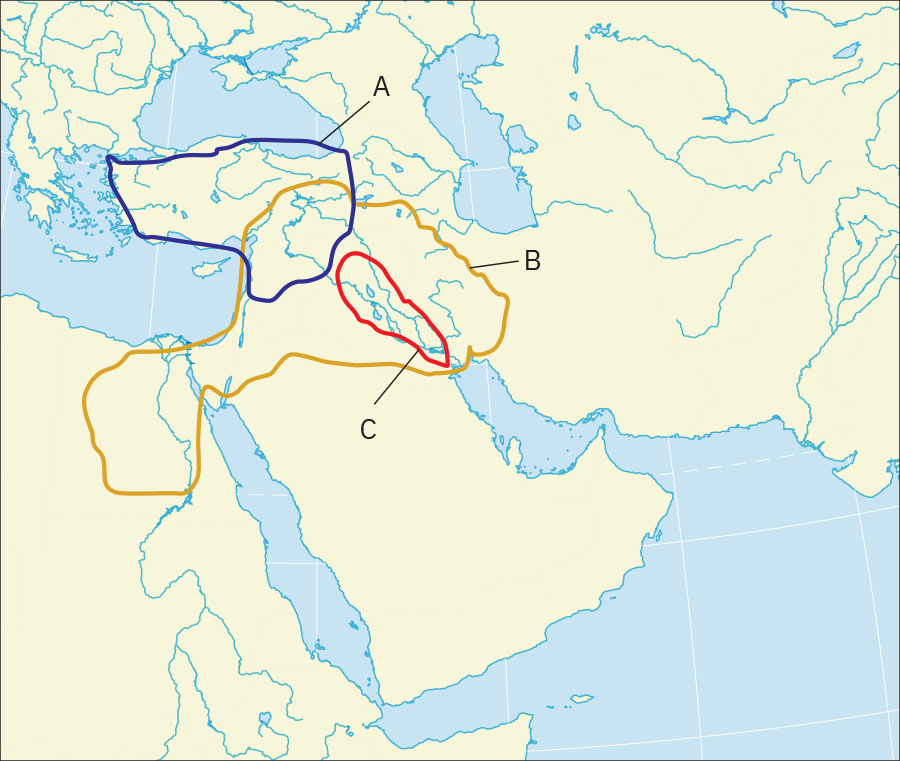
After the challenges to Mesopotamian civilization created by the invasions of the Amorites and Elamites, a succession of new empires emerged. In the 1700s BCE, King Hammurabi transformed Babylon from a minor city-state to the center of a vast empire. At the start of the 1500s BCE, the Hittites exploded out of Anatolia, sacking Babylon and later competing with Egypt for supremacy in the eastern Mediterranean. During the Iron Age that followed, the Near East underwent an even deeper transformation as the Neo-Assyrians created the first empire to control both Mesopotamia and Egypt. Then, at the end of the seventh century BCE, a resurgent Babylonia allied with the Median Empire to destroy the Neo-Assyrian Empire and carve up the spoils.
英語のヒント
アムル人とエラム人の侵入がメソポタミア文明にもたらした危機の後、新しい帝国が次々に現れた。紀元前1700年代、ハンムラビ王は小都市国家バビロンを、広大な帝国の中心へ変えた。紀元前1500年代の初めには、ヒッタイトがアナトリアから急速に進出し、バビロンを略奪し、後には地中海東部の覇権をエジプトと争った。続く鉄器時代には、新アッシリアがメソポタミアとエジプトの両方を支配する最初の帝国を築き、近東はさらに大きく変わった。紀元前7世紀末には、再興したバビロニアがメディア帝国と同盟し、新アッシリア帝国を滅ぼして、その領土を分け合った。
Each empire controlled large territories that were home to diverse peoples, religions, and daily practices, often adopted from older civilizations and shaped to suit their own needs and interests.
英語のヒント
各帝国は、多様な人々、宗教、日々の慣行を抱える広い領域を支配した。それらはしばしば古い文明から受け継がれ、帝国自身の必要や利害に合わせて形を変えた。
Review Questions復習問題
- Old Babylonian Empire
- Neo-Babylonian Empire
- Hittite Empire
- Neo-Assyrian Empire
- 古バビロニア帝国
- 新バビロニア帝国
- ヒッタイト帝国
- 新アッシリア帝国
- to settle depopulated lands
- to demonstrate the cost of rebellion
- to appease the gods
- to acquire tin
- 人口の失われた土地に定住するため
- 反乱の代償を示すため
- 神々をなだめるため
- スズを得るため
- nobles, professionals, peasants, the enslaved
- nobles, farmers, bankers, peasants
- kings, scribes, landowners, the enslaved
- kings, farmers, priests, the enslaved
- 貴族、専門職層、農民、奴隷
- 貴族、農業従事者、銀行業者、農民
- 王、書記、地主、奴隷
- 王、農業従事者、神官、奴隷
- good will
- hostile intentions
- military might
- divine support
- 友好の意思
- 敵意
- 軍事力
- 神の支持
- tribute
- intermarriage
- espionage
- war
- 貢納
- 婚姻関係を結ぶこと
- 諜報活動
- 戦争
Check Your Understanding Questions理解を確かめる問題
Copyright Rice University, OpenStax. CC BY 4.0. · CC BY 4.0
Application and Reflection Questions応用・考察問題
chattel slavery
動産としての奴隷制
a form of slavery in which one person is owned by another as a piece of property
人が、他の人によって財産として所有される形の奴隷制。
Iron Age
鉄器時代
the period beginning around 1200 BCE when iron became the preferred material for manufacturing tools and weapons
紀元前1200年頃に始まり、道具や武器を作る材料として、鉄が好んで使われるようになった時代。
vassal state
属国
a state or kingdom that is nominally independent in the running of its internal affairs but must submit to the demands of a dominating empire and usually provide tribute to it
国内の運営では名目上独立しているが、支配的な帝国の要求に従い、通常は貢納も行わねばならない国家や王国。