第7章ローマ帝国での暮らしExperiencing the Roman Empire
7.1 The Daily Life of a Roman Family7.1 ローマの家族の日常生活
Learning Objectives学習の目標
By the end of this section, you will be able to:
この節を学ぶと、次のことができるようになる。
Describe a typical Roman home
典型的なローマの住居を説明する
Discuss gender roles in Roman families
ローマの家族における男女の役割を論じる
Analyze the influence of social class on daily life in Rome
社会階級がローマの日常生活に及ぼした影響を分析する
The family was an important element of life during the Roman Empire. The male patriarch was the head of the household, which consisted of the immediate and extended family, as well as adjacent groups, including dependents and enslaved people. While men held ultimate authority in the family, women were also expected to maintain family order, with responsibilities in and often outside the household. Pride in a family’s prosperity was a crucial Roman value, which motivated both the honoring of ancestors and the securing of a future for descendants. Romans looked to their ancestors for examples of correct moral behavior and worked diligently for the family’s continuing stability.
英語のヒント
ローマ帝国の時代、家族は生活の重要な要素だった。男性の家父長が家の長を務めた。その家には、近親者と親族に加えて、扶養される人々や奴隷にされた人々など、周辺の集団も含まれていた。家族内で最終的な権限を持っていたのは男性だったが、女性も家族の秩序を保つことを期待され、家庭内で、しばしば家庭の外でも責任を担った。一家の繁栄を誇りにすることは、ローマ人にとって極めて重要な価値観であり、祖先を敬うことと子孫の将来を確保することの両方を促した。ローマ人は、正しい道徳的行動の手本を祖先に求め、家族の安定を保ち続けるために勤勉に働いた。
The Structure of Roman Familiesローマの家族の構造
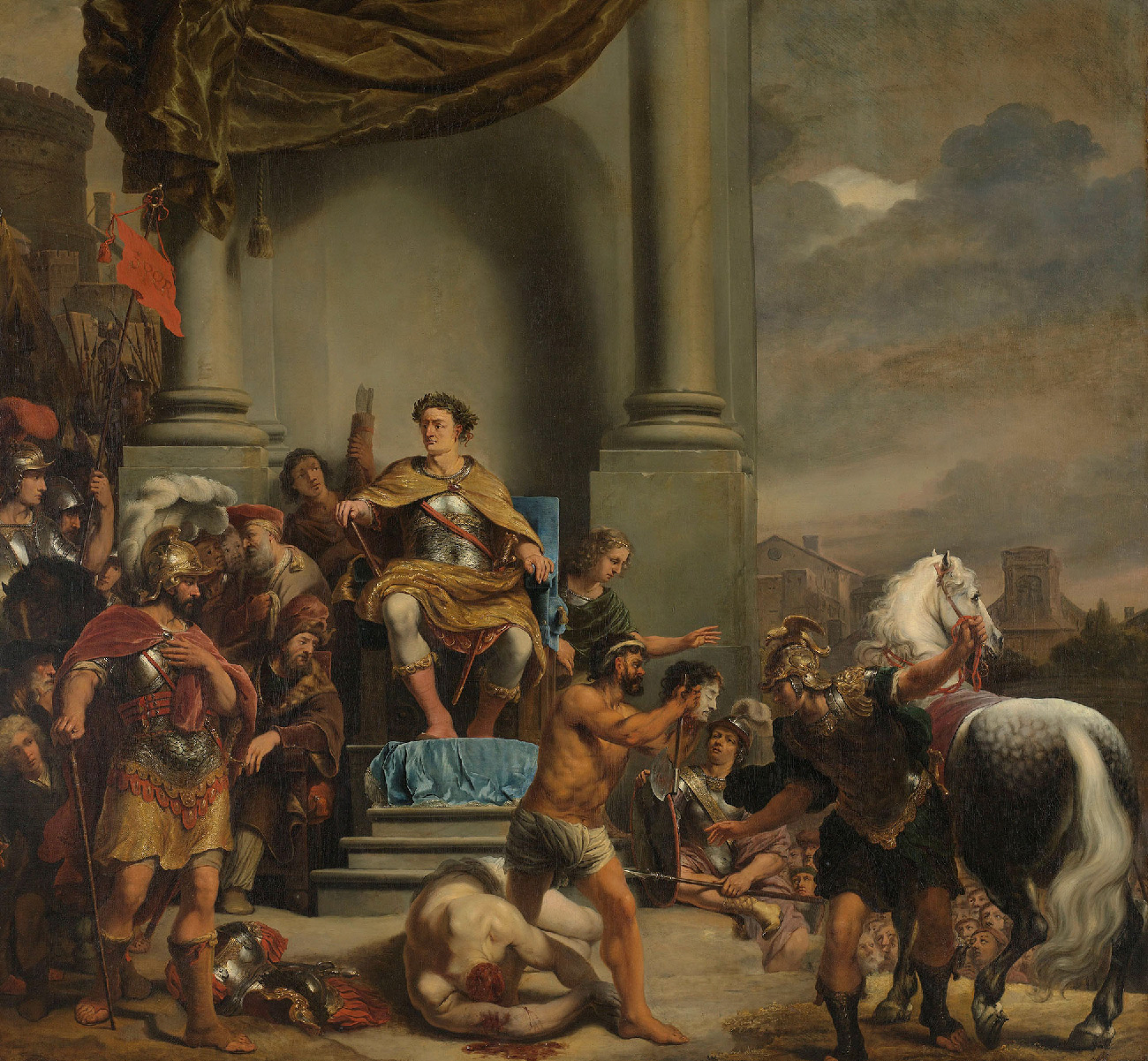
Family life was oriented around the paterfamilias, the male head of the household. According to tradition, this patriarch had the power of life and death over all his dependents, an authority referred to as patria potestas (“paternal power”). Members of the extended family subject to this authority included the patriarch’s wife, their children, anyone descended through the family’s male line, and all enslaved people belonging to the household. With his authority, the patriarch was both the judge and rule maker of the family, with the power to sell his dependents into bondage or destroy their property (Figure 7.3).
英語のヒント
家族の生活は、男性の家長であるパテルファミリアスを中心に営まれていた。伝統に従えば、この家父長は、自分に従属するすべての人々の生殺与奪の権を持っていた。これはパトリア・ポテスタス(「父の権力」、家父権)と呼ばれた。この権威に服する親族には、家父長の妻、子供たち、家系の男系を通じて生まれたすべての子孫、そしてその家に属するすべての奴隷が含まれた。家父長はこの権威によって、家族の裁判官であると同時に規則の制定者でもあり、従属する人々を隷属状態へ売り渡したり、その財産を破壊したりする権限を持っていた(図7.3)。
A Roman Paterfamilias.ローマのパテルファミリアス。
(credit: “Consul Titus Manlius Torquatus Orders the Beheading of his Son” by Rijksmuseum/Wikimedia Commons, CC0 1.0) · CC0 1.0
Figure 7.3 This painting by the seventeenth-century Dutch artist Ferdinand Bol depicts the Roman general Manlius, who had his own son executed for disobedience. Though produced in a much later period, Bol’s work illuminates some traditional Roman values: The patriarch’s power is indicated in Manlius’s outward indifference as he looks away from his son’s death, and his loyalty to Rome is demonstrated by his looking toward his troops instead. (credit: “Consul Titus Manlius Torquatus Orders the Beheading of his Son” by Rijksmuseum/Wikimedia Commons, CC0 1.0)
図7.3 17世紀のオランダの画家フェルディナント・ボルによるこの絵は、命令に背いた実の息子を処刑させたローマの将軍マンリウスを描いている。はるか後の時代の作品だが、伝統的なローマの価値観の一端を浮かび上がらせる。息子の死から目をそらすマンリウスの、表面上は無関心な様子が家父長の権力を示し、代わりに部隊へ視線を向けることがローマへの忠誠を示している。(出典:Rijksmuseum/Wikimedia Commons「Consul Titus Manlius Torquatus Orders the Beheading of his Son」、CC0 1.0)
Ultimately, however, the goal of the paterfamilias was to promote his family’s welfare. His power worked through consensus and deliberation with the other family members. As the primary provider, he expected respect from his family but could also reward good behavior. In this way, an entire family might benefit by working together to further their social or financial prosperity.
英語のヒント
しかし、パテルファミリアスの最終的な目的は、一家の幸福と安寧を増進することだった。その権力は、ほかの家族との合意や協議を通じて行使された。主な扶養者として家族から敬意を払われることを期待したが、良い行いに報いることもできた。このように、社会的・経済的な繁栄をさらに進めるために協力すれば、家族全体が利益を得ることもあった。
The securing of a Roman family’s reputation began with the education and training of children. In early Rome, children were educated in the home; later, grammar schools enrolled boys and girls from wealthy families until around the age of twelve. Education usually centered on reading and writing Latin and Greek as well as arithmetic. Around age fifteen, boys donned the toga virilis (“toga of manhood”), a plain white toga representing their enrollment as citizens and entrance into manhood. Roman citizenship was highly coveted and was bestowed either at birth to children of citizens or by special decree. Sons of prominent families could then go on to a civil or military career. After a son inherited his father’s property (as well as his debts), it became his responsibility to maintain the family’s reputation and prosperity.
英語のヒント
ローマの一家の名声を確かなものにする取り組みは、子供の教育と訓練から始まった。初期のローマでは子供は家庭で教育を受けたが、後には、富裕な家庭の男女の子供が、およそ12歳まで文法学校に通った。通常、教育の中心はラテン語とギリシャ語の読み書き、そして算術だった。男子は15歳ごろになると、トガ・ウィリリス(「成人男子のトガ」)を着た。これは、市民としての登録と成人への仲間入りを表す、無地の白いトガだった。ローマ市民権は強く望まれるものであり、市民の子供には出生時に、あるいは特別な布告によって授けられた。名門の息子たちは、その後、公職や軍務の道へ進むことができた。息子が父の財産と負債を相続すると、一家の名声と繁栄を維持する責任は息子に移った。
By contrast, girls commonly married at a young age, usually between fourteen and eighteen years old, and often to a much older man. Younger girls were viewed as more sexually pure and therefore easier to control. In the most common form of marriage, a wife brought a dowry that became her husband’s property. Thus, a woman from a wealthy background with a large dowry had some sway in making marriage arrangements. She also had the protection a powerful family could offer should her husband prove to be less than ideal. Lower-class women were more reliant on their husband’s status to enhance their own. In any case, marriage represented a woman’s coming under the legal control of her husband’s household.
英語のヒント
これに対して、女子は一般に若くして結婚し、通常は14〜18歳で、相手がずっと年上の男性であることも多かった。若い女子ほど性的に純潔で、それゆえ支配しやすいと見なされていた。最も一般的な結婚の形では、妻は持参金を持っていき、それは夫の財産になった。そのため、裕福な家の出身で多額の持参金を持つ女性は、結婚の取り決めにある程度の影響力を持っていた。また、もし夫が理想から程遠い人物だとわかった場合には、有力な実家が与えてくれる保護もあった。下層階級の女性は、自分の地位を高めるうえで、夫の地位に頼る度合いがより大きかった。いずれにしても、結婚することは、女性が夫の家の法的な支配下に入ることを意味した。
The vast legal and age imbalance between husband and wife was reflected in the cultural restrictions on Roman women. Yet, though a Roman man’s work was an important contributor to the family’s success, women devoted much of their efforts to the same goal. Women were responsible for the management of the household, which included ensuring provisions for the family, overseeing any enslaved people and other dependents, and looking after the children. Spinning wool was viewed as the activity of an ideal Roman woman, and many wives were expected to occupy themselves with this work. Despite these expectations, there is evidence that many women, particularly non-elite women, held professions outside the home, including in medicine, trade, and agriculture.
英語のヒント
夫婦の法的な立場と年齢における大きな不均衡は、ローマの女性に課された文化的な制約にも表れていた。しかし、ローマの男性の仕事が一家の成功に大きく貢献していた一方で、女性も同じ目標に多大な力を注いでいた。女性は家政を担い、家族の食料などを確保し、奴隷やほかの従属する人々を監督し、子供の世話をした。羊毛を紡ぐことは理想的なローマ女性の仕事と見なされ、多くの妻はその仕事に従事することを期待された。こうした期待があったにもかかわらず、多くの女性、とりわけエリート層以外の女性が、医療、商業、農業など、家庭の外で職業を持っていたことを示す証拠がある。
A Day in the Life of a Roman Familyローマの家族の一日
Romans lived and worked in a variety of contexts across the empire. Most of our evidence of the practical elements of their daily lives comes from archaeological evidence uncovered at Pompeii. The remains of this once-bustling city (which was destroyed by a volcanic eruption in 79 CE) show us the occupations, architecture, and lifestyles of different social classes. In addition, though most of what we know is about wealthy estates, life in the countryside outside the city constituted another important part of imperial Roman society.
英語のヒント
ローマ人は帝国各地のさまざまな環境で暮らし、働いていた。その日常生活の具体的な様子を示す証拠の大部分は、ポンペイで発見された考古学的資料に由来する。かつてにぎわい、紀元後79年の火山噴火で破壊されたこの都市の遺跡は、異なる社会階級の職業、建築、生活様式を私たちに伝えている。また、私たちにわかっていることの大半は富裕層の地所についてだが、都市の外の農村の暮らしも、帝政期ローマ社会のもう一つの重要な部分を構成していた。
Daily life was dominated by aristocratic men who enjoyed careers in politics, law, and the military. Wealthy Romans were part of two property-based classes: the senatorial and the equestrian ranks. Only those above a certain property threshold were allowed to be members of these upper classes, and they occupied privileged social positions with access to prestigious careers denied to the lower classes. An elite Roman man’s day began at home in the domus, a traditional single-family house that served both practical and symbolic roles (the term domus refers not only to the physical residence but also to the family). It was a place of display in which a family could take pride and where the father would conduct official business. Every morning, in the role of patron, he would receive a number of clients in his home who sought his aid in exchange for loyalty. The late morning was usually consumed by responsibilities outside the home, including business and political meetings. During the afternoon, wealthy Roman men spent their time socializing and pursuing leisure activities, such as attending public entertainment performances or visiting the bathhouse.
英語のヒント
日常生活を支配していたのは、政治、法律、軍事の分野で職業上の地位を持つ、貴族的な男性たちだった。裕福なローマ人は、財産を基準とする二つの階級、元老院身分と騎士身分に属していた。一定の財産基準を上回る者だけがこの上層階級の一員となることを許され、特権的な社会的地位を占め、下層階級には認められない、威信のある職業に就くことができた。エリート男性の一日は、ドムスという伝統的な一世帯用住宅で始まった。ドムスには実用的な役割と象徴的な役割の両方があった。この語は物理的な住居だけでなく、家族そのものも指す。家族が誇りにできる威勢の誇示の場であり、父が公的な仕事を行う場所でもあった。毎朝、父は庇護者として、忠誠と引き換えに援助を求める多くの被庇護者を自宅に迎えた。午前の遅い時間は、商取引や政治の会合など、家の外での務めに費やされるのが普通だった。午後になると、裕福なローマの男性は、公の娯楽の催しを見物したり浴場を訪れたりして、社交や余暇活動に時間を使った。
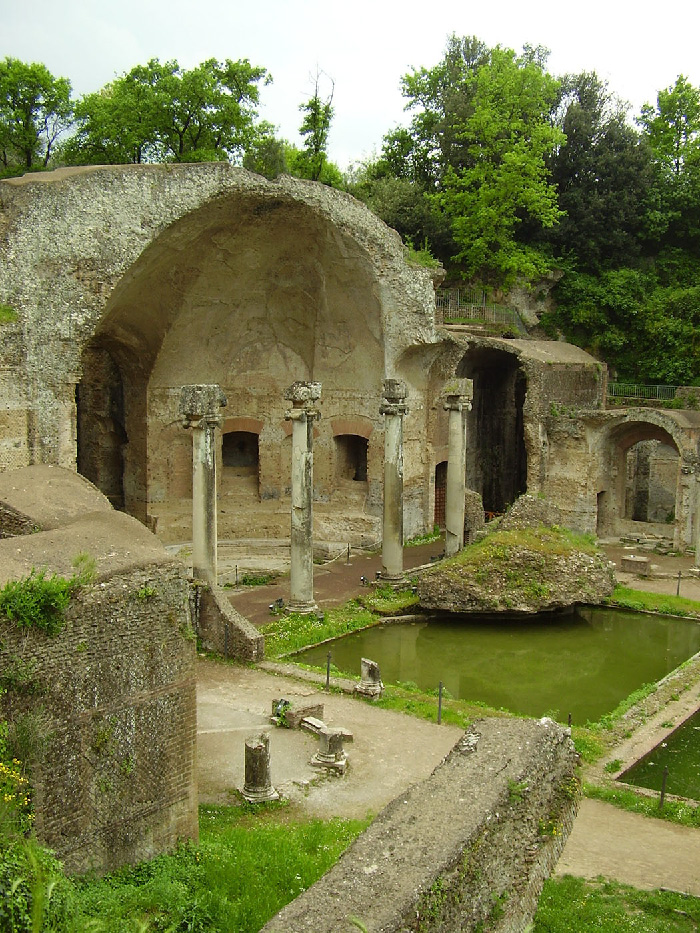
The wealthiest Romans had both houses in the city and villas in the countryside. Suburban villas were located just outside a city’s walls, and villas located in the countryside typically originated as agricultural estates. Large estates, known as latifundia, were agricultural operations in which enslaved people worked the land for the owner’s profit. In the imperial period, these estates came to contain villa residences that functioned more as places of recreation and a means to display wealth. Many elements of luxury displayed in townhouses also appear in villas, such as gardens, fountains, and mosaics. Hadrian’s villa outside Rome is an opulent example of luxury at the very top of the Roman social order, incorporating elements of this emperor’s travels in the second century CE (Figure 7.5).
英語のヒント
最も裕福なローマ人は、都市の住宅と農村の別荘の両方を持っていた。郊外の別荘は都市の城壁のすぐ外にあり、農村の別荘は、一般に農業用の地所を起源としていた。ラティフンディアと呼ばれる大土地所有は、奴隷にされた人々が所有者の利益のために土地を耕す農業経営だった。帝政期になると、こうした地所には、保養の場や富を誇示する手段としての性格を強めた別荘住宅が建つようになった。庭園、噴水、モザイクなど、都市の住宅に見られるぜいたくな要素の多くは、別荘にも見られる。ローマ郊外のハドリアヌス帝の別荘は、ローマ社会の最上層の豪華な暮らしを示す、壮麗な例である。紀元後2世紀にこの皇帝が旅した土地の要素を取り入れている(図7.5)。
How Wealthy Romans Lived.裕福なローマ人の暮らし。
(credit: “Hadrian villa ruins” by “Entoaggie09”/Wikimedia Commons, CC BY 2.5) · CC BY 2.5
Figure 7.5 The architecture of Hadrian’s second-century villa outside Rome recalls elements of the emperor’s travels, including a Greek Temple of Venus, a small lake resembling an Egyptian canal, and numerous statues. (credit: “Hadrian villa ruins” by “Entoaggie09”/Wikimedia Commons, CC BY 2.5)
図7.5 ローマ郊外にある2世紀のハドリアヌス帝の別荘は、皇帝が旅先で見たものを建築に取り入れている。ギリシャ風のウェヌス神殿、エジプトの運河に似た小さな湖、多数の彫像などである。(出典:「Entoaggie09」/Wikimedia Commons「Hadrian villa ruins」、CC BY 2.5)
Life for the lower classes was not as luxurious or as stable. Clients formed a largely educated class in Rome who supported themselves through gifts from their patrons and meager employment. Though Romans typically had a six-hour workday, the urban poor relied more on occasional work or odd jobs. In large cities, many lived in insulae, apartment complexes of three to four levels that occupied a rectangular city block. Insulae had a reputation for being overcrowded and having limited facilities, however.
英語のヒント
下層階級の生活は、これほどぜいたくでも安定的でもなかった。ローマの被庇護者は、おおむね教育を受けた人々からなる階層だったが、庇護者からの贈り物とわずかな仕事によって生計を立てていた。ローマ人の労働時間は通常、一日6時間だったが、都市の貧困層は、臨時の仕事や雑仕事に頼る度合いが大きかった。大都市では、多くの人がインスラと呼ばれる集合住宅に住んでいた。これは長方形の街区を占める3〜4階建ての建物だった。しかし、インスラは過密で、設備も限られていることで知られていた。