第7章ローマ帝国での暮らしExperiencing the Roman Empire
What Family Meant in Romeローマにおいて家族が意味したもの
The power of the paterfamilias was mirrored in the power of Roman politicians and magistrates. Romans’ personal respect for authority, dispensing of justice, and honoring of the family influenced the way they conducted themselves publicly. The desire to further the family’s prosperity also extended into other facets of daily life. The family as a unit worked to achieve status and prosperity, and everyone had a role to play.
英語のヒント
パテルファミリアスの権力は、ローマの政治家や政務官の権力にも映し出されていた。権威への個人的な敬意、裁きを行うこと、家族を尊重することは、ローマ人の公の場での振る舞いにも影響した。一家の繁栄をさらに進めたいという願いは、日常生活のほかの側面にも及んだ。家族は一つの単位として地位と繁栄の獲得に努め、誰もが果たすべき役割を持っていた。
Politics was certainly an extension of Roman family principles. Holding a coveted and powerful political position, Roman senators were referred to as “conscript fathers” (patres conscripti), and their authority, dispensed through legislation and legal judgments, was much like that of a father over his household. Laws about marriage and childbirth made once-private matters a concern of the Roman state. For example, the emperor Augustus made adultery a public crime, setting out to promote childbirth in Rome and protect legal marriages. Yet, like the expectations for women in Roman society, this legislation disproportionately punished women, who could be exiled for adultery as a result.
英語のヒント
政治は、まさにローマの家族原理の延長にあった。誰もが望む強力な政治的地位にあった元老院議員は、「登録された父たち」(パトレス・コンスクリプティ)と呼ばれた。立法や法的判断を通じて行使されるその権威は、父が家族に対して持つ権威によく似ていた。結婚や出産に関する法律は、かつて私的だった事柄をローマ国家の関心事にした。たとえば、アウグストゥス帝は、ローマでの出産を奨励し、正規の婚姻を保護しようとして、姦通を公的な犯罪とした。しかし、ローマ社会で女性に向けられた期待と同じく、この法律も女性に偏って処罰を加えた。その結果、女性は姦通によって追放されることもあった。
Emperors were especially interested in maintaining their family’s stability, for the practical purpose of ensuring dynastic continuity but also to garner positive public opinion. Rulers took special interest in finding an heir and exercising tight control over family matters. Augustus worked diligently to name an heir to rule after him, appointing several before being succeeded by his stepson Tiberius. Having an unstable household could mean a quick end to an emperor’s reign if the situation became too tumultuous. In the later Roman Empire, when there was significant turnover of rulers, emperors named an heir soon after coming to power.
英語のヒント
皇帝は、一家の安定を維持することにとりわけ関心を持っていた。王朝の継続を確保するという実際的な目的に加えて、好意的な世論を集めるためでもあった。支配者は後継者を見つけ、家族の問題を厳しく統制することに特別な注意を払った。アウグストゥスは、自分の後に統治する後継者を指名することに力を尽くした。何人もの候補を指名した末に、継子のティベリウスが跡を継いだ。家族が不安定な場合、その状況があまりに混乱すると、皇帝の治世がたちまち終わることもあった。支配者の交代が激しかったローマ帝国後期には、皇帝は権力を握ると間もなく後継者を指名した。
Similarly, public figures who embodied Roman family values were looked on favorably. Cornelia, a noblewoman in the second century BCE, is remembered for devoting herself to motherhood above all else. She gave birth to twelve children, and after her husband died she refused to remarry and focused instead on raising her surviving children. Her sons Tiberius and Gaius Gracchus led influential political careers before they were both assassinated. Cornelia is reported to have said of her sons, in conversation with another woman displaying her jewelry, “These are my jewels.” Cornelia was noted for embodying feminine virtues in her motherly devotion and for her indirect impact on Roman politics.
英語のヒント
同様に、ローマの家族的価値観を体現した公的な人物は、好意的に見られた。紀元前2世紀の貴族女性コルネリアは、何よりも母としての務めに身をささげたことで記憶されている。彼女は12人の子供を産み、夫の死後は再婚を断り、代わりに生き残った子供たちの養育に力を注いだ。息子のティベリウスとガイウス・グラックスは、二人とも暗殺されるまで、政治の場で大きな影響力を持った。コルネリアは、宝石を見せびらかす別の女性との会話で、息子たちについて「これが私の宝石です」と言ったと伝えられる。母としての献身によって女性の美徳を体現したこと、そしてローマ政治に間接的な影響を及ぼしたことで知られた。
By contrast, public figures who disregarded Roman family values were infamous. For example, Agrippina the Younger, great-granddaughter of the emperor Augustus, was viewed as a power-hungry woman in her time. She married her uncle, the emperor Claudius, who was twenty-five years older than she. She then convinced him to adopt her son Nero from a previous marriage, an act that eventually implicated Agrippina in Claudius’s murder in 54 CE and led to Nero’s reign as emperor. Instead of holding more power as empress after Nero’s ascension, Agrippina saw her relationship with her son flounder. Nero plotted to have her killed, first in a sinking boat, from which she escaped, and then by an assassin. The violence and treachery of the imperial family especially tarred Agrippina as a disreputable woman.
英語のヒント
これに対して、ローマの家族的価値観を顧みない公的な人物は、悪名をはせた。たとえば、アウグストゥス帝の曾孫にあたる小アグリッピナは、当時、権力に飢えた女性と見なされていた。彼女は自分より25歳年上の叔父、クラウディウス帝と結婚した。その後、前の結婚で生まれた息子ネロを養子にするよう、夫を説得した。この行為は、やがて紀元後54年のクラウディウス殺害へのアグリッピナの関与を疑わせ、ネロの皇帝即位につながった。ネロの即位後、皇太后としてさらに権力を握るどころか、アグリッピナと息子の関係は行き詰まった。ネロは彼女を殺そうと企て、まず沈むよう仕組んだ船を用いたが、彼女は脱出した。そこで次に暗殺者を差し向けた。皇帝一家の暴力と裏切りは、とりわけアグリッピナに、評判の悪い女性という汚名を着せた。
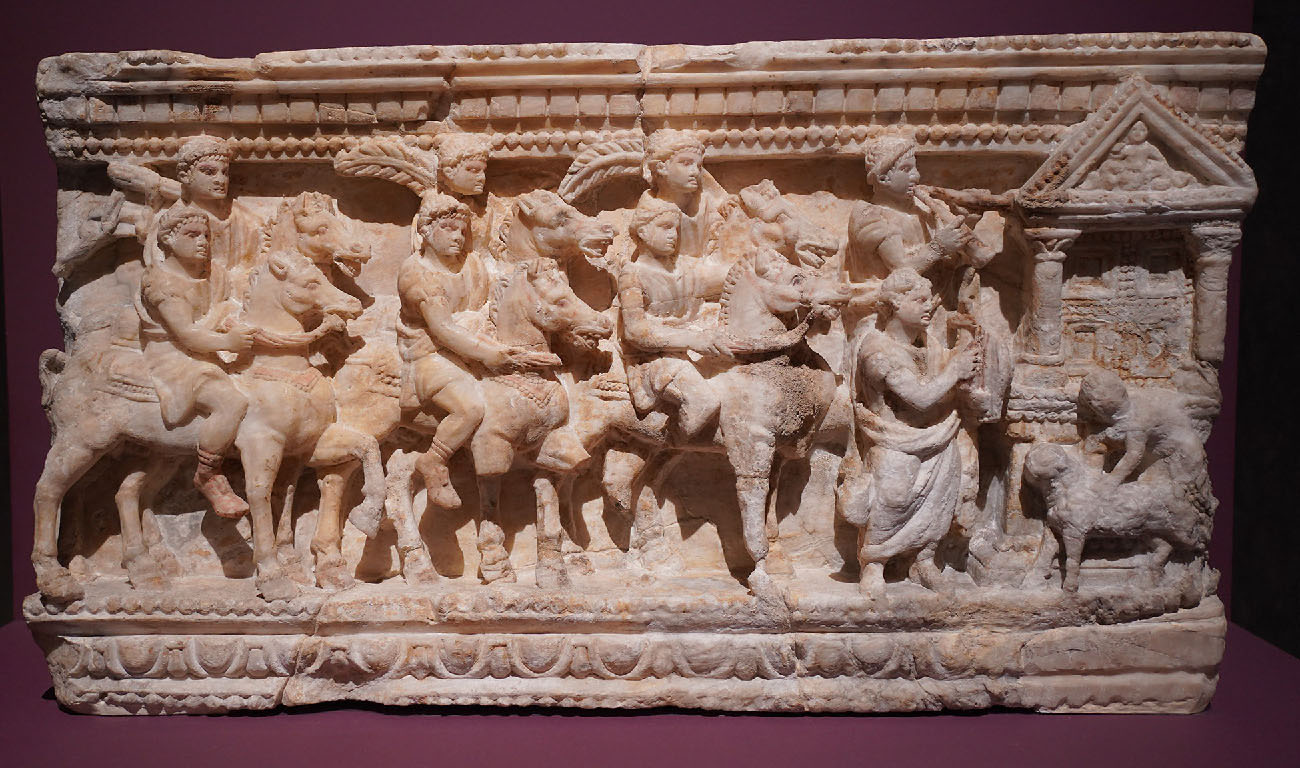
Finally, respect for ancestral custom and precedents known as mos maiorum (“the way of the ancestors”) and for deceased members of the family were epitomized in funeral parades. In these public rituals, the deceased was carried from home to the city center, or forum, where the body was laid out. A eulogy was delivered by the heir, surrounded by others wearing ancestor masks that represented deceased family members. The procession linked the living family to the past, and the route through the city gave the ritual public and communal significance (Figure 7.6).
英語のヒント
最後に、モス・マイオルム(「祖先の慣習」)と呼ばれる先祖伝来の慣行や先例への敬意、そして亡くなった家族への敬意は、葬送の行列に典型的に表れていた。この公的な儀礼では、死者は自宅から都市中心部のフォルムへ運ばれ、そこで遺体が安置された。後継者が弔辞を述べ、その周囲には、亡くなった家族を表す祖先の仮面を着けた人々が立った。行列は、生きている家族を過去につなぎ、都市内を通る経路は、この儀礼に公的・共同体的な意味を与えた(図7.6)。
A Roman Funeral.ローマの葬儀。
(credit: modification of work “Etruscan-Roman cinerary urn from Volaterrae circa 100 BC” by “TimeTravelRome”/Flickr, CC BY 2.0) · CC BY 2.0
Figure 7.6 This relief from the first century BCE depicts a Roman funerary procession. The deceased’s high status is clear from the presence of soldiers, musicians, and politicians heading toward the sanctuary on the right, where an animal sacrifice is prepared. (credit: modification of work “Etruscan-Roman cinerary urn from Volaterrae circa 100 BC” by “TimeTravelRome”/Flickr, CC BY 2.0)
図7.6 紀元前1世紀のこの浮彫は、ローマの葬送行列を描いている。兵士、音楽家、政治家たちが、動物の供犠が準備されている右側の聖所へ進んでいることから、死者の高い地位がわかる。(出典:「TimeTravelRome」/Flickrによる「Etruscan-Roman cinerary urn from Volaterrae circa 100 BC」を改変、CC BY 2.0)