第7章ローマ帝国での暮らしExperiencing the Roman Empire
7.2 Slavery in the Roman Empire7.2 ローマ帝国の奴隷制
Learning Objectives学習の目標
By the end of this section, you will be able to:
この節を学ぶと、次のことができるようになる。
Describe the legal and social structures that supported slavery in the Roman Empire
ローマ帝国の奴隷制を支えた法的・社会的な仕組みを説明する
Discuss the different experiences of enslaved men, women, and children
奴隷にされた男性、女性、子供が経験したことの違いを論じる
Explain the importance of gladiators in Roman culture
ローマ文化における剣闘士の重要性を説明する
Slavery was a fundamental part of Roman daily life. Enslaved people came from many parts of the large empire and had been enslaved in many different ways. They worked in a variety of contexts and were subject to their master’s whims and punishment. Many were trained as gladiators, professional fighters paid to battle before an audience, sometimes to the death, but others worked in the cities and countryside in a variety of roles. The freeing of enslaved people was a common practice, and freed people were important to the continued functioning of the Roman economy and political order.
英語のヒント
奴隷制はローマの日常生活の基本的な一部だった。奴隷にされた人々は、広大な帝国の各地から来ており、奴隷にされた経緯もさまざまだった。多様な環境で働き、主人の気まぐれや処罰にさらされていた。多くは剣闘士として訓練された。剣闘士とは、観衆の前で、時には死に至るまで戦う、報酬を受ける職業的な戦闘者である。一方、都市や農村でさまざまな役割を果たす者もいた。奴隷の解放は広く行われていた慣行であり、解放された人々は、ローマの経済と政治秩序が機能し続けるうえで重要だった。
The Structures of Roman Slaveryローマの奴隷制の仕組み
Enslavement was the result of a variety of circumstances in the Roman world; there was no single mechanism that sustained the system. During the Roman Republic, it appears that most enslaved people were former soldiers captured in war. Slave dealers purchased these captives from defeated armies and brought them to various slave markets throughout the empire for sale to buyers in need of slave labor. Following the civil wars during the reign of Augustus, however, prisoners of war were fewer, and the system relied more heavily on other sources.
英語のヒント
ローマ世界で人が奴隷にされるのには、さまざまな事情があり、制度を維持した仕組みは一つではなかった。共和政ローマでは、奴隷の大半は戦争で捕らえられた元兵士だったと考えられる。奴隷商人は、敗れた軍のこうした捕虜を買い取り、帝国各地の奴隷市場へ連れていき、奴隷労働を必要とする買い手に売った。しかし、アウグストゥスの治世における内戦の後は、戦争捕虜が減り、制度はほかの供給源により強く依存するようになった。
Some historians believe natural reproduction accounted for a large number of new enslaved people; the children of enslaved women were considered the property of the household in which the mother lived. Enslavement could also be the result of kidnapping and piracy. Some enslaved people were sold into bondage through patria potestas. Others had been abandoned as infants by families that did not want to or could not care for a child; these children often ended up in the hands of slave traders. Finally, while involuntary debt bondage had been outlawed since the time of the early Roman Republic, people could sell themselves into slavery to pay off debts. Slave markets, often kept supplied by piracy, were an important element of the system, and the one at Delos (which was most active in the second and early first century BCE) was the largest; upwards of ten thousand enslaved people might be sold in a single day.
英語のヒント
歴史家の中には、新たに奴隷となる人々の多くは、奴隷の親から生まれた子供だったと考える者もいる。奴隷の女性の子供は、母親が暮らす家の財産と見なされた。誘拐や海賊行為によって奴隷にされることもあった。家父権によって隷属状態へ売られた者もいた。また、子供を育てる意志や余裕のない家族に、乳児のときに捨てられた者もいた。そうした子供は、しばしば奴隷商人の手に渡った。さらに、意に反する債務奴隷化は共和政ローマ初期から禁じられていたものの、借金を返すために自分自身を奴隷として売ることはできた。しばしば海賊行為によって奴隷を供給されていた奴隷市場は、制度の重要な一部だった。デロス島の市場は最大で、紀元前2世紀から紀元前1世紀初頭にかけて最も活発に取引が行われた。一日で1万人を超える奴隷が売られることもあった。
The freeing of enslaved people through manumission was an expected practice in Rome, though the rate at which it occurred is difficult to assess. It usually happened when a person was around eighteen years old, but not simply in return for good behavior. Some of the enslaved were allowed to keep part of their earnings in order to purchase their freedom. And enslaved women could also be freed after producing a certain number of children. Manumission was made official before a Roman magistrate or in a slaveholder’s will. It was often accompanied by a sum of money so that the newly freed could more assuredly begin their lives as freed persons. The debt of obligation was clear, however, since a freed person became the client of their former master.
英語のヒント
マヌミッシオ、すなわち奴隷解放によって自由を与えることは、ローマでは通常想定される慣行だった。ただし、どの程度の頻度で行われたのかを見積もることは難しい。解放されるのは通常18歳ごろだったが、単に行いが良かったことへの褒美ではなかった。奴隷の中には、自分の自由を買うために収入の一部を手元に残すことを許された者もいた。また、奴隷の女性は、一定数の子供を産んだ後に解放されることもあった。奴隷解放は、ローマの政務官の前で、または奴隷所有者の遺言によって正式なものとなった。解放されたばかりの人が、自由人としてより確実に生活を始められるよう、金銭が添えられることも多かった。しかし、恩義に基づく義務は明確だった。解放された人は、以前の主人の被庇護者になったからである。
Freed people formed a substantial class in Rome, but with a fair number of restrictions on their conduct. They were often beholden to their former master’s influence and prevented from holding most important political or religious positions. Many did go on to become independently wealthy professionals in trade, agriculture, and education, and some were even slaveholders themselves. A few occupied prominent positions in powerful households. They were denied the full rights of Roman citizenship, however, though their children were considered full citizens.
英語のヒント
解放された人々はローマで大きな階層を形成したが、その行動にはかなり多くの制限があった。以前の主人の影響下に置かれ、重要な政治的・宗教的な地位に就くことを妨げられる場合が多かった。それでも多くは、商業、農業、教育の専門職として独力で裕福になり、中には自ら奴隷を所有する者もいた。有力な家で重要な地位を占める者も少数いた。しかし、彼らにはローマ市民権の完全な権利は認められなかった。その子供たちは、完全な市民と見なされた。
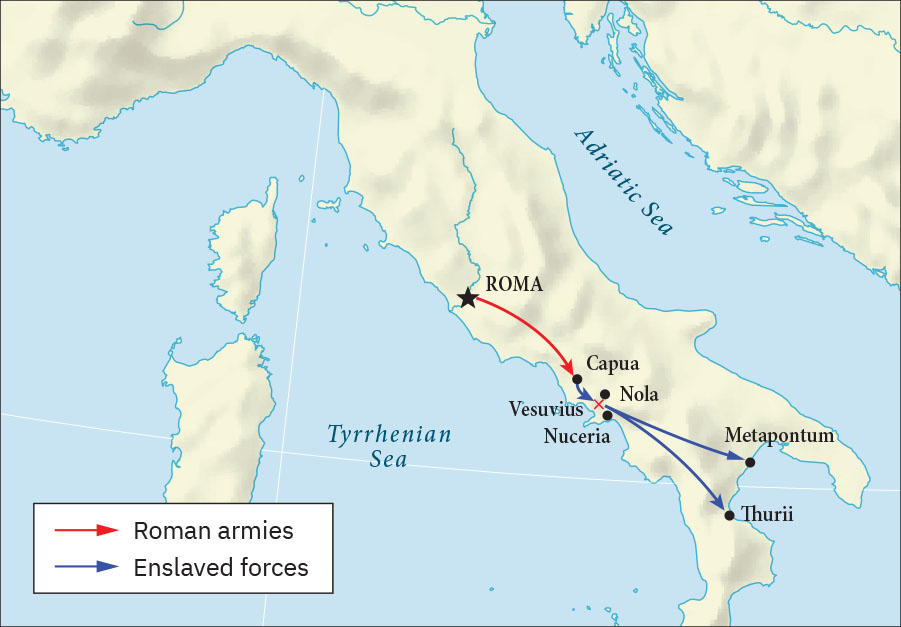
Enslaved people were subject to brutal treatment, and a series of revolts illustrates their efforts to seek freedom. In the late second century BCE, rebellions in Sicily inspired uprisings elsewhere in the Mediterranean, notably in the Greek mines. A few decades later, Spartacus instigated the most famous slave revolt. Originally from Thrace or Greece, Spartacus was enslaved after being captured in battle and was trained as a gladiator in Capua in central Italy. In 73 BCE, he planned to escape, along with a substantial number of other enslaved people. Though their original plan may have been only to get away, they took up weapons and fought for their freedom. Spartacus eventually raised an army of more than seventy thousand and defeated a number of armies sent by the Roman Senate. Finally, the Roman general Crassus defeated Spartacus in battle, putting an end to the revolt in 71 BCE (Figure 7.7). However, Spartacus’s rebellion was the tipping point. Following these violent conflicts, there seems to have been some effort by Rome to avoid future revolts, as seen in the laws of Augustus that controlled the practice of manumission.
英語のヒント
奴隷にされた人々は残酷に扱われ、一連の反乱は、自由を求める彼らの努力を示している。紀元前2世紀末には、シチリアでの反乱が、地中海のほかの地域、とりわけギリシャの鉱山での蜂起を促した。それから数十年後、スパルタクスが最も有名な奴隷反乱を起こした。トラキアかギリシャの出身だったスパルタクスは、戦闘で捕らえられた後に奴隷にされ、イタリア中部のカプアで剣闘士として訓練された。紀元前73年、彼は相当数の仲間とともに脱走を計画した。当初の目的は逃げることだけだったかもしれないが、彼らは武器を取り、自由のために戦った。スパルタクスは、最終的に7万人を超える軍を集め、元老院が送り込んだいくつもの軍を破った。ついにローマの将軍クラッススが戦闘でスパルタクスを破り、紀元前71年に反乱を終わらせた(図7.7)。しかし、この反乱は転換点となった。こうした激しい衝突の後、ローマは将来の反乱を避けるために、何らかの努力をしたように見える。奴隷解放の慣行を統制したアウグストゥスの法律にも、それが表れている。
Spartacus’s Revolt.スパルタクスの反乱。
(attribution: Copyright Rice University, OpenStax, under CC BY 4.0 license) · CC BY 4.0
Figure 7.7 Spartacus’s revolt began in 73 BCE, in Capua in central Italy. As more enslaved people were recruited to the cause, Rome sent armies to subdue them. The rebels were besieged on the slopes of Mount Vesuvius but were able to outwit their opponents, defeat the initial Roman forces sent against them, and eventually expand their raiding territory farther south. (attribution: Copyright Rice University, OpenStax, under CC BY 4.0 license)
図7.7 スパルタクスの反乱は、紀元前73年にイタリア中部のカプアで始まった。さらに多くの奴隷が反乱に加わると、ローマは鎮圧のために軍を派遣した。反乱軍はヴェスヴィオ山の斜面で包囲されたが、敵を出し抜き、最初に送られたローマ軍を破り、やがて襲撃する地域をさらに南へ広げた。(出典:Copyright Rice University, OpenStax、CC BY 4.0)