第3章初期文明と都市社会Early Civilizations and Urban Societies
Society and Religion in Ancient Mesopotamia古代メソポタミアの社会と宗教
Thanks to the preservation of cuneiform clay tablets and the discovery and translation of law codes and works of literature, historians have at their disposal a wealth of information about Mesopotamian society. The study of these documents and the archaeological excavations carried out in Mesopotamia have allowed them to reconstruct the empire’s economy.
英語のヒント
楔形文字の粘土板が保存され、法典や文学作品が発見・翻訳されたおかげで、歴史家はメソポタミア社会について豊富な情報を利用できる。これらの文書の研究と現地の考古学的発掘によって、帝国の経済の姿を復元できるようになった。
We know now that temples and royal palaces were not merely princely residences and places for religious rituals; they also functioned as economic redistribution centers. For example, agricultural goods were collected from farmers as taxes by civic and religious officials, who then stored them to provide payments to the artisans and merchants they employed. Palaces and temples thus needed to possess massive storage facilities. Scribes kept records in cuneiform of all the goods collected and distributed by these institutions. City gates served as areas where farmers, artisans, and merchants could congregate and exchange goods. Precious metals such as gold often served as a medium of exchange, but these goods had to be weighed and measured during commercial exchanges, since coinage and money as we understand it today did not emerge until the Iron Age, a millennium later.
英語のヒント
神殿と王宮は、君主の住居や宗教儀礼の場であるだけでなく、経済的な再分配の中心としても機能していた。たとえば、都市や宗教の役人が農民から税として農産物を集め、保管し、雇っている職人や商人への支払いに使った。このため、王宮と神殿には大規模な貯蔵施設が必要だった。書記は、集められ、分配された物資をすべて楔形文字で記録した。都市の門は、農民、職人、商人が集まって物を交換する場所となった。金などの貴金属は交換手段として使われることが多かったが、取引のたびに重さや量を測る必要があった。現在の意味での貨幣や硬貨が現れるのは、1000年後の鉄器時代だったからである。
Society in southern Mesopotamia was highly urban. About 70 to 80 percent of the population lived in cities, but not all were employed as artisans, merchants, or other traditional urban roles. Rather, agriculture and animal husbandry accounted for a majority of a city’s economic production. Much of the land was controlled by the temples, kings, or other powerful landowners and was worked by semi-free peasants who were tied to the land. The rest of the land included numerous small plots worked by the free peasants who made up about half the population. A much smaller portion was made up of enslaved people, typically prisoners of war or persons who had committed crimes or gone into debt. A man could sell his own children into slavery to cover a debt.
英語のヒント
メソポタミア南部の社会は、都市への集中度が高かった。人口の約70~80%が都市に住んだが、全員が職人や商人など、典型的な都市の仕事をしていたわけではない。むしろ、都市の経済生産の大半を占めたのは、農耕と畜産だった。土地の多くは神殿、王、有力地主が支配し、土地に縛られた半自由の農民が耕した。残りは多数の小区画からなり、人口の約半数を占める自由農民が耕した。奴隷にされた人々の割合は、それよりはるかに小さかった。一般に戦争捕虜、犯罪を犯した人、借金を負った人である。男性は、借金を返すため自分の子どもを奴隷として売ることもできた。
Much of the hard labor performed in the fields was done by men and boys, while the wives, mothers, and daughters of merchants and artisans were sometimes fully engaged in running family businesses. Cuneiform tablets tell us that women oversaw the business affairs of their families, especially when husbands were merchants who often traveled far from home. For example, cuneiform tablets from circa 1900 BCE show that merchants from Ashur in northern Mesopotamia conducted trade with central Anatolia and wrote letters to their female family members back home. Women were also engaged in the production of textiles like wool and linen. They not only produced these textiles in workshops with their own hands, but some appear to have held managerial positions within the textile industry.
英語のヒント
畑での重労働の多くは男性や少年が担ったが、商人や職人の妻、母、娘が、家業の経営に全面的に携わることもあった。粘土板からは、特に商人の夫が遠くへ出かける時、女性が家の商売を取り仕切ったことが分かる。たとえば紀元前1900年頃の粘土板には、メソポタミア北部アッシュルの商人が、アナトリア中央部と交易し、故郷の家族の女性へ手紙を書いたことが記される。女性は羊毛や亜麻の織物の生産にも携わった。工房で自ら織物を作るだけでなく、織物産業で管理職に就いた女性もいたらしい。
Free peasant farmers, artisans, and merchants were all commoners. This put them in a higher social position than the semi-free peasants and slaves but lower than the elite nobility, who made up a very small percentage of the population and whose ranks included priests, official scribes, and military leaders. This aristocratic elite often received land in payment for their services to the kings and collected rents in kind from their peasant tenants. Social distinctions were also reflected in the law. For example, aspects of Hammurabi’s law code called for punishments for causing physical harm to another to be equal to the harm inflicted. This principle is best summarized in the line “an eye for an eye and a tooth for a tooth.” However, the principle applied only to victims and perpetrators of the same social class. An aristocrat convicted of the murder of a fellow noble paid with their life, while an aristocrat who harmed or murdered a commoner might be required only to pay a fine.
英語のヒント
自由農民、職人、商人は平民であり、半自由農民や奴隷より高く、貴族層より低い地位にあった。貴族は人口のごく少数で、神官、公的な書記、軍事指導者を含んだ。彼らは王への奉仕の報酬として土地を受け取ることが多く、小作農から現物の地代を徴収した。社会的な違いは法にも表れた。たとえばハンムラビ法典には、他者への身体的損害に対し、与えた損害と等しい刑罰を科す条項がある。「目には目を、歯には歯を」が、その原則をよく表す。しかし、これは被害者と加害者が同じ階級の場合に限られた。同じ貴族を殺した貴族は命で償ったが、平民を傷つけたり殺したりした貴族は、罰金だけで済むことがあった。
Men and women were not equal under the Code of Hammurabi. A man was free to have multiple wives and divorce a wife at will, whereas a woman could divorce her husband only if she could prove he had been unkind to her without reason. However, a woman from a family of means could protect her position in a marriage if her family put up a dowry, which could be land or goods. Upon marriage, the husband obtained the dowry, but if he divorced or was unkind to his wife, he had to return it to her and her family.
英語のヒント
ハンムラビ法典の下では、男女は平等ではなかった。男性は複数の妻を持ち、望めば離婚できたが、女性が離婚できるのは、夫が理由なく不当に扱ったことを証明できる場合だけだった。しかし、裕福な家の女性は、実家が土地や物品を持参財として出せば、婚姻内での立場を守れた。結婚時に夫が持参財を受け取るが、離婚したり妻を不当に扱ったりすれば、妻とその家族へ返す必要があった。
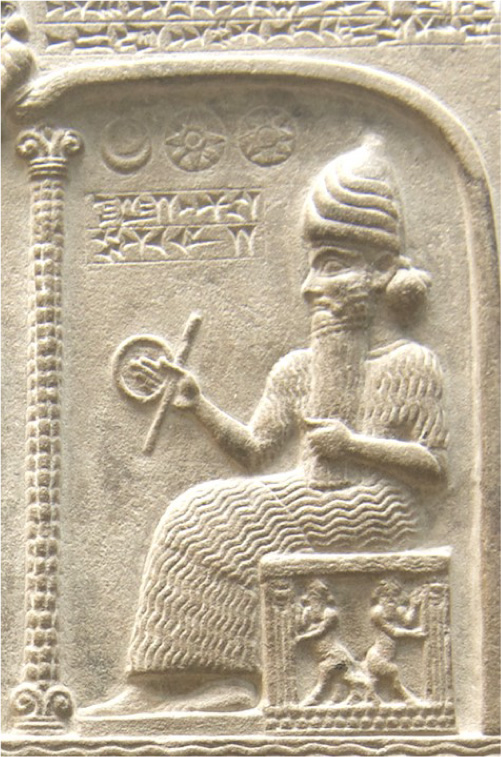
Cuneiform tablets have also allowed historians to read stories about the gods and heroes of Mesopotamian cultures. Mesopotamians revered many different gods associated with forces of nature. These were anthropomorphic deities who not only had divine powers but also frequently acted on very human impulses like anger, fear, annoyance, and lust. Examples include Utu, the god of the sun (Figure 3.15); Inanna (known to the Akkadians as Ishtar), the goddess of fertility; and Enlil (whose equivalent in other Mesopotamian cultures was Marduk), the god of wind and rain. The ancient Mesopotamians held that the gods were visible in the sky as heavenly bodies like stars, the moon, the sun, and the planets. This belief led them to pay close attention to these bodies, and over time, they developed a sophisticated understanding of their movement. This knowledge allowed them to predict astronomical events like eclipses and informed their development of a twelve-month calendar.
英語のヒント
楔形文字の粘土板によって、メソポタミアの神々や英雄の物語も読めるようになった。人々は自然の力と結び付く多くの神を崇敬した。これらは人間の姿を持ち、神的な力だけでなく、怒り、恐れ、いら立ち、欲情といった、人間らしい衝動によって動くことも多かった。太陽神ウトゥ(図3.15)、豊穣の女神イナンナ(アッカド人のイシュタル)、風雨の神エンリル(ほかのメソポタミア文化のマルドゥクに相当する)がその例である。古代メソポタミア人は、神々が星、月、太陽、惑星などの天体として空に見えると考えた。そのため天体を注意深く観察し、次第にその運動を高度に理解するようになった。この知識によって、日食や月食などの天文現象を予測でき、12か月の暦も発達した。
The God Utu.神ウトゥ。
(credit: "Tablet of Shamash" by “Katolophyromai”/Wikimedia Commons, CC0 1.0) · CC0 1.0
Figure 3.15 This limestone relief of the Mesopotamian god Utu (known as Shamash among the Akkadians) is part of the larger Tablet of Shamash created in the early ninth century BCE. Here Utu is shown seated, holding the rod-and-ring, an ancient symbol reflecting the balance of power between the palace and the temple. (credit: "Tablet of Shamash" by “Katolophyromai”/Wikimedia Commons, CC0 1.0)
図3.15 メソポタミアの神ウトゥ(アッカド人のシャマシュ)の石灰岩浮彫。紀元前9世紀初めに作られた「シャマシュの石板」の一部である。ウトゥは、宮殿と神殿の力の均衡を表す古代の象徴、棒と輪を持って座っている。(出典:「Katolophyromai」/Wikimedia Commons「Tablet of Shamash」、CC0 1.0)
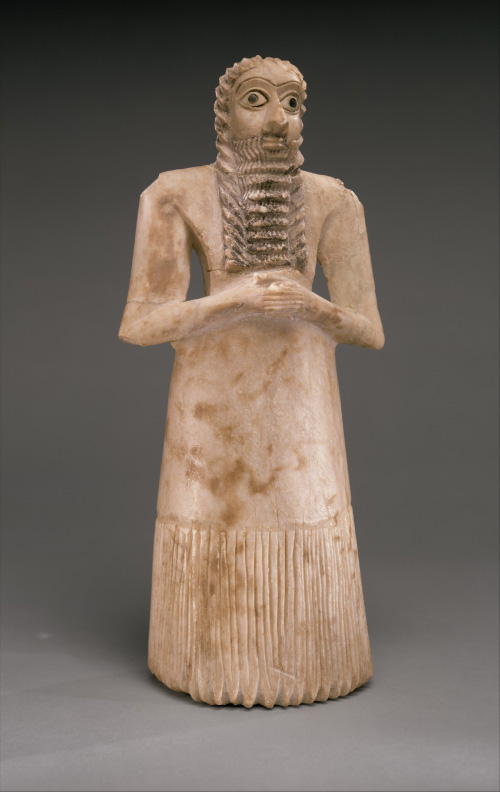
People in Mesopotamia believed human beings were created to serve the gods (Figure 3.16). They were expected to supply the gods with food through the sacrifice of sheep and cattle in religious rituals, and to honor them with temples, religious songs or hymns, and expensive gifts. People sought divine support from their gods. But they also feared that their worship might be insufficient and anger the deity. When that happened, the gods could bring death and devastation through floods and pestilence. Stories of gods wreaking great destruction, sometimes for petty reasons, are common in Mesopotamian myths. For example, in one Sumerian myth, the storm god Enlil nearly destroyed the entire human race with a flood when the noise made by humans annoyed him and kept him from sleep.
英語のヒント
メソポタミアの人々は、人間は神々に仕えるために作られたと信じていた(図3.16)。宗教儀礼でヒツジやウシを供犠として捧げて神々に食料を供給し、神殿、宗教的な歌や賛歌、高価な贈り物で敬うことが求められた。人々は神々の助けを求めたが、礼拝が不十分で神を怒らせることも恐れた。怒れば神々は、洪水や疫病によって死と荒廃をもたらしかねなかった。時には些細な理由で神々が大きな破壊を起こす物語は、メソポタミア神話によく見られる。あるシュメール神話では、人間の騒音にいら立ち、眠りを妨げられた嵐の神エンリルが、洪水で人類をほぼ滅ぼした。
A Sumerian Worshiper.シュメールの礼拝者。
(credit: "Standing male worshiper" by Fletcher Fund, 1940/The Metropolitan Museum of Art, Public Domain) · Public Domain
Figure 3.16 This one-foot-tall Sumerian statue of a worshiper with clasped hands from circa 2900–2600 BCE was placed in a temple to perpetually worship the god to whom it was dedicated. (credit: "Standing male worshiper" by Fletcher Fund, 1940/The Metropolitan Museum of Art, Public Domain)
図3.16 紀元前2900~2600年頃の、手を組むシュメールの礼拝者像。高さは1フィートで、奉献先の神を永遠に礼拝するため、神殿に置かれた。(出典:Fletcher Fund、1940年/メトロポリタン美術館「Standing male worshiper」、パブリックドメイン)
The ancient Mesopotamians’ belief that the gods were fickle, destructive, and easily stirred to anger is one reason many historians believe they had a generally pessimistic worldview. From the literature they left behind, we can see that while they hoped for the best, they were often resigned to accept the worst. Given the environment in which Mesopotamian civilization emerged, this pessimism is somewhat understandable. River flooding was common and could often be unpredictable and destructive. Wars between city-states and the destruction that comes with conflict were also common. Life was difficult in this unforgiving world, and the profiles of the various gods of the Mesopotamians reflect this harsh reality.
英語のヒント
神々は気まぐれで、破壊的で、怒りやすいという信仰は、古代メソポタミア人が全般に悲観的な世界観を持っていた、と多くの歴史家が考える理由の一つである。残された文学からは、最善を願いながら、最悪を受け入れる覚悟もしていたことがうかがえる。文明の生まれた環境を考えれば、この悲観主義には理解できる面がある。川の洪水は頻繁で、予測できず、破壊的なことも多かった。都市国家間の戦争や、それに伴う破壊もよく起こった。この容赦のない世界で暮らしは厳しく、さまざまな神々の性格は、その過酷な現実を映している。
Evidence of Mesopotamians’ pessimism is also present in their view of the afterlife. In their religion, after death all people spent eternity in a shadowy underworld sometimes called “the land of no return.” Descriptions of this place differ somewhat in the details, but the common understanding was that it was a gloomy and frightening place where the dead were consumed by sorrow, eating dust and clay and longing pitifully and futilely to return to the land of the living.
英語のヒント
メソポタミア人の悲観主義は、死後の世界観にも表れる。その宗教では、死後は誰もが、「帰らずの地」とも呼ばれる暗い地下世界で永遠を過ごす。細部の描写には違いがあるが、一般には、死者が悲しみに包まれ、塵や粘土を食べ、生者の世界へ戻りたいと哀れにもむなしく願い続ける、陰鬱で恐ろしい場所と理解された。