第6章地中海の人々Mediterranean Peoples
Hellenistic Cultureヘレニズム文化
A characteristic cultural feature of the Hellenistic period was the blending of Greek and other cultures of the former Persian Empire. The Seleucid and Ptolemaic dynasties both employed Greeks and Macedonians as soldiers and bureaucrats in their empires. Alexander the Great and subsequent Hellenistic kings founded Greek cities in the former Persian Empire for Greek and Macedonian colonists, often naming them in honor of themselves or their queens. These cities included the institutions of the Greek cities of their homeland—temples to Greek gods, theaters, agora (marketplaces), and gymnasia—so the colonists could feel at home in their new environment. At the site of Ai Khanum in modern Afghanistan, archaeologists have uncovered the impressive remains of one such Hellenistic city with a gymnasium.
英語のヒント
ヘレニズム時代の特徴的な文化現象は、ギリシア文化と旧ペルシア帝国のほかの文化との混合だった。セレウコス朝もプトレマイオス朝も、領内の兵士や官僚にギリシア人・マケドニア人を用いた。アレクサンドロス大王と、後のヘレニズム諸王は、ギリシアやマケドニアからの植民者のため、旧ペルシア領にギリシア都市を建設した。自分や王妃の名にちなんで都市を名付けることも多かった。これらの都市には、ギリシアの神々の神殿、劇場、アゴラ(市場)、体育施設など、故国の都市にあった施設が備えられ、植民者は新しい土地でも故郷のように暮らせた。現在のアフガニスタンにあるアイ・ハヌムで、考古学者は体育施設を持つこの種のヘレニズム都市の、見事な遺構を発掘した。
Alexandria in Egypt, founded by Alexander himself in 331 BCE, was the capital of the Ptolemaic kingdom and the largest Hellenistic city, with a population that reached one million. There the Ptolemies founded the Museon, or “home of the Muses,” from which the term “museum” derives. They modeled this on Aristotle’s Lyceum, as a center for scientific research and literary studies. These same kings also patronized the Alexandrian Library, where they assembled the largest collection of books in the ancient world. Antioch, in today’s southeastern Turkey, was the largest city of the Seleucid kingdom, with a population of half a million. In cities such as Alexandria and Antioch, the Greek-speaking population became integrated with the indigenous population.
英語のヒント
前331年にアレクサンドロス自身が建てたエジプトのアレクサンドリアは、プトレマイオス朝の首都で、人口100万人に達した最大のヘレニズム都市だった。そこでプトレマイオス家は、ムーセイオン、つまり「ムーサたちの館」を創設した。「ミュージアム」という語はここに由来する。アリストテレスのリュケイオンを手本とし、科学研究と文学研究の中心にしたのである。同じ王たちはアレクサンドリア図書館も保護し、古代世界最大の書物のコレクションを集めた。現在のトルコ南東部にあるアンティオキアは、人口50万人を擁するセレウコス朝最大の都市だった。アレクサンドリアやアンティオキアなどでは、ギリシア語を話す人びとが、もともとの住民と一体化していった。
Most Greek cities in this period were no longer independent since they were usually under the control of one of the Hellenistic kingdoms. The city-states of the Achaean and Aetolian Leagues in Greece were the exception, fiercely maintaining their independence against the Antigonid rulers of Macedon. Having lost the right of self-government, many Greeks in cities under the rule of kings no longer focused on politics and diplomacy but turned to the search for personal happiness. New religions emerged that promised earthly contentment and eternal life and combined Greek and non-Greek elements. For example, the worship of the Egyptian goddess Isis became common in many Hellenistic cities.
英語のヒント
この時期、ギリシア都市の大半は、いずれかのヘレニズム王国の支配下にあり、もはや独立していなかった。例外はギリシアのアカイア同盟とアイトリア同盟の都市国家で、マケドニアのアンティゴノス朝に対して強く独立を守った。王の支配下にある都市では、自治の権利を失った多くのギリシア人が、政治や外交に関心を集中するのをやめ、個人の幸福を求めるようになった。現世の満足と永遠の生命を約束し、ギリシア的要素と非ギリシア的要素を合わせた新しい宗教が現れた。例えばエジプトの女神イシスへの信仰は、多くのヘレニズム都市に広まった。
Mithras was a Persian sun god worshiped by the Medes, but in the second century BCE, Greeks in Hellenistic cities came to believe Mithras would lead them, too, to eternal life. His followers built special chapels decorated with symbols whose meaning is still disputed. The emphasis on secret religious rituals, or mysteries, about which followers were sworn to silence, lends the worship of Isis and Mithras in this period the name mystery religions (Figure 6.27).
英語のヒント
ミトラスはメディア人が崇拝したペルシアの太陽神だったが、前2世紀、ヘレニズム都市のギリシア人は、この神が自分たちも永遠の生命へ導くと信じるようになった。信者は特別な礼拝所を建て、今日でも意味が議論されている象徴で飾った。信者が秘密を守ると誓った宗教儀礼、すなわち秘儀を重視したことから、この時期のイシスやミトラスへの信仰は「密儀宗教」と呼ばれる(図6.27)。
Mithras.ミトラス
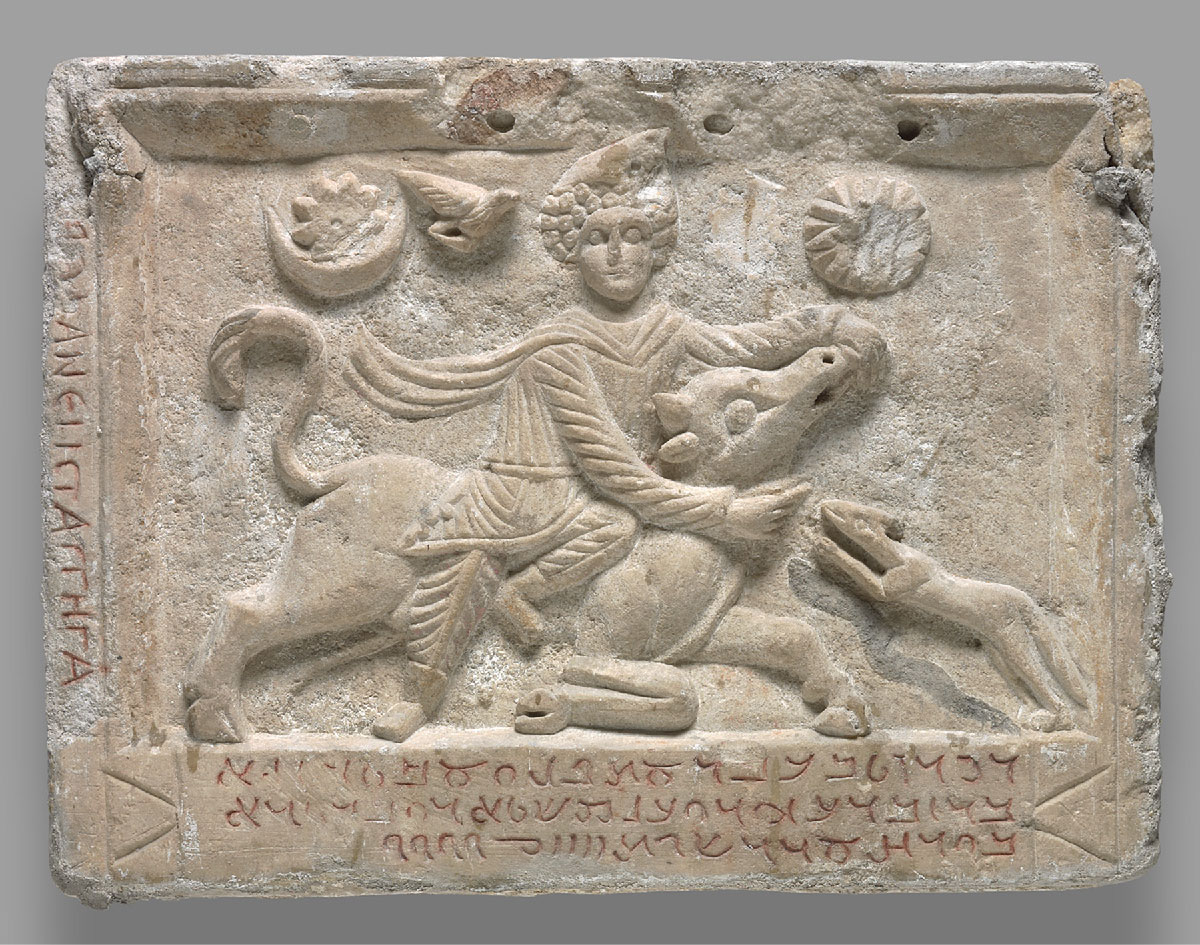
(credit: modification of work “Cult Relief of Mithras Slaying the Bull (Tauroctony)” by Yale University Gallery/Wikimedia Commons, CC0 1.0) · CC0 1.0
Figure 6.27 This stone relief from the second century CE depicts the Persian sun god Mithras, who became the center of a mystery religion. (credit: modification of work “Cult Relief of Mithras Slaying the Bull (Tauroctony)” by Yale University Gallery/Wikimedia Commons, CC0 1.0)
図6.27 後2世紀のこの石の浮彫りは、密儀宗教の中心となったペルシアの太陽神ミトラスを表している。(出典: 原作品を加工:“Cult Relief of Mithras Slaying the Bull (Tauroctony)”/Yale University Gallery/Wikimedia Commons, CC0 1.0)
Another religion practiced in Hellenistic cities was Judaism, whose followers included migrant Jewish people and new converts. By the second century BCE, the Hebrew Bible had been translated into Greek under the Ptolemies, since ancient Judea was within their control for much of the Hellenistic period and many Jewish people had immigrated to Alexandria.
英語のヒント
ヘレニズム都市で実践された別の宗教がユダヤ教で、移住したユダヤ人だけでなく新しい改宗者も信者に含まれた。古代ユダヤはヘレニズム時代のかなりの期間、プトレマイオス朝の支配下にあり、多くのユダヤ人がアレクサンドリアへ移住していた。そのため同王朝のもとで、前2世紀までにヘブライ聖書がギリシア語へ翻訳された。
Some Greeks preferred new philosophies to religion as a means to achieve happiness. Hellenistic philosophy emphasized the search for internal peace and contentment. Stoicism, for example, maintained that the universe was governed by divine reason (Logos), which determined the fate of all people. Happiness therefore resulted from learning how to cope with life and accepting fate while avoiding extreme negative emotions such as fear and anger. Epicureans, however, maintained that the key to happiness was to avoid physical and mental pain by pursuing pleasure. The founders of these two philosophical schools, Zeno and Epicurus respectively, both lived in the early third century BCE and taught in Athens, which continued to be a center of learning in this period. The Stoics were so named because Zeno instructed his students in the stoa poikile, or “painted porch” in the Athenian agora. The mystery religions and philosophies of the Hellenistic era continued to flourish as these cities became incorporated into the expanding Roman Empire.
英語のヒント
一部のギリシア人は、幸福を得る手段として宗教より新しい哲学を好んだ。ヘレニズム哲学は、内面の平安と満足を求めることを重視した。例えばストア派は、宇宙が神的な理性(ロゴス)によって支配され、それが全人類の運命を決めると考えた。そのため、恐れや怒りなど極端な否定的感情を避けつつ、人生に対処し、運命を受け入れる方法を学ぶことから幸福が生まれるとした。これに対しエピクロス派は、快楽を求めて心身の苦痛を避けることが幸福の鍵だと考えた。それぞれの学派の創始者、ゼノンとエピクロスはともに前3世紀初めに生き、この時代も学問の中心だったアテネで教えた。ストア派の名は、ゼノンがアテネのアゴラにあったストア・ポイキレ、つまり「彩色柱廊」で弟子に教えたことに由来する。ヘレニズム時代の密儀宗教や哲学は、これらの都市が拡大するローマ帝国に組み込まれていくなかでも、繁栄を続けた。
Section Summaryこの節のまとめ
By 338 BCE, King Philip II’s empire of Macedon had become the ruling power in Greece. Philip’s son Alexander the Great adopted his father’s plan to unite the Greek city-states in a war of revenge against the Persian Empire. He defeated the Persians at the battles of Issus (333 BCE) and Gaugamela (330 BCE), and after the assassination of the Persian king Darius III, he claimed the Persian throne for himself and advanced deep into central Asia and India. After his own soldiers mutinied, however, Alexander withdrew to Babylon, where he died in 323 BCE.
英語のヒント
前338年までに、フィリッポス2世のマケドニア帝国がギリシアの支配勢力となった。その息子アレクサンドロス大王は、ギリシア都市国家をまとめてペルシア帝国への復讐戦争を行うという父の計画を引き継いだ。イッソス(前333年)とガウガメラ(前330年)でペルシア軍を破り、ペルシア王ダレイオス3世が暗殺されると、自ら王位を主張し、中央アジアとインドの奥へ進んだ。しかし兵士たちが反抗したためバビロンへ戻り、前323年に死んだ。
Alexander’s generals and their children competed for control of his empire between 323 BCE and 272 BCE. The descendants of Alexander’s generals, Antigonus, Seleucus, and Ptolemy, ruled over separate kingdoms in Macedon and Greece, western and central Asia, and Egypt, building new Greek cities for their Greek colonists. Alexandria in Egypt, the largest Hellenistic city, was a center of Greek science and literature, with its massive library and museum. Having lost sovereignty and self-government, many Greeks sought personal happiness through new philosophies such as Epicureanism and Stoicism.
英語のヒント
前323~前272年、アレクサンドロスの将軍たちとその子どもたちは帝国の支配を争った。将軍アンティゴノス、セレウコス、プトレマイオスの子孫は、マケドニアとギリシア、西・中央アジア、エジプトの別々の王国を治め、ギリシアからの植民者のために新しいギリシア都市を建てた。最大のヘレニズム都市であるエジプトのアレクサンドリアは、巨大な図書館とムーセイオンを備え、ギリシアの科学と文学の中心だった。主権と自治を失った多くのギリシア人は、エピクロス派やストア派などの新しい哲学によって、個人の幸福を求めた。