第6章地中海の人々Mediterranean Peoples
The Rise and Organization of Athensアテネの台頭と組織
Athens, like Sparta, developed its own system of government in the Archaic period. Uniquely large among Greek city-states, Athens had long enclosed all the land of Attica, which included several mountain valleys. It was able to eventually develop into a militarily powerful democratic state in which all adult male citizens could participate in government, though “citizenship” was a restricted concept, and because only males could participate, it was by nature a limited democracy.
英語のヒント
アテネもスパルタと同じく、アルカイック期に独自の政治制度を発達させた。ギリシアの都市国家としては例外的に大きく、いくつもの山あいの谷を含むアッティカ全域を、古くから領土に収めていた。やがて軍事的に強力な民主政国家へと発展し、成人男性市民は全員、政治に参加できるようになった。ただし「市民」と認められる範囲は限られ、参加できるのも男性だけだったので、もともと限定的な民主政だった。
The roots of Athenian democracy are long and deep, however, and its democratic institutions evolved over centuries before reaching their fullest expression in the fifth century BCE. It was likely the growing prosperity of Athenians in the eighth century that had set Athens on this path. As more families became prosperous, they demanded greater say in the functioning of the city-state. By the seventh century BCE, Athens had an assembly allowing citizens (free adult males) to gather and discuss the affairs of the state. However, as the rising prosperity of Athenians stalled and economic hardship loomed by the end of the century, the durability of the fledgling democracy seemed in doubt. Attempts to solve the economic problems by adjusting the legal code, most notably by the legislator Draco (from whose name we get the modern term “draconian”), had little effect, though codifying the law in written form brought more clarity to the legal system.
英語のヒント
しかしアテネ民主政の根は長く深く、その制度は数世紀にわたって発展したのち、前5世紀にもっとも充実した姿を取った。アテネをこの道へ進ませたのは、おそらく前8世紀の市民の繁栄だった。豊かになる家族が増えるにつれ、都市国家の運営にもっと発言したいと要求するようになった。前7世紀までには、市民である自由身分の成人男性が集まって国の問題を議論する民会があった。ところが、この世紀末になると繁栄の拡大が止まり、経済的苦境が迫ったため、発展途上の民主政が持ちこたえられるかは疑わしくなった。法律を改めて経済問題を解決しようとする試み、とくに立法者ドラコンの試みは、ほとんど効果を上げなかった。現代の「苛酷な」という英語draconianは、彼の名に由来する。それでも法を成文化したことは、法制度をより明確にする効果を持った。
With the once-thriving middle class slipping into bankruptcy and sometimes slavery, civil war seemed inevitable. Disaster was avoided only with the appointment of Solon in 594 BCE to restore order. Solon came from a wealthy elite family, but he made it known that he would draft laws to benefit all Athenians, rich and poor. A poet, he used his songs to convey his ideas for these new laws (Figure 6.13).
英語のヒント
かつて繁栄した中間層が破産し、ときには奴隷にまで転落するなか、内戦は避けられないかに見えた。危機を回避したのは、前594年に秩序を回復するためソロンが任命されたことだった。ソロン自身は裕福な有力家系の出身だったが、富める者も貧しい者も含め、すべてのアテネ人に利益をもたらす法律を作ると明言した。詩人でもあった彼は、歌を通じて新しい法律についての考えを伝えた(図6.13)。
Solon.ソロン
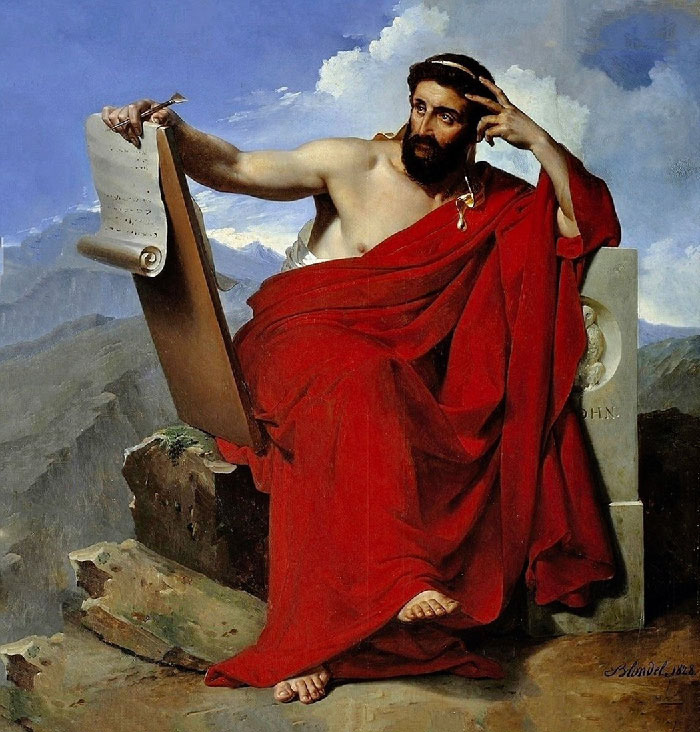
(credit: “Portrait of Solon Legislator and Poet of Athenes” by Musee de Picardie/Wikimedia Commons, Public Domain) · Public Domain
Figure 6.13 This idealized portrait in oils represents Solon, poet and legislator of Athens. It was made in the early nineteenth century by Merry-Joseph Blondel, a French painter of the Neoclassical school. (credit: “Portrait of Solon Legislator and Poet of Athenes” by Musee de Picardie/Wikimedia Commons, Public Domain)
図6.13 この理想化された油彩肖像画は、アテネの詩人・立法者ソロンを表している。19世紀初頭、新古典主義のフランス人画家メリ=ジョゼフ・ブロンデルが制作した。(出典: “Portrait of Solon Legislator and Poet of Athenes”/Musee de Picardie/Wikimedia Commons, パブリックドメイン)
One of Solon’s first measures was to declare that all debts Athenians owed one another were forgiven. Solon also made it law that no Athenian could be sold into slavery for failure to repay a loan. These decrees did much to provide relief to farmers struggling with debt who could now return to work the land. Under Solon’s new laws, each of Athens’s four traditional tribes chose one hundred of its members by lot, including commoners, to sit in the new Council of Four Hundred and run the government. There were still magistrates, but now Solon created the jury courts. All Athenians could appeal the ruling of a magistrate in court and have their cases heard by a jury of fellow citizens. Solon also set up a hierarchal system in which citizens were eligible for positions in government based on wealth instead of hereditary privilege. Wealth was measured by the amount of grain and olive oil a citizen’s land could produce. Only the wealthiest could serve as a magistrate, sit on the Council, and attend the Assembly and jury courts. Citizens with less wealth could participate in all these activities but could not serve as magistrates. The poorest could only attend the Assembly and the jury courts.
英語のヒント
ソロンの最初の施策の一つは、アテネ人同士のすべての債務を免除すると宣言することだった。また、借金を返せないという理由でアテネ人を奴隷として売ることを禁じた。これらの命令は借金に苦しむ農民を大いに救い、彼らは農地での仕事に戻れるようになった。ソロンの新法のもと、アテネの伝統的な四部族は、それぞれ平民を含む100人を抽選で選び、新設の四百人評議会に送り、政治を運営した。政務官は残ったが、ソロンは新たに陪審法廷を設けた。すべてのアテネ人は政務官の裁定に対して法廷へ不服を申し立て、同じ市民で構成される陪審に事件を審理してもらうことができた。さらにソロンは、世襲の特権ではなく財産によって公職に就く資格を定める、階層的な制度を作った。富は、市民の土地が生産できる穀物とオリーブ油の量で測られた。もっとも裕福な者だけが、政務官を務め、評議会に加わり、民会と陪審法廷に参加するという、すべての活動を行えた。それより財産の少ない市民も政務官以外には参加できた。もっとも貧しい者は、民会と陪審法廷への参加だけが認められた。
Solon’s reforms were not enough to end civil unrest, however. By 545 BCE, a relative of his named Pisistratus had seized power by force with his own private army and ruled as a tyrant with broad popular support. Pisistratus was reportedly a benevolent despot and very popular. He kept Solon’s reforms largely in place, and Athenians became accustomed to serving in Solon’s Council and in jury courts. They were actively engaged in self-government, thus setting the stage for the establishment of democracy. Pisistratus also encouraged the celebration of religious festivals and cults that united the people of Attica through a common religion. To further help the farmers Solon brought back, Pisistratus redistributed land so they could once again make a living.
英語のヒント
しかし、ソロンの改革だけでは市民の争乱を終わらせられなかった。前545年までに、親族のペイシストラトスが私兵を用いて実力で権力を奪い、広い民衆の支持を受けて僭主として支配した。彼は慈愛ある専制者だったと伝えられ、非常に人気があった。ソロンの改革をほぼ維持したため、アテネ人は評議会や陪審法廷で役割を果たすことに慣れていった。人びとは自治に積極的に関わり、民主政が成立する下地が作られた。ペイシストラトスは、共通の宗教によってアッティカの人びとを結び付ける祭礼や祭祀も奨励した。また、ソロンの施策で復帰した農民をさらに助けるため、土地を再分配し、彼らが再び生計を立てられるようにした。
After Pisistratus’s death, his sons tried to carry on as tyrants, but they lacked their father’s popularity. Around 509 BCE, an Athenian aristocrat named Cleisthenes persuaded the Spartans to intervene in Athens and overthrow these tyrants. The Spartans, however, set up a government of elites in Athens that did not include Cleisthenes. Consequently, he appealed to the common people living in the villages, or demes, to reject this pro-Spartan regime and establish a “democracy.” His appeal was successful, and Cleisthenes implemented reforms to Solon’s system of government. He replaced the Council of Four Hundred with one of five hundred and reorganized the Athenians into ten new tribes, including in each one villages from different parts of Attica. Every year, each tribe chose fifty members by lot to sit in the new Council. This reform served to unite the Athenians, since each tribe consisted of people from different parts of Attica who now had to work together politically. Each tribe’s delegation of fifty also served as presidents for part of the year and ran the day-to-day operation of the government.
英語のヒント
ペイシストラトスの死後、息子たちは僭主としての支配を続けようとしたが、父ほどの人気はなかった。前509年ごろ、アテネの貴族クレイステネスは、スパルタに介入を促し、僭主たちを倒させた。ところがスパルタは、クレイステネスを含まない有力者の政権をアテネに設けた。そこで彼は、デーモスと呼ばれる村々に住む平民に呼びかけ、親スパルタ政権を退けて「民主政」を作ろうと訴えた。訴えは実を結び、クレイステネスはソロンの政治制度に改革を加えた。四百人評議会を五百人評議会に替え、アテネ人を新しい十部族に編成し直した。各部族にはアッティカの異なる地域の村を含めた。毎年、各部族から50人を抽選で選んで新しい評議会に送った。異なる地域の人びとが同じ部族となり、政治で協力しなければならなくなったため、この改革はアテネ人の結束を促した。各部族の50人の代表団は、1年のうちの一定期間、当番として政治の日常業務を担った。
By the end of the Archaic period, Athens had developed a functioning direct democracy, which differs from modern republics in which citizens vote for representatives who sit in the legislature. All citizens could sit in the Athenian Assembly, which then was required to meet at least ten times a year. All laws had to be approved by the Assembly. Only the Assembly could declare war and approve treaties. Athens had a citizen body of thirty to forty thousand adult males in the Classical period, but only six thousand needed to convene for meetings of the Assembly. Citizens could also be chosen by lot to sit in the Council. Since they were permitted to serve for just two one-year terms over a lifetime, many Athenians had the opportunity to participate in the executive branch of government. All citizens also served on juries, which not only determined the guilt or innocence of the accused but also interpreted the way the law was applied. Women, enslaved people, and foreign residents could not participate. However, women of the citizen class were prominent in the public religious life of the city, serving as priestesses and in ceremonial roles in religious festivals.
英語のヒント
アルカイック期の終わりまでに、アテネでは実際に機能する直接民主政が発達していた。これは、市民が立法府に入る代表者を投票で選ぶ現代の共和政とは異なる。アテネでは全市民が民会に参加でき、当時、民会は少なくとも年10回開かれることになっていた。すべての法律は民会の承認を必要とし、宣戦布告と条約の承認も民会だけが行えた。古典期のアテネには3万~4万人の成人男性市民がいたが、民会の会合に必要なのは6,000人だった。市民は抽選で評議会の一員にも選ばれた。一生のうち1年の任期を2回までしか務められなかったため、多くのアテネ人に行政への参加の機会があった。すべての市民は陪審も務め、有罪か無罪かを判断するだけでなく、法律をどう適用するかも解釈した。女性、奴隷、在留外国人は参加できなかった。それでも市民階層の女性は、女祭司や宗教祭礼の儀式上の役割を担い、都市の公的な宗教生活で重要な位置を占めた。