第6章地中海の人々Mediterranean Peoples
6.2 Ancient Greece6.2 古代ギリシア
Learning Objectives学習の目標
By the end of this section, you will be able to:
この節を学ぶと、次のことができるようになる。
Identify the historical factors that shaped the development of the Greek city-state
ギリシアの都市国家の発展を形づくった歴史的要因を特定する。
Describe the evolution of the political, economic, and social systems of Athens and Sparta
アテネとスパルタの政治・経済・社会制度の変遷を説明する。
Discuss the alliances and hostilities among the Greek city-states during the Classical period
古典期のギリシア都市国家間の同盟と対立を論じる。
Identify the major accomplishments of Ancient Greek philosophy, literature, and art
古代ギリシアの哲学、文学、美術の主要な成果を特定する。
In the centuries following the collapse of the Bronze Age Mycenaean kingdoms around 1100 BCE, a dynamic new culture evolved in Iron Age Greece and the Aegean region. During this period, the Greek city-states developed innovative consensual governments. Free adult males participated in their own governance and voted to create laws and impose taxes. This system of government contrasted with the earlier monarchies of the ancient Near East, in which rulers claimed to govern their subjects through the will of the gods.
英語のヒント
前1100年ごろに青銅器時代のミケーネ諸王国が崩壊した後、数世紀のあいだに、鉄器時代のギリシアとエーゲ海地方では、活力に満ちた新しい文化が発展した。この時期、ギリシアの都市国家は、人びとの合意に基づく革新的な政治の仕組みを発達させた。自由身分の成人男性は、自分たちの統治に参加し、法律の制定や税の賦課について投票した。この政治制度は、神々の意思によって臣民を治めると支配者が主張した、それ以前の古代近東の君主政とは対照的だった。
The degree of political participation in the Greek city-states varied from monarchy and oligarchy, or government by a small group of wealthy elites, to democracy, literally “rule by the people,” a broader-based participation that eventually included both rich and poor adult males. These systems influenced Ancient Roman and European political thought through the centuries. The Greek Classical period (500–323 BCE) witnessed constant warfare among rival city-states, yet it was marked by the creation of enduring works of literature and art that inspired centuries of European artists and writers. Greek philosophers also subjected the human condition and the natural world to rational analysis, rejecting traditional beliefs and sacred myths.
英語のヒント
ギリシア都市国家で政治に参加できる範囲は、君主政や、少数の裕福な有力者が統治する寡頭政から、やがて豊かな者も貧しい者も成人男性であれば参加する、より広い基盤を持つ民主政までさまざまだった。民主政は文字どおりには「人民による支配」を意味する。こうした制度は、何世紀にもわたって古代ローマやヨーロッパの政治思想に影響した。ギリシアの古典期(前500~前323年)には、対立する都市国家のあいだで戦争が絶えなかった。その一方、この時代に生み出された長く残る文学や美術の作品は、ヨーロッパの芸術家や作家に何世紀にもわたって着想を与えた。ギリシアの哲学者も、伝統的な信仰や聖なる神話を退け、人間のあり方と自然界を理性的な分析にかけた。
Archaic Greeceアルカイック期のギリシア
The Greek Dark Ages (1100–800 BCE) persisted after the collapse of the Mycenaean civilization but began to recede around 800 BCE. From this point and for the next few centuries, Greece experienced a revival in which a unique and vibrant culture emerged and evolved into what we recognize today as Classical Greek civilization. This era, from 800 to 500 BCE, is called Archaic Greece after arche, Greek for “beginning.”
英語のヒント
ミケーネ文明の崩壊後、ギリシアの暗黒時代(前1100~前800年)は続いたが、前800年ごろになるとしだいに終わりを迎えた。そこから数世紀のあいだに、ギリシアは復興を経験し、独特で活気ある文化が出現した。それが発展して、今日私たちが古典ギリシア文明と認めるものになった。前800~前500年のこの時代は、「始まり」を意味するギリシア語アルケーにちなみ、アルカイック期ギリシアと呼ばれる。
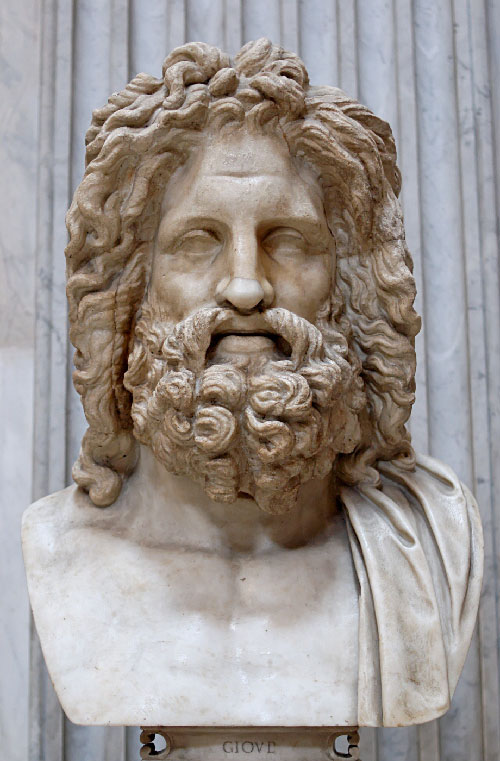
The Greek renaissance was marked by rapid population growth and the organization of valleys and islands into independent city-states, each known as a polis (Greek for city-state). Towns arose around a hill fortress or acropolis to which inhabitants could flee in times of danger. Each polis had its own government and religious cults, and each built monumental temples for the gods, such as the temple of Hera, wife of Zeus and protector of marriage and the home, at the city-state of Argos. Though politically disunited, the Greeks, who began to refer to themselves as Hellenes after the mythical king Hellen, did share a common language and religion. The most famous of their sacred sites were Delphi, near Mount Parnassus in central Greece and seat of the oracle of Apollo, the god of prophecy, and Olympia in southern Greece, sacred to Zeus, who ruled the pantheon of gods at Mount Olympus (Figure 6.9). Beginning in 776 BCE, according to Aristotle, Greeks traveled to Olympia every four years to compete in athletic contests in Zeus’s honor, the origin of the Olympic Games.
英語のヒント
ギリシアの再生を特徴づけたのは、急速な人口増加と、谷や島ごとに独立した都市国家が作られたことだった。都市国家はそれぞれポリスと呼ばれた。町は、危険なときに住民が逃げ込める丘上の砦、アクロポリスの周囲に発達した。各ポリスには独自の政権と祭祀があり、神々のために壮大な神殿を建てた。例えばアルゴスのポリスには、ゼウスの妻で、結婚と家庭の守護神であるヘラの神殿があった。政治的には分裂していたが、神話の王ヘレンにちなみ自らをヘレネスと呼び始めたギリシア人は、共通の言語と宗教を確かに持っていた。とくに有名な聖地は、ギリシア中部のパルナッソス山近くにあり、予言の神アポロンの神託所を擁するデルフォイと、ギリシア南部でゼウスに捧げられたオリュンピアだった。ゼウスはオリュンポス山の神々を統べる神である(図6.9)。アリストテレスによれば、前776年からギリシア人は4年ごとにオリュンピアを訪れ、ゼウスをたたえる運動競技で競い合った。これがオリンピックの起源である。
Zeus.ゼウス
(credit: “So-called “Zeus of Otricoli”. Marble, Roman copy after a Greek original from the 4th century” by “Jastrow”/Wikimedia Commons, Public Domain) · Public Domain
Figure 6.9 This larger-than-life marble bust of the Greek god Zeus is believed to be a Roman copy of a fourth-century BCE Greek original. It was found in Otricoli, Italy, in 1775. (credit: “So-called “Zeus of Otricoli”. Marble, Roman copy after a Greek original from the 4th century” by “Jastrow”/Wikimedia Commons, Public Domain)
図6.9 実物より大きいこの大理石のギリシア神ゼウスの胸像は、前4世紀のギリシアの原作をローマ時代に模刻したものと考えられる。1775年、イタリアのオトリーコリで見つかった。(出典: “So-called “Zeus of Otricoli”. Marble, Roman copy after a Greek original from the 4th century”/“Jastrow”/Wikimedia Commons, パブリックドメイン)
The start of the Archaic period also witnessed the reemergence of specialization in Greek society. Greek artists became more sophisticated and skilled in their work. They often copied artistic styles from Egypt and Phoenicia, where Greek merchants were engaging in long-distance trade. At the site of Al-Mina, along the Mediterranean coast in Syria where historians believe the Phoenician alphabet was first transmitted to the Greeks, Greek and Phoenician merchants exchanged goods. Far to the west, on the island of Ischia off the west coast of Italy, Greeks were competing with Phoenician merchants for trade with local peoples, whose iron ore was in strong demand. Thanks to their contact and trade with the Phoenicians, Greeks adapted the Phoenician alphabet to their own language, making an important innovation by adding vowels (a, e, i, o, u). The eighth century BCE thus witnessed the return of literacy and the end of the Aegean world’s relative isolation after the interlude of the Greek Dark Ages.
英語のヒント
アルカイック期の始まりには、ギリシア社会で仕事の専門化が再び進んだ。ギリシアの美術工芸家の仕事は、より洗練され、技量も向上した。ギリシア商人が長距離交易を行っていたエジプトやフェニキアの美術様式を、よく模倣したのである。シリアの地中海沿岸にあるアル・ミナでは、ギリシア商人とフェニキア商人が品物を交換した。歴史家は、この地でフェニキア文字が初めてギリシア人に伝わったと考えている。はるか西、イタリア西岸沖のイスキア島では、ギリシア人はフェニキア商人と競って地元の人びとと取引していた。当地の鉄鉱石に強い需要があったためである。フェニキア人との接触と交易を通じて、ギリシア人はフェニキア文字を自分たちの言語に合わせ、その際に母音(a、e、i、o、u)を加えるという重要な革新を行った。こうして前8世紀には、ギリシア暗黒時代という中断を経て、読み書きが復活し、エーゲ海世界の相対的な孤立も終わった。
The eighth century BCE was also the period in which the epic poems the Iliad and the Odyssey were composed, traditionally attributed to the blind poet Homer. While historians debate whether Homer was a historical or a legendary figure, they agree the epics originated in the songs of oral poets in the Greek Dark Ages. In the eighth century BCE, using the Greek alphabet, scribes wrote these stories down for the first time.
英語のヒント
前8世紀は、伝統的に盲目の詩人ホメロスの作とされる叙事詩『イリアス』と『オデュッセイア』が成立した時代でもある。ホメロスが実在の人物か伝説上の存在かについて歴史家は議論しているが、これらの叙事詩が、ギリシア暗黒時代に口頭で詩を伝えた人びとの歌に由来するという点では一致している。前8世紀、書記はギリシア文字を用い、これらの物語を初めて書き留めた。
As the population expanded during the Archaic period, a shortage of farmland brought dramatic changes. Many Greeks in search of land to farm left their homes and founded colonies along the shores of the Black Sea and the northern Aegean, in North Africa at Cyrene in Libya, and in southern Gaul (modern France) at Massalia (Marseille). The largest number were on the island of Sicily and in southern Italy, the region the Greeks referred to as Magna Graecia or “Greater Greece.” When Greeks established a colony, it became an independent polis with its own laws. The free adult males of the community divided the colony’s land into equal lots. Thus, a new idea developed in the colonies that citizenship in a community was associated with equality and participation in the governing of the state.
英語のヒント
アルカイック期に人口が増えると、農地不足が大きな変化をもたらした。耕す土地を求める多くのギリシア人が故郷を離れ、黒海沿岸やエーゲ海北部、北アフリカのリビアにあるキュレネ、そしてガリア南部、現在のフランスにあるマッサリア(マルセイユ)に植民市を築いた。もっとも多く建てられたのはシチリア島と南イタリアで、ギリシア人はこの地域をマグナ・グラエキア、つまり「大ギリシア」と呼んだ。ギリシア人が植民市を設けると、それは独自の法律を持つ独立したポリスとなった。共同体の自由身分の成人男性は、植民市の土地を等しい区画に分けた。こうして植民市では、共同体の市民であることが平等や国家統治への参加と結び付く、という新しい考えが生まれた。
In the society of Archaic Greece, the elite landowners, or aristoi, traditionally controlled the government and the priesthoods in the city-states. But thanks to the new ideas from the colonies, the common people, or kakoi, began demanding land and a voice in the governing of the polis. They were able to gain leverage in these negotiations because city-states needed troops in their wars for control of farmland. The nobility relied on the wealthier commoners, who could afford to equip themselves with iron weapons and armor. In some city-states, the aristoi and the kakoi were not able to resolve their differences peaceably. In such cases, a man who had strong popular support in the city would seize power and rule over the city. The Greeks referred to such populist leaders as tyrants.
英語のヒント
アルカイック期ギリシアでは、アリストイと呼ばれる有力な土地所有者が、伝統的に都市国家の政治と祭司職を独占していた。しかし植民市から新しい考えが伝わると、カコイと呼ばれる一般民衆は、土地とポリスの政治に発言する権利を求め始めた。都市国家は農地の支配をめぐる戦争に兵士を必要としていたので、民衆は交渉で影響力を得ることができた。貴族は、鉄製の武器や鎧を自費でそろえられる、比較的裕福な平民を頼りにしていたのである。都市国家によっては、アリストイとカコイが対立を平和的に解決できなかった。その場合、都市で強い民衆の支持を持つ人物が権力を奪って支配した。ギリシア人は、このように民衆の支持を背景とする指導者を僭主と呼んだ。
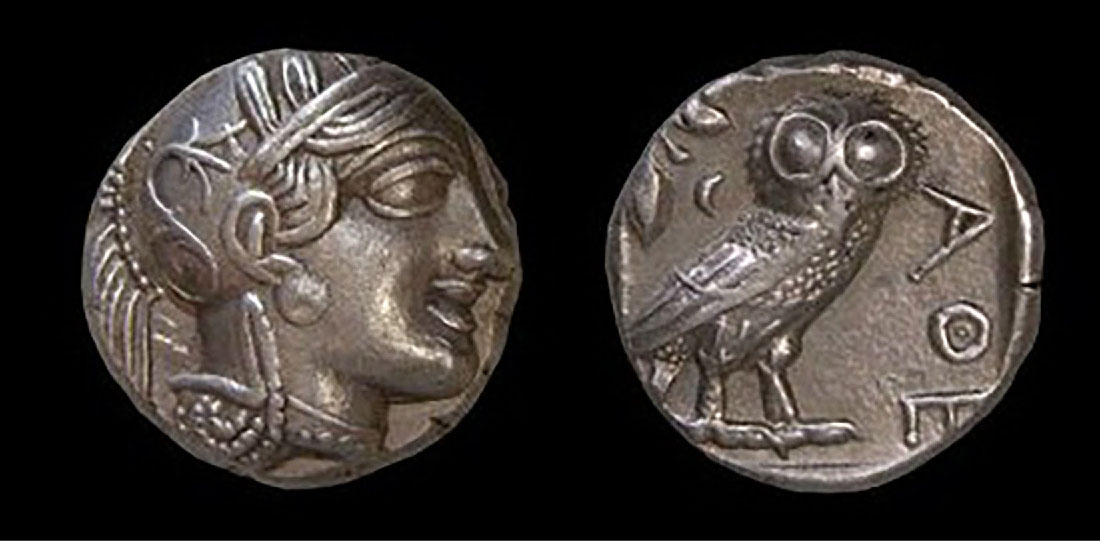
In the sixth century BCE, the difficulties caused by the land shortage were relieved by the invention of coinage. A century before, adopting a practice of the kings of Lydia in western Asia Minor (Turkey), Athens stamped silver pieces with the image of an owl, a symbol of wisdom often associated with the goddess Athena (See Figure 6.11). Instead of weighing precious metals to use as currency or arguing over the value of bartered goods to trade, merchants could use coins as a simple medium of exchange. The agora, or place of assembly in each city-state, thus became a marketplace to buy and sell goods. In the sixth century BCE, this rise of a market economy stimulated economic growth as farmers, artisans, and merchants discovered stronger incentives to produce and procure more goods for profit. For example, farmers learned how to produce more food with the land they already possessed rather than always seeking more land. The economic growth of this period is reflected in the many new temples the Greek city-states constructed then.
英語のヒント
前6世紀には、貨幣の発明によって土地不足のもたらす困難が和らいだ。その1世紀前、アテネは小アジア西部(トルコ)のリュディア王たちの慣行を取り入れ、銀片にフクロウの図柄を刻印した。フクロウは、女神アテナとしばしば結び付けられる知恵の象徴だった(図6.11参照)。商人は、貨幣として使う貴金属をそのつど量ったり、物々交換する品物の価値を言い争ったりする代わりに、簡単な交換手段として硬貨を使うことができた。こうして各都市国家の集会場であるアゴラは、品物を売買する市場になった。前6世紀には、この市場経済の発展が経済成長を促した。農民・職人・商人が、利益のためにより多くの品物を生産し、調達する強い動機を持つようになったためである。例えば農民は、常に土地を増やそうとする代わりに、すでに持つ土地からもっと多くの食料を作る方法を学んだ。この時代の経済成長は、ギリシアの都市国家が当時建てた多数の新しい神殿にも表れている。
Athenian Money.アテネの貨幣
(credit: “Athens owl coin” by “yuichi”/Wikimedia Commons, CC0 1.0) · CC0 1.0
Figure 6.11 This Athenian silver coin from the fifth century BCE depicts Athena on one side and an owl, Athena’s symbol, on the other. (credit: “Athens owl coin” by “yuichi”/Wikimedia Commons, CC0 1.0)
図6.11 この前5世紀のアテネの銀貨には、一方の面にアテナ、もう一方の面にアテナの象徴であるフクロウが描かれる。(出典: “Athens owl coin”/“yuichi”/Wikimedia Commons, CC0 1.0)