第6章地中海の人々Mediterranean Peoples
A Republic of Troubles問題を抱える共和国
Rome’s constant wars and conquests in the third and second centuries BCE created a host of social, economic, and political problems for the republic. The Roman people grew dissatisfied with the leadership of the Senate and the aristocratic elite, and they increasingly looked to strong military leaders to address the problems.
英語のヒント
前3~前2世紀に続いたローマの戦争と征服は、共和国に数多くの社会的・経済的・政治的な問題をもたらした。ローマの人びとは元老院と貴族層の指導に不満を深め、問題の解決を強力な軍事指導者に求めるようになっていった。
A number of factors contributed to these problems and transformations. From the foundation of the republic, most Roman citizens had owned and operated small family farms. Indeed, to serve as Roman soldiers, men had to own property. However, the Punic Wars had strained this traditional system. Roman soldiers were often away from home for long periods of time, leaving the women and children to maintain their holdings. When they ultimately did return, many found their property in another’s hands. Others decided to sell their neglected farms and move their families to the expanding city of Rome, where they joined the growing ranks of the landless working class known as the proletariat. By the first century BCE, the population of the city of Rome may have exceeded one million.
英語のヒント
こうした問題や変化には、いくつもの要因が作用していた。共和国の成立以来、ローマ市民の大部分は家族経営の小農場を所有し、耕していた。実際、ローマの兵士として務めるには、男性は財産を持たなければならなかった。しかしポエニ戦争は、この伝統的な仕組みに負担をかけた。ローマ兵は長期間家を空けることが多く、そのあいだ女性や子どもが農場を維持しなければならなかった。ようやく戻ると、自分の土地が他人のものになっていた者も多かった。荒れた農場を売り、拡大を続けるローマの都市へ家族を連れて移ると決めた者もいた。彼らは、プロレタリアートと呼ばれる土地を持たない労働者層に加わり、その人数は増えていった。前1世紀までに、ローマ市の人口は100万人を超えていた可能性がある。
The growth of the proletariat disrupted the Roman political system and invited large-scale corruption. The traditional patron-client system collapsed, since landless Romans didn’t need the assistance of patrons to settle property disputes. Politicians therefore had to win the support of the urban masses with free food and entertainment, such as gladiatorial combats, and promises to create jobs through public works projects. Some even organized the poor into violent gangs to frighten their political rivals. These conditions resulted in widespread dissatisfaction with the government of the republic.
英語のヒント
プロレタリアートの増加はローマの政治制度を揺さぶり、大規模な腐敗を招いた。土地を持たないローマ人は財産をめぐる争いの解決にパトロヌスの援助を必要としなくなり、従来のパトロヌスとクリエンテスの仕組みは崩れた。そのため政治家は、食料の無料配給や剣闘士の試合などの娯楽、公共事業で雇用を生むという約束によって、都市の大衆の支持を得なければならなくなった。政治上のライバルを脅すため、貧しい人びとを暴力集団に組織する者さえいた。こうした状況は、共和政の政府に対する広範な不満を生んだ。
To meet the growing demand for grain, wine, and olive oil to feed the urban population, large landowners bought land from poor Roman farmers and leased public land from the Roman state to create large plantations. These were very profitable because landowners could cheaply purchase enslaved people, who were plentiful. For example, after the defeat of Perseus of Macedon in 168 BCE, the Romans enslaved 150,000 people from Epirus as punishment since this kingdom had been allied with Perseus in the war. Pirates from Cilicia (in southeast Turkey) and from the Greek island of Crete also kidnapped people throughout the eastern Mediterranean and sold them to Roman traders. The island of Delos in the Aegean Sea became a massive human market in the second century BCE, where reportedly ten thousand people were bought and sold every day.
英語のヒント
都市人口を養うため穀物、ワイン、オリーブ油の需要が増すと、大地主は貧しいローマ農民から土地を買い、ローマ国家から公有地を借りて、大規模農園をつくった。奴隷化された人びとが大量におり、安く購入できたため、これらの農園は非常に収益性が高かった。たとえば前168年、マケドニア王ペルセウスを破ったあと、ローマ人は、戦争中にペルセウスと同盟していたエペイロス王国を罰するため、その住民15万人を奴隷にした。キリキア、現在のトルコ南東部や、ギリシアのクレタ島を拠点とする海賊も、東地中海の各地で人をさらい、ローマ商人に売った。エーゲ海のデロス島は前2世紀、巨大な人身売買の市場となり、毎日1万人が売買されたと伝えられる。
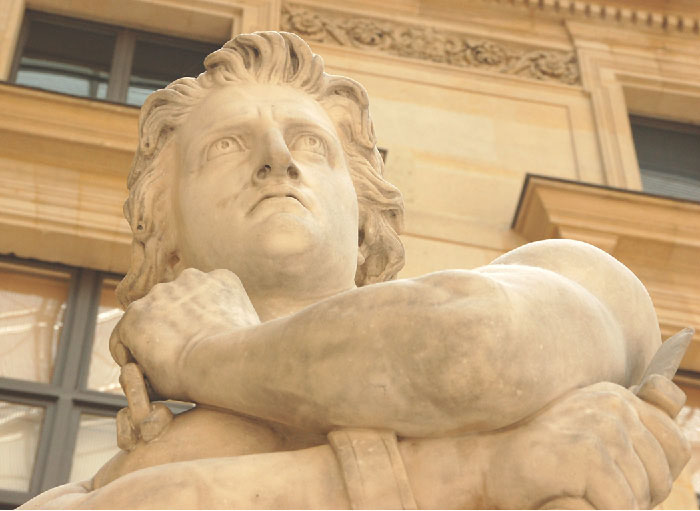
Terrible working conditions resulted in massive revolts by the enslaved, beginning in the second half of the second century BCE. The most famous was led by Spartacus, an enslaved man and gladiator from Thrace (modern Bulgaria). In 76 BCE, Spartacus and other enslaved gladiators rose against their owners and were quickly joined by hundreds of thousands of others (Figure 6.33). Spartacus’s forces defeated two Roman armies before being crushed in 71 BCE. The Romans crucified thousands of the rebels along Italy’s major roads to send a warning to enslaved people across Italy.
英語のヒント
劣悪な労働環境によって、前2世紀後半から、奴隷化された人びとの大規模な反乱が起きた。もっとも有名なのは、トラキア、現在のブルガリア出身の奴隷で剣闘士だったスパルタクスが率いた反乱である。前76年、スパルタクスら奴隷の剣闘士は所有者に反旗を翻し、たちまち何十万人もの人びとが加わった(図6.33)。スパルタクスの軍はローマ軍を2度破ったが、前71年に鎮圧された。ローマ人は、イタリア全土の奴隷化された人びとへの警告として、数千人の反乱者をイタリアの主要道路沿いで十字架にかけた。
Spartacus.スパルタクス
(credit: “Spartacus, Denis Foyatier, 1830” by Gautier Poupeau/Flickr, CC BY 2.0) · CC BY 2.0
Figure 6.33 This is a detail of a larger-than-life marble statue by the nineteenth-century French sculptor Denis Foyatier, showing Spartacus breaking his chains. Now in the Louvre, the statue originally stood in Paris’s famous Jardin des Tuileries on the Avenue of Great Men. (credit: “Spartacus, Denis Foyatier, 1830” by Gautier Poupeau/Flickr, CC BY 2.0)
図6.33 19世紀のフランスの彫刻家ドニ・フォワティエによる、実物より大きい大理石像の一部で、スパルタクスが鎖を断ち切る姿を示す。現在はルーヴル美術館にあるが、もとはパリの有名なテュイルリー庭園の「偉人の並木道」に置かれていた。(出典: “Spartacus, Denis Foyatier, 1830”/Gautier Poupeau/Flickr, CC BY 2.0)
In addition to the proletariat and enslaved people, new classes of wealthy Romans were also unhappy with the leadership of the traditional elite. The most profitable enterprise for these new Roman entrepreneurs was acting as bankers and public contractors, or publicans. The republic relied on publicans to construct public works such as aqueducts and theaters, as well as to operate government-owned mines and collect taxes. Roman governors often looked the other way when publicans squeezed additional tax revenues from the populations of the provinces.
英語のヒント
プロレタリアートや奴隷化された人びとに加え、新たに生まれた裕福なローマ人の階層も、伝統的な支配層の指導に不満を抱いた。この新しいローマの事業家にとって、もっとも利益の大きい仕事は、金融業者や、公的な事業の請負人であるプブリカヌスとして活動することだった。共和国は、水道橋や劇場といった公共施設の建設、国有鉱山の経営、徴税をプブリカヌスに依存していた。プブリカヌスが属州の住民から余分な税を搾り取っても、ローマの属州総督はしばしば見て見ぬふりをした。
This tumultuous and complicated environment led to the rise of two of the Late Republic’s most intriguing political figures, Tiberius and Gaius Gracchus. The Gracchi, as they are collectively known, were plebeian brothers whose families had been members of the elite for generations (Scipio Africanus was their grandfather). Tiberius, the elder brother, was concerned to see the large plantations being worked by enslaved foreigners rather than Roman farmers. He feared Rome’s military was in danger since Rome relied on its land-owning farmers to equip themselves and serve in the army. In 133 BCE, as a tribune, he proposed a law to distribute public land to landless Romans. This measure struck a blow at the senatorial class, many of whom had accumulated huge swaths of land formerly owned by independent farmers who had gone to war. The assembly voted to approve the proposal, but many senators were horrified not only because they stood to lose land but also because, to win the vote, Tiberius had violated the traditions of the Republic. The Republic was ruled by the upper classes, and in courting popular opinion, the brothers had challenged elite control over high political institutions. Convinced he was assuming too much popular support and violating the traditions of Rome, the Senate declared a state of emergency and a group of senators beat Tiberius to death.
英語のヒント
この激動する複雑な状況から、共和政末期のとくに興味深い2人の政治家、ティベリウス・グラックスとガイウス・グラックスが登場した。まとめてグラックス兄弟と呼ばれる2人はプレブスだったが、家系は何世代も支配層に属していた。祖父はスキピオ・アフリカヌスだった。兄ティベリウスは、大農園で働くのがローマ農民ではなく奴隷化された外国人になっているのを見て懸念した。ローマは土地を持つ農民が自ら装備を整えて兵役に就くことに依存していたため、軍が危うくなると恐れたのである。前133年、護民官となった彼は、公有地を土地のないローマ人に分配する法律を提案した。この政策は元老院階級に打撃を与えた。その多くが、もとは出征した自営農民の土地だった広大な土地を集積していたからである。民会は提案を承認したが、多くの元老院議員は強い衝撃を受けた。土地を失いかねないだけでなく、ティベリウスが投票で勝つために共和国の伝統を破ったからだった。共和国は上流階級が統治しており、兄弟は民衆の意見に働きかけることで、国家の重要な政治機関に対する支配層の統制に挑んだのである。ティベリウスが民衆の支持を集めすぎ、ローマの伝統を破っていると確信した元老院は、非常事態を宣言した。そして元老院議員の一団が、彼を殴り殺した。
Ten years later Tiberius’s brother Gaius, an astute politician as well, was also elected tribune. He won over poor Roman farmers with his proposal to establish new colonies to give them land. He also provided free grain for the poor and called for new public works projects to create jobs for the working class and lucrative contracts for wealthy publicans. His measures passed the Plebeian Assembly. Gaius was also elected tribune for two years straight, in violation of Roman political tradition. The final straw for the Senate was Gaius’s proposal to establish a new court system that could try senators for corruption. In 121 BCE, the senators took action to subdue Gaius. He attempted to use force himself to resist the Senate, but in the end his supporters were massacred and he died, either by his own hand or at the hands of senators who had opposed his rise to power.
英語のヒント
10年後、同じく政治的に抜け目のない弟ガイウスも護民官に選ばれた。彼は新たな植民市を建設して土地を与えるという提案で、貧しいローマ農民の支持を得た。貧しい人びとに穀物を無料で配り、労働者層に雇用を、裕福なプブリカヌスに有利な契約を生む新しい公共事業も求めた。その政策は平民会で可決された。ガイウスはまた、ローマの政治的伝統に反して、2年連続で護民官に選ばれた。元老院にとって我慢の限界となったのは、元老院議員を汚職で裁ける新たな裁判制度を設けようとしたことだった。前121年、元老院議員たちはガイウスを抑え込もうと動いた。彼も武力で元老院に抵抗しようとしたが、最終的に支持者は虐殺された。ガイウスも、自ら命を絶ったか、彼の台頭に反対する元老院議員たちに殺されたかして、死に至った。