第6章地中海の人々Mediterranean Peoples
6.3 The Hellenistic Era6.3 ヘレニズム時代
Learning Objectives学習の目標
By the end of this section, you will be able to:
この節を学ぶと、次のことができるようになる。
Explain the events that led to the rise of Alexander the Great
アレクサンドロス大王の台頭につながった出来事を説明する。
Analyze Alexander the Great’s successes as a military and political leader
軍事・政治指導者としてのアレクサンドロス大王の成功を分析する。
Discuss the role that Alexander the Great’s conquests played in spreading Greek culture
アレクサンドロス大王の征服が、ギリシア文化の拡大に果たした役割を論じる。
The Classical period in Greece ended when Greece lost its freedom to the Kingdom of Macedon and Macedon’s king Alexander the Great conquered the Persian Empire. The period that followed Alexander’s death is known as the Hellenistic period (323–31 BCE). Alexander’s empire was divided among his top generals, including Seleucus, Ptolemy, and Antigonus. During this time, Greeks, also called Hellenes, ruled over and interacted with the populations of the former Persian Empire. The resulting mixture of cultures was neither Greek nor non-Greek but “Greek-like,” or Hellenistic, a term that refers to the flourishing and expansion of Greek language and culture throughout the Mediterranean and Near East during this period.
英語のヒント
ギリシアがマケドニア王国に対して自由を失い、その王アレクサンドロス大王がペルシア帝国を征服すると、ギリシアの古典期は終わった。アレクサンドロスの死に続く時期を、ヘレニズム時代(前323~前31年)という。彼の帝国は、セレウコス、プトレマイオス、アンティゴノスをはじめとする有力な将軍たちのあいだで分割された。この時期、ヘレネスとも呼ばれるギリシア人は、旧ペルシア帝国の人びとを支配し、彼らと交流した。そこから生じた文化の混合は、純粋なギリシア文化でも非ギリシア文化でもなく、「ギリシア風」、すなわちヘレニズム的だった。この語は、当時、ギリシアの言語と文化が地中海・近東全域で繁栄し、広まったことを指す。
The Kingdom of Macedonマケドニア王国
The ancient Kingdom of Macedon straddled today’s Greece and northern Macedonia. The Macedonians did not speak Greek but had adopted Greek culture in the Archaic period, and their royal family claimed to be descended from the mythical Greek hero Heracles.
英語のヒント
古代マケドニア王国は、現在のギリシアと北マケドニアにまたがっていた。マケドニア人はギリシア語を話さなかったが、アルカイック期にギリシア文化を取り入れており、王家は神話のギリシア英雄ヘラクレスの子孫だと主張した。
King Philip II of Macedon, who reigned from 359 to 336 BCE, transformed the kingdom into a great power. He recruited common farmers and developed them into a formidable infantry, with trained aristocrats as cavalry. His tactical skills and diplomacy allowed Philip to secure control of new territory in Thrace (modern-day northern Greece and Bulgaria), which provided access to precious metals and thus the economic resources to expand his military power.
英語のヒント
前359~前336年に在位したマケドニア王フィリッポス2世は、王国を強国へ変えた。普通の農民を募って強力な歩兵隊に育て、訓練された貴族を騎兵とした。戦術の巧みさと外交によって、フィリッポスはトラキア、現在のギリシア北部とブルガリアに当たる土地を新たに支配した。これによって貴金属を確保し、軍事力を拡大する経済資源を得た。
In 338 BCE, Athens and Thebes finally put decades of conflict aside to ally against the rising power of Macedon. At the Battle of Chaeronea (338 BCE), the Macedonians crushed this allied army. Philip sought to unite the Greek city-states under his leadership after this victory, and he organized them toward the goal of waging war against the Persian Empire. However, in 336 BCE, Philip was killed by an assassin with a personal grudge.
英語のヒント
前338年、アテネとテーバイはついに数十年にわたる対立を脇に置き、台頭するマケドニアに対抗する同盟を結んだ。しかしカイロネイアの戦い(前338年)で、マケドニア軍はこの連合軍を打ち破った。勝利後、フィリッポスはギリシア都市国家を自らの指導下にまとめ、ペルシア帝国との戦争という目標へ向けて組織した。だが前336年、個人的な恨みを持つ暗殺者に殺された。
Philip II was succeeded by his twenty-year-old son Alexander III, later known as Alexander the Great, who immediately faced an invasion by Thracian tribes from the north and a rebellion in Greece led by Thebes and Athens. Within a year, the young king had crushed these opponents and announced he was carrying out his father’s plan to wage war against Persia. Darius III, the Persian king, amassed armies to face him, but they were mainly draftees from the subject peoples of the Persian Empire. At the battles of Issus (333 BCE) and Gaugamela (330 BCE), these forces collapsed against the Macedonians, commanded by Alexander himself.
英語のヒント
フィリッポス2世の後を継いだのは20歳の息子アレクサンドロス3世、のちのアレクサンドロス大王だった。即位してすぐ、北からのトラキア諸部族の侵入と、テーバイ・アテネの主導するギリシアの反乱に直面した。しかし1年以内にこれらの敵を抑え、父のペルシア遠征計画を実行すると宣言した。ペルシア王ダレイオス3世は迎え撃つ軍を集めたが、兵の大部分は帝国の従属諸民族から徴発した者だった。イッソス(前333年)とガウガメラ(前330年)の戦いで、彼らはアレクサンドロス自身の指揮するマケドニア軍に敗れた。
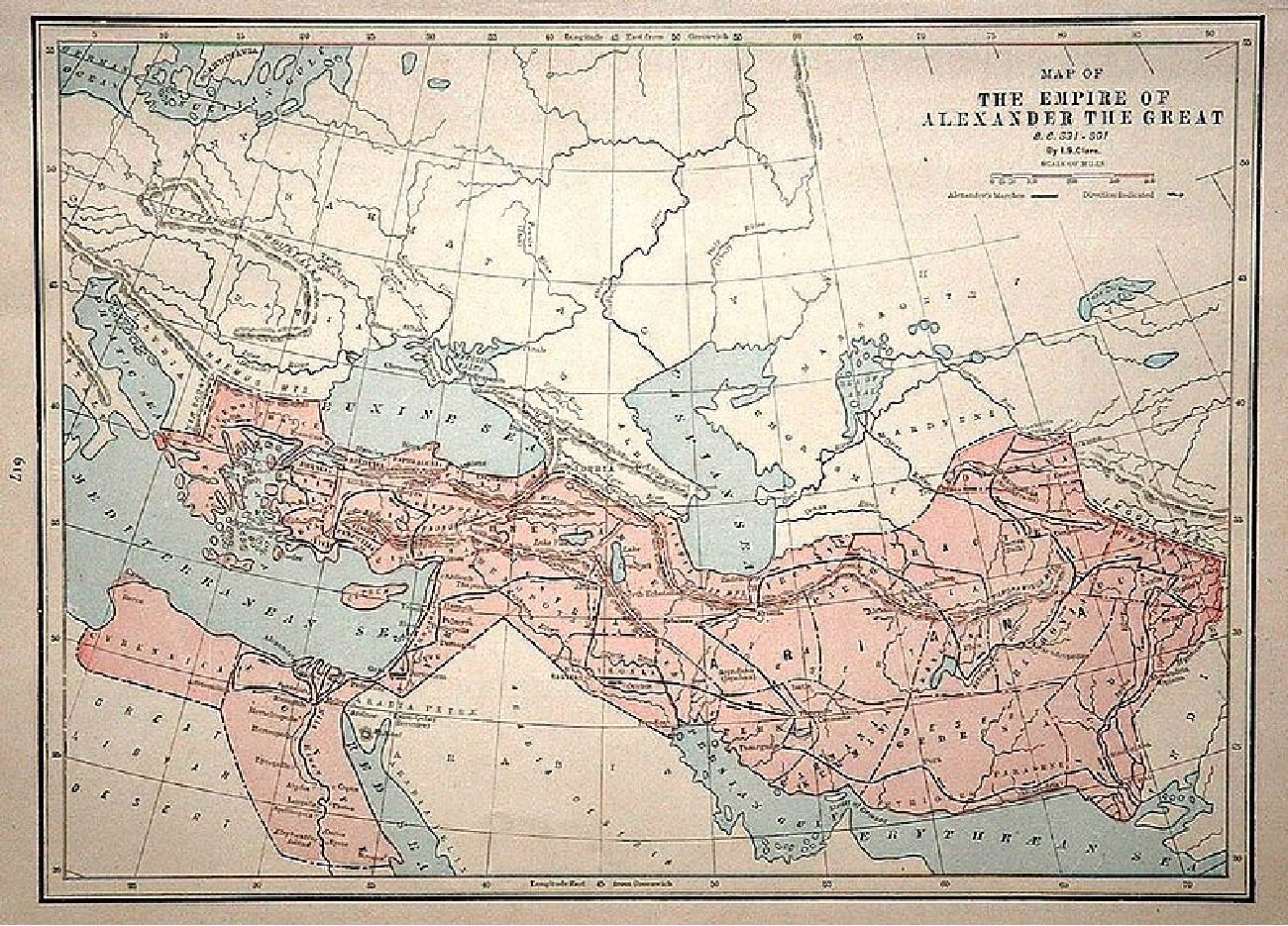
At first, Alexander envisioned his campaign as a war of vengeance against Persia. Although he was Macedonian, he saw himself as a Hellene and often compared himself to the hero Achilles of the Iliad, from whom he claimed to be descended through his mother. In 330 BCE, Alexander’s forces sacked and later burned Persepolis, the jewel of the Persian Empire. After the assassination of Darius III by disgruntled Persian nobles that same year, however, Alexander claimed the Persian throne and introduced Persian customs to his court, such as having his subjects prostrate themselves before him. To consolidate his control of the Persian Empire, in 330–326 BCE he advanced his army deep into central Asia and to the Indus River valley (modern Pakistan) (Figure 6.23). In 326 BCE, his exhausted troops mutinied and refused to advance to the Ganges River in central India as Alexander desired. He led his army back to Babylon in Mesopotamia, where he died in 323 BCE at the age of thirty-three, probably due to the cumulative impact of injuries experienced during the campaign.
英語のヒント
当初、アレクサンドロスは遠征を、ペルシアへの復讐の戦争と考えていた。マケドニア人でありながら自らをヘレネスとみなし、『イリアス』の英雄アキレウスに自分をなぞらえることが多かった。母を通じてアキレウスの血を引くとも主張した。前330年、彼の軍はペルシア帝国の宝ともいうべきペルセポリスを略奪し、のちに焼き払った。しかし同じ年、不満を抱くペルシア貴族にダレイオス3世が暗殺されると、アレクサンドロスはペルシアの王位を主張し、臣下が自分の前で平伏することなど、ペルシアの慣行を宮廷に取り入れた。帝国支配を固めるため、前330~前326年には軍を中央アジア奥地と、現在のパキスタンに当たるインダス川流域へ進めた(図6.23)。前326年、疲れ果てた兵士たちは反抗し、アレクサンドロスが望んだインド中部のガンジス川への前進を拒んだ。彼は軍を率いてメソポタミアのバビロンへ戻り、前323年、33歳で亡くなった。遠征中に負った傷の影響が積み重なったためだった可能性が高い。
The Conquests of Alexander the Great.アレクサンドロス大王の征服
(credit: “Map of the Empire of Alexander the Great (1893)” by Unknown/Wikimedia Commons, Public Domain) · Public Domain
Figure 6.23 Alexander advanced his army as far as central Asia and the Indus River, but he was unable to reach the Ganges River as he desired. (credit: “Map of the Empire of Alexander the Great (1893)” by Unknown/Wikimedia Commons, Public Domain)
図6.23 アレクサンドロスは中央アジアとインダス川まで軍を進めたが、望んでいたガンジス川への到達は果たせなかった。(出典: “Map of the Empire of Alexander the Great (1893)”/作者不詳/Wikimedia Commons, パブリックドメイン)
Though his Bactrian wife Roxane was pregnant when he died, Alexander had made no arrangements for a successor. Members of his court and his military commanders thus fought among themselves for control of the empire in what historians refer to as the Wars of the Successors. One of the more colorful contestants was Pyrrhus, who was not Macedonian but was the king of Epirus and Alexander’s cousin. Pyrrhus temporarily seized the throne of Macedon and attempted to carve out an empire for himself in Sicily and southern Italy. He never lost a battle, but he lost so many troops in a campaign defending Magna Graecia in southern Italy from Rome that he was never able to capitalize on his success. (Today the term pyrrhic victory refers to a win so costly that it is in effect a loss.) In 272 BCE, Pyrrhus died after being struck by a roof tile thrown at him by an elderly woman during a street battle in the city of Argos. His death marked the end of the wars among Alexander’s generals.
英語のヒント
アレクサンドロスが死んだとき、バクトリア出身の妻ロクサネは妊娠していたが、彼は後継者について何も手配していなかった。そのため、宮廷の人びとと軍の指揮官は帝国の支配をめぐって争った。歴史家が後継者戦争と呼ぶ争いである。個性的な争奪者の1人がピュロスだった。マケドニア人ではなくエペイロスの王で、アレクサンドロスのいとこだった。彼は一時マケドニア王位を奪い、シチリアや南イタリアに自分の帝国を築こうとした。戦闘では一度も敗れなかったが、南イタリアの大ギリシアをローマから守る遠征であまりに多くの兵を失い、成功を生かすことができなかった。(今日「ピュロスの勝利」は、犠牲が大きすぎて実質的には敗北に等しい勝利を指す。)前272年、アルゴスの市街戦で老女が投げた屋根瓦に当たり、ピュロスは死んだ。彼の死によって、アレクサンドロスの将軍たちの争いは終わった。
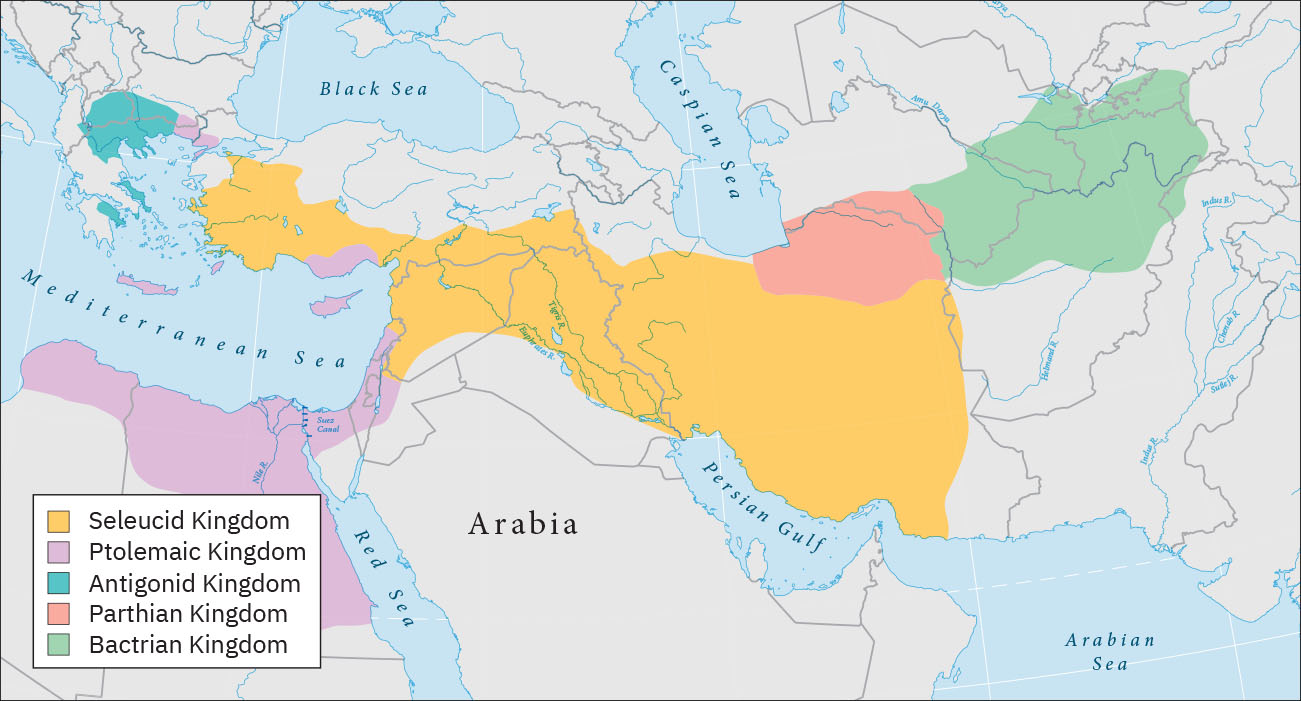
By the middle of the third century BCE, certain generals and their descendants were ruling as kings over different portions of Alexander’s empire (Figure 6.25). Antigonus and his descendants, the Antigonids, ruled Macedon and much of Greece. Some city-states in Greece organized federal leagues to maintain their independence from Macedon. The Achaean League was in the Peloponnese and the Aetolian League in central Greece. Another Macedonian general, Ptolemy, was king of Egypt. To win the support of the Egyptian people, Ptolemy and his successors assumed the title of pharaoh and built temples to Egyptian gods. Yet another Macedonian general, Seleucus and his descendants, the Seleucids, ruled as kings over much of the former Persian Empire, from Asia Minor in the west to central Asia in the east. They adopted many practices of the Persian Empire, including honoring local gods, as revealed by cuneiform records of the offerings they made.
英語のヒント
前3世紀半ばまでには、有力な将軍とその子孫が、アレクサンドロス帝国の各地を王として治めていた(図6.25)。アンティゴノスとその子孫であるアンティゴノス朝は、マケドニアとギリシアの大部分を支配した。ギリシアの一部の都市国家は、マケドニアからの独立を維持するため連邦同盟を結成した。ペロポネソスのアカイア同盟と、ギリシア中部のアイトリア同盟である。別のマケドニア将軍プトレマイオスは、エジプト王となった。住民の支持を得るため、彼とその後継者はファラオの称号を用い、エジプトの神々のために神殿を建てた。さらに将軍セレウコスとその子孫のセレウコス朝は、西の小アジアから東の中央アジアに至る旧ペルシア帝国の大部分を支配した。彼らはペルシア帝国の多くの慣行を取り入れ、地方の神々も敬った。そのことは、彼らの供物について記した楔形文字の記録からわかる。
The Hellenistic World.ヘレニズム世界
(credit: modification of work “The Hellenistic World in late 281 BC” by “Cattette”/Wikimedia Commons, CC BY 4.0) · CC BY 4.0
Figure 6.25 The conquests of Alexander and conflicts over the spoils that raged for decades after his death resulted in the reordering of what had once been the Persian Empire. While the borders regularly shifted over the years, this map provides a snapshot of the Hellenistic kingdoms in about 263 BCE. (credit: modification of work “The Hellenistic World in late 281 BC” by “Cattette”/Wikimedia Commons, CC BY 4.0)
図6.25 アレクサンドロスの征服と、死後数十年にわたる戦利品をめぐる争いによって、かつてのペルシア帝国の領域は再編された。国境は年とともにたびたび動いたが、この地図は前263年ごろのヘレニズム諸王国を示す。(出典: 原作品を加工:“The Hellenistic World in late 281 BC”/“Cattette”/Wikimedia Commons, CC BY 4.0)
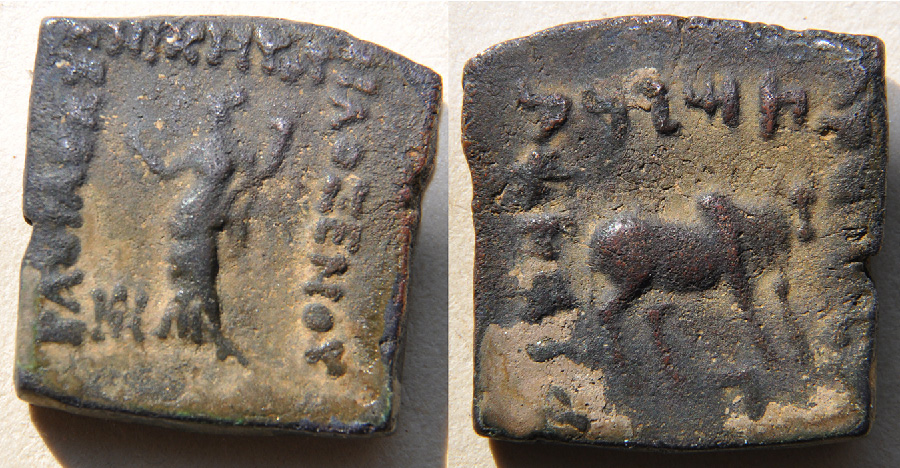
The Seleucid Kingdom was an enormous and complicated region, stretching from the Aegean Sea to today’s Afghanistan, with a population of some thirty million people of various ethnic and linguistic groups. Keeping control over the vast kingdom proved difficult, and some of the far eastern portions like Bactria and Parthia began to break away around 250 BCE. Both became separate Hellenistic kingdoms, ruled initially by former Greek governors of the areas. Around 200 BCE, the Bactrian kingdom invaded and conquered the Indus River valley. The most famous of the Bactrian kings of India was Menander I, whose kingdom stretched from the Indus River valley to the upper Ganges in central India. Menander converted to Buddhism and became a holy man, known in India as Milinda. The Greek colonists who settled in Bactria and India introduced their art into the region, which influenced Indian sculpture, painting, and architecture. By the end of the second century BCE, however, the Bactrian kingdom had collapsed due to constant civil wars between rival claimants to the throne. We know of their existence only through the coins they issued as kings (Figure 6.26).
英語のヒント
セレウコス朝の領域は、エーゲ海から現在のアフガニスタンに及ぶ巨大で複雑な地域で、多様な民族と言語集団に属する約3,000万人が暮らしていた。広大な王国の支配を保つことは難しく、前250年ごろには、遠い東方のバクトリアやパルティアなどが離脱し始めた。両者は別々のヘレニズム王国となり、当初はその地域の旧ギリシア人総督が治めた。前200年ごろ、バクトリア王国はインダス川流域へ侵入し、征服した。インドを治めたバクトリア系の王でもっとも有名なのがメナンドロス1世で、その王国はインダス川流域からインド中部のガンジス川上流まで広がった。メナンドロスは仏教へ改宗して聖者となり、インドではミリンダとして知られる。バクトリアとインドに定住したギリシアの植民者は、その地域に自分たちの美術をもたらし、インドの彫刻・絵画・建築に影響を与えた。しかし前2世紀末までに、王位を争う者たちの絶え間ない内戦で、バクトリア王国は崩壊した。それらの王が存在したことは、彼らが発行した貨幣によってのみ知られている(図6.26)。
A Greco-Bactrian Coin.グレコ=バクトリアの貨幣
(credit: “Bactrian coin, 1st or 2nd century BC” by Jean-Michel Moullec/Flickr, CC BY 2.0) · CC BY 2.0
Figure 6.26 Even after the Bactrian kingdom split away from the Seleucid Empire in the third century BCE, Greek influence there remained. This Greco-Bactrian coin, likely from the second century BCE, shows a Greek goddess and Greek letters on one side and a humped bull, an Indian symbol, and Kharosthi script (Indo-Persian) on the other. (credit: “Bactrian coin, 1st or 2nd century BC” by Jean-Michel Moullec/Flickr, CC BY 2.0)
図6.26 前3世紀にバクトリア王国がセレウコス朝から分離しても、ギリシアの影響は残った。おそらく前2世紀のこのグレコ=バクトリアの貨幣は、一方の面にギリシアの女神とギリシア文字、もう一方にインドの象徴であるこぶ牛と、インド=ペルシア系のカローシュティー文字を表す。(出典: “Bactrian coin, 1st or 2nd century BC”/Jean-Michel Moullec/Flickr, CC BY 2.0)
In these Hellenistic kingdoms, where peace treaties and alliances could be secured through arranged marriages, elite women might achieve political power unimaginable in Classical Greece. In Egypt, for example, Ptolemy II married his sister Arsinoe, as was the custom for pharaohs, and installed her as co-ruler. Dynastic queens also often ruled when the designated heir was just a child. In 253 BCE, the Seleucid king Antiochus II ended his war for control of Syria with a treaty by which he married Berenice, the daughter of his opponent Ptolemy II. However, Antiochus’s former wife Laodice murdered Berenice and her children upon Antiochus’s death in 246 BCE to secure the succession for her own young son Seleucus II. Ptolemy III subsequently declared war to avenge the death of his sister and her children.
英語のヒント
これらのヘレニズム王国では、政略結婚によって和平や同盟を固めることができたため、上層の女性が、古典期ギリシアでは考えられない政治権力を得る場合があった。例えばエジプトのプトレマイオス2世は、ファラオの慣行にならって姉妹のアルシノエと結婚し、共同統治者とした。指定された後継者がまだ子どものときには、王妃が統治することも多かった。前253年、セレウコス朝のアンティオコス2世は、対戦相手プトレマイオス2世の娘ベレニケと結婚するという条約で、シリア支配をめぐる戦争を終わらせた。しかし前246年にアンティオコスが死ぬと、前妻ラオディケは、自分の幼い息子セレウコス2世の継承を確かなものにするため、ベレニケとその子どもたちを殺した。その後プトレマイオス3世は、姉妹とその子どもたちの死への報復として宣戦した。
In 194 BCE, Antiochus III ended yet another war for control of Syria by giving his daughter Cleopatra I in marriage to Ptolemy V. Upon Ptolemy’s death in 180 BCE, Cleopatra ruled because their sons and daughter were still children. The most famous of the powerful Hellenistic queens was this Cleopatra’s descendant, Cleopatra VII, who reigned from 51 to 31 BCE. The last of the Ptolemies, Cleopatra VII reigned as co-ruler with her brothers Ptolemy XIII and Ptolemy XIV, as well as with Ptolemy XV, also called Caesarion, who was her son with the Roman general Julius Caesar.
英語のヒント
前194年、アンティオコス3世は娘クレオパトラ1世をプトレマイオス5世へ嫁がせ、シリアの支配をめぐる新たな戦争を終わらせた。前180年にプトレマイオスが死ぬと、息子たちと娘がまだ子どもだったため、クレオパトラが統治した。強力なヘレニズム女王のなかでもっとも有名なのは、このクレオパトラの子孫で、前51~前31年に在位したクレオパトラ7世である。プトレマイオス朝最後の君主だった彼女は、弟たちのプトレマイオス13世・14世、さらにプトレマイオス15世と共同統治した。15世はカエサリオンとも呼ばれ、ローマの将軍ユリウス・カエサルとの間にもうけた息子だった。