第6章地中海の人々Mediterranean Peoples
The Rise of Client Armies私兵軍団の台頭
After the assassination of Gaius Gracchus, Rome’s political class was divided into two warring factions. The populares were politicians who, like Gaius, sought the political support of discontented groups in Roman society, whereas the optimates were the champions of the old order and the traditional leadership of the elite in the Roman Senate. In 112 BCE, Rome went to war against Jugurtha, the king of Numidia (modern Algeria/Tunisia) in North Africa, after he slaughtered Romans there who had supported his brother as king. Roman armies suffered defeat after defeat, and due to the decline in numbers of Roman farmers, Rome was having difficulty filling the ranks.
英語のヒント
ガイウス・グラックスの暗殺後、ローマの政治家層は、互いに争う2つの派閥に分かれた。ポプラレス、すなわち民衆派は、ガイウスのように、ローマ社会で不満を抱く集団から政治的支持を得ようとする政治家だった。対するオプティマテス、すなわち閥族派は、旧秩序と、元老院の支配層による伝統的な指導を擁護した。前112年、ローマは北アフリカのヌミディア、現在のアルジェリアとチュニジアに当たる国の王ユグルタと戦争を始めた。ユグルタが、彼の兄弟を王として支持した現地のローマ人を虐殺したためである。ローマ軍は敗北を重ね、ローマ農民の減少によって兵員の補充にも苦労した。
Gaius Marius was a plebeian and commoner who rose up the ranks of the Roman army and emerged as the leader of the populares. In 107 BCE, he ran for consul by denouncing the traditional Roman elites as weak and ineffective generals and promising to quickly end the war with Jugurtha. Such rhetoric was wildly popular with the common people who supported him. Once in power, Marius reformed the entrance requirements for the army to open it to proletariats, extending them the opportunity for war gains and even land for their service. These reforms led to the emergence of professional client armies, or armies composed of men more loyal to their commander than to the state.
英語のヒント
ガイウス・マリウスはプレブスの平民出身で、ローマ軍のなかで昇進を重ね、民衆派の指導者になった。前107年、従来のローマ支配層を、弱腰で役に立たない将軍たちだと非難し、ユグルタとの戦争を速やかに終わらせると約束して、執政官に立候補した。この言い方は、彼を支持する一般の人びとに大いに受けた。政権に就くと、マリウスは入隊条件を改革し、プロレタリアートにも軍への道を開いた。彼らは軍務によって戦利品を得る機会、さらには土地を得る機会を与えられた。この改革から、職業的な私兵軍団、つまり国家よりも指揮官に強い忠誠を尽くす兵士からなる軍が生まれた。
By 105 BCE, Jugurtha was captured and then paraded through the Roman streets in chains. That same year, Rome faced new threats from the north in the form of Germanic tribes crossing the Rhine River and seeking to invade Italy. The Romans elected Marius consul for five consecutive terms (105–101 BCE) to lead his professional army against these enemies. After his victories, however, his enemies in the Senate wanted to embarrass him politically, so they prevented his proposal to give veterans land from becoming law. Marius was intimidated by these events and retired from politics.
英語のヒント
前105年までにユグルタは捕らえられ、鎖につながれてローマの街を引き回された。同じ年、ライン川を越えてイタリアへの侵入を図るゲルマン系諸部族によって、ローマは北からの新たな脅威に直面した。ローマ人は、マリウスが職業軍を率いてこれらの敵と戦えるよう、彼を5期連続、前105~前101年の執政官に選んだ。しかし勝利後、元老院にいる彼の敵は政治的に面目を失わせようとし、退役兵に土地を与える法案の成立を妨げた。マリウスはこの成り行きに気圧され、政界を退いた。
In 90 BCE, Rome was again in turmoil when its Italian allies revolted after years of providing troops without having any voice in governing. During this “Social” War (90–88 BCE), the Romans under the leadership of Sulla, an optimate, defeated the rebels. Shortly thereafter, in 88 BCE, Rome’s provinces in Greece and Asia Minor also revolted, after years of heavy taxes and corrupt governors. The rebels massacred thousands of Roman citizens and rallied around Mithridates, the Hellenistic king of Pontus in north Asia Minor. Optimates in the Senate appointed Sulla to lead an army against Mithridates. Like Marius, Sulla had promised his recruits land in return for their service. Populares in the Plebeian Assembly, however, assigned command of the army to Marius, who had come out of retirement.
英語のヒント
前90年、長年にわたって兵士を供給しながら国政で発言権を持てなかったイタリアの同盟国が反乱を起こし、ローマは再び混乱に陥った。この「同盟市戦争」(前90~前88年)で、閥族派のスッラが率いるローマ人は反乱者を破った。その直後の前88年には、重税と腐敗した総督に長年苦しんできたギリシアと小アジアのローマ属州でも反乱が起きた。反乱者は数千人のローマ市民を虐殺し、小アジア北部のヘレニズム王国ポントスの王ミトリダテスのもとに結集した。元老院の閥族派は、ミトリダテス討伐軍の指揮官にスッラを任命した。マリウスと同様、スッラも新兵に軍務の見返りとして土地を約束していた。しかし平民会の民衆派は、引退から戻ったマリウスに軍の指揮権を与えた。
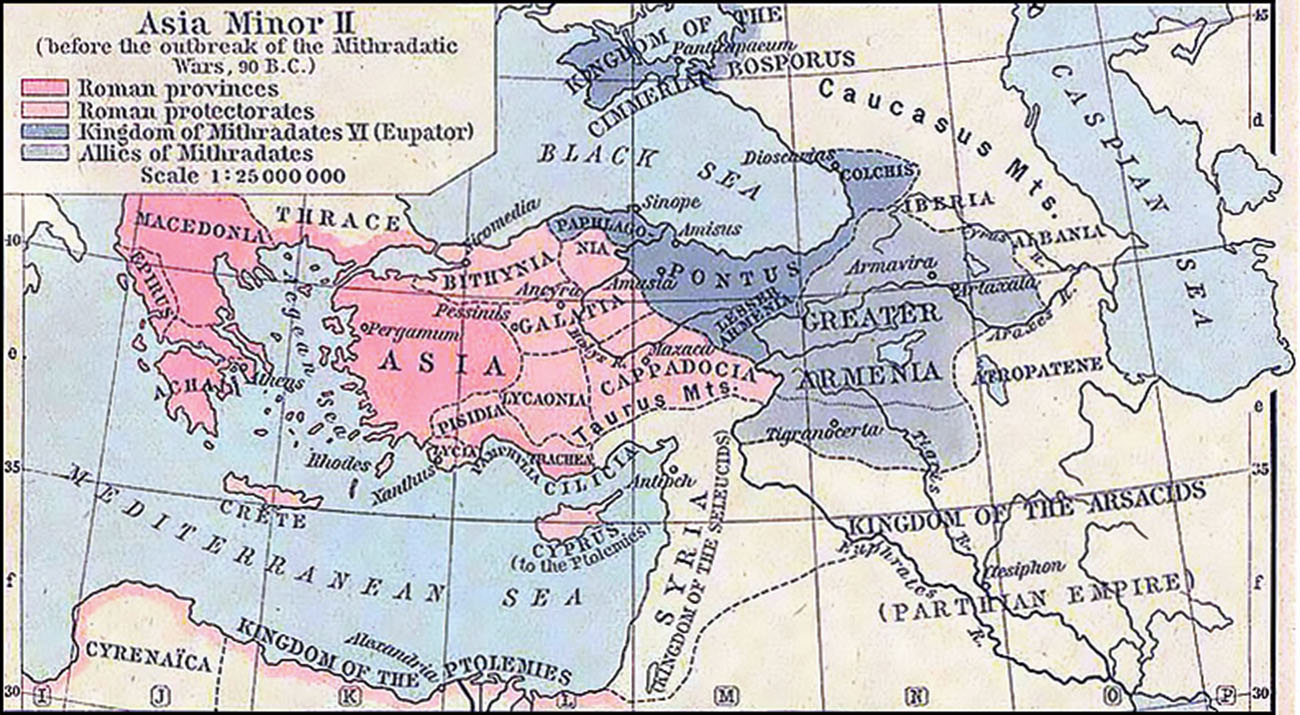
Sulla, then outside Rome with his client army, convinced his soldiers to choose personal loyalty to their general and his promise of land over their allegiance to Rome, and they marched on the city. Sulla’s army hunted down and murdered many populares, and after establishing his own faction in charge of Rome, Sulla marched against Mithridates (Figure 6.34).
英語のヒント
当時、私兵軍団とともにローマの外にいたスッラは、ローマへの忠誠よりも、将軍個人への忠誠と彼が約束した土地を選ぶよう兵士たちを説得し、一緒にローマへ進軍した。スッラ軍は民衆派を多数追い詰めて殺した。スッラは自分の派閥にローマの支配を確保させると、ミトリダテスに向けて進軍した(図6.34)。
Rome and King Mithridates.ローマとミトリダテス王
(credit: modification of work” Asia Minor at the time of the First Mithridatical War” by The Historical Atlas by William River Shepherd, University of Texas Libraries/Wikimedia Commons, Public Domain) · Public Domain
Figure 6.34 As Rome expanded far beyond Italy, keeping its citizens in distant provinces safe could be a challenge. That was the case when parts of Greece and Asia Minor rebelled and rallied around King Mithridates of Pontus. This 1911 map of the eastern Mediterranean in 90 BCE shows Rome and its allies (pink) and King Mithridates’s kingdom and his allies (blue-violet). (credit: modification of work” Asia Minor at the time of the First Mithridatical War” by The Historical Atlas by William River Shepherd, University of Texas Libraries/Wikimedia Commons, Public Domain)
図6.34 ローマがイタリアのはるか外へ広がると、遠い属州にいる市民の安全を守ることが難しくなる場合があった。ギリシアと小アジアの一部が反乱を起こし、ポントス王ミトリダテスのもとに結集したときがそうだった。前90年の東地中海を表すこの1911年の地図は、ローマと同盟国をピンク系、ミトリダテスの王国と同盟国を青紫系で示す。(出典: 原作品を加工:“ Asia Minor at the time of the First Mithridatical War”/William River Shepherd 著 The Historical Atlas/テキサス大学図書館/Wikimedia Commons, パブリックドメイン)
In 87 BCE, Marius, who had been in hiding, rallied his old veterans and marched on Rome, marking the second time in two years that Roman soldiers had chosen personal loyalty to their general over obedience to Rome’s laws. Marius’s men now hunted down and murdered optimates. After winning his seventh term as consul in 87 BCE, Marius died in office from natural causes. Having forced Mithridates out of Greece and restored Roman rule there, Sulla led his army back to Rome in 83 BCE to overthrow the populares who were still in charge. While in Rome, he compelled the Senate to appoint him dictator. The office of dictator was an ancient republican office used only during emergencies because it granted absolute authority for a limited time to handle the emergency. When Sulla assumed the office, it hadn’t been used since the Second Punic War.
英語のヒント
前87年、身を隠していたマリウスは古参兵を再び集め、ローマへ進軍した。ローマ兵がローマの法への服従より将軍個人への忠誠を選んだのは、これで2年間に2度目となった。今度はマリウスの兵が、閥族派を追い詰めて殺した。マリウスは前87年に7期目の執政官の地位を得たが、在職中に病死した。ミトリダテスをギリシアから追い出し、ローマの支配を回復したスッラは、なお政権を握る民衆派を倒すため、前83年に軍を率いてローマへ戻った。ローマでは元老院を屈服させ、自分を独裁官に任命させた。独裁官は共和政の古くからの役職で、非常時にだけ用いられた。緊急事態に対処するため、期間を限って絶対的な権限を与える役職だったからである。スッラが就任した時点では、第二次ポエニ戦争以来使われていなかった。
During Sulla’s time as dictator, he ordered the execution of his political enemies and reformed the laws. In 79 BCE, he relinquished the office and retired from public life, convinced he had saved the republic and preserved the power of the traditional elite in the Senate. Instead, however, within half a century the Roman Republic was dead.
英語のヒント
独裁官在任中、スッラは政敵の処刑を命じ、法律を改革した。前79年、共和政を救い、元老院の伝統的な支配層の権力を守ったと確信して、役職を手放し、公の生活から退いた。しかし実際には、その後半世紀もしないうちにローマ共和政は命を失った。
Section Summaryこの節のまとめ
The Romans overthrew the Etruscan dynasty at the close of the sixth century BCE and became a republic. The Struggle of the Orders ended with the plebeians winning equality with the patricians under the law, and by the third century BCE Roman citizens were electing officials and passing legislation through various assemblies under the watchful eye of the Senate. By the third century BCE, Rome had united the Italian peninsula by pledging to defend all new allies from their enemies. With these allies, Rome possessed the military resources to crush the other Mediterranean powers, Carthage and the Hellenistic monarchies of the eastern Mediterranean.
英語のヒント
ローマ人は前6世紀末にエトルリア人の王朝を倒し、共和政に移行した。身分闘争は、プレブスが法のもとでパトリキとの平等を獲得して終わった。前3世紀までに、ローマ市民は元老院の厳しい監視のもと、さまざまな民会を通して役人を選び、法律を可決するようになった。前3世紀までにローマは、新しい同盟国をすべてその敵から守ると誓うことで、イタリア半島を統一した。同盟国を得たローマには、カルタゴや東地中海のヘレニズム諸王国といった、ほかの地中海勢力を打ち砕く軍事的な資源が備わった。
By the mid-second century BCE, Rome was the dominant power in the Mediterranean. But the wars had created a number of social problems tearing the Republic apart. These conflicts led to the rise of the Gracchi and later the partisan battle between the populares who opposed the governing elite and the optimates who supported it. By the end of the second century BCE, powerful military commanders and their client armies had assumed great authority in the republic. One of these commanders, General Sulla, twice marched on Rome to secure power for his political faction, the optimates. In 79 BCE, he retired, but his marches on Rome and his resurrection of the office of dictator laid the groundwork for the permanent overthrow of the Republic later.
英語のヒント
前2世紀半ばまでに、ローマは地中海の覇権国家となった。しかし戦争は、共和国を引き裂く多くの社会問題を生んだ。こうした対立のなかからグラックス兄弟が台頭し、のちには、統治する支配層に反対する民衆派と、それを支持する閥族派の抗争が起きた。前2世紀末には、強力な軍の指揮官とその私兵軍団が、共和国で大きな権限を握っていた。その一人スッラは、自分の派閥である閥族派の権力を確保するため、2度ローマへ進軍した。彼は前79年に引退したが、ローマへの進軍と独裁官職の復活は、のちに共和政を永久に覆すための土台をつくった。