第6章地中海の人々Mediterranean Peoples
Classical Greece古典期のギリシア
The Greek Classical period (500–323 BCE) was an era of great cultural achievement in which enduring art, literature, and schools of philosophy were created. It began with the Greek city-states uniting temporarily to face an invasion by the mighty Persian Empire, but it ended with them locked in recurring conflicts and ultimately losing their independence, first to Persia and later to Macedon.
英語のヒント
ギリシアの古典期(前500~前323年)は、長く残る美術、文学、哲学の諸学派が生まれた、文化的達成の大きい時代だった。その始まりには、強大なペルシア帝国の侵入に対してギリシアの都市国家が一時的に団結した。しかし終わりには、繰り返す争いから抜け出せなくなり、ついには最初にペルシア、続いてマケドニアに対して独立を失った。
The Persian Warsペルシア戦争
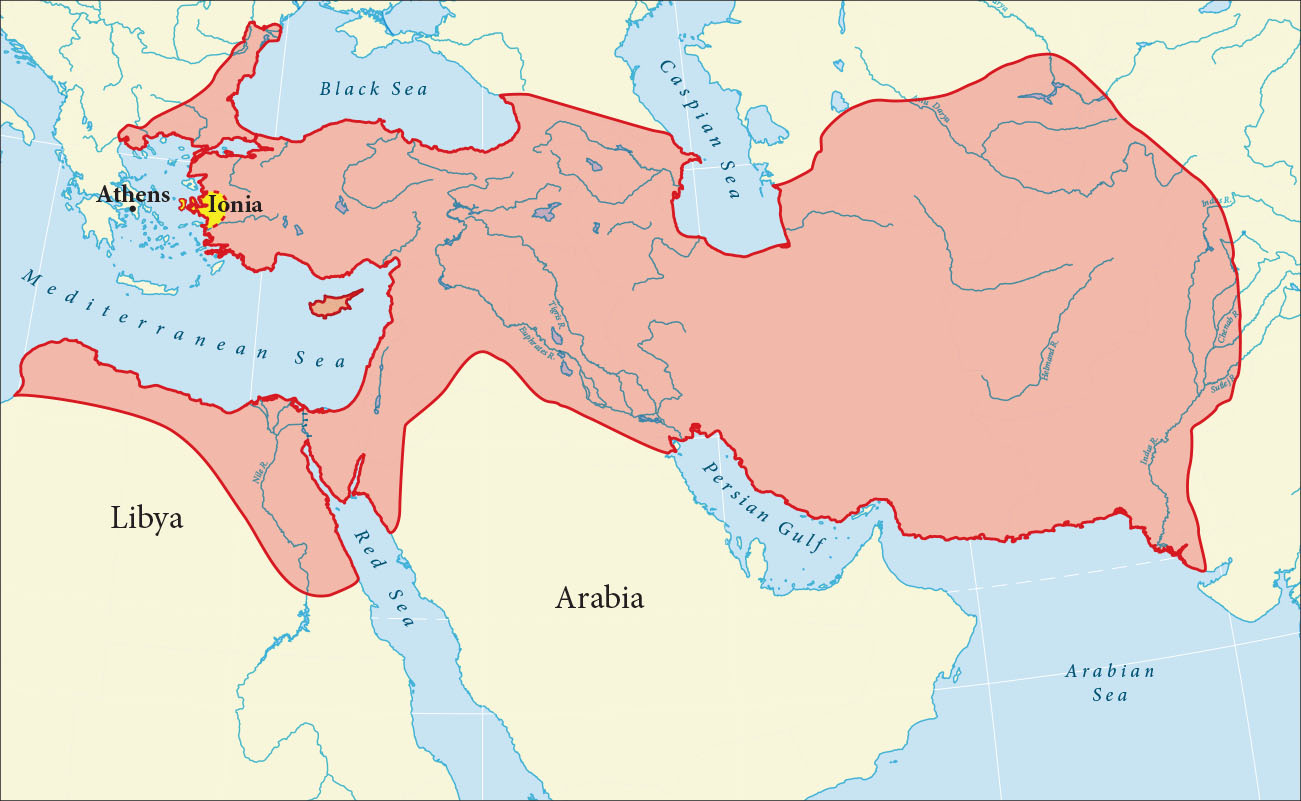
The Persian Wars (492–449 BCE) were a struggle between the Greek city-states and the expanding Persian Empire. In the mid-sixth century BCE, during the reign of Cyrus the Great, Persian armies subdued the Greek city-states of Ionia, located across the Aegean from Greece in western Asia Minor (Turkey) (Figure 6.14). To govern the cities, the Persians installed tyrants recruited from the local Greek population. The resident Greeks were unhappy with the tyrants’ rule, and in 499 BCE they rose in the Ionian Rebellion, joined by Athens and the Greek cities on the island of Cyprus. But by 494 BCE Persian forces had crushed the rebellions in both Ionia and Cyprus. For intervening in Persian affairs, the Persian king Darius decided that Athens must be punished.
英語のヒント
ペルシア戦争(前492~前449年)は、ギリシアの都市国家と、勢力を広げるペルシア帝国との争いだった。前6世紀半ば、キュロス大王の治世に、ペルシア軍はイオニアのギリシア都市国家を服属させた。イオニアは、ギリシアからエーゲ海を隔てた小アジア西部、現在のトルコに位置する(図6.14)。ペルシア人は都市を統治するため、現地のギリシア人から選んだ僭主を置いた。住民のギリシア人はその支配に不満を持ち、前499年にイオニアの反乱を起こした。アテネとキプロス島のギリシア諸都市もこれに加わった。しかし前494年までに、ペルシア軍はイオニアとキプロス双方の反乱を鎮圧した。ペルシア王ダレイオスは、自国の問題に介入したアテネを罰しなければならないと決めた。
Persia and the Greeks in 499 BCE.前499年のペルシアとギリシア人
(credit: modification of work “Persian Empire, 490 BC, showing route of Cyrus the Younger, Xenophon and the 10.000” by The Department of History - United States Military Academy/Wikimedia Commons, Public Domain) · Public Domain
Figure 6.14 The Greek world was on the edge of the massive Persian Empire at Persia’s height around 500 BCE. Persian rulers likely thought little of the Greeks, but that changed in 499 BCE when Athens intervened in the rebellion in Ionia, a region located just across the Aegean Sea from Athens. (credit: modification of work “Persian Empire, 490 BC, showing route of Cyrus the Younger, Xenophon and the 10.000” by The Department of History - United States Military Academy/Wikimedia Commons, Public Domain)
図6.14 前500年ごろ、最盛期にあった巨大なペルシア帝国の端にギリシア世界があった。ペルシアの支配者はギリシア人をほとんど気に留めていなかったと思われるが、前499年、アテネがエーゲ海のすぐ対岸にあるイオニアの反乱に介入すると、状況は変わった。(出典: 原作品を加工:“Persian Empire, 490 BC, showing route of Cyrus the Younger, Xenophon and the 10.000”/The Department of History - United States Military Academy/Wikimedia Commons, パブリックドメイン)
In 490 BCE, Darius assembled a large fleet and army to cross the Aegean from Asia Minor, planning to subdue Athens and install one of Pisistratus’s sons as tyrant there. These Persian forces landed at Marathon on the west coast of Attica. They vastly outnumbered the Athenians but were drafted subjects with little motivation to fight and die. The Athenian soldiers, in contrast, were highly motivated to defend their democracy. The Persians could not withstand the Athenians’ spirited charge in the Battle of Marathon and were forced back onto their ships. Leaving the battle, the Persians then sailed around Attica to Athens. The soldiers at Marathon raced by land across the peninsula to guard the city. Seeing the city defended, the Persians returned to Asia Minor in defeat.
英語のヒント
前490年、ダレイオスは大艦隊と軍を集め、小アジアからエーゲ海を渡った。アテネを服属させ、ペイシストラトスの息子の1人を僭主に据える計画だった。ペルシア軍はアッティカ西岸のマラトンに上陸した。兵数はアテネ軍を大きく上回っていたが、徴発された臣民で、戦って死ぬ意欲は乏しかった。対してアテネ兵は、自分たちの民主政を守ろうという強い動機を持っていた。マラトンの戦いで、ペルシア軍はアテネ軍の激しい突撃に耐えられず、船へ押し戻された。戦場を離れたペルシア軍は、アッティカを回ってアテネへ向かった。マラトンの兵士たちは半島を陸路で急いで横断し、都市の防衛に駆けつけた。防備を見たペルシア軍は、敗れて小アジアへ引き返した。
In 480 BCE, Xerxes, the son and successor of Darius, launched his own invasion of Greece intended to avenge this defeat and subdue all the Greek city-states. He assembled an even larger fleet as well as an army that would invade by land from the north. At this time of crisis, most of the Greek city-states decided to unite as allies and formed what is commonly called the Hellenic League. Sparta commanded the armies and Athens the fleet. A small band of the larger land forces, mostly Spartans, decided to make a stand at Thermopylae, a narrow pass between the mountains and the sea in northeastern Greece. Their goal was not to defeat the invading Persian army, which vastly outnumbered them, but to delay them so the rest of the forces could organize a defense. For days the small Spartan force, led by their king Leonidas, successfully drove back a vastly superior Persian army, until a Greek traitor informed the Persians of another mountain pass that enabled them to circle around and surround the Spartans. The Spartan force fought to the death, inspiring the Greeks to continue the fight and hold the Hellenic League together.
英語のヒント
前480年、ダレイオスの息子で後継者のクセルクセスは、敗北への報復と、ギリシアの全都市国家の服属を目指して、自ら侵攻を始めた。さらに大きな艦隊と、北から陸路で侵入する軍を集めた。この危機に、多くのギリシア都市国家は同盟を組んで団結することを決め、一般にヘラス同盟と呼ばれる連合を作った。スパルタが陸軍、アテネが艦隊を指揮した。大きな陸上部隊のうち、主にスパルタ人から成る少数部隊が、ギリシア北東部の山と海に挟まれた狭い通路テルモピュライで踏みとどまることを決めた。目的は、はるかに大軍のペルシア軍を倒すことではなく、残りの軍が防備を整える時間を稼ぐことだった。王レオニダス率いる少数のスパルタ軍は、何日にもわたって圧倒的に優勢なペルシア軍を撃退した。しかしギリシア人の裏切り者が別の山道を教えたため、ペルシア軍は迂回して彼らを包囲できた。スパルタ軍は最後まで戦って死に、その姿は、ギリシア人が戦いを続け、同盟を維持する励みとなった。
After the Battle of Thermopylae, the Persian forces advanced against Athens. The Athenians abandoned their city and withdrew to the nearby island of Salamis, where they put their faith in their fleet to protect them. At the naval Battle of Salamis, the allied Greek fleet led by Athens destroyed the Persian ships. Xerxes then decided to withdraw much of his force from Greece, since he no longer had a fleet to keep it supplied.
英語のヒント
テルモピュライの戦いの後、ペルシア軍はアテネへ進んだ。アテネ人は都市を捨て、近くのサラミス島へ退避し、自分たちを守る艦隊を信頼した。サラミスの海戦では、アテネ率いるギリシア連合艦隊がペルシアの船を破壊した。軍へ補給する艦隊を失ったため、クセルクセスは兵力の大部分をギリシアから引き揚げることにした。
In 479 BCE, the reduced Persian force had retreated from Athens to the plains of Boeotia, just north of Attica. The Greek allied forces under the command of Sparta advanced into Boeotia and met the Persian army at the Battle of Plataea. The Persian forces, mostly unwilling draftees, were no match for the Spartan troops, and the battle ended in the death or capture of most of the Persian army.
英語のヒント
前479年、兵力を減らしたペルシア軍はアテネから、アッティカのすぐ北にあるボイオティアの平野へ後退していた。スパルタ指揮下のギリシア連合軍はボイオティアへ進み、プラタイアの戦いでペルシア軍と対峙した。主に不本意ながら徴兵された兵士から成るペルシア軍は、スパルタ軍の相手ではなく、戦いの結果、ペルシア軍の大部分が戦死するか捕虜になった。
The Athenian Empire and the Peloponnesian Warアテネ帝国とペロポネソス戦争
After the Persian Wars, the Athenians took the lead in continuing the fight against Persia and liberating all Greek city-states. In 477 BCE, they organized an alliance of Greek city-states known today as the Delian League, headquartered on the Aegean island of Delos. Members could provide ships and troops for the league or simply pay Athens to equip the fleet, which most chose to do. Over the next several decades, allied forces of the Delian League liberated the Greek city-states of Ionia from Persian rule and supported rebellions against Persia in Cyprus and Egypt. Around 449 BCE, Athens and Persia reached a peace settlement in which the Persians recognized the independence of Ionia and the Athenians agreed to stop aiding rebels in the Persian Empire.
英語のヒント
ペルシア戦争後、アテネ人はペルシアとの戦いを続け、すべてのギリシア都市国家を解放する運動を主導した。前477年、エーゲ海のデロス島を本拠とする都市国家の同盟を結成した。現在デロス同盟と呼ばれるものである。加盟国は船や兵を提供するか、アテネに資金を払い艦隊を整えさせるかを選べたが、大半は後者を選んだ。その後数十年のあいだに、同盟軍はイオニアのギリシア都市国家をペルシア支配から解放し、キプロスやエジプトで起きた対ペルシア反乱を支援した。前449年ごろ、アテネとペルシアは和平に達した。ペルシアはイオニアの独立を認め、アテネはペルシア帝国内の反乱者への援助をやめることに同意した。
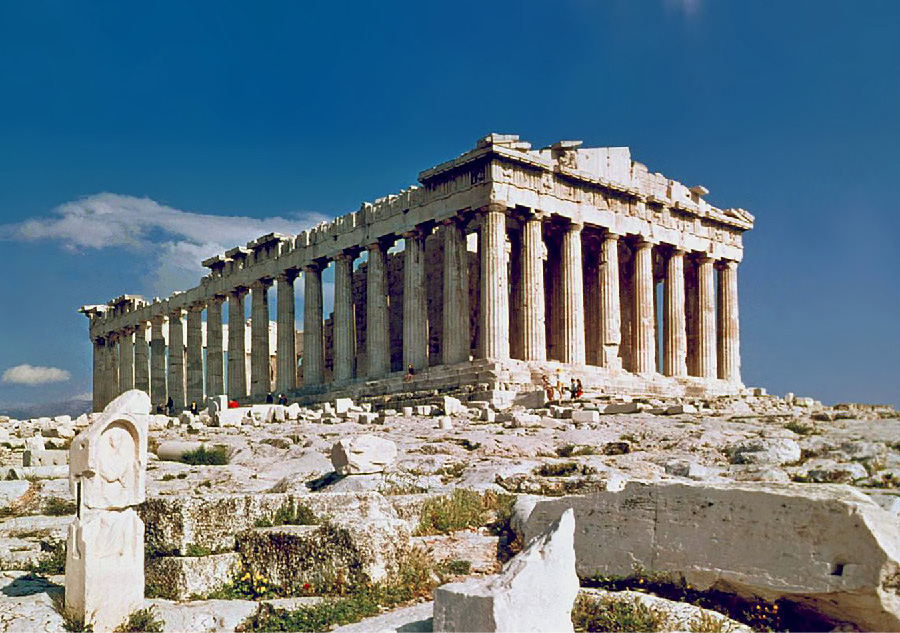
Over the course of this war, the money from the Delian League enriched many lower-class Athenians, who found employment as rowers in the fleet. Athens even began paying jurors in jury courts and people who attended meetings of the Assembly. Over time it became clear to the other Greeks that the Delian League was no longer an alliance but an empire in which the subject city-states paid a steady flow of tribute. In 465 BCE, the city-state of Thasos withdrew from the league but was compelled by Athenian forces to rejoin. Around 437 BCE, the Athenians began using tribute to rebuild the temples on the Acropolis that the Persians had destroyed. Including the Parthenon, dedicated to Athena Parthenos, these were some of the most beautiful temples ever built and the pride of Athens, but to the subject city-states they came to symbolize Athenians’ despotism and arrogance (See Figure 6.15).
英語のヒント
この戦争のあいだ、デロス同盟の資金は、艦隊の漕ぎ手として雇われた多くの下層のアテネ人を豊かにした。アテネは陪審法廷の陪審員や、民会の会合への参加者にも手当を払うようになった。やがてほかのギリシア人には、デロス同盟がもはや同盟ではなく、従属する都市国家が継続的に貢納する帝国となったことが明らかになった。前465年、タソスは同盟から脱退したが、アテネ軍によって復帰を強いられた。前437年ごろ、アテネ人は貢納金を使い、ペルシア軍に破壊されたアクロポリスの神殿を再建し始めた。処女神アテナに捧げられたパルテノンを含むこれらの神殿は、かつてないほど美しい建造物で、アテネの誇りだった。しかし従属する都市国家にとっては、アテネ人の専制と傲慢さの象徴となった(図6.15参照)。
The Parthenon.パルテノン神殿
(credit: “The Parthenon Athens” by Steve Swayne/Flickr, Public Domain) · Public Domain
Figure 6.15 The large and sumptuous Parthenon, seen here as it is today, was built on the Athenian Acropolis in the fifth century BCE in honor of Athena. Following the temple’s destruction in the Persian War, Athens set out to rebuild it using tribute money, which angered some of the other Greek city-states. (credit: “The Parthenon Athens” by Steve Swayne/Flickr, Public Domain)
図6.15 現在の姿がここに示された、大きく豪華なパルテノン神殿は、前5世紀にアテナをまつるためアテネのアクロポリスに建てられた。ペルシア戦争で神殿が破壊されたあと、アテネは貢納金を使って再建を始めたため、ほかのギリシア都市国家の一部を怒らせた。(出典: “The Parthenon Athens”/Steve Swayne/Flickr, パブリックドメイン)
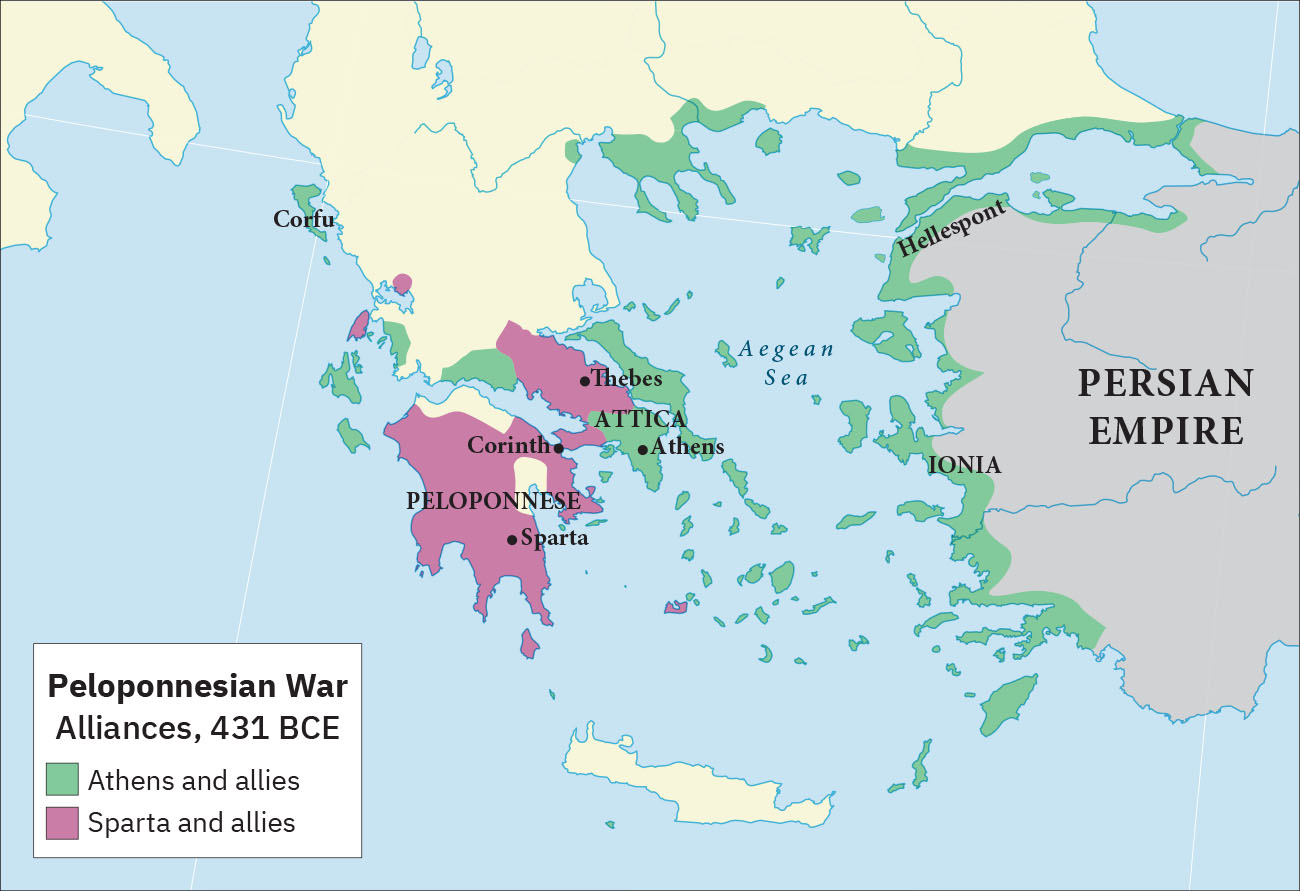
The wealth and power of Athens greatly concerned the Spartans, who saw themselves as the greatest and noblest of the Greeks. The rivalry between the two city-states eventually led them into open conflict. In 433 BCE, the Athenians assisted the city-state of Corcyra in its war against Corinth. Corinth was a member of the Peloponnesian League and requested that Sparta, the leader of this league, take action against Athenian aggression. Thus, in 431 BCE, the Peloponnesian War began with the invasion of Attica by Sparta and its allies (See Figure 6.16).
英語のヒント
アテネの富と力は、自分たちこそギリシア人のなかでもっとも偉大で高貴だと考えるスパルタ人を強く不安にした。二つの都市国家の競争は、やがて公然たる衝突へ進んだ。前433年、アテネはケルキュラがコリントスと行っていた戦争を援助した。ペロポネソス同盟に属していたコリントスは、盟主スパルタに、アテネの攻撃的行動に対抗するよう求めた。こうして前431年、スパルタと同盟国がアッティカへ侵入し、ペロポネソス戦争が始まった(図6.16参照)。
The Peloponnesian War.ペロポネソス戦争
(credit: modification of work “The Alliances of the Peloponnesian War” by U.S. Army Cartographer/Wikimedia Commons, Public Domain) · Public Domain
Figure 6.16 Athens and its allies controlled the coasts and islands of the Aegean, making it a powerful naval force to contend with. Sparta and its allies were largely land based, though they eventually were able to outmaneuver the Athenians at sea in some important battles. (credit: modification of work “The Alliances of the Peloponnesian War” by U.S. Army Cartographer/Wikimedia Commons, Public Domain)
図6.16 アテネと同盟国はエーゲ海の海岸と島々を支配し、手ごわい海軍勢力となった。スパルタと同盟国は主として陸を基盤としていたが、やがて重要ないくつかの海戦で、アテネを戦術的に上回ることができた。(出典: 原作品を加工:“The Alliances of the Peloponnesian War”/U.S. Army Cartographer/Wikimedia Commons, パブリックドメイン)
The political leader Pericles persuaded his fellow Athenians to withdraw from the countryside of Attica and move within the walls of Athens, reasoning that the navy would provide them food and supplies and the wall would keep them safe until Sparta tired of war and sought peace. Pericles’s assessment proved correct. In 421 BCE, after ten years of war, the Spartans and Athenians agreed to the Peace of Nicias, which kept the Athenian empire intact. The cost of the war for Athens was high, however. Due to the crowding of people within its walls, a plague had erupted in the city in 426 BCE and killed many, including Pericles.
英語のヒント
政治指導者ペリクレスは、アテネ人にアッティカの農村から引き揚げ、アテネの城壁内へ移るよう説得した。海軍が食料や物資を供給し、スパルタが戦争に疲れて和平を求めるまで城壁が守ってくれる、と考えたのである。ペリクレスの判断は正しいとわかった。10年の戦争を経た前421年、スパルタとアテネはニキアスの和約に合意し、アテネ帝国はそのまま残った。しかし、アテネが支払った戦争の代償は大きかった。城壁内に人びとが密集したため、前426年に疫病が発生し、ペリクレスを含む多くの人が命を落とした。
Several years later, arguing that the empire could thrive only by expanding, an ambitious young Athenian politician named Alcibiades (a kinsman of Pericles) inspired a massive invasion of Sicily targeting Syracuse, the island’s largest city-state. Just as the campaign began in 415 BCE, Alcibiades’s political enemies in Athens accused him of impiety and treason, and he fled to Sparta to avoid a trial. Without his leadership, the expedition against Syracuse floundered, and in 413 BCE the entire Athenian force was destroyed. In exile, Alcibiades convinced the Spartans to invade Attica again, now that Athens had been weakened by the disaster in Syracuse. In the years that followed, the Spartans realized they needed a large fleet to defeat Athens, and they secured funds for it from Persia on the condition that Sparta restore the Greek cities in Ionia to Persian rule. In 405 BCE, the new Spartan fleet destroyed the Athenian navy at the Battle of Aegospotami in the Hellespont. The Athenians, under siege, could not secure food or supplies without ships, and in 404 BCE the city surrendered to Sparta. The Peloponnesian War ended with the fall of the city and the collapse of the Athenian empire.
英語のヒント
数年後、ペリクレスの親族で野心的な若い政治家アルキビアデスは、帝国は拡大しなければ繁栄できないと主張し、シチリア最大の都市国家シュラクサイを標的とする大規模な遠征を推し進めた。前415年に遠征が始まると間もなく、アテネの政敵は彼を不敬と反逆の罪で告発した。裁判を避けるため、彼はスパルタへ逃れた。指導者を失ったシュラクサイ遠征は行き詰まり、前413年にはアテネの全遠征軍が壊滅した。亡命中のアルキビアデスは、シュラクサイでの惨敗によりアテネが弱った今こそ、再びアッティカへ侵入すべきだとスパルタを説得した。その後、スパルタはアテネを倒すには大艦隊が必要だと悟り、イオニアのギリシア諸都市をペルシア支配へ戻すという条件で、ペルシアから艦隊の資金を得た。前405年、ヘレスポントスのアイゴスポタモイの戦いで、新しいスパルタ艦隊がアテネ海軍を破った。包囲されたアテネは、船がなければ食料も物資も確保できず、前404年にスパルタへ降伏した。都市の陥落とアテネ帝国の崩壊によって、ペロポネソス戦争は終わった。
The conclusion of the Peloponnesian War initially left Sparta dominant in Greece. Immediately following the war, Sparta established oligarchies of local aristocrats in the city-states that had been democracies under the Delian League. And it set up the Era of the Thirty Tyrants, a brief rule of oligarchs in Athens. With regard to Persia, Sparta reneged on its promise to restore the Greek city-states in Ionia to Persian control. Persia responded by funding Greek resistance to Sparta, which eventually compelled Sparta to accept Persia’s terms in exchange for Persian support. This meant turning over the Ionian city-states as it had previously promised.
英語のヒント
ペロポネソス戦争の終結によって、当初はスパルタがギリシアで優位に立った。戦争の直後、スパルタは、デロス同盟のもとで民主政だった都市国家に、地元の貴族による寡頭政を設けた。アテネにも、短期間の寡頭支配である三十人僭主政を成立させた。ペルシアに対しては、イオニアのギリシア都市国家をその支配へ返すという約束を破った。ペルシアはギリシア内の反スパルタ勢力に資金を与えて応じ、ついにスパルタは、ペルシアの支援を受ける代わりにその条件を受け入れざるをえなくなった。つまり、かつて約束したとおり、イオニアの都市国家を引き渡すことになったのである。
Now with Persian backing, the Spartans continued to interfere in the affairs of other Greek city-states. This angered city-states like Thebes and Athens. In 371 BCE, the Thebans defeated the Spartans at the Battle of Leuctra in Boeotia. The next year they invaded the Peloponnese and liberated Messene from Spartan rule, depriving the Spartans of most of their helot labor there. Without the helots, the Spartans could not support their military system as before, and their Peloponnesian League collapsed. Alarmed by the sudden growth of Thebes’s power, Athens and Sparta again joined forces and, in 362 BCE, fought the Thebans at the Battle of Mantinea. The battle was inconclusive, but Thebes’s dominance soon faded. By 350 BCE, the Greek city-states were exhausted economically and politically after decades of constant warfare.
英語のヒント
今度はペルシアの後ろ盾を得て、スパルタはほかのギリシア都市国家の内政に干渉し続けた。テーバイやアテネなどはこれに反発した。前371年、テーバイはボイオティアのレウクトラの戦いでスパルタを破った。翌年にはペロポネソスへ侵入してメッセネをスパルタ支配から解放し、スパルタから当地のヘイロータイ労働力の大半を奪った。ヘイロータイを失ったスパルタは、それまでのように軍事制度を維持できず、ペロポネソス同盟は崩壊した。テーバイの急成長を恐れたアテネとスパルタは再び手を組み、前362年のマンティネイアの戦いでテーバイと戦った。戦いは決着を見なかったが、テーバイの優位はまもなく衰えた。前350年までには、何十年も続く戦争によって、ギリシアの都市国家は経済的にも政治的にも疲弊していた。