第12章戦間期The Interwar Period
Introductionはじめに
Recovery from War.戦争からの復興
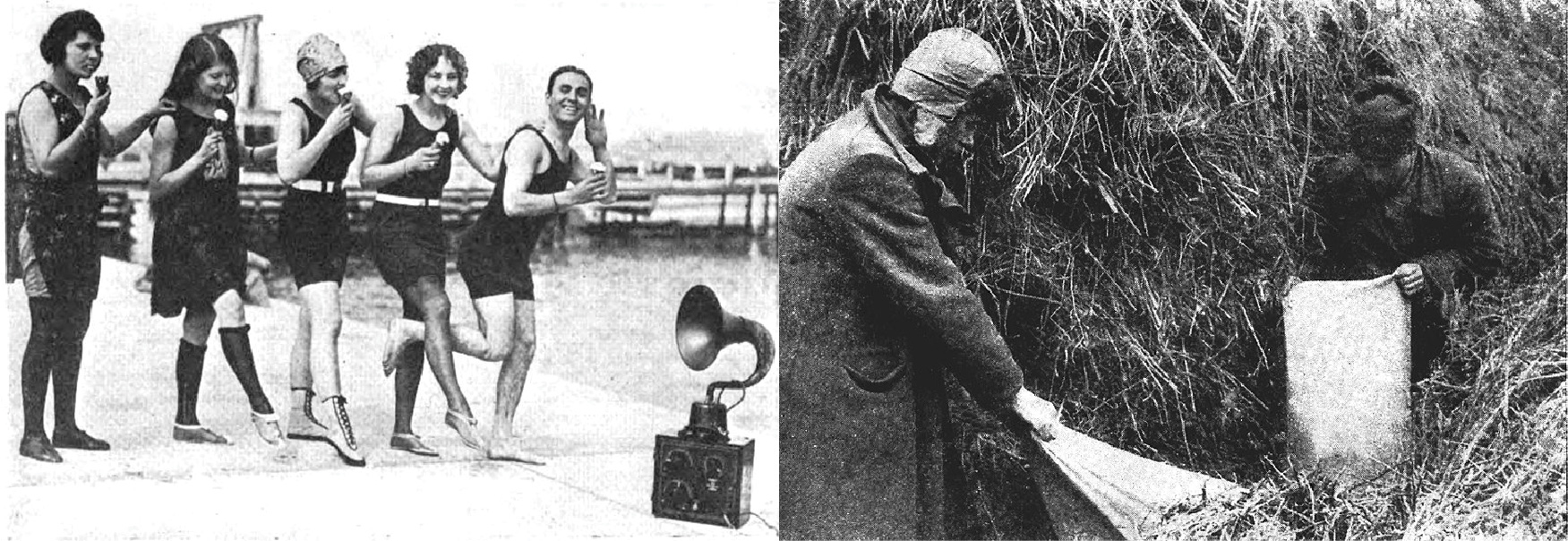
(credit left: modification of work “Radio beach party 1923” by World Radio History/Wikimedia Commons, Public Domain; credit right: modification of work “Forced collectivization USSR” by U. Druzhelubov, Proletarskoe Foto (Proletarian Photo)/Wikimedia Commons, Public Domain) · Public Domain
Figure 12.1 (left) Early British screen stars pose for a publicity photo at the beach to promote the new wireless radio in 1923. (right) Soviet peasants harvest grain in 1933 during the forced collectivization in their district. (credit left: modification of work “Radio beach party 1923” by World Radio History/Wikimedia Commons, Public Domain; credit right: modification of work “Forced collectivization USSR” by U. Druzhelubov, Proletarskoe Foto (Proletarian Photo)/Wikimedia Commons, Public Domain)
図12.1 左:1923年、新しい無線ラジオを宣伝するため、初期のイギリス映画のスターたちが海辺で宣伝写真のポーズを取る。右:1933年、居住地区で農業の強制集団化が進められるなか、ソ連の農民が穀物を収穫する。(左の出典:World Radio History/Wikimedia Commons「Radio beach party 1923」を改変、パブリックドメイン。右の出典:U. Druzhelubov、Proletarskoe Foto〈プロレタリアの写真〉/Wikimedia Commons「Forced collectivization USSR」を改変、パブリックドメイン)
The interwar years of the 1920s and 1930s saw a world recovering from the upheaval of World War I. People reacted differently to the horrors of the conflict, but many chose to embrace the present, and the 1920s were filled with new forms of cultural expression and new opportunities (Figure 12.1). In Europe the economy still lagged, but in other parts of the world economic growth soared. By the 1930s, however, economic instability had become common as the Great Depression plunged nations into poverty and unemployment. Governments dealt with the downturn in a variety of ways, but solutions in several countries included more authoritarian policies.
英語のヒント
1920年代と1930年代の戦間期、世界は第一次世界大戦がもたらした激動から立ち直ろうとしていた。戦争の惨禍に対する反応は人それぞれだったが、多くの人々は今を生きることを選んだ。1920年代には、新しい文化表現と新たな機会があふれていた(図12.1)。ヨーロッパでは経済の回復がなお遅れていたが、世界のほかの地域では経済成長が急速に進んだ。しかし1930年代になると、世界恐慌が各国を貧困と失業に陥れ、経済の不安定化が広く見られるようになった。政府はさまざまな方法で不況に対処したが、いくつかの国では、より権威主義的な政策が解決策として採られた。
Timeline: The Interwar Period.年表:戦間期
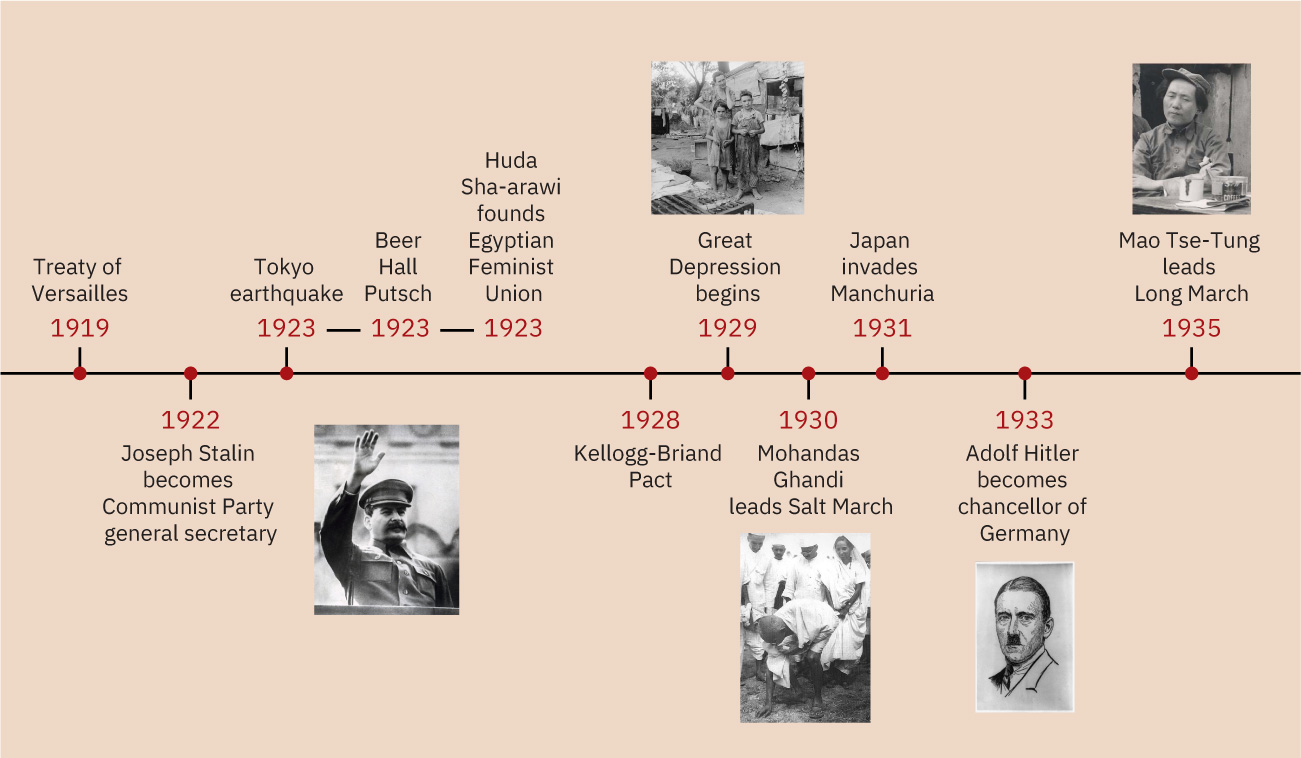
(credit “1922”: modification of work “Stalin in July 1941” by Nationaal Archief/Wikimedia Commons, Public Domain; credit “1929”: modification of work “Poor mother and children, Oklahoma, 1936 by Dorothea Lange” by Library of Congress/Wikimedia Commons, Public Domain; credit “1930”: modification of work “Salt March” by Unknown/Wikimedia Commons, Public Domain; credit “1933”: modification of work “Adolf Hitler, head-and-shoulders portrait, facing slightly left” by George Grantham Bain Collection/Library of Congress; credit “1935”: modification of work “Mao Zedong in Yan’an” by Unknown/Wikimedia Commons, Public Domain) · Public Domain
Figure 12.2 (credit “1922”: modification of work “Stalin in July 1941” by Nationaal Archief/Wikimedia Commons, Public Domain; credit “1929”: modification of work “Poor mother and children, Oklahoma, 1936 by Dorothea Lange” by Library of Congress/Wikimedia Commons, Public Domain; credit “1930”: modification of work “Salt March” by Unknown/Wikimedia Commons, Public Domain; credit “1933”: modification of work “Adolf Hitler, head-and-shoulders portrait, facing slightly left” by George Grantham Bain Collection/Library of Congress; credit “1935”: modification of work “Mao Zedong in Yan’an” by Unknown/Wikimedia Commons, Public Domain)
図12.2 (1922年の出典:オランダ国立公文書館/Wikimedia Commons「Stalin in July 1941」を改変、パブリックドメイン。1929年:米国議会図書館/Wikimedia Commons「Poor mother and children, Oklahoma, 1936 by Dorothea Lange」を改変、パブリックドメイン。1930年:作者不詳/Wikimedia Commons「Salt March」を改変、パブリックドメイン。1933年:George Grantham Bain Collection/米国議会図書館「Adolf Hitler, head-and-shoulders portrait, facing slightly left」を改変。1935年:作者不詳/Wikimedia Commons「Mao Zedong in Yan’an」を改変、パブリックドメイン)