第9章工業化時代の拡張Expansion in the Industrial Age
Introductionはじめに
“A Troublesome Egg to Hatch.”「孵化させるのが難しい卵」
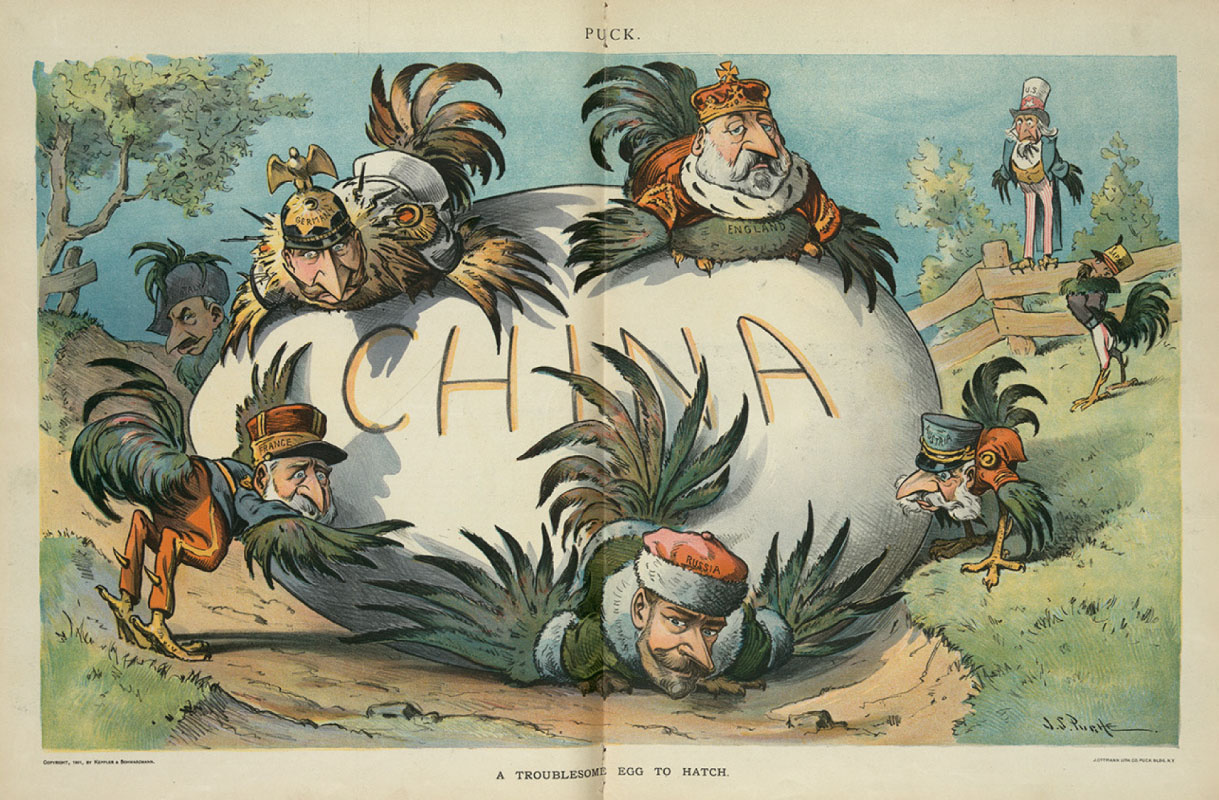
A troublesome egg to hatch — J. S. Pughe, 1901; Library of Congress, 2010651397. Public Domain. Modified by OpenStax. · Public Domain
Figure 9.1 Eager for wealth, the powerful industrialized nations of the world try to hatch the “troublesome egg” that was China in this 1901 political cartoon by the American artist J. S. Pughe. Britain and Germany settle atop it, Russia is in danger of being crushed beneath, and the United States looks on from afar. (credit: modification of work “A troublesome egg to hatch” by LOC Prints and Photographs Division/Library of Congress)
図9.1 米国の画家J・S・パグが1901年に描いたこの風刺画では、富を求める世界の強力な工業国が、中国という「孵化させるのが難しい卵」をかえそうとしている。英国とドイツが卵の上に陣取り、ロシアはその下で押しつぶされかけ、米国は遠くから見守っている。(出典:米国議会図書館版画写真部の作品「A troublesome egg to hatch」を改変/Library of Congress)
In the second half of the nineteenth century, Britain, France, Belgium, Germany, the United States, and a few other countries embarked on the Second Industrial Revolution as they adopted new sources of energy and churned out ever-larger numbers of manufactured goods. In their quest for profit and power, the industrialized nations sought access to new markets and inexpensive sources of raw materials. Their desire for resources led them to seize territory in Africa, Asia, and the Pacific, ignoring the rights of the people there and costing the lives of millions. Even as large and established a nation as China was not inviolable, and the European nations carved spheres of influence from it just as they did in other regions of the world (Figure 9.1).
英語のヒント
19世紀後半、英国、フランス、ベルギー、ドイツ、米国などは、新たなエネルギー源を導入し、ますます大量の工業製品を次々と生産して、第2次産業革命に乗り出した。利益と権力を求め、工業国は新しい市場と安価な原料の供給源への参入を目指した。資源への欲求に駆られ、これらの国々はアフリカ、アジア、太平洋の領土を奪い、現地の人々の権利を無視して、数百万人の命を奪った。中国ほど大きく、歴史ある国でさえ侵略を免れず、ヨーロッパ諸国は世界のほかの地域と同様、中国を勢力圏に切り分けた(図9.1)。
Timeline: Expansion in the Industrial Age.年表:産業化時代の拡張
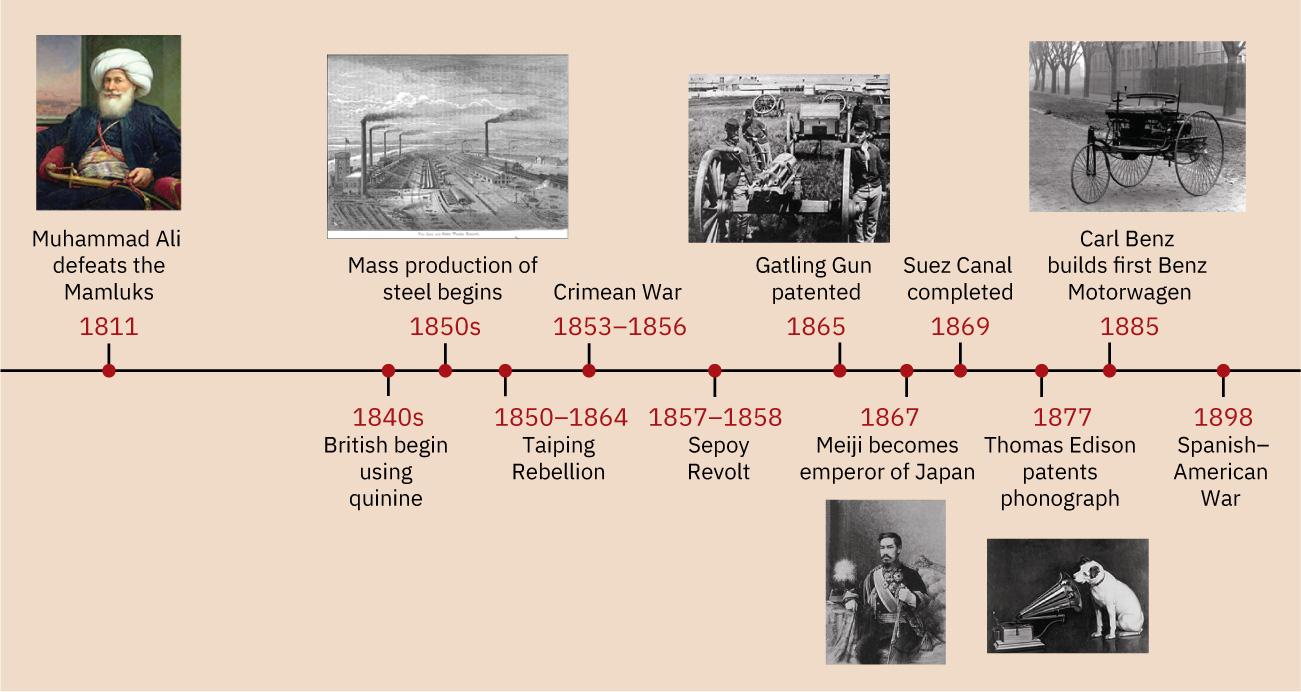
(credit “1811”: modification of work “Modern Egypt, Muhammad Ali by Auguste Couder, lighter colors” by Unknown/Wikimedia Commons, Public Domain; credit “1850s”: modification of work “Steelworks at Barrow-in-Furness, 1877” by Unknown/University of Strathclyde project/Wikimedia Commons, Public Domain; credit “1865”: modification of work “Gatling in US-Army” by Yellowstone National Park Collection/Wikimedia Commons, Public Domain; credit “1867”: modification of work “Conté portrait of the Emperor Meiji” by Eduardo Chiossone in Tenno Yondai No Shozo/Wikimedia Commons, Public Domain; credit “1877”: modification of work “Photograph of the painting ‘Dog looking at and listening to a phonograph,’ by Francis Berraud in 1898” by Library of Congress/Library of Congress; credit “1885”: modification of work “1885 Benz” by Alonso de Mendoza/Wikimedia Commons, Public Domain) · Public Domain
Figure 9.2 (credit “1811”: modification of work “Modern Egypt, Muhammad Ali by Auguste Couder, lighter colors” by Unknown/Wikimedia Commons, Public Domain; credit “1850s”: modification of work “Steelworks at Barrow-in-Furness, 1877” by Unknown/University of Strathclyde project/Wikimedia Commons, Public Domain; credit “1865”: modification of work “Gatling in US-Army” by Yellowstone National Park Collection/Wikimedia Commons, Public Domain; credit “1867”: modification of work “Conté portrait of the Emperor Meiji” by Eduardo Chiossone in Tenno Yondai No Shozo/Wikimedia Commons, Public Domain; credit “1877”: modification of work “Photograph of the painting ‘Dog looking at and listening to a phonograph,’ by Francis Berraud in 1898” by Library of Congress/Library of Congress; credit “1885”: modification of work “1885 Benz” by Alonso de Mendoza/Wikimedia Commons, Public Domain)
図9.2 (出典「1811」:Unknownによる「Modern Egypt, Muhammad Ali by Auguste Couder, lighter colors」を改変/Wikimedia Commons、Public Domain。「1850s」:Unknownによる「Steelworks at Barrow-in-Furness, 1877」を改変/University of Strathclyde project/Wikimedia Commons、Public Domain。「1865」:「Gatling in US-Army」を改変/Yellowstone National Park Collection/Wikimedia Commons、Public Domain。「1867」:Eduardo Chiossoneによる「Conté portrait of the Emperor Meiji」を改変/Tenno Yondai No Shozo/Wikimedia Commons、Public Domain。「1877」:「Photograph of the painting ‘Dog looking at and listening to a phonograph,’ by Francis Berraud in 1898」を改変/Library of Congress。「1885」:Alonso de Mendozaによる「1885 Benz」/Wikimedia Commons、Public Domain)
Locator Map: Expansion in the Industrial Age.位置図:産業化時代の拡張
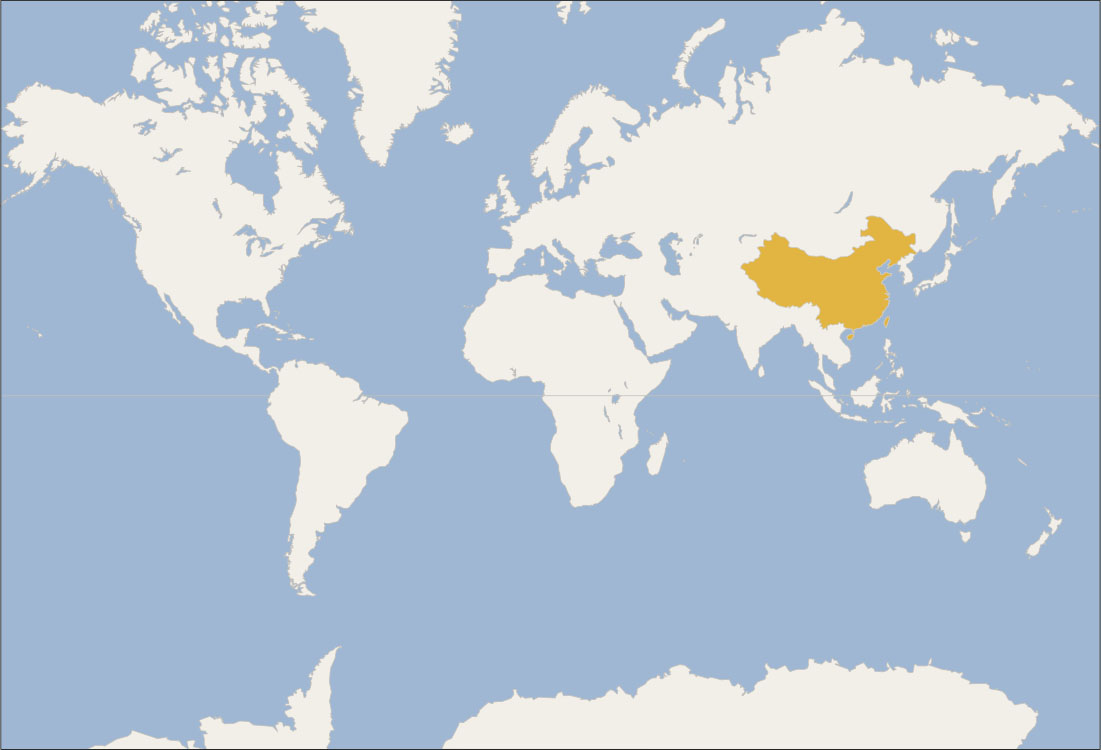
(credit: modification of work “World map blank shorelines” by Maciej Jaros/Wikimedia Commons, Public Domain) · Public Domain
Figure 9.3 (credit: modification of work “World map blank shorelines” by Maciej Jaros/Wikimedia Commons, Public Domain)
図9.3 (出典:Maciej Jaros「World map blank shorelines」を改変、Wikimedia Commons、パブリックドメイン)