第9章工業化時代の拡張Expansion in the Industrial Age
Resistance and Revolution抵抗と革命
Resistance movements and outright revolts sprang up wherever colonizers went. The revolt by Egyptians unwilling to submit to European control, the war waged by the Mahdi’s army, and Ethiopia’s war with Italy were all examples of African acts of resistance. Elsewhere in Africa, more limited revolts took place, such as the Zulu and Matabele (Ndebele) tribes’ resistance of British or Dutch control in the south.
英語のヒント
植民者が進む先々で、抵抗運動や公然たる反乱が起きた。ヨーロッパの支配に従おうとしないエジプト人の蜂起、マフディー軍の戦争、エチオピアとイタリアの戦争は、いずれもアフリカの抵抗の例である。アフリカの他地域でも、南部でズールー族やマタベレ(ンデベレ)族がイギリスやオランダの支配に抵抗したように、より限られた規模の反乱が起きた。
Resistance to foreign rule also took place in Asia and the Pacific. By the end of the nineteenth century, Chinese people’s resentment against foreigners in their land was high. The sale of foreign manufactured goods had hurt many Chinese artisans. The imperialists’ building of railroads and bridges had put many porters, cart drivers, and ferriers out of work. Foreigners were not subject to Chinese law. Protestant and Catholic missionaries in the country were especially resented. They interfered with rituals for venerating ancestors, and families were sometimes split when some members became Christians and others did not. Rumors abounded concerning the missionaries’ orphanages. One story, no doubt influenced by foreigners’ interest in taking photographs, said missionaries took children in only to kill them and use their eyeballs to make the substance that captured images on photographic plates.
英語のヒント
外国支配への抵抗はアジアや太平洋でも起こった。19世紀末までに、中国人の間では、自国にいる外国人への憤りが高まっていた。外国製品の販売は多くの中国人職人に損害を与えた。帝国主義者が鉄道や橋を建設すると、多くの荷運び人、荷車の御者、渡し守が職を失った。外国人は中国の法律に従わなかった。国内のプロテスタントやカトリックの宣教師は、とりわけ反感を買った。祖先を崇敬する儀礼に干渉し、家族の一部がキリスト教徒になり、他はならないことで、家族が分裂することもあった。宣教師の孤児院についても噂があふれた。外国人の写真撮影への関心に影響されたに違いないある話では、宣教師は子供を引き取ると殺し、その眼球を写真乾板に像を写す物質の製造に使うのだとされた。
In northern China, anti-foreign sentiments led to the formation of a secret society known as the Society of the Righteous and Harmonious Fists. Foreigners who witnessed the ritual exercises that members believed made them invulnerable to bullets called them Boxers. In 1899, the Boxers began their campaign to drive foreigners from China by killing two German priests. Violence swept through northern China as the Boxer Uprising flared. Boxers murdered foreigners and Chinese Christians and destroyed foreign property, sometimes disrupting railroads by pulling the steel rails from the ground.
英語のヒント
中国北部では反外国感情から、義和団として知られる秘密結社が生まれた。団員は儀礼的な体操によって弾丸を受けても傷つかなくなると信じ、その姿を見た外国人は彼らをボクサーと呼んだ。1899年、義和団はドイツ人司祭2人を殺害し、外国人を中国から追い出す運動を始めた。義和団の蜂起が激化すると、暴力が中国北部を覆った。義和団は外国人や中国人キリスト教徒を殺害し、外国の財産を破壊した。鋼鉄のレールを地面から引き抜き、鉄道を妨害することもあった。
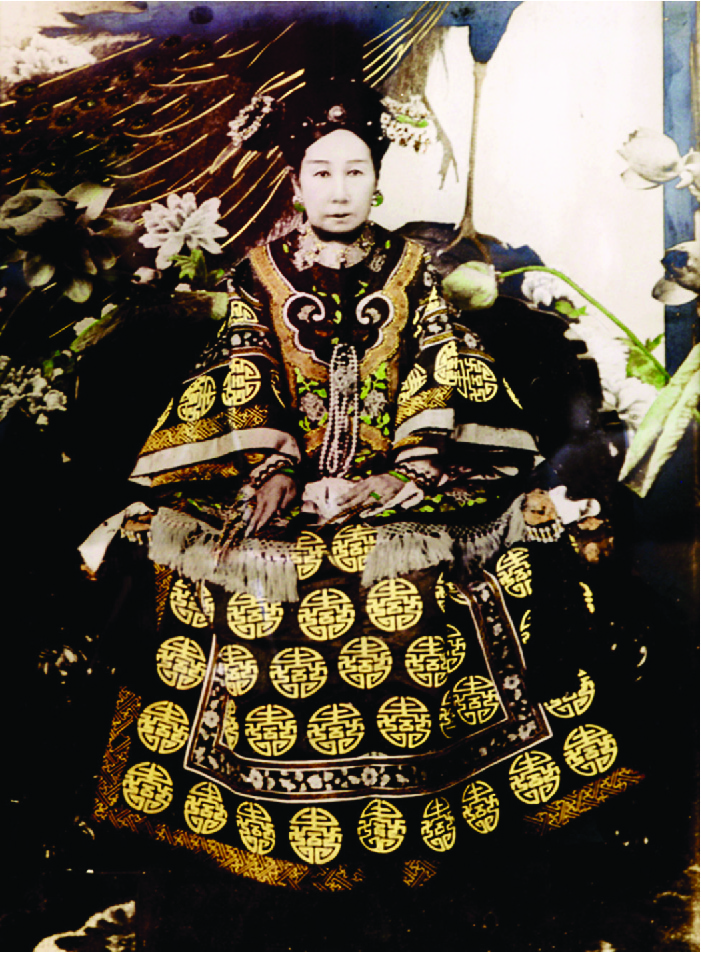
At first the Chinese army tried to stop the Boxers. However, in January 1900, believing foreign forces had invaded China to stop the uprising, the dowager empress Cixi proclaimed the Boxers should not be treated like criminals (Figure 9.29). Terrified foreigners streamed into Beijing seeking protection, but Cixi encouraged them to leave. Fearing for their lives, they barricaded themselves inside the embassies in the foreign quarter of Beijing. Cixi then proclaimed her allegiance to the Boxers and declared war on foreigners within China.
英語のヒント
当初、中国軍は義和団を止めようとした。しかし1900年1月、西太后は、蜂起を止めるため外国軍が中国に侵入したと信じ、義和団を犯罪者として扱ってはならないと宣言した(図9.29)。恐怖に駆られた外国人が保護を求めて北京へ流れ込んだが、西太后は彼らに退去を促した。身の危険を感じた彼らは、北京の外国人地区にある公使館内に立てこもった。すると西太后は義和団への支持を表明し、中国国内の外国人に宣戦した。
Empress Cixi.西太后。
(credit: “The Ci-Xi Imperial Dowager Empress” by Unknown/Wikimedia Commons, Public Domain) · Public Domain
Figure 9.29 Cixi, once a concubine of the Xianfeng emperor, assumed power upon his death in 1861. She ruled on behalf of her young son and remained in power even after he came of age. (credit: “The Ci-Xi Imperial Dowager Empress” by Unknown/Wikimedia Commons, Public Domain)
図9.29 かつて咸豊帝の側室だった西太后は、1861年の皇帝の死後、権力を掌握した。幼い息子に代わって統治し、息子が成人した後も権力を保った。(クレジット:「The Ci-Xi Imperial Dowager Empress」、作者不詳/Wikimedia Commons、パブリックドメイン)
Swiftly Britain, France, Germany, the United States, Japan, Russia, Austria-Hungary, and Italy formed the Eight-Nation Alliance, and their troops raced to Beijing. Waiting for help, the foreigners rationed their food and huddled in fear. One woman recalled hearing frenzied Boxers trying to dig through the building’s wall to reach the people inside. After a siege of fifty-five days, the international force arrived and the Boxers were dispersed, killed, or captured. In September 1901, the Boxer Protocol was signed, officially ending the incident. China was forbidden to import weapons for two years, and foreign legations were given the right to keep troops of their own nation for their defense. China also awarded $330 million to the members of the Eight-Nation Alliance.
英語のヒント
イギリス・フランス・ドイツ・アメリカ・日本・ロシア・オーストリア=ハンガリー・イタリアは、すぐに八か国連合軍を組織し、その軍隊は北京へ急行した。救援を待つ外国人は食料を配給制にし、恐怖の中で身を寄せ合った。ある女性は、狂乱した義和団員が建物内の人々に到達しようと壁を掘り抜く音を聞いたと回想した。55日間の包囲の後、国際連合軍が到着し、義和団員は散らされ、殺され、あるいは捕らえられた。1901年9月、北京議定書が調印され、事件は正式に終結した。中国は2年間の武器輸入を禁じられ、外国公使館には防衛のため自国の兵士を置く権利が与えられた。中国はまた、八か国連合の参加国に3億3000万ドルを支払うことになった。
U.S. attempts to rule the Philippines after purchasing it from Spain were hindered by the resistance of many Filipino tribes. Middle-class Filipinos had sought independence from Spanish control just as the Cubans had. Following Spain’s defeat, leaders of the independence movement like Emilio Aguinaldo had expected the United States to allow them to rule themselves. When President William McKinley announced in 1898 that the United States intended to govern the islands until the Filipinos were judged capable of ruling themselves, Aguinaldo objected: “My relations with the United States did not bring me . . . to make war on the Spaniards for their benefit, but for the purpose of our own liberty and independence.”
英語のヒント
スペインから購入したフィリピンを統治しようとするアメリカの試みは、多くのフィリピンの部族の抵抗に妨げられた。フィリピンの中産階級は、キューバ人と同様、スペイン支配からの独立を求めていた。スペイン敗北後、エミリオ・アギナルドら独立運動の指導者は、アメリカが自治を認めると期待していた。1898年、ウィリアム・マッキンリー大統領が、フィリピン人は自ら統治できると判断されるまでアメリカが島々を統治する意向だと発表すると、アギナルドは異議を唱えた。「アメリカとの関係は、私に……彼らの利益のためスペイン人と戦争をさせるためのものではなかった。われわれ自身の自由と独立のためだったのだ。」
The United States did not intend to relinquish control of its newly claimed territory, however, and war broke out. Attempts by the Filipinos to defeat U.S. forces in conventional warfare failed, so they adopted guerrilla tactics. Both sides tortured captives. U.S. soldiers burned villages to weaken civilians and guerrilla fighters alike and built concentration camps to hold resisting Filipinos. Many starved or died from infectious disease. In 1900, the United States began a “policy of attraction” by promising economic development along with a degree of self-government. The policy drew the support of wealthy and middle-class Filipinos and others who did not support Aguinaldo’s tactics. In 1901, Aguinaldo was captured, and the United States declared the war over in 1903. It was several decades before the Philippines gained independence.
英語のヒント
しかしアメリカは、新たに得た領土の支配を手放すつもりはなく、戦争が勃発した。通常戦でアメリカ軍を破ろうとするフィリピン人の試みは失敗し、彼らはゲリラ戦術を採用した。双方が捕虜を拷問した。アメリカ兵は民間人とゲリラ戦士の双方を弱体化させるため村を焼き、抵抗するフィリピン人を収容する強制収容所を築いた。多くの人が餓死し、感染症で死亡した。1900年、アメリカは経済開発と一定の自治を約束する「懐柔政策」を始めた。この政策は富裕層や中産階級のフィリピン人、その他アギナルドの戦術を支持しない人々の支持を得た。1901年にアギナルドが捕らえられ、アメリカは1903年に終戦を宣言した。フィリピンが独立を得るのは、それから数十年後のことだった。
India’s response to British imperialism was somewhat different. Violence had failed in the Sepoy Mutiny of 1857, and middle-class Indians, especially those with a British-style education, now turned to political change. They were disappointed, however, because many British elites considered Indians unfit for self-government, and they feared losing control of their most valuable colony. In 1885, moderate nationalists founded the Indian National Congress (INC), aimed at enacting political reform. The INC especially wished to end unfair taxation and remove all British-imposed barriers to industrialization in India.
英語のヒント
イギリス帝国主義へのインドの対応は、やや異なっていた。1857年のセポイの反乱では暴力が失敗し、中産階級のインド人、とりわけイギリス式の教育を受けた人々は、今度は政治的変革に向かった。しかし、イギリスのエリートの多くがインド人を自治に不適格とみなし、最も価値ある植民地を失うことを恐れていたため、彼らは失望させられた。1885年、穏健な民族主義者は、政治改革を目指してインド国民会議(INC)を設立した。国民会議はとりわけ、不公正な課税を終わらせ、イギリスがインドの工業化に課した障壁をすべて取り除くことを望んだ。
The moderate approach did not suit all Indian nationalists, however. Bal Gangadhar Tilak called for immediate independence from Britain, and in his newspaper he stated that Indians were justified in killing the British. “Swaraj (self-rule) is my birthright and I shall have it,” he proclaimed. When the British partitioned the province of Bengal in 1905, making Bengali Hindus a minority group within the new divisions, the INC supported a boycott of British-made goods and government schools, and acts of anti-British terrorism occurred.
英語のヒント
しかし、この穏健な方法は、すべてのインド民族主義者に合うわけではなかった。バール・ガンガーダル・ティラクはイギリスからの即時独立を要求し、自らの新聞で、インド人がイギリス人を殺すことは正当だと述べた。「スワラージ(自治)は私の生まれながらの権利であり、必ず手に入れる」と彼は宣言した。1905年、イギリスがベンガル州を分割し、新たな区分の中でベンガルのヒンドゥー教徒を少数派にすると、国民会議はイギリス製品と官立学校のボイコットを支持し、反英テロ行為も起きた。
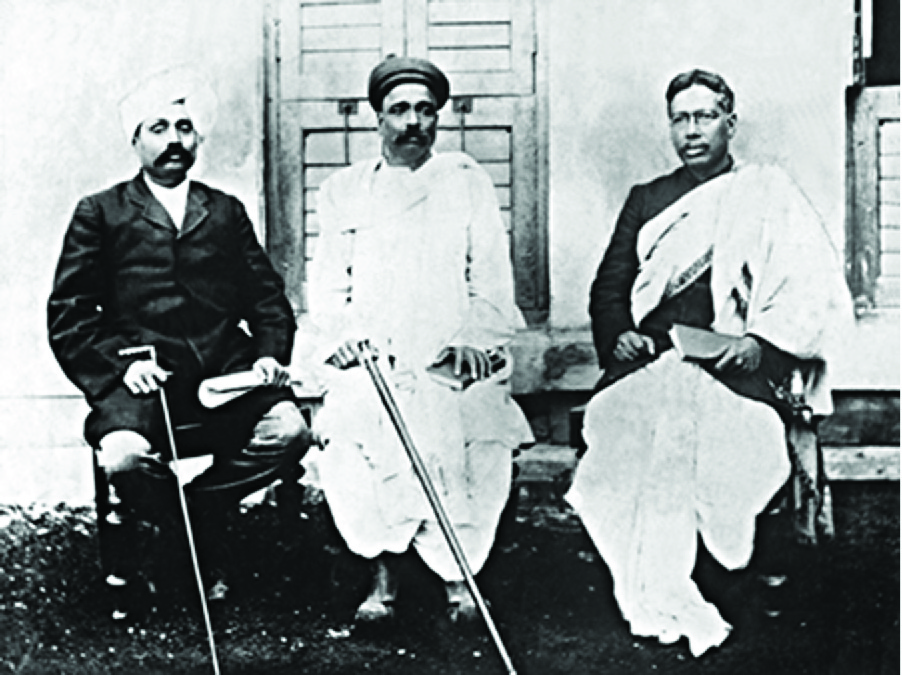
Fearing a radical turn would harm their cause, INC president Gopal Krishna Gokhale and other moderate members called for the boycott to end when a new secretary of state for India was appointed whom they believed was sympathetic. The Swadeshi movement calling upon Indians to purchase only Indian-made goods continued, however, led by the Indian lawyer and political activist Mohandas Gandhi. Tilak supported the Swadeshi movement, and in 1907 the INC split in two, with radicals aligning themselves with Tilak, Bipin Chandra Pal, and Lala Lajput Rai (Figure 9.31).
英語のヒント
急進的な方向転換が運動を損なうことを恐れた国民会議議長ゴーパール・クリシュナ・ゴーカレーと他の穏健派は、同情的だと考える新しいインド担当国務大臣が任命されると、ボイコットの終了を求めた。しかし、インド人にはインド製品だけを買うよう呼びかけるスワデーシー運動は、インド人弁護士で政治活動家のモーハンダース・ガンディーが率いて続けられた。ティラクはスワデーシー運動を支持し、1907年に国民会議は二つに分裂した。急進派はティラク、ビピン・チャンドラ・パール、ラーラー・ラージパト・ラーイの側についた(図9.31)。
Indian Nationalists.インドの民族主義者たち。
(credit: “Bal Gangadhar Tilak, Lala Lajpat Rai and Bipinchandra Pal” by Unknown/Wikimedia Commons, Public Domain) · Public Domain
Figure 9.31 Indian nationalist leaders Lala Lajput Rai, Bal Gangadhar Tilak, and Bipin Chandra Pal (l. to r.) were allies in the fight for independence and were often referred to as Lal-Bal-Pal. (credit: “Bal Gangadhar Tilak, Lala Lajpat Rai and Bipinchandra Pal” by Unknown/Wikimedia Commons, Public Domain)
図9.31 インド民族運動の指導者、ラーラー・ラージパト・ラーイ、バール・ガンガーダル・ティラク、ビピン・チャンドラ・パール(左から)は、独立闘争での盟友であり、「ラール・バール・パール」と呼ばれることが多かった。(クレジット:「Bal Gangadhar Tilak, Lala Lajpat Rai and Bipinchandra Pal」、作者不詳/Wikimedia Commons、パブリックドメイン)