第9章工業化時代の拡張Expansion in the Industrial Age
Latin Americaラテンアメリカ
The nations of Latin America also became export economies. Now freed from Spanish and Portuguese control, they were eager to industrialize but faced a variety of obstacles. At the beginning of the nineteenth century, Brazil had imported steam engines and developed facilities for sugar refining, coffee processing, and textile production. Paraguay built an iron foundry and established a steamship line. Chile opened coal mines and built sawmills and flour mills. Many countries also built rail lines. However, they did not become heavily industrialized; consequently, their development took another path.
英語のヒント
ラテンアメリカ諸国も輸出経済となった。スペインとポルトガルの支配を脱し、産業化への意欲は強かったが、さまざまな障害に直面した。19世紀初頭、ブラジルは蒸気機関を輸入し、製糖、コーヒー加工、繊維生産の施設を発達させた。パラグアイは製鉄所を建て、蒸気船航路を開いた。チリは炭鉱を開発し、製材所と製粉所を建てた。多くの国が鉄道も建設した。しかし、高度な工業化には至らず、その発展は別の道をたどった。
Ironically, independence was part of the problem. When Spain and Portugal regulated their economies, Latin American merchants had chafed at restrictions, but these regulations had also heavily taxed foreign-made goods, which protected local handicraft industries. Now that merchants could trade with any countries they wished, however, goods made in Europe and the United States flooded in. Like India and Egypt, Latin American countries quickly found their own manufactured goods could not be made or sold as cheaply as imports. They also could not make enough to supply internal demand. As Brazilians and Chileans watched, their silver flowed overseas instead of being spent at home.
英語のヒント
皮肉にも、独立は問題の一部だった。スペインとポルトガルが経済を統制していた頃、ラテンアメリカの商人は制限にいらだっていた。しかし、その規制は外国製品に高い税を課し、地元の手工業を守ってもいた。ところが、商人が望むどの国とも取引できるようになると、欧米の製品が流れ込んだ。インドやエジプトと同様、ラテンアメリカ諸国も、自国の製品を輸入品ほど安く作ったり売ったりできないことにすぐ気づいた。国内需要を満たす十分な量も作れなかった。ブラジル人とチリ人が見守るなか、銀は国内で使われず海外へ流れ出した。
Latin Americans quickly realized that they would be more successful at continuing to grow sugar and coffee, products that had been the bases of the colonial economy and were still in high demand, than they would be at attempting to compete with foreign manufacturers. Later in the nineteenth century, Brazil produced rubber for the same reasons, using its abundant land and large agricultural workforce to supply raw materials for industrialized nations. Although these decisions made sense to planters and politicians, they nevertheless locked Spain’s and Portugal’s former colonies into providing raw materials that did not command as high a price as the finished products made from them.
英語のヒント
ラテンアメリカの人々は、外国の製造業者と競争しようとするより、砂糖とコーヒーを作り続ける方が成功しやすいことをすぐに理解した。どちらも植民地経済の基礎だった産品であり、依然として需要が高かった。19世紀後半には、ブラジルも同じ理由でゴムを生産し、豊富な土地と大きな農業労働力を使い、工業国へ原料を供給した。これらの決定は農園主と政治家には理にかなっていたが、それでも旧スペイン・ポルトガル植民地を、原料から作られる完成品ほど高い価格では売れない原料の供給に固定した。
Thus, though Latin Americans sold large amounts of cash crops to the United States and Europe, enriching the planter class, their earnings never exceeded (or even equaled) what they paid for imports. This disparity had a negative effect on Latin American society. Wealthy plantation owners and urban professionals could afford the factory-made products of other continents, but agricultural laborers could not, accentuating the class divide. Furthermore, many of the industrial improvements that Latin American countries did make, like the construction of mines and railroads, were funded by European and U.S. banks, and much necessary equipment, like steam engines and other machinery, was imported from Europe, leaving little money at home for domestic projects like building roads and telegraph lines. Regional wars in the nineteenth century also destabilized South America and interfered with industrialization. For example, from 1864 to 1870, Paraguay battled the united forces of Uruguay, Brazil, and Argentina in the War of the Triple Alliance. By the time the war ended, it and infectious diseases had killed much of Paraguay’s population.
英語のヒント
こうしてラテンアメリカの人々は大量の換金作物を欧米へ売り、農園主階級を富ませたものの、その収入は輸入への支払額を超えず、同額にさえ達しなかった。この不均衡はラテンアメリカ社会に悪影響を与えた。裕福な農園所有者と都市の専門職は他大陸の工場製品を買えたが、農業労働者は買えず、階級の隔たりは際立った。さらに、鉱山や鉄道の建設など、ラテンアメリカ諸国が実際に実施した産業上の改善の多くも、欧米の銀行が資金を出していた。蒸気機関など必要な設備の多くはヨーロッパから輸入され、道路や電信線の建設といった国内事業に使う資金はほとんど残らなかった。19世紀の地域戦争も南米を不安定化させ、産業化を妨げた。例えば1864~1870年、パラグアイは三国同盟戦争でウルグアイ、ブラジル、アルゼンチンの連合軍と戦った。戦争が終わるまでに、戦争と感染症によってパラグアイ人口の多くが失われていた。
Thus a variety of forces combined to make Latin America’s attempts to industrialize largely unsuccessful, and the region remained primarily an exporter of cash crops. Although railroads were built, they tended to be short lines linking the interior to the coast, enabling the export of raw materials. No national rail networks developed like they did in the United States and Europe, and electrification took place only in major cities.
英語のヒント
このように、さまざまな力が重なり、ラテンアメリカの産業化の試みは概して成功せず、この地域は主に換金作物の輸出地域であり続けた。鉄道は建設されたが、内陸と海岸を結び、原料を輸出できるようにする短い路線が多かった。米国やヨーロッパのような全国的な鉄道網は発達せず、電化も大都市に限られた。
China中国
China also did not become an industrial power in the nineteenth century, despite its population, wealth, natural resources, and tradition of innovation and invention. Historians have offered a variety of reasons.
英語のヒント
中国も、その人口、富、天然資源、革新と発明の伝統があったにもかかわらず、19世紀に工業大国にはならなかった。歴史家はさまざまな理由を挙げている。
First, no challengers in East Asia could match China in size, wealth, and military strength, so it had no need to compete with anyone. Second, because China’s population was large and often poor, labor was abundant and employers did not have to offer high wages to attract employees or replace workers with labor-saving machinery. Also, unlike in Europe, most coal deposits in China were located far from population and manufacturing centers. Coal provided the most efficient means of powering steam engines in factories and was crucial to the development of railroads.
英語のヒント
第一に、東アジアには規模、富、軍事力で中国に匹敵する挑戦者がおらず、誰かと競争する必要がなかった。第二に、中国の人口は多く、貧しい人も多かったので、労働力は豊富だった。雇用主は従業員を集めるため高賃金を提示したり、労働者を省力化機械に置き換えたりする必要がなかった。また、ヨーロッパとは異なり、中国の石炭埋蔵地の多くは人口集中地や生産拠点から遠かった。石炭は工場の蒸気機関を動かす最も効率的な手段であり、鉄道の発達にも不可欠だった。
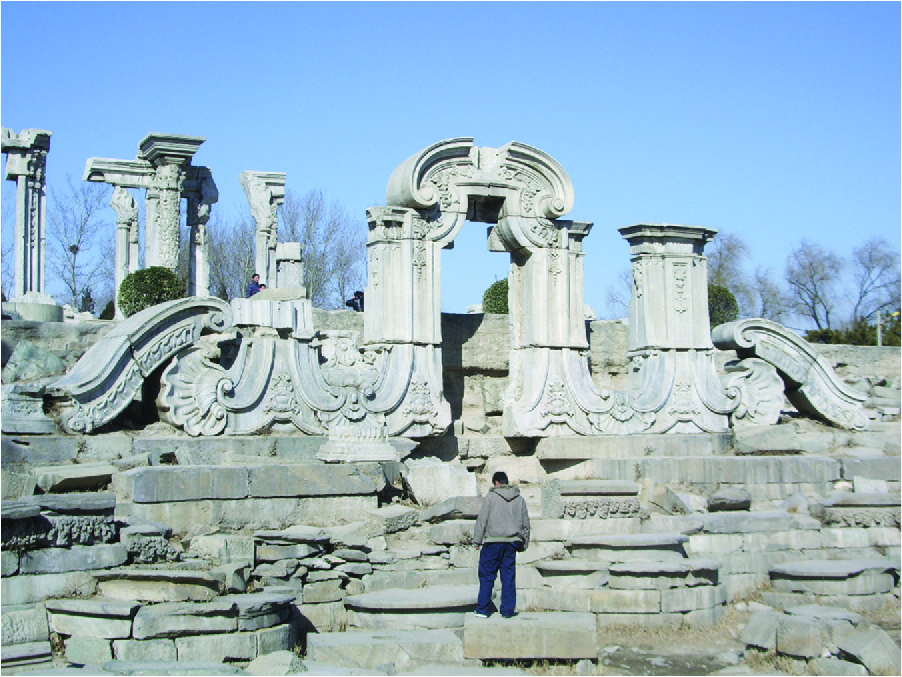
China had also been weakened by military defeats and internal rebellion. Britain won the First Opium War (1839–1842), gaining control over Hong Kong and five other ports: Guangzhou, Shanghai, Ningbo, Fuzhou, and Xiamen. In 1844, China also signed treaties with France and the United States, giving them the right to trade in the five open ports and build Christian churches in and send missionaries to China. China’s loss to Britain in the Second Opium War (1856–1860) led to the signing of the Treaty of Tianjin, which gave Britain, France, the United States, and Russia further rights to trade and establish diplomatic posts in the capital of Beijing. China refused to honor the treaty, however, and British and French troops invaded Beijing in 1860, looting and burning the imperial Old Summer Palace (Figure 9.12). The subsequent Convention of Beijing affirmed the Treaty of Tianjin.
英語のヒント
中国は、軍事的敗北と内乱によっても弱体化していた。イギリスは第一次アヘン戦争(1839~1842年)に勝利し、香港と、それ以外の五つの港、広州・上海・寧波・福州・厦門の支配権を得た。1844年、中国はフランスおよびアメリカ合衆国とも条約を結び、五つの開港場で貿易する権利、中国にキリスト教会を建て宣教師を派遣する権利を両国に与えた。第二次アヘン戦争(1856~1860年)でイギリスに敗れた中国は天津条約を締結し、イギリス・フランス・アメリカ・ロシアに、貿易を行い首都北京に外交拠点を設ける一層の権利を認めた。しかし、中国が条約の履行を拒んだため、1860年に英仏両軍が北京へ侵攻し、皇帝の離宮であった円明園を略奪して焼き払った(図9.12)。その後の北京条約によって天津条約が確認された。
A Casualty of the Opium Wars.アヘン戦争の犠牲。
(credit: “Old summer palace ruin” by “Clee7903”/Wikimedia Commons, Public Domain) · Public Domain
Figure 9.12 Most of the Old Summer Palace, the residence of the Qing emperors, was looted and destroyed by British and French soldiers in October 1860. Treasures they carried off are now in museums around the world. (credit: “Old summer palace ruin” by “Clee7903”/Wikimedia Commons, Public Domain)
図9.12 清の皇帝の離宮だった円明園の大部分は、1860年10月にイギリスとフランスの兵士によって略奪され破壊された。彼らが持ち去った財宝は、現在、世界各地の博物館に収められている。(クレジット:「Old summer palace ruin」、作者「Clee7903」/Wikimedia Commons、パブリックドメイン)
China’s defeat in the Opium Wars began what the Chinese have called “the century of humiliation.” In accord with the Treaty of Tianjin, six million taels (a unit of currency) of Chinese silver that might otherwise have been invested in business enterprises flowed to the victorious foreigners as compensation for damages sustained. This demonstration of the Qing ’s military weakness plus other grievances such as high unemployment and failure to maintain the crucially important Grand Canal, which transported food stuffs from south to north, led to numerous uprisings and outbreaks of violence directed at the reigning dynasty.
英語のヒント
アヘン戦争での中国の敗北は、中国人が「屈辱の一世紀」と呼ぶ時代の始まりとなった。天津条約に従って、事業への投資に使われたかもしれない中国の銀600万両(両は通貨単位)が、損害賠償として勝利した外国勢力に流出した。清の軍事的弱体ぶりが示されたことに加えて、高失業率や、南から北へ食料を運ぶきわめて重要な大運河の維持管理の不備などへの不満が、支配王朝に向けた数多くの蜂起や暴力事件を引き起こした。
Internal rebellion also weakened China. In December 1850, the Taiping Rebellion began when Qing troops tried to force the followers of a man named Hong Xiuquan from their stronghold in Guangxi province in the south. Hong, a village schoolteacher, had come to believe he was the son of the Christian God and the brother of Jesus. Rejecting both Qing authority and Confucian tradition, he spread his religious teachings throughout southern China and gained a sizable following. In early 1851, after defeating some Qing forces, Hong Xiuquan proclaimed the Taiping Tianguo (Heavenly Kingdom of Great Peace) with himself as king. He urged his followers to give up alcohol and opium and called for the overthrow of the Qing government. His promises of land and wealth for all attracted impoverished peasants, tribal minority groups, bandit gangs, and members of Chinese secret societies, some originally formed to restore the Ming dynasty.
英語のヒント
内乱も中国を弱体化させた。1850年12月、清軍が、南部の広西省にある拠点から洪秀全という人物の信徒を追い出そうとしたことで、太平天国の乱が始まった。村の教師だった洪は、自分がキリスト教の神の息子で、イエスの弟であると信じるようになっていた。清の権威と儒教の伝統の両方を否定し、中国南部一帯に自分の宗教的教えを広め、多くの信者を集めた。1851年初め、清軍の一部を打ち破った洪秀全は、自らを王とする太平天国(大いなる平和の天の王国)の成立を宣言した。彼は信徒に酒とアヘンをやめるよう求め、清政府の打倒を呼びかけた。万人に土地と富を与えるという約束は、貧しい農民、少数民族の集団、盗賊団、中国の秘密結社の成員を引きつけた。その秘密結社の中には、もともと明朝の復興を目的に作られたものもあった。
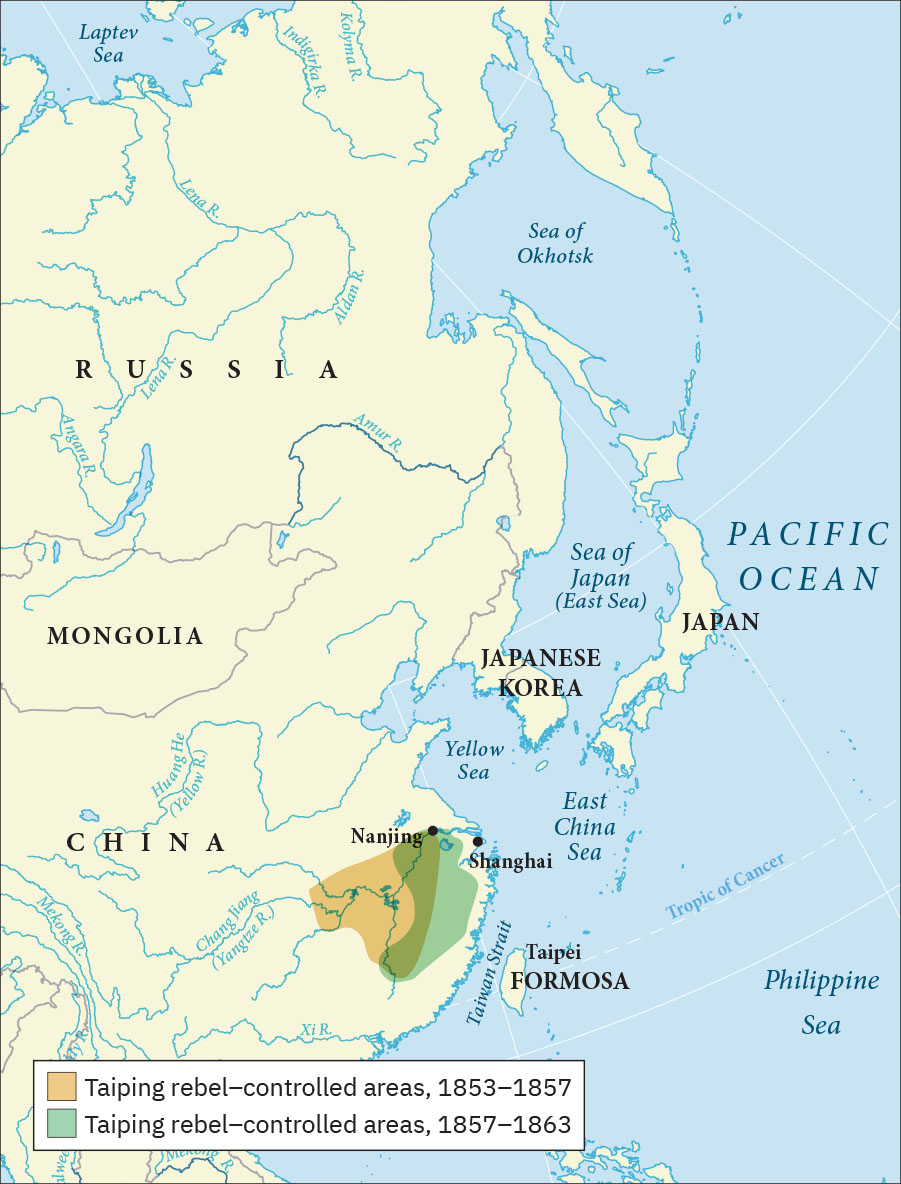
Hong Xiuquan’s forces raged through southern China, seizing towns and cities and confiscating food, money, and weapons. (Figure 9.13). In 1853, the populous southern city of Nanjing fell to the Taiping army and became Hong Xiuquan’s capital. Many died in the fighting, and the confiscation of foodstuffs led to famine. By the time the Taiping Rebellion ended after Hong’s death in 1864, an estimated twenty to thirty million Chinese had died, and the south, China’s most populous region, had been devastated.
英語のヒント
洪秀全の軍勢は中国南部を荒らし回り、町や都市を占領して食料・金銭・武器を没収した(図9.13)。1853年、人口の多い南部の都市南京が太平天国軍の手に落ち、洪秀全の首都となった。戦闘で多くの人が死亡し、食料の没収は飢饉をもたらした。洪が1864年に死去した後、太平天国の乱が終わるまでに、中国人の死者は推計2000万~3000万人に達し、中国で最も人口の多い地域だった南部は荒廃していた。
The Taiping Rebellion.太平天国の乱。
(attribution: Copyright Rice University, OpenStax, under CC BY 4.0 license) · CC BY 4.0
Figure 9.13 The shading shows the area controlled by the Taiping rebels. Note how close they were to the major port of Shanghai. (attribution: Copyright Rice University, OpenStax, under CC BY 4.0 license)
図9.13 色付きの部分は太平天国軍が支配した地域を示す。主要な港である上海にどれほど近かったかに注目しよう。(出典:著作権 Rice University、OpenStax、CC BY 4.0ライセンス)