第9章工業化時代の拡張Expansion in the Industrial Age
Japan日本
In July 1853, U.S. commodore Matthew Perry sailed into Edo (Tokyo) Bay at the head of a fleet of four gunships, charged with negotiating diplomatic relations and trade agreements with Japan. Japan had largely closed itself off in the 1600s to avoid colonization and domination by western countries. The Japanese also wished to protect their cultural integrity, and warding off foreign influences was part of this strategy. Intent upon securing entry, Perry ordered his ship’s guns to turn toward the shore and fire. The guns fired blanks, but the Japanese military did not know this. Talks between Perry and the Japanese government ensued, and on March 31, 1854, Japan signed the Convention of Kanagawa, which opened the ports of Shimoda and Hakotate to American ships, promised assistance for American ships and sailors shipwrecked on Japanese coasts, granted American merchants permission to purchase provisions in Japan, and promised peaceful and friendly relations between the United States and Japan. Lacking the military power to resist Perry’s demands, the Japanese government had no choice but to agree.
英語のヒント
1853年7月、米国のマシュー・ペリー提督は、4隻の砲艦からなる艦隊を率いて江戸(東京)湾へ入った。日本との国交と通商協定を交渉する任務を帯びていた。日本は、西洋諸国による植民地化と支配を避けるため、17世紀にほぼ国を閉ざしていた。日本人には自国文化の独自性を守る意図もあり、外国の影響を防ぐことはその戦略の一部だった。入国の確保を目指すペリーは、艦砲を岸へ向けて発射するよう命じた。空砲だったが、日本側の軍人はそれを知らなかった。続いてペリーと日本政府との交渉が行われ、1854年3月31日、日本は日米和親条約に調印した。条約は下田と函館の港を米国船に開き、日本沿岸で難破した米国船と船員の救助、米国商人による日本での物資購入、日米の平和的で友好的な関係を約束した。ペリーの要求に抵抗する軍事力を欠いた日本政府には、同意する以外の選択肢がなかった。
Japan was then governed by the Tokugawa shogunate, a system in which a military leader, the shogun, ruled in place of the emperor, whose role had largely been that of a figurehead for hundreds of years. Under the shogunate, aristocratic lords who were subordinate to the shogun, called daimyo, and their retainers, members of a warrior elite called the samurai, governed the country. After Perry’s arrival, modernizers in Japan, remembering the American gunboats and China’s humbling by Britain’s navy in the first of the Opium Wars (1839–1842), believed the best way to protect their country was to adopt the technology and institutions of the west. They saw the shogunate as a barrier to modernization, so they called for the emperor to resume rule. Many samurai were not convinced by these arguments. Not only would industrialization elevate “inferior” craftspeople and merchants, who were far below them in the social hierarchy, but the shogunate’s end would deprive them of power and influence.
英語のヒント
当時、日本を統治していたのは徳川幕府だった。軍事的指導者である将軍が天皇に代わって治め、天皇の役割は何百年ものあいだ、おおむね名目的な君主の役割にとどまっていた。幕府のもとでは、将軍に従属する大名と呼ばれる領主と、その家臣である武士が国を統治した。ペリー来航後、日本の近代化論者は、米国の砲艦と第1次アヘン戦争(1839~1842年)で英国海軍に屈した中国を念頭に置き、国を守る最善の方法は西洋の技術と制度を導入することだと考えた。幕府を近代化の障害とみなし、天皇による統治の再開を求めた。多くの武士は、これらの主張に納得しなかった。産業化は、身分秩序で自分たちよりはるか下にいる「下等な」職人や商人の地位を高めるだけでなく、幕府の終焉は武士の権力と影響力も奪うからである。
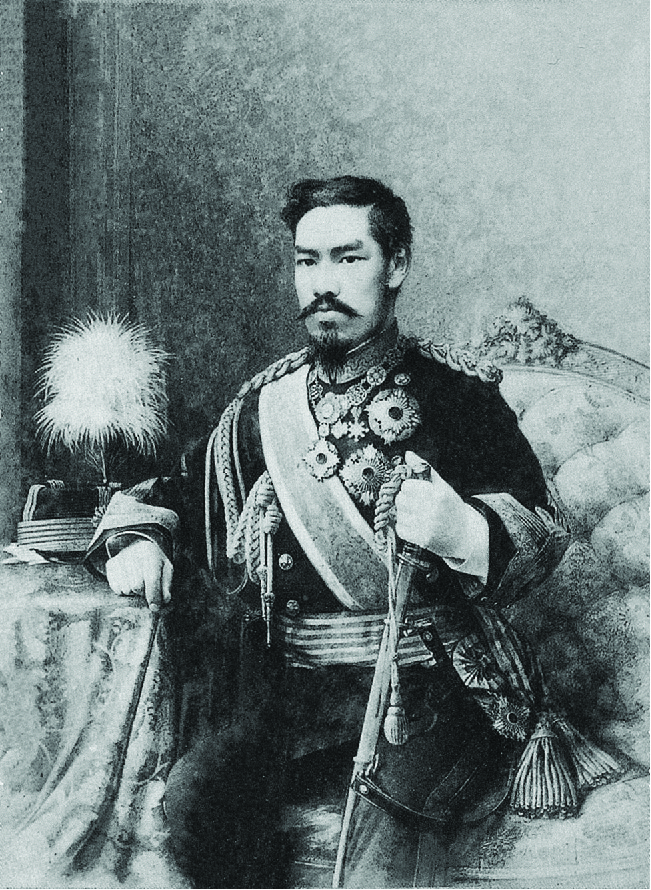
In January 1867, Emperor Meiji (Figure 9.9) ascended the throne following the death of his father. In November, the reigning shogun Tokugawa Yoshinobu resigned and relinquished his power, and in January 1868 the emperor officially proclaimed the end of the shogunate. The period called the Meiji Restoration was underway. In 1869, the daimyo surrendered their titles and their land to the emperor. Although the daimyo were allowed to remain governors of their former lands, the samurai were no longer their retainers. Instead, they worked for the state. In 1871, the daimyo were removed as governors, and they and the samurai were given yearly stipends.
英語のヒント
1867年1月、父の死後、明治天皇が即位した(図9.9)。11月、在職中の将軍徳川慶喜が辞任して権力を返上し、1868年1月、天皇は正式に幕府の終焉を宣言した。明治維新と呼ばれる時期が始まっていた。1869年、大名たちは称号と領地を天皇に返した。大名は旧領の知事にとどまることを認められたが、武士はもはや大名の家臣ではなく、国家に仕えることとなった。1871年に大名は知事から解任され、大名と武士には年ごとの俸給が支給された。
Emperor Mutsuhito Meiji.明治天皇・睦仁
(credit: “Conté portrait of the Emperor Meiji” by Eduardo Chiossone in Tenno Yondai No Shozo/Wikimedia Commons, Public Domain) · Public Domain
Figure 9.9 This highly realistic 1888 conté crayon portrait of Emperor Meiji by the Italian engraver Edoardo Chiossone was drawn covertly from life and was often mistaken for a photograph at the time. (credit: “Conté portrait of the Emperor Meiji” by Eduardo Chiossone in Tenno Yondai No Shozo/Wikimedia Commons, Public Domain)
図9.9 イタリアの版画家エドアルド・キヨッソーネが1888年にコンテで描いた明治天皇のこのきわめて写実的な肖像は、本人をひそかに観察して制作されたもので、当時は写真と間違えられることも多かった。(出典:Eduardo Chiossoneによる「Conté portrait of the Emperor Meiji」/Tenno Yondai No Shozo/Wikimedia Commons、Public Domain)
Even further indignities awaited those who had once held power in Japan, however. The government stipends given to daimyo and samurai were made subject to taxation in 1873, and beginning in 1876 they were distributed in the form of government bonds. The Meiji government officially abolished class distinctions, which for the samurai meant the loss of privileges such as the right to wear swords. Although some rebelled, rising up against government forces several times in the 1870s, they were defeated by Japan’s new national army, equipped with modern weapons and trained in western methods of fighting.
英語のヒント
かつて日本で権力を握っていた人々には、さらに屈辱的な処遇が待っていた。大名と武士への政府の俸給は1873年に課税対象となり、1876年からは国債の形で支給されるようになった。明治政府は正式に身分差を廃止し、武士にとっては帯刀権などの特権の喪失を意味した。一部は反乱を起こし、1870年代に何度か政府軍と戦ったが、近代兵器を装備し、西洋式の戦闘訓練を受けた日本の新しい国軍に敗れた。
Industrialization was a major goal of Japan’s Meiji government, and the state played a greater role in it than in most western countries in the nineteenth century. The first goal was to build railroads to unite the regions of the country and assist in further industrial development. Construction began in 1870; by 1872, a rail line linked the capital of Tokyo with the port of Yokohama. Perhaps remembering that Perry’s demands had been dictated from the deck of a gunboat, the government also invested heavily in shipbuilding.
英語のヒント
産業化は明治政府の主要目標であり、19世紀の西洋諸国の多くに比べ、国家の役割が大きかった。最初の目標は、各地域を結び、さらなる産業発展を助ける鉄道の建設だった。建設は1870年に始まり、1872年までには首都東京と横浜港が鉄道で結ばれた。ペリーの要求が砲艦の甲板から突きつけられたことをおそらく念頭に置いて、政府は造船にも多額を投資した。
The Mitsubishi Corporation, a private company founded by samurai Iwasaki Yatori, competed directly with the government and, with its modern ships and efficient management, replaced it as the country’s leading shipbuilder and shipper. Seeking independence from western shipping lines, the government then turned eleven ships over to Mitsubishi with the provision that it establish regular trade with China. In 1887, the company purchased the government-owned shipyard in Nagasaki. Mitsubishi became one of Japan’s first zaibatsu, family-owned business conglomerates with financial and industrial branches influential in Japanese politics.
英語のヒント
武士の岩崎弥太郎が設立した民間企業の三菱は、政府と直接競争し、近代的な船と効率的な経営によって、政府に代わり国内有数の造船・海運事業者となった。西洋の海運会社からの自立を目指す政府は、中国との定期貿易を開くという条件で、三菱に11隻の船を引き渡した。1887年、三菱は長崎の官営造船所を購入した。三菱は日本の最初期の財閥の一つとなった。財閥とは、金融・産業部門をもち、日本の政治にも影響力を及ぼす同族経営の企業集団である。
Mitsubishi also invested heavily in coal mining. The Japanese government did so too and invested in lead, iron, and copper mines, as well as in factories that manufactured weapons and cement. The government’s willingness to fund industries not crucial to military defense or industrial development was variable. The textile industry, for example, relied less heavily on government support. Thus as Japan strove to build battleships and railways and to modernize its army, textile companies continued to purchase mechanized equipment from abroad.
英語のヒント
三菱は炭鉱にも多額を投資した。日本政府も同様に炭鉱へ投資し、さらに鉛・鉄・銅の鉱山、兵器やセメントを製造する工場にも資金を投じた。軍事防衛や産業発展に不可欠ではない産業への資金援助については、政府の姿勢は一様ではなかった。例えば繊維産業は、政府支援への依存度が比較的低かった。このため、日本が軍艦と鉄道を建設して陸軍を近代化しようと努力するなか、繊維企業は引き続き国外から機械設備を購入した。
The Japanese government abolished feudalism and gave peasant farmers title to their land, freeing them to sell it and travel to cities for work in factories and shipyards if they wished. Those who remained on the land were helped to increase Japan’s food production by the government’s importation of fertilizers and farm equipment. The abolition of samurai status freed the warrior elite to use their skills as managers of factories. As the samurai built private wealth, they invested in economic sectors that received less government support. Textile production benefited greatly from this trend, as did brewing and the manufacture of glass and chemicals.
英語のヒント
日本政府は封建制を廃止し、農民に土地の所有権を与え、望めば土地を売って都市へ移動し、工場や造船所で働けるようにした。農地にとどまった人々も、政府が肥料や農機具を輸入したことで、食料増産を助けられた。武士身分の廃止により、武士層は能力を工場経営者として使えるようになった。武士たちは個人資産を築くと、政府支援の少ない経済部門へ投資した。この傾向は繊維生産に大きな利益をもたらし、醸造、ガラス製造、化学製品製造も同じ恩恵を受けた。
Japan established a public school system in 1872. By 1900, attendance was nearly universal for boys, and girls were not far behind. The new system stressed the study of both science and the Confucian classics. Japan also sent students abroad to study technology and institutions in the United States and Europe.
英語のヒント
日本は1872年に公教育制度を整えた。1900年までには男子の就学がほぼ普遍的となり、女子もそれに近づいていた。新制度は科学と儒学の古典の両方を重視した。日本はさらに、米国やヨーロッパの技術・制度を学ぶため、学生を海外へ派遣した。
By the end of the nineteenth century, Japan had become capable of competing with larger countries and was eager to do so. It soon got the chance. In 1895, it successfully defeated non-industrialized China in the Sino-Japanese War. In 1905, it defeated Russia and sent a clear message to the United States and Europe that it intended to become a world power.
英語のヒント
19世紀末までに、日本はより大きな国々と競えるようになり、実際に競うことを望んでいた。その機会はすぐに訪れた。1895年、日本は日清戦争で、工業化していなかった中国を破った。1905年にはロシアを破り、世界の大国になる意思を米国とヨーロッパへ明確に示した。