第12章戦間期The Interwar Period
12.2 The Formation of the Soviet Union12.2 ソ連の成立
Learning Objectives学習の目標
By the end of this section, you will be able to:
この節を学び終えると、次のことができるようになる。
Describe the Soviet Union’s early years and the structure of its government
成立初期のソ連と、その統治機構を説明する。
Analyze the effects of Stalin’s first Five-Year Plan on the Soviet economy
スターリンの第一次五カ年計画が、ソ連経済に及ぼした影響を分析する。
Describe life in the Soviet Union under Stalin
スターリン統治下のソ連での生活を説明する。
Russia underwent massive political upheaval during the Bolshevik takeover in 1917. A bloody civil war was fought for the next three years before the Bolsheviks and their leader Vladimir Lenin were victorious. Russia was then reorganized as the Soviet Union in the early 1920s. Lenin’s early death created an opening exploited by Joseph Stalin, an autocrat who reshaped the “worker’s paradise” of the Soviet Union to bring it fully under his authoritarian control.
英語のヒント
1917年にボリシェヴィキが政権を奪取した際、ロシアでは巨大な政治的激変が起こった。その後3年間にわたって血なまぐさい内戦が戦われ、ボリシェヴィキとその指導者ウラジーミル・レーニンが勝利した。続いて1920年代初めに、ロシアはソビエト連邦へと再編された。レーニンの早い死によって生じた機会を利用したのが、ヨシフ・スターリンである。この独裁者は、「労働者の楽園」とされたソ連を作り変え、自らの権威主義的支配の下に完全に置いた。
The Birth of the Soviet Union and the Rise of Stalinソ連の誕生とスターリンの台頭
After the Bolshevik seizure of the government and Russia’s hasty departure from World War I, Lenin moved to consolidate power in Russia. Civil war raged from 1918 to 1921 between the Red Army of the Bolsheviks and the White Army representing all the groups that opposed them, including the Russian upper classes, forces loyal to the monarchy, and Lenin’s enemies within the Russian Social Democrats, such as the Menshevik faction. Members of the White Army disagreed on whether they sought an anti-Bolshevik communist government or the return of a tsarist government. The Red Army, though smaller, had a focused goal and was better organized.
英語のヒント
ボリシェヴィキが政権を奪い、ロシアが慌ただしく第一次世界大戦から離脱すると、レーニンは国内で権力を固め始めた。1918年から1921年にかけて、ボリシェヴィキの赤軍と、彼らに反対する諸集団を代表する白軍との間で、激しい内戦が続いた。白軍側にはロシアの上流階級、君主制に忠実な勢力、さらにロシア社会民主派の内部でレーニンと対立していたメンシェヴィキなどの派閥が含まれた。白軍の構成員は、反ボリシェヴィキの共産主義政権を目指すのか、ツァーリの統治を復活させるのかについて、意見が一致していなかった。赤軍は規模では小さかったものの、目標が明確で、よりよく組織されていた。
British, French, Japanese, and U.S. troops all invaded Russia in support of the White Army and stayed until 1920, but they were unable to stop the Bolsheviks from seizing control. The civil war ended in 1921 with the Bolsheviks in control. Approximately 1.5 million soldiers had died in the fighting, but the civilian death toll was substantially higher—about eight million.
英語のヒント
イギリス、フランス、日本、アメリカの軍隊はいずれも白軍を支援してロシアに侵入し、1920年まで駐留したが、ボリシェヴィキが支配権を握るのを阻止できなかった。内戦は1921年にボリシェヴィキが支配する形で終結した。戦闘で死亡した兵士は約150万人だったが、民間人の死者はそれを大きく上回り、約800万人に達した。
During the civil war, Lenin and the Bolshevik leadership also sought to take over lands outside Russia that had been controlled by the now-deposed tsar. Lenin approached these regions with the goal of creating a federal state of republics governed by a soviet, an elected committee of workers’ representatives. Each republic in this new “Soviet Union” would represent an ethnicity and be nominally independent but ultimately under the central government’s control. Many of these areas fiercely resisted incorporation by the Bolsheviks.
英語のヒント
内戦中、レーニンとボリシェヴィキ指導部は、ロシアの外で、すでに退位させられたツァーリがかつて支配していた土地も掌握しようとした。レーニンはこれらの地域に対し、ソヴィエト、すなわち選挙で選ばれた労働者代表の評議会によって統治される共和国からなる連邦国家を築こうとした。この新しい「ソビエト連邦」の各共和国は、それぞれの民族を代表し、名目上は独立していても、最終的には中央政府の支配下に置かれることになっていた。これらの地域の多くは、ボリシェヴィキによる編入に激しく抵抗した。
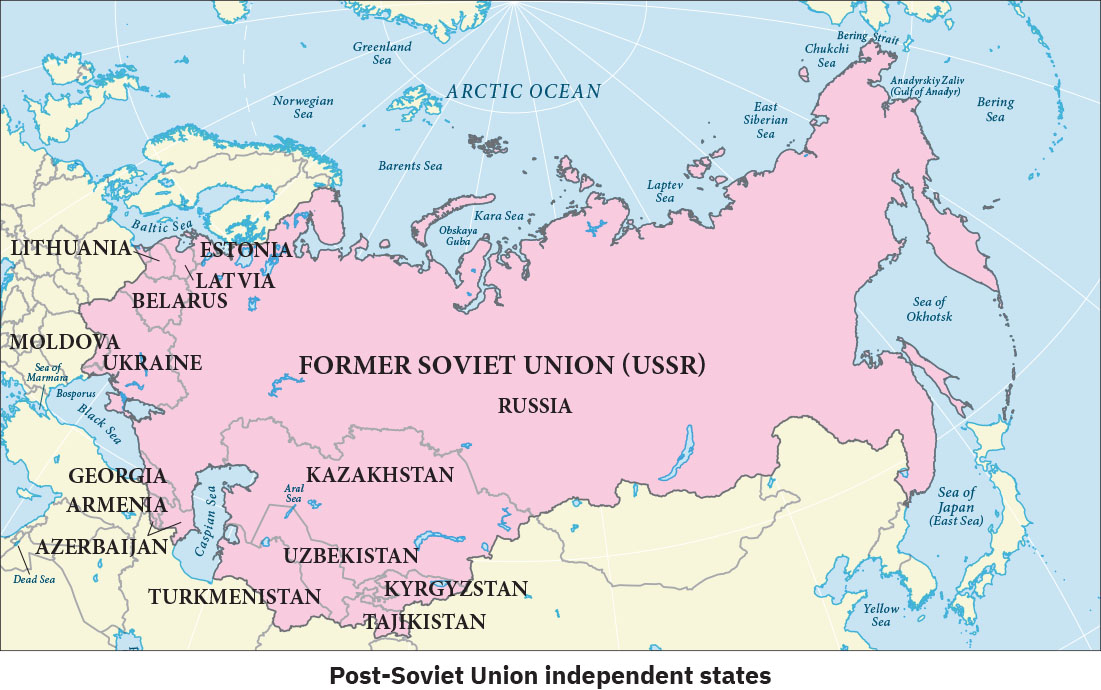
In 1919, for example, the Red Army invaded Ukraine and faced strong resistance, but by 1920, the Bolsheviks had taken control. Belarus was also established as a Soviet republic fairly easily. Both Ukraine and Belarus had some autonomy but had to rely on Lenin’s government to direct foreign policy. Other areas, like the Caucasus, proved more contentious. Azerbaijan and Armenia were incorporated by the Bolsheviks in 1920. The government in Georgia was heavily Menshevik and resisted Bolshevik rule, but in 1921 the Red Army took control of this region as well. In 1922, the Union of Soviet Socialist Republics (USSR) was established. It incorporated the country of Russia and the regions Russia had absorbed as soviet republics under a new centralized national government quite different from what the revolutionaries had envisioned only a few years before (Figure 12.8).
英語のヒント
たとえば1919年、赤軍はウクライナに侵攻して強い抵抗に遭ったが、1920年までにはボリシェヴィキが支配権を握った。ベラルーシも比較的容易にソビエト共和国として成立した。ウクライナとベラルーシには、いずれもある程度の自治権があったが、外交政策の指揮はレーニンの政府に頼らなければならなかった。カフカスのようなほかの地域では、争いがより激しかった。アゼルバイジャンとアルメニアは、1920年にボリシェヴィキに編入された。ジョージア政府ではメンシェヴィキが強い勢力を持ち、ボリシェヴィキによる統治に抵抗した。しかし1921年、赤軍はこの地域も支配下に収めた。1922年、ソビエト社会主義共和国連邦(USSR)が成立した。ロシアと、ロシアがソビエト共和国として吸収してきた地域は、新しい中央集権的な国家政府の下に組み込まれた。この政府は、革命家たちがわずか数年前に思い描いていたものとは大きく異なっていた(図12.8)。
The USSR.ソビエト社会主義共和国連邦。
(attribution: Copyright Rice University, OpenStax, under CC BY 4.0 license) · CC BY 4.0
The Bolsheviks had used the civil war to strengthen their control over the economy. This included wielding oversight of industrialization and taking steps toward the elimination of private property. The national government decided what could be produced and rationed goods throughout the country. Such control was held up as necessary to meet government and military needs, but the focus on top-down administration vied with the revolution’s slogans about workers having more power under communism.
英語のヒント
ボリシェヴィキは内戦を利用して、経済に対する支配を強めていた。工業化を監督し、私有財産の廃止に向けた措置を進めることも、その一環だった。中央政府は何を生産できるかを決め、全国で物資を配給した。こうした統制は、政府と軍の必要を満たすために欠かせないものだと説明された。しかし、上からの管理を重視するやり方は、共産主義の下で労働者がより大きな権力を持つという革命の標語と衝突していた。
World War I and the civil war had created massive dislocations in the Russian economy. Industrial production had dropped significantly below prewar levels, as had agricultural production and particularly grain output. People were out of work, and prices had risen. The economy was essentially bankrupt. To combat these problems, Lenin abandoned the earlier economic approach, called war communism, and introduced the New Economic Policy (NEP) in 1921. The NEP kept the government in overall control of the economy, but it introduced some aspects of capitalism, such as giving peasants the ability to sell their produce on the market and allowing small businesses to operate through private not state ownership. This was not the pure socialist state Lenin had envisioned. Instead, it was an emergency response to significant hardships and growing discontent among the Russian people.
英語のヒント
第一次世界大戦と内戦は、ロシア経済に大きな混乱をもたらした。工業生産は戦前の水準を大幅に下回り、農業生産、とりわけ穀物生産も同様に落ち込んだ。人々は失業し、物価は上昇していた。経済は事実上破綻していた。これらの問題に対処するため、レーニンはそれまでの「戦時共産主義」と呼ばれる経済方針を放棄し、1921年に新経済政策(ネップ、NEP)を導入した。ネップは経済全体に対する政府の統制を維持しながら、資本主義の一部の要素を取り入れた。たとえば、農民が農産物を市場で売ることを認め、小規模事業を国有ではなく私有の形で営めるようにした。これはレーニンが思い描いていた純粋な社会主義国家ではなかった。ロシアの人々が直面する深刻な困難と、増大する不満に対する緊急の対応だったのである。
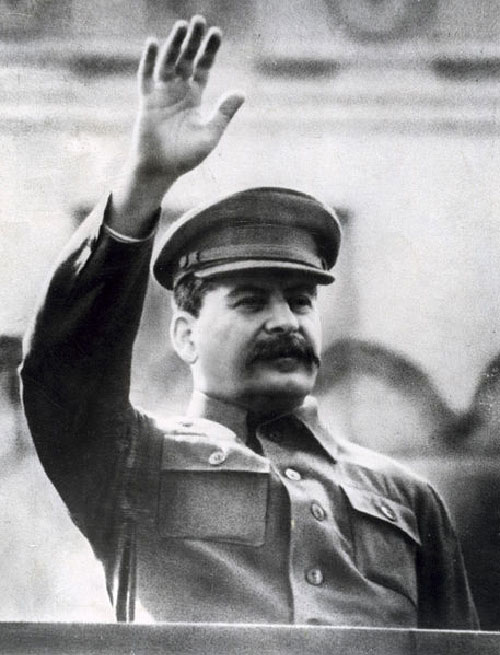
By the end of the civil war, Russia’s Communist Party bureaucracy had grown quite large and intricate. There were multiple layers of leaders, from the local through the regional and national levels. One who began to exploit his understanding and control of this bureaucracy was Joseph Stalin (Figure 12.9). Stalin had grown up in poverty in the Russian Empire’s state of Georgia. He adopted the surname Stalin in adulthood because it meant “man of steel,” and he became a Bolshevik in the early 1900s. In 1922, Stalin became the Communist Party’s general secretary. This was not a high-level position, but Stalin realized he could use it to consolidate power behind the scenes. He controlled all appointments within the party and could ensure that only those who agreed with him achieved these positions.
英語のヒント
内戦が終わるころには、ロシア共産党の官僚組織はかなり大規模で複雑になっていた。指導者の階層は地方から地域、全国の各段階に幾重にも重なっていた。この官僚組織への理解と支配力を利用し始めた人物の一人が、ヨシフ・スターリンだった(図12.9)。スターリンは、ロシア帝国のジョージアで貧困の中に育った。成人してから、「鋼鉄の人」を意味するスターリンという姓を名乗り、1900年代初めにボリシェヴィキとなった。1922年、彼は共産党の書記長になった。当時これは高位の職ではなかったが、スターリンは舞台裏で権力を固めるために利用できると気づいた。党内のすべての人事を掌握し、自分に賛同する者だけを各役職に就けることができたのである。
Joseph Stalin.ヨシフ・スターリン。
(credit: “Stalin in July 1941” by Nationaal Archief/Wikimedia Commons, Public Domain) · Public Domain
Figure 12.9 This 1941 photo shows Stalin in a style of military tunic that other Soviet officials adopted and that later came to be named after him. (credit: “Stalin in July 1941” by Nationaal Archief/Wikimedia Commons, Public Domain)
図12.9 1941年のこの写真でスターリンが着ている軍服風の上着は、ほかのソ連高官も着用し、のちに彼の名で呼ばれるようになった。(出典:「Stalin in July 1941」、オランダ国立公文書館/Wikimedia Commons、パブリックドメイン)
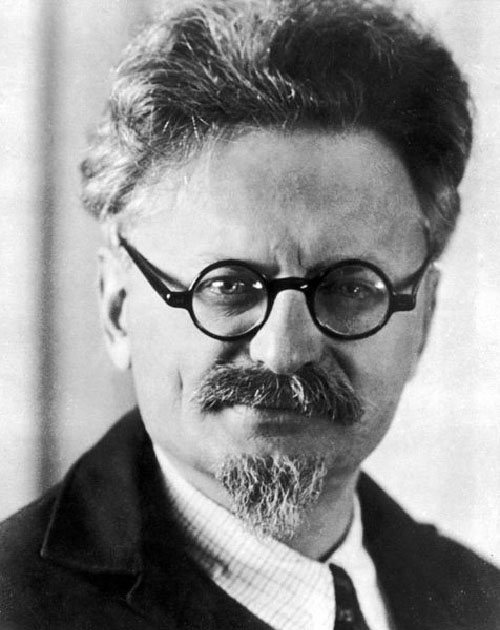
Lenin’s death in 1924 opened a power vacuum and a debate over the future of policy in the Soviet Union. There were two very different paths the country could follow. Favoring one path were leaders such as Leon Trotsky, the man responsible for making the Red Army a dependable fighting force during the civil war (Figure 12.10). Trotsky hoped to both increase industrialization and end the more capitalistic policies of the NEP. In particular, Trotsky hoped the Soviet Union could serve as an example to spur more revolutionary movements around the world. On the other side were those who wanted to continue the NEP and pursue a slower, less radical path to industrialization. Stalin, then in his forties, strove to keep out of these specific debates. He and Trotsky held opposing views on communist ideology and the future of the Soviet Union, but Stalin’s control over the Communist bureaucracy gave him leverage.
英語のヒント
1924年のレーニンの死は権力の空白を生み、ソ連が今後どのような政策を取るかをめぐる論争を引き起こした。国の進路には、大きく異なる二つの選択肢があった。その一方を支持したのは、レフ・トロツキーらの指導者である。トロツキーは、内戦中に赤軍を信頼できる戦闘集団へと育て上げた人物だった(図12.10)。彼は工業化を進めるとともに、ネップの資本主義的な政策を終わらせたいと考えた。とりわけ、ソ連が模範となって、世界各地でさらなる革命運動を促すことを期待していた。もう一方には、ネップを継続し、工業化をもっとゆっくりと、急進性を抑えて進めたいと考える人々がいた。当時40代だったスターリンは、こうした個別の論争から距離を置こうと努めた。彼とトロツキーは共産主義の思想とソ連の将来について対立していたが、共産党の官僚組織を掌握するスターリンは、それによって優位に立っていた。
Leon Trotsky.レフ・トロツキー。
(credit: “Leon Trotsky, 1930s” by Unknown/Wikimedia Commons, Public Domain) · Public Domain
Figure 12.10 This photo shows Trotsky in the 1930s, when he was in exile from Russia. (credit: “Leon Trotsky, 1930s” by Unknown/Wikimedia Commons, Public Domain)
図12.10 ロシアから追放されていた1930年代のトロツキー。(出典:「Leon Trotsky, 1930s」、作者不明/Wikimedia Commons、パブリックドメイン)
In 1927, Stalin expelled Trotsky from the Communist Party. In 1929, Trotsky was forced into exile. He was assassinated by a Soviet agent in Mexico in 1940. By the end of the 1920s, although the new Soviet government did seek to fulfill some of the promises Bolshevism had held out, the collective approach of the early years of the decade had devolved to one-man rule.
英語のヒント
1927年、スターリンはトロツキーを共産党から除名した。1929年にはトロツキーは国外追放となり、1940年にメキシコでソ連の工作員に暗殺された。1920年代末までに、新しいソ連政府はボリシェヴィズムが掲げた約束の一部を実現しようとはしていたものの、1920年代初めの集団的な統治のあり方は、一人の人間による支配へと変質していた。