第12章戦間期The Interwar Period
12.3 The Great Depression12.3 世界恐慌
Learning Objectives学習の目標
By the end of this section, you will be able to:
この節を学び終えると、次のことができるようになる。
Explain the causes of the Great Depression
世界恐慌の原因を説明する。
Describe the immediate effects of the Great Depression on the economies of industrialized and developing nations
世界恐慌が、工業国と発展途上国の経済に直接及ぼした影響を説明する。
Describe how industrialized nations responded to citizens’ needs during the Great Depression
世界恐慌中、工業国が国民の必要にどのように対応したかを説明する。
Explain the attractions of communism to people in industrialized nations during the Great Depression
世界恐慌中、工業国の人々が共産主義に引かれた理由を説明する。
Analyze the similarities and differences among fascist Italy, Nazi Germany, and Stalin’s Soviet Union
ファシズム下のイタリア、ナチス・ドイツ、スターリンのソ連の共通点と相違点を分析する。
The decade of the 1930s was marked by economic collapse around the world. The Great Depression gripped numerous countries, causing widespread unemployment, immense poverty, and financial collapse. There were no easy solutions for any government trying to combat the misery, and different countries adopted different methods to alleviate the suffering of their people. The inability of capitalist countries to fully solve their economic problems made ideologies such as communism more attractive. The Great Depression developed out of a perfect storm of problems, and only the economic stimulation of the onset of World War II brought the world closer to a return of prosperity.
英語のヒント
1930年代は、世界各地で経済が崩壊した時代だった。世界恐慌は多くの国を襲い、広範な失業、甚大な貧困、金融の崩壊をもたらした。この悲惨な状況と闘う政府に、容易な解決策はなかった。各国は国民の苦しみを和らげるため、それぞれ異なる方法を採用した。資本主義諸国が経済問題を十分に解決できなかったため、共産主義のような思想の魅力が高まった。世界恐慌は、さまざまな問題が最悪の形で重なる中で生じた。第二次世界大戦の勃発に伴う経済への刺激によって初めて、世界は繁栄の回復へ近づいた。
Economic Collapse経済の崩壊
When the economic collapse that came to be known as the Great Depression began in the United States in 1929, it ended the postwar boom and sent the entire world’s economy reeling. No economic depression is caused by one element alone. One contributing factor, however, was economic instability that the rising stock market in the United States had camouflaged.
英語のヒント
1929年にアメリカで、のちに世界恐慌と呼ばれる経済崩壊が始まると、戦後の好況は終わり、世界全体の経済が激しく揺さぶられた。どの経済不況も、一つの要因だけで起こるわけではない。しかし、その一因は、アメリカの株式市場の上昇によって覆い隠されていた経済の不安定さだった。
The stock market had set new highs seemingly every year of the 1920s. Some of the increase in stock prices and the resulting valuations of companies’ worth made perfect sense at the time. Companies were in fact selling new products, and more of them. Electric ovens, washing machines, and radios were all highly desirable new consumer items. However, by the late 1920s, the stock market was beset by a wave of pure speculation, that is, the buying and selling of shares based solely on bets that stock prices would go even higher, though unsupported by increased product sales. This guesswork drove stock prices up until they became dangerously overvalued.
英語のヒント
1920年代には、株式市場は毎年のように最高値を更新していた。株価上昇と、それに伴う企業価値の評価額の一部には、当時としては十分な理由があった。企業は実際に新製品を売り、その販売量も増やしていた。電気オーブン、洗濯機、ラジオは、いずれも人々が強く欲しがる新しい消費財だった。しかし1920年代後半までに、株式市場は純粋な投機の波にのみ込まれていた。商品の売上増加という裏づけがないのに、株価がさらに上がるという見込みだけを頼りに株式を売買することである。このような当て推量が株価を押し上げ、危険なほど割高な水準に達した。
Stock prices began to drop sharply in the fall of 1929 and eventually crashed, bringing bank failures in their wake as banks’ investments in stocks lost value. The lack of banking regulations meant that if a bank went bankrupt, those who had placed their money on deposit there lost all their savings. Ironically, when customers began to withdraw their funds because they feared a bank would fail, they often inadvertently triggered that failure, since banks hold only a small percentage of their money as cash in their vaults and invest the rest. Not only did these failures hurt depositors in the banks; they left many communities without the means to obtain loans for businesses or farms, which further compromised the economic health of an area.
英語のヒント
1929年の秋に株価は急落し始め、ついには暴落した。銀行が投資していた株式の価値も失われ、その後を追うように銀行の破綻が起きた。銀行規制が不十分だったため、銀行が倒産すれば、そこに預金していた人々は貯蓄をすべて失った。皮肉なことに、銀行が倒産するのを恐れて顧客が預金を引き出し始めると、その行動自体が意図せず倒産を引き起こすことがよくあった。銀行は資金のごく一部しか金庫の現金として保有せず、残りは投資に回しているからである。こうした銀行破綻は、預金者を傷つけただけではなかった。多くの地域で、企業や農場が融資を受ける手段も失われ、地域経済の健全さがさらに損なわれた。
Contributing to the Depression was the buying of consumer items on credit. When the Depression came, households struggling with job losses put their remaining income into keeping a roof over their heads and food on the table. Their defaults on their credit payments starved the stores, which then had to lay off more workers to stay afloat. Meanwhile U.S. industry had grown significantly and was producing consumer goods at an unprecedented rate. With consumers both at home and abroad unable to purchase, however, the twin problems of overproduction and underconsumption ground the economy to a halt. Contributing to this financial catastrophe was the unequal distribution of wealth. When the Depression began, the majority of American families (80 percent) had no savings at all, so a job loss quickly led to homelessness and hunger (Figure 12.11).
英語のヒント
消費財を信用払いで買うことも、恐慌の一因となった。恐慌が来ると、失業に苦しむ世帯は、残った収入を住まいの確保と日々の食事に回した。信用払いの返済が滞ると、商店は資金難に陥り、経営を続けるためにさらに従業員を解雇しなければならなくなった。その間にアメリカの工業は大きく成長しており、かつてない速さで消費財を生産していた。しかし国内外の消費者が買えなくなると、過剰生産と過少消費という二つの問題が、経済を停止に追い込んだ。この金融・経済上の破局には、富の不平等な分配も寄与していた。恐慌が始まったとき、アメリカの家庭の大多数、すなわち80パーセントには、貯蓄がまったくなかった。そのため失業は、すぐに住まいの喪失と飢えにつながった(図12.11)。
The Great Depression.世界恐慌。
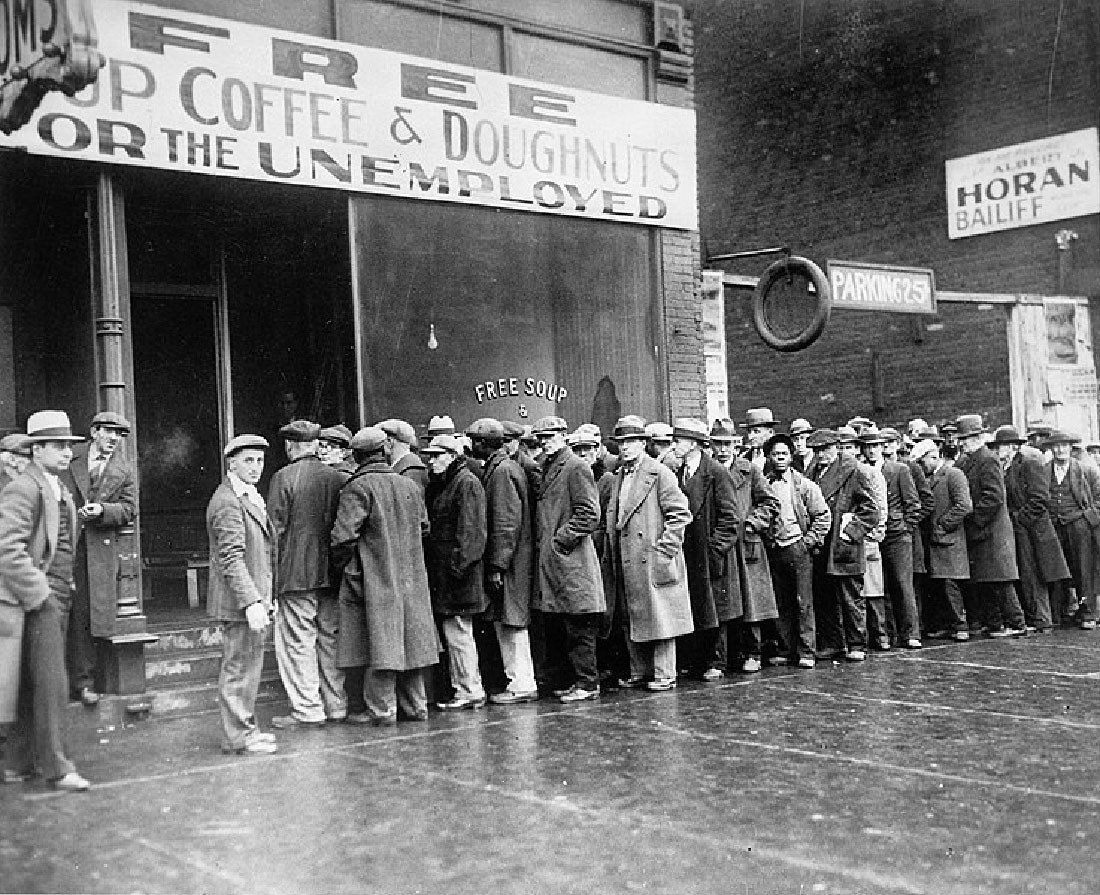
(credit: “Unemployed men queued outside a depression soup kitchen opened in Chicago by Al Capone” by U.S. National Archives and Records Administration/Wikimedia Commons, Public Domain) · Public Domain
Figure 12.11 This photo shows unemployed men waiting for food outside a soup kitchen in Illinois in 1931. (credit: “Unemployed men queued outside a depression soup kitchen opened in Chicago by Al Capone” by U.S. National Archives and Records Administration/Wikimedia Commons, Public Domain)
図12.11 1931年、イリノイ州の炊き出し所の外で食事を待つ失業中の男性たち。(出典:「Unemployed men queued outside a depression soup kitchen opened in Chicago by Al Capone」、米国国立公文書記録管理局/Wikimedia Commons、パブリックドメイン)
The Smoot-Hawley Tariff Act of 1930 was an example of the isolationist and protectionist policies the U.S. government followed in the 1920s. An increased tariff of nearly 40 percent had already been enacted in 1922. Smoot-Hawley raised tariff rates another 20 percent on more than twenty thousand kinds of imported goods, supposedly to protect American farmers and industries from foreign competition. These extreme rates caused other countries to institute their own retaliatory high tariff rates on U.S. goods. Therefore, the industrial might of the United States was stymied because its residents were unable to purchase goods due to job losses and lack of income, and its businesses were unable to recoup any of their monies by selling goods overseas. Smoot-Hawley was the highest tariff the U.S. government has ever enacted. It helped stifle world trade, which decreased 30 percent by the early 1930s.
英語のヒント
1930年のスムート=ホーリー関税法は、アメリカ政府が1920年代に取っていた孤立主義と保護主義の政策を示す一例だった。すでに1922年には、約40パーセントまで引き上げられた関税が導入されていた。スムート=ホーリー法は、アメリカの農民と産業を外国との競争から守るという名目で、2万種類を超える輸入品の関税率をさらに20パーセント引き上げた。これらの極端な税率によって、他国も報復としてアメリカ製品に高関税を課すようになった。その結果、アメリカの工業力は発揮できなくなった。国内の人々は失業と所得不足で製品を買えず、企業も海外販売で資金を回収できなかったからである。スムート=ホーリー法による関税は、アメリカ政府がこれまでに導入した中で最も高いものだった。世界貿易を抑え込む一因となり、貿易は1930年代初めまでに30パーセント減少した。
One of the key aspects of the Great Depression was the way it encumbered foreign trade around the globe. Worldwide gross domestic product (GDP)—the value of all the goods and services a country produces in one year—decreased by 15 percent between 1929 and 1932. With trade plummeting, many U.S. banks began recalling loans made to foreign businesses and countries, which caused crises in other places.
英語のヒント
世界恐慌の重要な特徴の一つは、世界各地の外国貿易を妨げたことだった。国内総生産(GDP)とは、一国が1年間に生産するすべての財とサービスの価値であり、その世界全体の額は1929年から1932年の間に15パーセント減少した。貿易が急減すると、多くのアメリカの銀行が外国企業や外国への融資の回収を始め、それがほかの地域にも危機を引き起こした。