第12章戦間期The Interwar Period
Other countries throughout Latin America extended voting rights in the early 1900s. Chile suffered its share of chaos as reformers tried to seize political power there. Ultimately, Chile was able to build a series of coalition governments in the 1930s that brought stability for many years. By the 1920s, political instability was increasingly common in other places like Argentina. In September 1930, General José Félix Uriburu seized power in the capital, Buenos Aires. Uriburu had been heavily influenced by the Italian version of fascism. He banned political parties and suspended the constitution. His was the first of several military coups that occurred in Argentina in the ensuing decades.
英語のヒント
ラテンアメリカのほかの国々も、1900年代初めに選挙権を拡大した。チリでは改革派が政権を握ろうとする中、相応の混乱が起きた。最終的にチリは、1930年代に一連の連立政権を成立させ、その後の長年にわたる安定をもたらした。一方、アルゼンチンのような地域では、1920年代までに政治的不安定がますます目立つようになった。1930年9月、ホセ・フェリクス・ウリブル将軍が首都ブエノスアイレスで権力を奪取した。イタリア型ファシズムに強い影響を受けていたウリブルは、政党を禁止し、憲法を停止した。これは、その後数十年間にアルゼンチンで起こる、いくつもの軍事クーデターの最初だった。
A New Culture for the Masses大衆のための新たな文化
Alongside the expansion of democracy, the 1920s also shepherded in a new world of mass culture and mass media. Technological innovations let people connect nearly instantaneously and have shared experiences without being in the same place. Where the infrastructure existed, it was radio and the movies that made this possible.
英語のヒント
民主主義の拡大と並行して、1920年代は大衆文化とマスメディアの新たな世界をもたらした。技術革新によって、人々はほとんど瞬時につながり、同じ場所にいなくても共通の経験を持てるようになった。必要な基盤が整った地域で、これを可能にしたのがラジオと映画だった。
Radio wave technology had been pioneered in the late 1800s, but its widespread use and cultural influence were still decades off. By the 1920s, radio’s value as a news medium was becoming clear, but its true influence came from commercial radio shows, supported through another new medium called advertising that filled the airwaves in the mid-1920s. From that point through the interwar years, people could gather to hear the latest episodes of entertaining soap operas, mystery shows, and westerns, along with news items and live reporting of sports events.
英語のヒント
電波技術は1800年代後半に先駆的な開発が行われていたが、広く使われ、文化に影響を及ぼすようになるまでには、なお数十年を要した。1920年代までには、ニュース媒体としてのラジオの価値が明らかになりつつあった。しかし、本当の影響力は、1920年代半ばの電波を埋めた、広告という別の新しい媒体に支えられる商業ラジオ番組から生まれた。それ以後の戦間期を通じて、人々は集まって、娯楽的な連続ドラマ、ミステリー番組、西部劇の最新回や、ニュース、スポーツの生中継を聴くことができた。
Silent films had ruled movie theaters in the 1900s and 1910s, but beginning in the late 1920s, “talking pictures” emerged and quickly became the dominant form of motion pictures. Mass media technologies meant people could watch the same movies, follow the same soap operas, and cheer for the same teams despite being hundreds or thousands of miles apart. These experiences created a mass culture for the first time, uniting people whose lives had once been dominated by regional and local concerns.
英語のヒント
1900年代と1910年代の映画館は無声映画が主流だったが、1920年代後半から「しゃべる映画」、すなわちトーキーが登場し、急速に映画の主流となった。マスメディアの技術によって、人々は何百マイル、何千マイルと離れていても、同じ映画を見て、同じ連続ドラマを追い、同じチームを応援できるようになった。こうした経験は、それまで地域や地元の関心事に生活を左右されていた人々を結びつけ、初めて大衆文化を生み出した。
The film industries in many countries developed somewhat differently in the 1930s. In the United States, the industry was centered in Hollywood, a district in Los Angeles, California. The bosses of movie studios wanted to make films that were popular with audiences and relatively cheap to produce. In other countries, the film industries were similarly popular, but many were also supportive of artistic experimentation in film. The German film industry took a modernist approach, seen in the silent 1920 horror film The Cabinet of Dr. Caligari, for example, and many of its films critiqued politics and society in the postwar era. In Japan, the film industry went through a period of reform in the 1920s as producers and directors began adopting different filmmaking techniques instead of simply recording a theatrical production. Some films took leftist positions that reflected the growth of unions in Japanese society, but other genres such as those featuring samurai characters also became popular and well known.
英語のヒント
1930年代、各国の映画産業は少しずつ異なる発展を遂げた。アメリカでは、カリフォルニア州ロサンゼルスの一地区、ハリウッドが中心となった。撮影所の経営者は、観客に人気があり、比較的安く制作できる映画を作ろうとした。ほかの国でも映画産業は同様に人気を集めたが、その多くは、映画における芸術的な実験も支持した。ドイツの映画産業は、たとえば1920年の無声ホラー映画『カリガリ博士』に見られるような、モダニズムの手法を取った。多くの作品が戦後の政治と社会を批判した。日本では1920年代、プロデューサーや監督が、舞台上演を単に記録するのでなく、異なる映画制作技法を取り入れ始め、映画産業は改革の時期を迎えた。日本社会での労働組合の成長を反映して左派的な立場を取る映画もあったが、侍を登場人物とする作品など、ほかのジャンルも人気を得て、広く知られるようになった。
People were also embracing new ways of living in the 1920s. Women, in particular, were ready to fulfill their updated expectations for themselves. The “New Woman” of this era abandoned the traditions of the past to enter an exciting future. Women in many countries were also adopting new plans for their lives, such as pursuing higher education, although a college degree was still quite rare among women. There were also many new jobs in the workplace that women were eager to hold. In Europe and the United States, secretarial work was becoming dominated by women rather than the men who had held such jobs in the 1800s. Nursing also became an important career option for women.
英語のヒント
1920年代には、人々は新しい生き方も受け入れつつあった。とりわけ女性は、自分自身に対する新たな期待を実現しようとしていた。この時代の「新しい女性」は、過去の伝統を捨て、刺激に満ちた未来へ踏み出した。多くの国で女性は、高等教育を受けるなど、自分の人生のための新しい計画を持つようになった。ただし、大学の学位を持つ女性は、まだきわめて少なかった。女性が就くことを望む新たな仕事も、職場に数多く現れた。ヨーロッパとアメリカでは、1800年代に男性が担っていた秘書の仕事を、女性が主に担うようになりつつあった。看護も、女性にとって重要な職業上の選択肢となった。
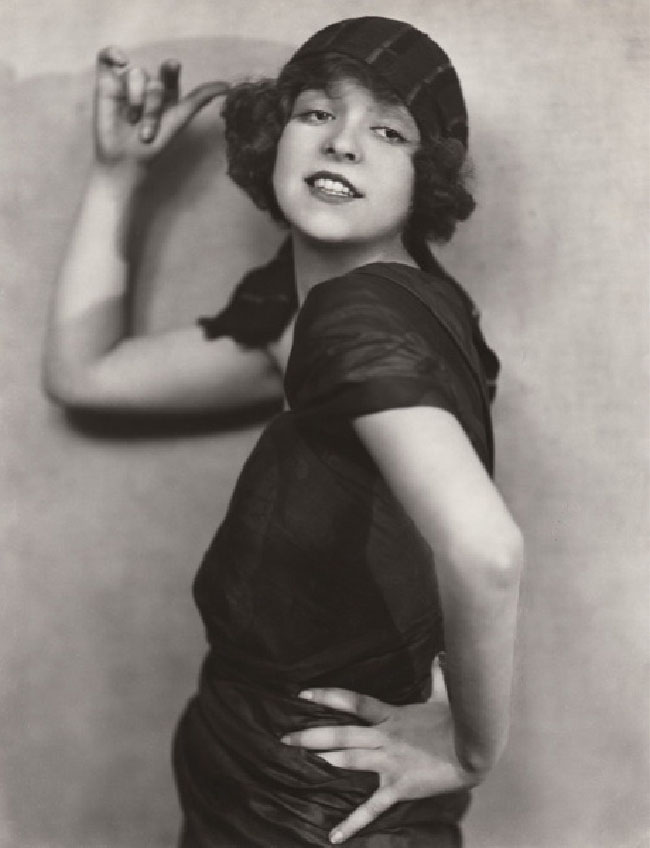
The New Woman was a significant departure from the nineteenth-century Western woman, who wore her long hair piled high on her head and dressed in high-necked blouses and ankle-length skirts. Young women in the 1920s wore knee-length skirts, discarded corsets, and cut their hair short. They went out in the evenings to drink and dance and socialize. A woman who adopted these behaviors became known as a flapper in the United States, due to the way these women danced with arms flapping from their sides (Figure 12.22).
英語のヒント
「新しい女性」は、19世紀の西洋の女性から大きく変化した姿だった。19世紀の女性は長い髪を頭の上で高く結い上げ、襟の高いブラウスと足首まであるスカートを着ていた。1920年代の若い女性は膝丈のスカートをはき、コルセットを脱ぎ捨て、髪を短く切った。彼女たちは夜に出かけ、酒を飲み、踊り、人々と交流した。こうした振る舞いを取り入れた女性は、アメリカではフラッパーと呼ばれるようになった。両腕を体の脇からはためかせて踊る様子に由来する呼び名である(図12.22)。
A Flapper.フラッパー。
(credit: “Photo of Clara Bow in 1921” by Brewster Magazine/Wikimedia Commons, Public Domain) · Public Domain
Figure 12.22 This early photo of American film star Clara Bow personifies the flapper image. After starring in It, a romantic comedy in which she played a salesperson working in a department store, Bow became known as the “It Girl” and symbolized the New Woman of the 1920s. (credit: “Photo of Clara Bow in 1921” by Brewster Magazine/Wikimedia Commons, Public Domain)
英語のヒント
図12.22 アメリカの映画スター、クララ・ボウの初期のこの写真は、フラッパーのイメージを体現している。百貨店の販売員を演じた恋愛喜劇『イット』(It)に主演した後、ボウは「イット・ガール」として知られ、1920年代の「新しい女性」を象徴する存在となった。(出典:「Photo of Clara Bow in 1921」、Brewster Magazine/Wikimedia Commons、パブリックドメイン)
The spread of this modern image of a woman demonstrated the influence the West and especially the United States already had on popular culture. The New Woman appeared around the world on signs, in books, in song lyrics, and throughout the burgeoning movie industry. Advertisers, in particular, were quick to adopt her image, making it one to which female consumers could aspire. Each country had its own version—the moga (modern girl) in Japan, the garçonne (tomboy or flapper) in France.
英語のヒント
この現代的な女性像が広がったことは、西洋、とりわけアメリカが大衆文化にすでに及ぼしていた影響を示している。「新しい女性」は世界各地の看板、本、歌詞、そして急成長する映画産業の至る所に登場した。とりわけ広告主はすばやくそのイメージを取り入れ、女性の消費者が憧れるものにした。国ごとに、それぞれの姿があった。日本ではモガ、すなわちモダンガール、フランスではギャルソンヌ、すなわちおてんば娘やフラッパーである。