第12章戦間期The Interwar Period
The Fight for Self-Determination in Africaアフリカでの民族自決を求める闘争
Most Africans were not considered citizens of the empires of which they were part. Imperial powers exploited the colonies for their mineral wealth and other resources. They did little to better the lives of Africans, and the rhetoric of “civilizing” the continent was based on ingrained assumptions of White superiority. However, participation in World War I changed things for many Africans. More than one million Africans had fought in the war. The sense that their contribution should be rewarded with new political power was one result. Another was their exposure to international issues and the recognition that the principle of self-determination applied directly to themselves.
英語のヒント
アフリカの人々の大半は、自分たちが属する帝国の市民とは見なされなかった。帝国主義列強は、植民地の鉱物資源やその他の資源を搾取した。アフリカの人々の暮らしをよくするためにはほとんど何もせず、大陸を「文明化する」という言葉も、根深い白人優越の思い込みに基づいていた。しかし第一次世界大戦への参加は、多くのアフリカ人に変化をもたらした。100万人を超えるアフリカ人が戦争で戦った。その結果の一つは、自分たちの貢献には、新たな政治的権力が報酬として与えられるべきだという意識だった。もう一つは、国際問題に触れ、民族自決の原則が自分たちに直接当てはまると認識したことである。
A number of groups had begun to argue for more African involvement in colonial governments beginning in the late 1800s. In 1918, the National Congress of British West Africa (NCBWA) was formed to pressure the British government to turn legislative work over to elected assemblies in its West African colonies. This initiative marked a political awakening in the four British colonies of West Africa. The NCBWA sought to have them work as a cohesive political unit. The war itself had caused many European officials to depart Africa, turning a number of services over to Africans to administer and thus providing new roles for them to play in the running of their countries. Many imperial powers also squeezed their African colonies to produce more for the war effort but failed to pay fair prices for these items. This clear exploitation, along with a growing sense of their power, led many Africans to embrace nationalist movements after the war.
英語のヒント
1800年代後半から、植民地政府にアフリカ人がもっと関与すべきだと主張する集団が現れ始めていた。1918年には英領西アフリカ民族会議(NCBWA)が結成され、西アフリカ植民地での立法を、選挙で選ばれた議会に移すようイギリス政府に圧力をかけた。この取り組みは、西アフリカの四つのイギリス植民地における政治的覚醒を示した。NCBWAは、それらを一体の政治単位として機能させようとした。戦争そのものも、多くのヨーロッパ人官吏をアフリカから離れさせた。その結果、さまざまな業務がアフリカ人の管理に移され、自分たちの国を運営する新たな役割が生まれた。多くの帝国主義列強は、戦争のためにさらに多くを生産させようと、アフリカの植民地を締めつけながら、産品に公正な価格を払わなかった。この明白な搾取と、自分たちの力への自覚の高まりによって、多くのアフリカ人は戦後、民族運動を支持するようになった。
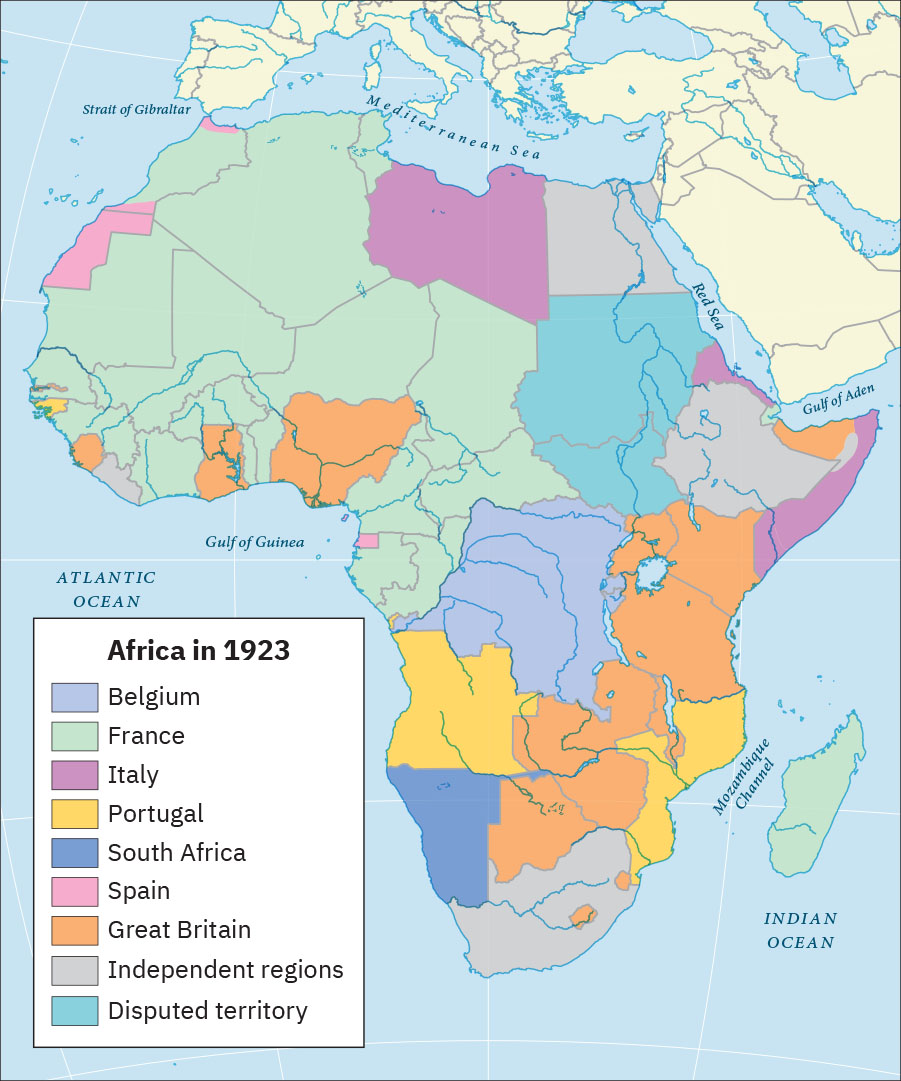
With the Great Depression came increasing pressure to “do more” with African colonies, as a way for imperial countries to deal with their economic problems. Those that could cultivate greater economic development in the colonies would benefit from increased resources and develop a colonial population with greater buying power for its own goods. Such development was a slow process in the 1930s, however (Figure 12.16). The British government enacted a Colonial Development Act at the end of the 1920s that funneled small amounts of money into its African colonies. But larger investments did not flow into Africa until after World War II.
英語のヒント
世界恐慌が起こると、宗主国が自国の経済問題に対処するため、アフリカの植民地を「もっと活用する」よう求める圧力が強まった。植民地の経済開発を進められれば、資源が増えるという利益を得られ、宗主国の製品を買う購買力の高い植民地住民も育てられるからである。しかし1930年代、こうした開発の進み方は遅かった(図12.16)。イギリス政府は1920年代末に植民地開発法を制定し、アフリカの植民地へ少額の資金を注ぎ込んだ。しかし、大規模な投資がアフリカへ流入するのは、第二次世界大戦後になってからだった。
Colonial Africa.植民地期のアフリカ。
(attribution: Copyright Rice University, OpenStax, under CC BY 4.0 license) · CC BY 4.0
A growing Pan-African movement also developed in the early twentieth century, with the goal of uniting African peoples to achieve greater independence. The first Pan-African Congress met in 1918 in Paris, organized by African American activist W. E. B. Du Bois. Its goal was to influence the Paris Peace Conference to support self-determination for the African colonies. Its impact was minimal, but it did contribute to the ideas of African nationalism that were growing at the time.
英語のヒント
20世紀初めには、アフリカの人々を結びつけて、より大きな独立を実現しようとするパン・アフリカ運動も発展した。最初のパン・アフリカ会議は、アフリカ系アメリカ人の活動家W・E・B・デュボイスによって組織され、1918年にパリで開かれた。その目標は、パリ講和会議に働きかけ、アフリカの植民地の民族自決を支持させることだった。影響力は小さかったが、当時高まりつつあったアフリカ民族主義の考え方に、確かに貢献した。
Another influence on the growth of African nationalism was the work of Marcus Garvey. Garvey was born in Jamaica and lived in the United States for many years. He founded the Universal Negro Improvement Association, which hoped to unite all people of African descent into one body with one government. Garvey’s work was focused on specific plans for a migration of African Americans from North America to the West African country of Liberia. These “Back to Africa” plans fell apart, however. Sufficient funds did not exist to make the migration possible. The National Association for the Advancement of Colored People (NAACP), the largest African American civil rights organization in the United States, also refused to endorse Garvey’s ideas, and the migration never materialized.
英語のヒント
アフリカ民族主義の成長に影響を与えたもう一つの活動が、マーカス・ガーヴェイの仕事だった。ジャマイカで生まれ、長年アメリカで暮らしたガーヴェイは、世界黒人地位向上協会を設立した。同協会は、アフリカ系のすべての人々を、一つの政府を持つ一つの団体にまとめようとした。ガーヴェイの活動は、アフリカ系アメリカ人が北アメリカから西アフリカのリベリアへ移住するための、具体的な計画に重点を置いていた。しかし、これらの「アフリカへ帰れ」という計画は頓挫した。移住を実現する十分な資金がなかった。また、アメリカ最大のアフリカ系アメリカ人の公民権団体である全米黒人地位向上協会(NAACP)も、ガーヴェイの考えの支持を拒み、移住は実現しなかった。
One way people in Africa expressed their independence of thought was by developing an African-based church system. Christianity in Africa had been inextricably tied to the missionary model, in which Europeans came to Africa and established church missions to spread the Christian faith. The independent African churches that began emerging in the late 1800s were formed in places like Ethiopia and Nigeria with the idea that Africans should be in charge of them rather than Europeans, whose churches were often seen as simply an extension of colonialism. The independence that African-led churches advocated in religious matters soon evolved into support for independence in political matters as well.
英語のヒント
アフリカの人々が思想上の自立を示した方法の一つは、アフリカに根ざす教会制度を発展させることだった。それまでアフリカのキリスト教は、ヨーロッパ人がアフリカへ来て布教拠点を設け、信仰を広めるという宣教師の形態と、切り離せない関係にあった。1800年代後半から現れたアフリカ独立教会は、エチオピアやナイジェリアなどで、ヨーロッパ人ではなくアフリカ人が教会を担うべきだという考えに基づいて設立された。ヨーロッパ人の教会は、単に植民地主義を延長するものと見られることが多かった。アフリカ人が率いる教会が宗教上の問題で唱えた自立は、まもなく政治上の独立を支持することへも発展した。
An Independent Indiaインドの独立を求めて
The significant role their troops in the British Army had played in World War I offered Indians some hope that Britain might now extend them more rights than before. Indians were also anxious to have the British government’s restrictive wartime measures lifted. However, it soon became clear that Britain had no plans for change. So, as in many other countries, in India a growing nationalist movement now advocated independence from colonial rule. The clash between Indian Nationalists and British rulers began almost immediately after the end of World War I.
英語のヒント
第一次世界大戦でイギリス軍に属するインド人兵士が重要な役割を果たしたことは、イギリスが今度こそ以前より多くの権利を認めるかもしれないという期待を、インド人に抱かせた。インド人は、イギリス政府が戦時中に設けた制限的な措置の撤廃も強く望んでいた。しかし、イギリスに変更の計画がないことは、すぐに明らかになった。そのため、ほかの多くの国々と同じく、インドでも成長する民族運動が植民地支配からの独立を唱えるようになった。インドの民族主義者とイギリスの支配者との衝突は、第一次世界大戦の終結直後に始まった。
In early April 1919, Indians began to gather in a walled square in Amritsar, a city in Punjab that was sacred to the Sikh population. They were protesting the passage of the Rowlatt Act, which allowed Indians suspected of engaging in revolutionary activities to be detained for two years without trial. At times the protests turned violent. Then, on April 13, the British Indian Army opened fire on the protestors, who had little chance of escape from the closed-in space. Hundreds were killed and more than a thousand wounded. The British commander of the unit ultimately resigned after an investigation. The massacre prompted the British government to make some legislative changes in India regarding who was eligible to vote and how many Indian representatives could sit in the national assembly. However, this small concession did not quell the continued criticism from Indian nationalists, who urged independence and self-rule. The Indian National Congress argued that India should be ruled by Indians. Its members proposed continued nonviolent disobedience and boycotts against British goods, along with a refusal to pay certain taxes.
英語のヒント
1919年4月初め、インド人は、シク教徒にとって聖地であるパンジャーブ地方の都市アムリトサルで、壁に囲まれた広場に集まり始めた。彼らは、革命活動に関わった疑いのあるインド人を、裁判なしで2年間拘禁できるとするローラット法の成立に抗議していた。抗議はときに暴力を伴った。そして4月13日、英領インド軍が抗議者たちに発砲した。閉ざされた空間から逃れる余地はほとんどなく、数百人が殺され、1,000人以上が負傷した。部隊を指揮したイギリス人司令官は、調査を受けた後、最終的に辞任した。この虐殺を受け、イギリス政府はインドで、誰に投票資格を認めるか、国の議会に何人のインド人代表が入れるかについて、いくつかの法律上の変更を行った。しかし、この小さな譲歩は、独立と自治を求めるインドの民族主義者の批判を抑えるには至らなかった。インド国民会議は、インドはインド人によって統治されるべきだと主張した。その構成員は、非暴力の不服従とイギリス製品のボイコットを続け、特定の税金の支払いも拒むことを提案した。
In this chaotic and emotional situation, a lawyer named Mohandas (Mahatma) Gandhi began to take center stage. Gandhi adopted and advocated the practice of civil disobedience and nonviolence, wore traditional modes of dress, and renounced material possessions. In the 1920s, the movement for self-rule became a grassroots operation preaching civil disobedience to people throughout India. Gandhi became head of the Indian National Congress in 1921, and it soon became the party of the masses.
英語のヒント
この混乱と感情の高まりの中で、モーハンダース(マハトマ)・ガンディーという弁護士が、中心的な存在となり始めた。ガンディーは市民的不服従と非暴力を実践し、その方法を唱え、伝統的な衣服を身につけ、物質的な所有を捨てた。1920年代、自治を求める運動は、インド各地の人々に市民的不服従を説く草の根運動となった。ガンディーは1921年にインド国民会議の指導者となり、同会議はまもなく大衆の政党となった。
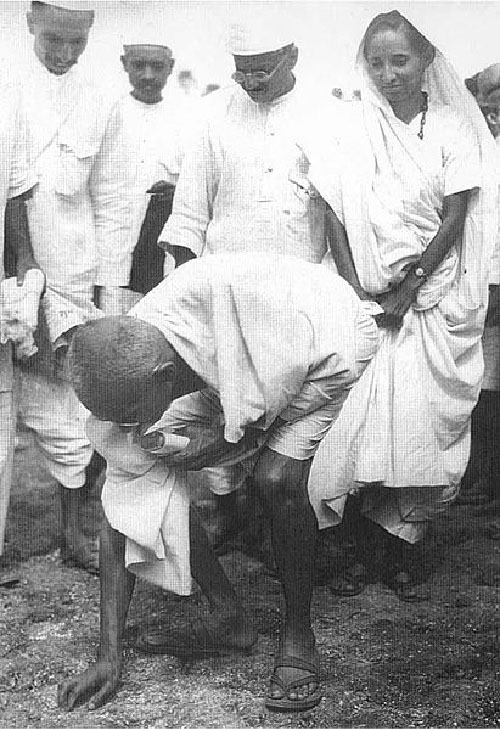
Many British rules flew in the face of Indian traditions, such as those regarding the collection of salt, a common element of the Indian diet. Under the colonial system, Indians could not gather or sell salt; instead, they had to purchase it from the British and pay a heavy tax. On March 12, 1930, Gandhi began a protest known as the Salt March, in which he led his supporters on a two-hundred-mile, twenty-four-day march to the Arabian Sea to collect salt from the seawater. Despite British efforts to obscure the salt deposits at the beaches, Gandhi and his followers did collect salt, in violation of British law (Figure 12.17). He and approximately sixty thousand others were arrested for these acts of civil disobedience. In numerous locations over the next several weeks, other nationalists similarly began collecting salt at coastlines in defiance of the law. Gandhi was not released from jail until the following year and agreed to suspend the mass act of civil disobedience.
英語のヒント
イギリスの規則の多くは、インドの伝統に真っ向から反していた。たとえば、インドの食生活で日常的に使われる塩の採取に関する規則がそうだった。植民地体制の下で、インド人は塩を採取したり売ったりすることができず、イギリス側から購入し、重い税を払わなければならなかった。1930年3月12日、ガンディーは「塩の行進」と呼ばれる抗議行動を始めた。支持者を率い、海水から塩を採るため、24日間かけて200マイルを歩き、アラビア海へ向かった。イギリス側は浜辺の塩の堆積を隠そうとしたが、ガンディーと支持者は実際に塩を採取し、イギリスの法律に違反した(図12.17)。ガンディーと約6万人の人々が、こうした市民的不服従の行為によって逮捕された。その後の数週間には、各地でほかの民族主義者たちも、法にあえて背いて海岸で塩を採り始めた。ガンディーが釈放されたのは翌年であり、彼は大規模な市民的不服従の行動を停止することに同意した。
The Salt March.塩の行進。
(credit: “Salt March” by Unknown/Wikimedia Commons, Public Domain) · Public Domain
Figure 12.17 Mahatma Gandhi collects salt at the shore of the Arabian Sea in 1930, in defiance of British law. (credit: “Salt March” by Unknown/Wikimedia Commons, Public Domain)
図12.17 1930年、イギリスの法律にあえて背き、アラビア海の海岸で塩を採取するマハトマ・ガンディー。(出典:「Salt March」、作者不明/Wikimedia Commons、パブリックドメイン)
While the British were not inclined to embrace India’s independence movement, within a few years they did begin to relent on the question of self-rule. While retaining control of the military and foreign policy functions, they turned other government operations over to Indians via the Government of India Act in 1935. This was an important step toward more autonomy for India. Muslim representation in India remained an issue, however. For example, the Indian National Congress was dominated by the Hindu majority, but rather than recognizing that body as representing all those living in India, the British recognized the separate Muslim League as the representatives of the Muslim population. The Indian National Congress had achieved a measure of its agenda in favor of self-rule, but India was still clearly under British control.
英語のヒント
イギリスはインドの独立運動を受け入れる気はなかったが、数年のうちに自治の問題では譲歩を始めた。軍事と外交の支配を維持しながら、1935年のインド統治法によって、ほかの行政運営をインド人に移した。これは、インドの自治拡大に向けた重要な一歩だった。しかし、インドのムスリムを誰が代表するかという問題は残った。たとえば、インド国民会議では多数派のヒンドゥー教徒が優勢だった。イギリスはその団体をインドに暮らすすべての人々の代表と認めず、別組織のムスリム連盟を、ムスリム住民の代表と認めた。インド国民会議は、自治を求める目標の一部を達成したが、インドがなおイギリスの支配下にあることは明らかだった。