第12章戦間期The Interwar Period
Section Summaryこの節のまとめ
The Great Depression of the 1930s was an economic downturn unparalleled in modern history. The interconnectedness of the world’s economies became clear as countries around the globe suffered the effects. While no single event caused the Great Depression, few people were left unscathed. Nations tried innovative ways to provide for their people, enacting work-relief programs, food programs, and new economic policies to bring their economies back under control. While many programs helped mitigate the pain of the Depression, none fully solved it, and some people embraced new political parties that offered different solutions. In the case of Italy and Germany, these new parties and politicians exploited the decade’s economic instability for their own ends in a grab for greater power.
英語のヒント
1930年代の世界恐慌は、近代史に例のない経済の落ち込みだった。世界各地の国々が影響を受けたことで、各国経済の相互の結びつきが明らかになった。世界恐慌は単一の出来事によって生じたものではなかったが、その打撃を免れた人はほとんどいなかった。各国は国民を支える新しい方法を試み、就労救済事業、食料支援、新たな経済政策を導入して、経済を再び制御下に収めようとした。多くの制度が恐慌の苦痛を和らげたものの、完全に解決したものはなく、一部の人々は別の解決策を掲げる新しい政党を支持した。イタリアとドイツでは、そうした新たな政党や政治家が、1930年代の経済不安を自分たちの目的に利用し、いっそう大きな権力を奪い取った。
Review Questions復習問題
- It decreased sales taxes on goods in the United States.
- It set up a fluctuating tariff system depending on the source of foreign goods.
- It raised tariffs on foreign goods in the United States and caused other countries to retaliate.
- It set quotas on foreign goods in the United States.
- アメリカ国内の商品の売上税を引き下げた。
- 外国製品の原産地に応じて変動する関税制度を設けた。
- アメリカに輸入される外国製品への関税を引き上げ、他国の報復を招いた。
- アメリカに輸入される外国製品に数量制限を設けた。
- Trade remained at its pre-Depression levels.
- Trade increased through the United States and Europe but fell elsewhere.
- Trade decreased across the globe.
- Trade decreased only in Europe but stayed stable elsewhere.
- 恐慌前の水準を維持した。
- アメリカとヨーロッパでは増えたが、ほかの地域では減った。
- 世界全体で減少した。
- ヨーロッパだけで減少し、ほかの地域では安定していた。
- The Communist Party was the most successful organization getting people elected to office.
- The Communist Party rebranded itself as a mainstream party in the 1930s.
- The Communist Party offered an alternative to the capitalist systems being undermined by the Great Depression.
- The Communist Party exploited people’s desire for entertainment by producing movies and holding rallies on a regular basis.
- 共産党が、候補者を公職に当選させるうえで最も成功した組織だったから。
- 共産党が、1930年代に主流政党として自らを売り出し直したから。
- 世界恐慌によって揺らいだ資本主義体制に代わる選択肢を、共産党が提示したから。
- 共産党が映画を制作し、定期的に集会を開いて、人々の娯楽への欲求を利用したから。
- by leading a march on Berlin
- by being invited to form a government by President Hindenburg
- by seizing control of government during the Beer Hall Putsch
- by solving Germany’s economic problems following the Great Depression
- ベルリンへの行進を率いることによって。
- ヒンデンブルク大統領から組閣を求められることによって。
- ミュンヘン一揆で政府の支配権を奪うことによって。
- 世界恐慌後のドイツの経済問題を解決することによって。
- a cooperative treaty with the Soviet Union
- a request by the Spanish king
- an electoral victory
- victory in the Spanish Civil War
- ソ連との協力条約
- スペイン国王からの要請
- 選挙での勝利
- スペイン内戦での勝利
Check Your Understanding Questions理解を確かめよう
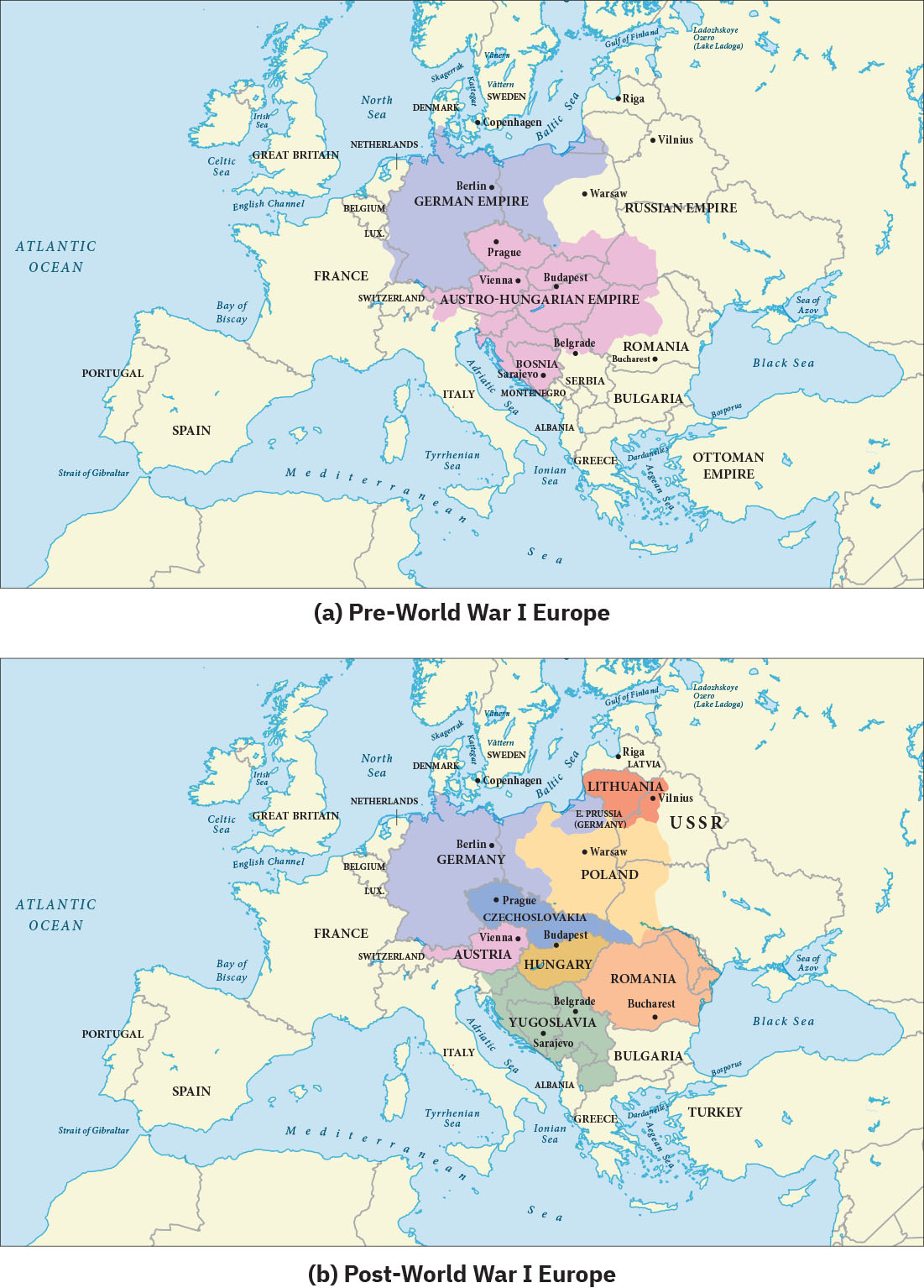
Maps of Europe before and after World War I. Copyright Rice University, OpenStax. CC BY 4.0. Composite as published in the source exercise. · CC BY 4.0
Application and Reflection Questions応用・考察問題
fascism
ファシズム
a political movement focused on transforming citizens into committed nationalists striving for unity and racial purity to remedy a perceived national decline
国家が衰退しているという認識を正そうと、市民を、統一と人種的純粋さを追求する献身的な国家主義者へと変えることに重点を置いた政治運動。
gold standard
金本位制
a monetary system in which the value of a country’s currency is tied directly to the value of gold
一国の通貨の価値を金の価値に直接結びつける通貨制度。
gross domestic product (GDP)
国内総生産(GDP)
the value of all the goods and services a country produces in one year
一国が1年間に生産するすべての財とサービスの価値。
New Deal
ニューディール
a U.S. program of economic reform under Franklin Roosevelt that created work-relief programs
フランクリン・ローズヴェルトの下で行われたアメリカの経済改革政策。就労救済事業などを創設した。
Schutzstaffel (SS)
シュッツシュタッフェル(SS、親衛隊)
German Nazi paramilitary organization designed for security and intimidation
警備と威嚇のために設けられた、ドイツのナチ党の準軍事組織。
socialist realism
社会主義リアリズム
an artistic movement in the Soviet Union that took the worker as a subject and was about patriotism as much as art
労働者を題材にし、芸術であると同時に愛国心の表現でもあった、ソ連の芸術運動。
totalitarianism
全体主義
a form of government in which the state controls all aspects of a person’s life
国家が個人の生活のあらゆる面を支配する統治形態。