第12章戦間期The Interwar Period
Democratic Yearnings民主主義への願い
The dismantling of empires at the end of the war was clearly a boon for democracy, but it was not always easy for fledgling countries to adopt new political systems. The tense situation in Ireland of the 1920s was just one example.
英語のヒント
戦争終結時の帝国の解体は、民主主義にとって明らかな追い風だった。しかし、生まれたばかりの国々が、新しい政治制度を取り入れるのは容易とは限らなかった。1920年代のアイルランドの緊迫した状況は、その一例である。
In 1922, the Irish Free State was created through the Anglo-Irish Treaty. This 1921 pact ended the Irish War of Independence that had begun in 1918 when the Irish Republican Army (IRA) and the Irish Nationalist Party fought British rule. Groups such as Sinn Féin (“We Ourselves”), organized in 1905 to fight for an independent Ireland, were often associated with the IRA and sometimes adopted more violent measures than the more moderate Irish Nationalist Party. They had the same goal but very different methods.
英語のヒント
1922年、英愛条約によってアイルランド自由国が成立した。1921年に結ばれたこの条約は、アイルランド共和軍(IRA)とアイルランド民族党がイギリスの統治に対して戦った、1918年に始まるアイルランド独立戦争を終結させた。独立したアイルランドを求めて1905年に組織されたシン・フェイン、すなわち「われら自身」のような団体は、IRAと結びつけられることが多く、より穏健なアイルランド民族党よりも暴力的な手段を取ることがあった。目標は同じでも、その方法は大きく異なっていた。
The Anglo-Irish Treaty initiated a vote on the future of Ireland. The six northern counties, largely Protestant, voted to remain part of the United Kingdom, but the other twenty-six formed the Irish Free State and received dominion status in the British Empire. As a dominion, the Irish Free State could make and enforce its own laws, make treaties, appoint ambassadors, and send its own representatives to international organizations. A sizable number of Catholics remained in the northern counties, however, which ultimately led to long-term violence. And while the new arrangement was a significant improvement over the past, it did not fully satisfy many Irish republicans, who wanted complete independence for Ireland. Sinn Féin itself was split; some members wanted greater sovereignty for Ireland and for the entire island to be rid of the British presence. A brief civil war broke out between the IRA and the Free State, but the Free State emerged victorious. In 1937, it was reorganized under a new government headed by Éamon de Valera, an anti-treaty leader, and took the name “Ireland.”
英語のヒント
英愛条約によって、アイルランドの将来を決める投票が行われた。プロテスタントが多い北部の6州は連合王国にとどまることを選んだが、残る26州はアイルランド自由国を形成し、大英帝国の自治領という地位を得た。自治領として、アイルランド自由国は独自の法律を制定・施行し、条約を結び、大使を任命し、国際機関へ独自の代表を送ることができた。しかし北部の諸州には、かなりの数のカトリック教徒が残り、それが最終的には長期にわたる暴力へつながった。また、新たな取り決めは以前に比べれば大きな改善だったものの、アイルランドの完全な独立を望む多くの共和主義者を十分に満足させるものではなかった。シン・フェイン自体も分裂した。一部の党員はアイルランドのいっそう大きな主権を求め、島全体からイギリスの存在を取り除くことを望んだ。IRAと自由国の間で短い内戦が起きたが、自由国が勝利した。1937年、条約反対派の指導者エイモン・デ・ヴァレラが率いる新政府の下で国家が再編され、「アイルランド」という名を取った。
Japan also took steps toward becoming more democratic for a brief period after World War I. In 1912, a new emperor, Taisho, had ushered in a period of liberalism with democratic and progressive politics. For example, labor strikes, such as the rice riots in 1918 in which tens of thousands of people protested the government’s failure to pay market prices for rice, became increasingly common as workers fought for better wages and working conditions. Women became active in labor unions and politics for the first time, and the number of unions more than tripled in the 1910s. During this period, Japan was viewed as a triumph of constitutional government.
英語のヒント
日本も、第一次世界大戦後の短い期間、より民主的な方向へ歩みを進めた。1912年に新しい天皇、大正天皇が即位し、民主的で進歩的な政治を伴う自由主義の時代が始まっていた。たとえば、労働者がよりよい賃金と労働条件を求めて闘う中で、労働争議が次第に増えた。1918年の米騒動では、政府が米に市場価格を支払わないことに、何万人もの人々が抗議した。女性は初めて労働組合や政治で積極的に活動するようになり、1910年代には労働組合の数が3倍以上になった。この時期、日本は立憲政治の成功例と見なされていた。
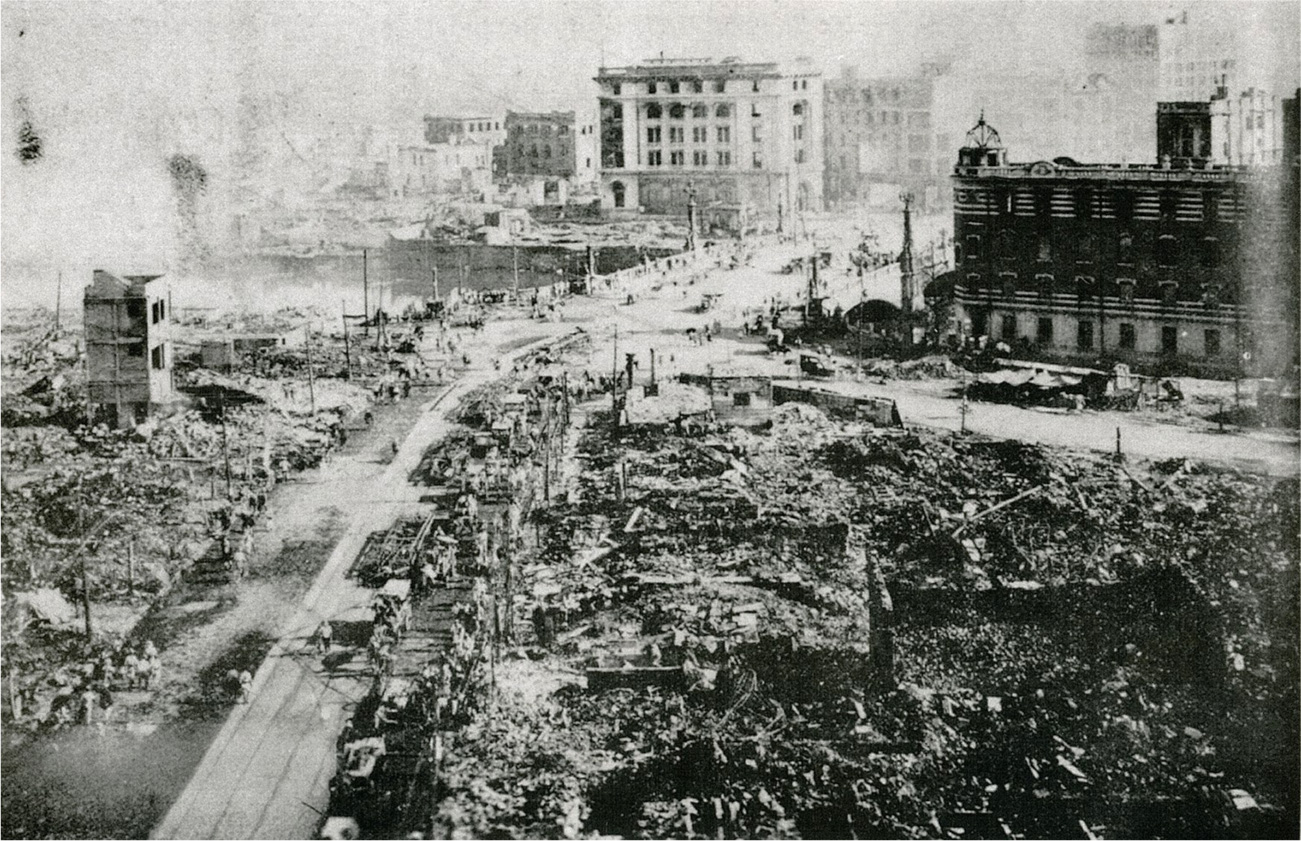
However, the progressive period did not last long. In 1923, the Great Kanto Earthquake, measuring 7.8 on the Richter scale, destroyed two major cities, Yokohama and Tokyo. Nearly 150,000 people died in the earthquake and the resulting fires and tsunamis (Figure 12.18). Rumors quickly spread that Koreans in the area were taking advantage of the chaos, were plotting political insurrection, and had already poisoned wells to contaminate the drinking water. Several thousand Koreans were targeted and killed in response. The devastation also provided an opportunity for the conservative and pro-military forces in the Japanese government to exercise increased control over society. Martial law was declared, and the repression of radicals was stepped up. Political activists who questioned government policies disappeared.
英語のヒント
しかし、この進歩的な時期は長くは続かなかった。1923年、リヒター尺度でマグニチュード7.8の関東大震災が、横浜と東京という二つの大都市を破壊した。地震と、それに続く火災や津波によって、約15万人が亡くなった(図12.18)。地域の朝鮮人が混乱につけ込み、政治的反乱を計画し、すでに井戸に毒を入れて飲料水を汚染しているといううわさが、急速に広まった。その結果、数千人の朝鮮人が標的にされ、殺害された。この破壊はまた、日本政府の保守的で軍を支持する勢力に、社会への統制を強める機会を与えた。戒厳令が敷かれ、急進派への弾圧が強化された。政府の政策に疑問を呈する政治活動家たちは、姿を消した。
A City Destroyed.破壊された都市。
(credit: modification of work “The Great Kanto Earthquake” by “urbz”/Flickr, CC BY 2.0) · CC BY 2.0
Figure 12.18 This 1923 photograph shows the extent of destruction in Tokyo caused by the Great Kanto Earthquake in 1923. (credit: modification of work “The Great Kanto Earthquake” by “urbz”/Flickr, CC BY 2.0)
図12.18 1923年に撮影されたこの写真は、同年の関東大震災による東京の破壊の広がりを示している。(出典:「The Great Kanto Earthquake」、urbz/Flickr、CC BY 2.0の作品を改変)
When the emperor died in 1926, his son Hirohito ascended to power, and the Shöwa period began. Japan’s political system now became increasingly dominated by the military, and the emperor’s role was shrouded in secrecy and worship. The country’s military leaders believed more aggressive actions were needed for Japan to control the Pacific as they wanted to.
英語のヒント
1926年に天皇が亡くなると、その子の裕仁が即位し、昭和の時代が始まった。日本の政治体制は、軍にいっそう強く支配されるようになり、天皇の役割は秘密と崇拝に包まれた。軍の指導者たちは、自分たちの望むように太平洋を支配するには、より攻撃的な行動が必要だと考えた。
Operating with a heightened sense of duty and honor, Japan’s military establishment and certain factions of its army became increasingly contemptuous of civilian leaders. By the late 1920s, they saw these politicians as incapable of solving domestic issues or addressing challenges from China and the Soviet Union. Some disaffected Japanese field commanders in China and the Japanese colony of Korea began to engage in direct actions, forming criminal conspiracies and cover-ups to secure the future of Japan as they saw it, even as they served the emperor.
英語のヒント
強い義務感と名誉意識で行動する日本の軍部と陸軍内の特定の派閥は、文民指導者への軽蔑を深めていった。1920年代後半までには、これらの政治家には国内問題を解決する力も、中国やソ連からの課題に対処する力もないと見なしていた。中国や日本の植民地である朝鮮にいた、不満を抱く一部の現地指揮官は、直接行動に出るようになった。天皇に仕えながら、自分たちが考える日本の将来を確保するため、犯罪的な陰謀とその隠蔽を企てた。
Nationalistic secret societies such as the Cherry Blossom Association and the Blood-Pledge Corps blossomed within the Japanese armed forces, particularly in the prestigious Kwantung Army stationed in Korea. The Japanese chafed at perceived unequal treatment in world affairs, such as at the Washington Naval Conference. Anxiety rose about the growth of Chinese nationalism under Chiang Kai-shek and the nationalist Guomindang government, and what it might mean for Japanese interests in China.
英語のヒント
桜会や血盟団のような国家主義的秘密結社が、日本の軍隊の中、とりわけ朝鮮に駐屯する名高い関東軍の中で増えていった。日本人は、ワシントン海軍軍縮会議などの国際問題で不平等に扱われていると感じ、不満を募らせた。蒋介石と国民党政府の下で中国の民族主義が成長していること、そしてそれが中国における日本の権益に何をもたらすかについて、不安が高まった。
Manchuria, which bordered Korea, was a semiautonomous province of China. In 1931, to precipitate a political crisis that would enable Japan to intervene, hyper-patriots in the Japanese army conspired to blow up a portion of the South Manchurian Railway near the Manchurian city of Mukden (Shenyang) and blamed the incident on Chinese nationalists. The local Japanese commander took the opportunity to occupy Mukden, and field commanders in Korea dispatched reinforcements without any orders from Tokyo to do so. Japanese public opinion supported the army’s action.
英語のヒント
朝鮮と接する満州は、中国の半自治的な地域だった。1931年、日本軍の過激な愛国主義者たちは、日本が介入できる政治危機を引き起こすため、満州の都市奉天、現在の瀋陽の近くで、南満州鉄道の一部を爆破することを共謀した。そして、その事件の責任を中国の民族主義者に押しつけた。現地の日本軍司令官は、この機会に奉天を占領した。朝鮮の現地指揮官たちは、東京からの命令がないまま援軍を派遣した。日本の世論は、軍の行動を支持した。
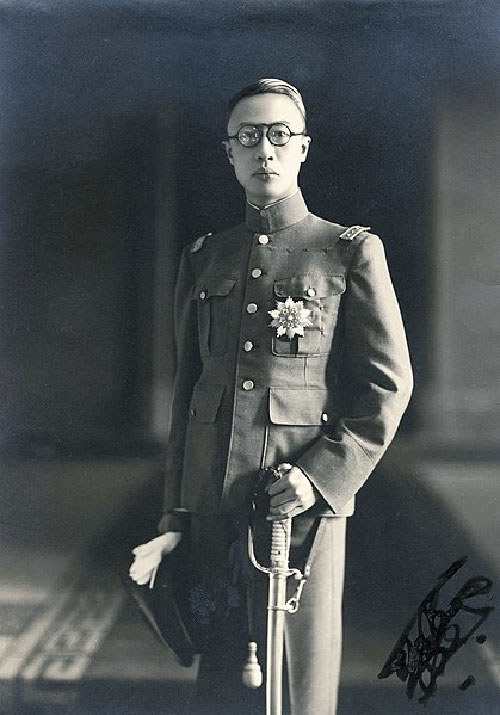
As the Japanese army fanned out in Manchuria, the Kwantung Army approached the former Chinese Emperor, Pu Yi, who had been living in the Japanese concession (an area of the city granted to Japan) in Tianjin since 1925 (Figure 12.19). The Japanese convinced Pu Yi they had acted in the interests of the Manchurian people to preserve law and order in his homeland. They then smuggled him back to Manchuria, and by March 1932, he had been persuaded to accept the position of “chief executive” of the newly born state of Manchukuo, otherwise known as Manchuria. As the Chinese government called for the League of Nations to intervene and pledged to accept its rulings, a British diplomat in Japan warned of “an atmosphere of gun-grease” in Japan.
英語のヒント
日本軍が満州に展開する中、関東軍は中国の元皇帝、溥儀に接触した。溥儀は1925年以来、天津の日本租界、すなわち市内で日本に管理を認められた区域に住んでいた(図12.19)。日本側は、彼の故郷で法と秩序を守り、満州の人々の利益のために行動したのだと、溥儀を説得した。その後、彼をひそかに満州へ戻した。1932年3月までに、溥儀は、満州としても知られるその地域に新しく生まれた満州国の「執政」に就くことを受け入れるよう説得された。中国政府が国際連盟の介入を求め、その判断を受け入れると誓約する一方、日本にいたあるイギリスの外交官は、日本には「銃の油のにおいが漂う雰囲気」があると警告した。
The Last Emperor.最後の皇帝。
(credit: “Pu Yi, Qing dynasty, China, Last emperor” by Unknown/Wikimedia Commons, Public Domain) · Public Domain
Figure 12.19 This photograph shows Pu Yi, China’s last emperor and Manchukuo’s first and only “chief executive,” in the 1930s or 1940s. (credit: “Pu Yi, Qing dynasty, China, Last emperor” by Unknown/Wikimedia Commons, Public Domain)
図12.19 1930年代または1940年代の溥儀を写した写真。中国最後の皇帝であり、満州国で最初かつ唯一の「執政」だった。(出典:「Pu Yi, Qing dynasty, China, Last emperor」、作者不明/Wikimedia Commons、パブリックドメイン)
In the fall of 1931, the League established the Lytton Commission to look into the situation. In January 1932, U.S. secretary of state Henry Stimson announced the Stimson Doctrine, which refused to recognize Manchukuo as an independent state.
英語のヒント
1931年秋、国際連盟は状況を調査するためにリットン調査団を設けた。1932年1月、米国国務長官ヘンリー・スティムソンはスティムソン・ドクトリンを発表し、満州国を独立国家として承認することを拒んだ。
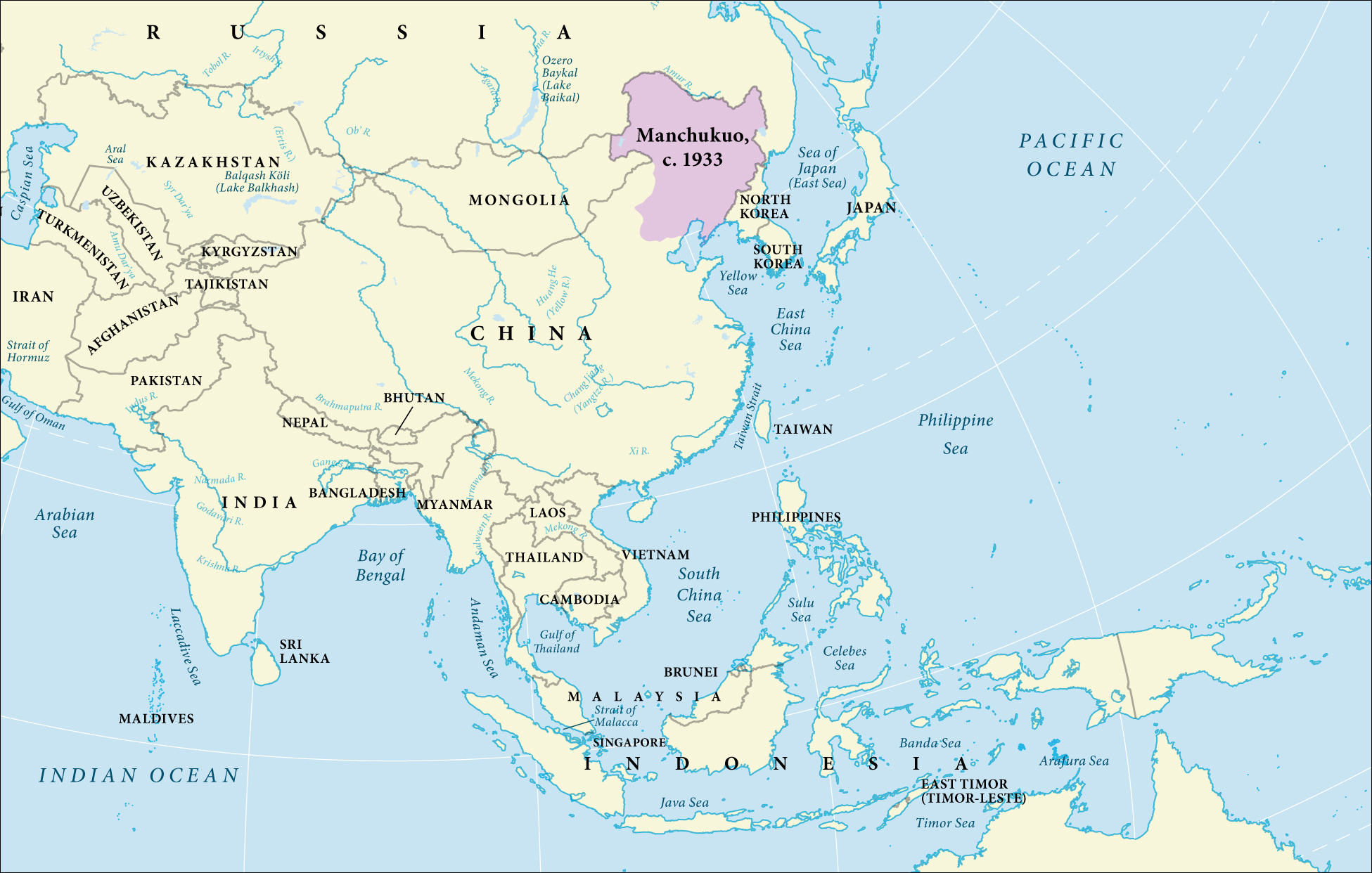
Chinese public opinion was aroused, and in January 1932, clashes erupted between Japanese marines and Chinese troops in the outskirts of Shanghai. In Manchuria, the Lytton Commission found that the Guomindang government of China “[Quotation omitted for rights reasons.]” Japan formally recognized the establishment of Manchukuo, its client state (a subordinate and dependent area), as a theoretically free, completely sovereign, and independent nation (Figure 12.20). The Lytton Report, published in October 1932, found fault on both sides but did not recommend full autonomy for Manchukuo. Japan responded by withdrawing from the League in March 1933. Japan ran the government in Manchukuo as a puppet state, controlling the native Chinese officials. Pu Yi continued as “head” of the government there until the end of the war, after which China took back control.
英語のヒント
中国の世論は激高し、1932年1月には上海の郊外で日本の海軍陸戦隊と中国軍との衝突が起きた。満州について、リットン調査団は、中国の国民党政府がどういう状態にあるかを次のように認定した。〔権利の関係で割愛〕日本は、自国の従属国、すなわち従属し依存する地域である満州国の成立を、建前上は自由で、完全な主権を持つ独立国家として正式に承認した(図12.20)。1932年10月に公表されたリットン報告書は、双方に問題があるとしながら、満州国の完全な自治は勧告しなかった。日本はこれに対し、1933年3月に国際連盟から脱退した。日本は、現地の中国人官吏を支配することによって、満州国政府を傀儡国家として運営した。溥儀は戦争の終わりまで政府の「元首」であり続け、その後、中国が支配を取り戻した。
A Disputed Client State.承認を争われた従属国家。
(attribution: Copyright Rice University, OpenStax, under CC BY 4.0 license) · CC BY 4.0
Figure 12.20 Manchukuo (Manchuria) was a client state in Japan’s imperialistic sphere of influence from the 1930s to the end of World War II. (attribution: Copyright Rice University, OpenStax, under CC BY 4.0 license)
図12.20 満州国、すなわち満州は、1930年代から第二次世界大戦の終結まで、日本の帝国主義的な勢力圏に置かれた従属国家だった。(帰属表示:著作権はライス大学・OpenStaxに帰属。CC BY 4.0ライセンス)
The Japanese secret societies within the military were animated by an exaggerated sense of Japan’s destiny. They began a campaign of violence against the Japanese civilian government. Elements of the Imperial Navy launched a coup in March 1932 by executing Japan’s former finance minister, Junnosuke Inoue, and Baron Dan, the head of Mitsui Corporation, as traitors to the Japanese people. On May 15, Prime Minister Inukai Tsuyoshi was shot to death by eleven young naval officers. Between 1930 and 1935, the Japanese witnessed twenty terrorist incidents, the assassination of four political leaders, the attempted murders of five others, and four coup attempts.
英語のヒント
日本軍内の秘密結社を動かしていたのは、日本の使命に対する誇張された意識だった。彼らは日本の文民政府に対して、暴力による攻撃を始めた。帝国海軍の一部は1932年3月、元蔵相の井上準之助と三井の総帥である團男爵を、日本国民への裏切り者として殺害し、クーデターを開始した。5月15日には、犬養毅首相が11人の若い海軍士官によって射殺された。1930年から1935年にかけて、日本では20件のテロ事件、4人の政治指導者の暗殺、さらに5人の殺害未遂、4回のクーデター未遂が起きた。
In the first half of the twentieth century, the dominant political party in Japan was a fusion of Meiji oligarchs, government bureaucrats, and recruits from other political parties. The Seiyukai, as it was named, consistently supported a march toward authoritarian government. Beginning in 1932, “national unity” governments dominated by high-ranking military officers increasingly assumed power and repressed threats and enemies. Authoritarian government took hold from the top down in the mid-1930s, as the military intimidated and overpowered civilian governance and created a military dictatorship.
英語のヒント
20世紀前半、日本で優勢だった政党は、明治期の寡頭支配者、政府官僚、ほかの政党から加わった者たちの融合によって成り立っていた。政友会と呼ばれるこの政党は、一貫して権威主義的な統治へ進むことを支持した。1932年以降、高位の軍人が支配する「挙国一致」内閣が、ますます権力を握り、脅威や敵と見なした者を弾圧した。1930年代半ばには、軍が文民による統治を威圧し、圧倒して軍事独裁を作り上げる中で、上からの権威主義的な統治が根づいた。
The situation in China was quite fluid through the 1920s and 1930s. Revolutionary activity grew but splintered, and the opposing views of Communists and Nationalists led to civil war. The Guomindang was led by Sun Yat-sen from 1912 until his death in 1925. Sun Yat-sen developed a more inclusive party and made an alliance with those who followed the communist path. After his death, Chiang Kai-shek arose as the leader of the Nationalists. Chiang focused on more traditional positions, and in the late 1920s, he chose to formally oust the communist members of the Guomindang.
英語のヒント
1920年代から1930年代にかけて、中国の状況はきわめて流動的だった。革命活動は拡大しながら分裂し、共産党と国民党の見解の対立は内戦へとつながった。国民党は、1912年から1925年に亡くなるまで、孫文に率いられていた。孫文は、より広い勢力を包み込む政党を育て、共産主義の道を進む者たちとも同盟を結んだ。彼の死後、蒋介石が国民党の指導者として台頭した。蒋は、より伝統的な立場を重視し、1920年代後半には共産党員を国民党から正式に排除することを選んだ。
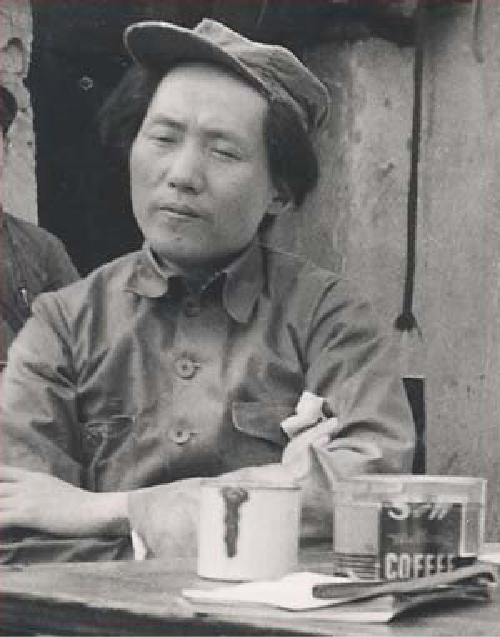
One of the people who had joined the communist ranks was a young member from Hunan Province, Mao Zedong (Figure 12.21). Mao had had intermittent schooling but was drawn to the revolutionary fervor of the Russian Revolution of 1917. He had supported both the communist cause and the Guomindang, but after Chiang ousted the communists, Mao took up arms against him.
英語のヒント
共産主義者の隊列に加わった若者の一人が、湖南省出身の毛沢東だった(図12.21)。毛は断続的に教育を受けていたが、1917年のロシア革命の熱気に引かれた。彼は共産主義運動と国民党の両方を支持していた。しかし、蒋介石が共産主義者を追放すると、毛は蒋に対して武器を取った。
Mao Zedong.毛沢東。
(credit: “Mao Zedong in Yan’an” by Unknown/Wikimedia Commons, Public Domain) · Public Domain
Figure 12.21 This photo of Mao, who was born in 1893, was taken before World War II. (credit: “Mao Zedong in Yan’an” by Unknown/Wikimedia Commons, Public Domain)
図12.21 1893年生まれの毛沢東を、第二次世界大戦前に撮影した写真。(出典:「Mao Zedong in Yan’an」、作者不明/Wikimedia Commons、パブリックドメイン)
Mao viewed communism and Marxism in a rather unorthodox way. Generally, Marxism relied on the proletariat, the industrial workers in the factories, gaining class consciousness. However, this model did not exist in China, a land of mostly agricultural peasants and little industrialization. So Mao came to believe that a Marxist state could be built on the peasantry rather than on industrial workers. Chinese communists would seek to overthrow not the capitalists but the landlords who controlled the land. This was a powerful tonic for the mass of Chinese peasants, who hungered for land reform. Such reform would oust the landlords and return all the land to the hands of the peasants who worked on it.
英語のヒント
毛は、共産主義とマルクス主義を、かなり非正統的な形で捉えていた。一般にマルクス主義は、プロレタリアート、すなわち工場の産業労働者が、階級意識を獲得することを基礎としていた。しかし、人口の大半が農民で、工業化の進んでいない中国には、このモデルに当たる状況がなかった。そこで毛は、産業労働者ではなく農民を基礎として、マルクス主義国家を築けると考えるようになった。中国の共産主義者が打倒しようとする相手は、資本家ではなく、土地を支配する地主となる。土地改革を切望していた中国の農民大衆にとって、これは強力な励みだった。そうした改革は地主を追い出し、土地を耕す農民の手に、すべての土地を戻すものだった。
The Nationalists themselves had encouraged assistance from the Soviet Union in the early 1920s, and the Soviet Union had responded with aid and training. Once Chiang became head of the Nationalists, however, he decided to break with the Communists and planned an extermination of the Communist forces. This forced many into hiding, but in 1935, Mao was able to lead them on the Long March to a safe retreat in northern China. Many flocked to Mao and his oratory about a new government in China that reflected the will of the people. In 1937, however, the Japanese Empire invaded mainland China. Chiang offered Mao a truce, setting aside the civil war in favor of fighting against the invading forces. Still, the internal battles between these two sides weakened the war effort against the Japanese.
英語のヒント
国民党自身、1920年代初めにはソ連からの援助を求め、ソ連も援助と訓練を提供していた。しかし蒋介石が国民党の指導者になると、共産党と決裂することを決め、共産党勢力の殲滅を計画した。そのため多くの共産主義者が身を隠さなければならなくなった。それでも1935年、毛は彼らを率い、中国北部の安全な避難地へ向かう長征を行うことができた。人々の意志を反映する中国の新政府について語る毛の演説に、多くの人が引きつけられた。しかし1937年、日本帝国が中国本土へ侵攻した。蒋は毛に休戦を提案し、侵略軍と戦うため、内戦をいったん脇へ置いた。それでも、この二つの陣営の内部抗争は、日本に対する戦争遂行を弱めた。
In Southeast Asia, themes of nationalism were also growing in popularity. Following his inability to be heard at negotiations for the Treaty of Versailles, Ho Chi Minh had returned home to the northern part of French Indochina (Vietnam, Laos, and Cambodia) and organized guerrilla fighters to begin ousting the French. Championing Vietnamese nationalism, Ho had received training from the Soviet Union and hoped communism would provide a path for his country to achieve independence.
英語のヒント
東南アジアでも、民族主義を掲げる動きへの支持が高まっていた。ヴェルサイユ条約の交渉で訴えを聞いてもらえなかったホー・チ・ミンは、ベトナム、ラオス、カンボジアからなる仏領インドシナの北部の故郷へ帰り、フランス人を追い出すためにゲリラ戦士を組織した。ベトナム民族主義を唱えたホーは、ソ連で訓練を受けており、共産主義が母国の独立への道を開くことを望んでいた。
Turkey welcomed the spread of democratic institutions in the 1920s. After the triumph of his nationalist party in the early 1920s, Mustafa Kemal Atatürk established a republic with a constitution and regular elections. The Republic of Turkey disassociated itself from the old Ottoman rule by adopting many Westernized elements. Women had the right to vote, the Arabic alphabet was no longer used, and traditional dress (veils for women and the fez for men) was outlawed. European fashion became the norm. Another major shift in Turkey was its adoption of a fully secular society. The legal system was overhauled to focus on a civil code like those of other European countries rather than on Islamic law.
英語のヒント
トルコは1920年代、民主的制度の広がりを歓迎した。1920年代初めに民族主義政党を率いて勝利したムスタファ・ケマル・アタテュルクは、憲法と定期的な選挙を持つ共和国を樹立した。トルコ共和国は、西洋化された多くの要素を取り入れることで、旧来のオスマン統治から距離を置いた。女性に投票権が与えられ、アラビア文字は使われなくなり、女性のベールや男性のフェズ帽といった伝統的な服装は禁止された。ヨーロッパ風の服装が標準となった。もう一つの大きな転換は、完全に世俗的な社会を採用したことだった。法制度は全面的に見直され、イスラム法ではなく、ヨーロッパ諸国のものに似た民法典を中心とするようになった。
Latin American countries, too, had some success expanding democracy in the 1920s. In 1910, revolution broke out in Mexico. A struggle over leadership followed in which Mexico was governed by a succession of revolutionary generals without any established way for the next president to come to power. The creation of a political party was meant to fix this, and by the 1920s, the PRI (the Institutional Revolutionary Party) had been formed. Though subject to name changes through the decades, this party dominated Mexican politics until the twenty-first century. There were regular elections and an expansion of voting, reflecting at least the outward acceptance of democratic institutions. However, the PRI effectively ran a one-party state, and all presidents and nearly all the members of the legislature were members of the party. In 1938, a new president, Lázaro Cárdenas, focused on the plight of ordinary workers in Mexico. He supported labor unions, nationalized the oil industry, promoted land reform, and attempted to bring more socialist policies to Mexico.
英語のヒント
ラテンアメリカ諸国も、1920年代に民主主義の拡大で一定の成功を収めた。メキシコでは1910年に革命が起こり、その後、指導権をめぐる争いが続いた。次の大統領が権力を得るための定まった方法のないまま、革命派の将軍たちが次々と国を統治した。政党の創設は、この問題を解決するためのものだった。1920年代までに、制度的革命党(PRI)につながる政党が成立していた。以後の数十年間に名称は変わったが、この政党は21世紀までメキシコ政治を支配した。定期的な選挙が行われ、投票する人々の範囲も広がり、少なくとも外形上は民主的制度を受け入れたことが示された。しかしPRIは事実上の一党国家を運営し、すべての大統領と、立法機関のほぼ全議員が同党の党員だった。1938年、新しい大統領ラサロ・カルデナスは、メキシコの一般労働者の苦境に焦点を当てた。労働組合を支持し、石油産業を国有化し、土地改革を推進して、より社会主義的な政策を導入しようとした。