第12章戦間期The Interwar Period
Worldwide Woe世界に広がる苦難
When the Great Depression occurred, ordinary people bore the brunt of it. Workers lost their jobs and were unable to find new ones as businesses laid off employees. Without the means to pay rent or a mortgage, families were evicted and became homeless. Hunger was a significant problem, particularly in urban areas where there was little chance of having a garden or finding other available foodstuffs. Families coped however they could, sometimes traveling hundreds of miles in the hope that jobs would be available somewhere. Homeless camps and shantytowns sprang up, but life in such a place was precarious because city officials might force the residents to leave (Figure 12.12).
英語のヒント
世界恐慌が起こったとき、その打撃を最も強く受けたのは普通の人々だった。企業が従業員を解雇する中、労働者は職を失い、新しい仕事も見つからなかった。家賃や住宅ローンを払う手段を失った家族は、住まいから立ち退かされ、家を失った。飢えは深刻な問題だった。とりわけ都市では、菜園を持ったり、ほかに手に入る食べ物を見つけたりする余地がほとんどなかった。家族はできる限りの方法で切り抜けようとし、ときにはどこかに仕事があることを願って、何百マイルも移動した。家を失った人々の野営地や掘っ立て小屋の集落が各地に現れた。しかし、都市の当局者が住民に立ち退きを強制するかもしれないため、そうした場所での生活も不安定だった(図12.12)。
Life in a Shantytown.掘っ立て小屋の集落での暮らし。
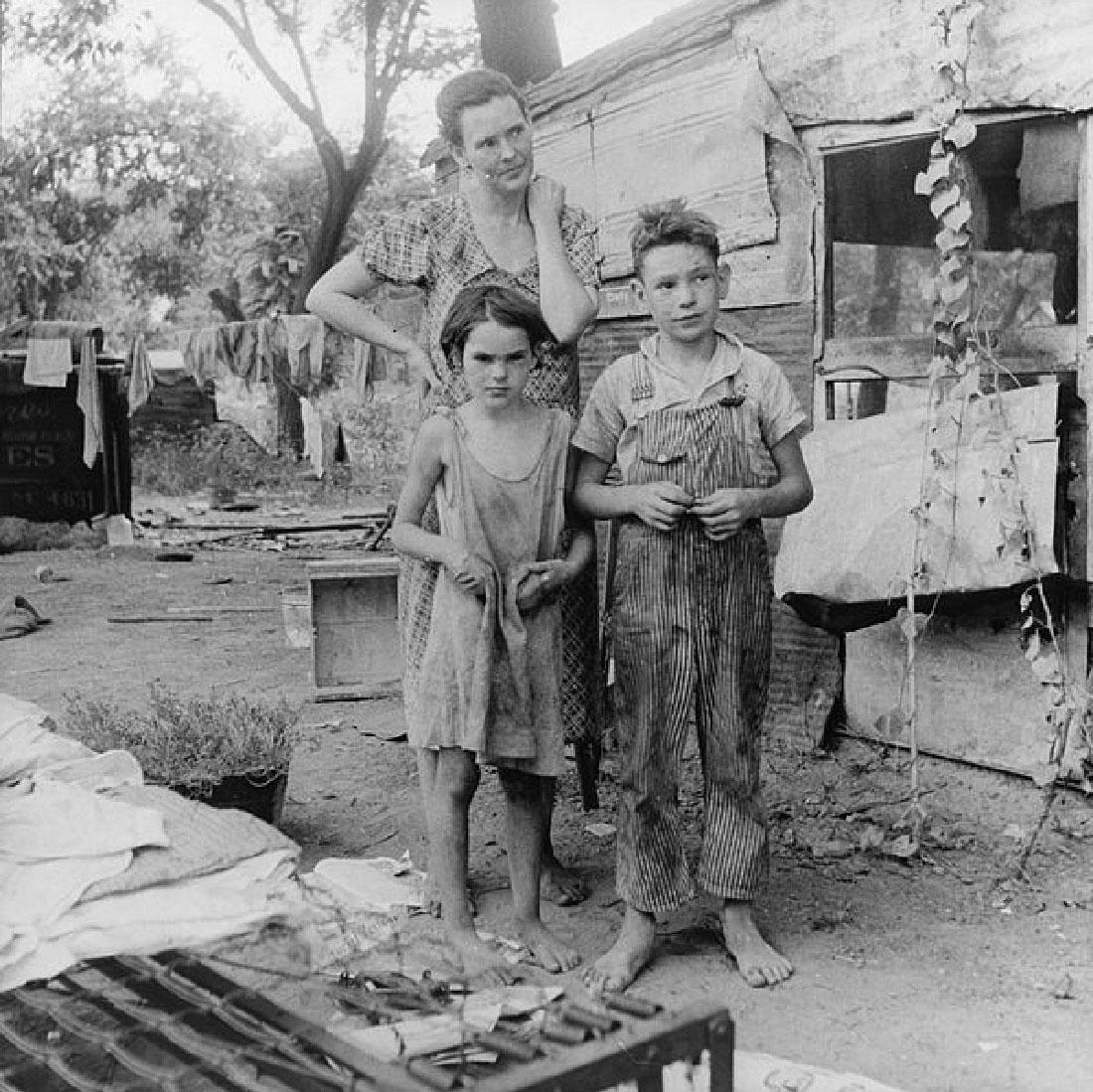
(credit: “Poor mother and children, Oklahoma, 1936 by Dorothea Lange” by Library of Congress/Wikimedia Commons, Public Domain) · Public Domain
Figure 12.12 This 1936 image by the well-known documentary photographer Dorothea Lange shows a mother and her children living in a shantytown in Oklahoma. (credit: “Poor mother and children, Oklahoma, 1936 by Dorothea Lange” by Library of Congress/Wikimedia Commons, Public Domain)
図12.12 著名な記録写真家ドロシア・ラングが1936年に撮影した写真。オクラホマ州の掘っ立て小屋の集落に暮らす母親と子どもたちを写している。(出典:「Poor mother and children, Oklahoma, 1936 by Dorothea Lange」、米国議会図書館/Wikimedia Commons、パブリックドメイン)
No part of the world was immune from the effects of the Great Depression. China was still relatively isolated in the 1930s, but it did experience economic problems when prices for two of its major exports, soybeans and silk, dropped. As an island nation, Japan had limited natural resources, and its militaristic new government needed to alleviate scarcities and secure needed resources such as oil and rubber. With a growing population, it also needed reliable food supplies.
英語のヒント
世界恐慌の影響を免れた地域は、世界のどこにもなかった。1930年代の中国はなお比較的孤立していたが、主要輸出品のうち大豆と生糸の価格が下落すると、やはり経済問題に直面した。島国である日本は天然資源が限られており、その新しい軍国主義的な政府は、物資不足を緩和し、石油やゴムなどの必要な資源を確保しなければならなかった。人口が増加していたため、安定した食料供給も必要だった。
All these factors coalesced into a Japanese plan to target certain areas throughout Asia for takeover, relying heavily on the Imperial Navy. Japan moved into Manchuria in 1931, setting up the state of Manchukuo there the following year. Seizing the region meant Japan would not have to pay for the items it wanted, such as rice, important during a depression that had limited its exports and thus its income from trade. The move also further established Japan as a preeminent power in the region.
英語のヒント
これらの要因が重なり、日本は帝国海軍に大きく頼りながら、アジア各地の特定の地域を奪取する計画を立てた。日本は1931年に満州へ進出し、翌年、そこに満州国を建国した。この地域を奪うことは、日本が米などの必要な物資に代金を払わずに済むことを意味した。恐慌によって輸出が制限され、貿易収入も減っていたため、これは重要だった。この行動はさらに、日本の地域における卓越した大国としての地位を強めた。
Many regions of Africa produced agricultural crops—wheat, maize, and cotton, for example. As trade declined, these sectors bore significant losses, and here too the poor suffered most. The colonial areas of Africa often mirrored the economic troubles of their imperial countries. However, South Africa’s gold mines produced enough income to keep it more stable than other regions in Africa.
英語のヒント
アフリカの多くの地域では、小麦、トウモロコシ、綿花などの農作物を生産していた。貿易が縮小すると、これらの部門は大きな損失を受け、ここでも貧しい人々が最も苦しんだ。アフリカの植民地では、宗主国の経済的困難がしばしばそのまま反映された。しかし南アフリカでは、金鉱が十分な収入を生み出したため、アフリカのほかの地域より安定を保つことができた。
Many Latin American countries were unable to contend with the severe decrease in exports the Depression brought. Some had financial systems heavily dependent on the export market and little in the way of an industrial sector to make up for the loss. Despite this weakness, however, Latin America weathered the Great Depression quite well. Most countries went off the gold standard—a monetary system in which the value of a currency is tied directly to the value of gold—in the early 1930s, but there was no widespread banking collapse as there was in the United States.
英語のヒント
ラテンアメリカの多くの国は、恐慌がもたらした輸出の激減に対応しきれなかった。金融制度が輸出市場に強く依存し、損失を埋め合わせる工業部門がほとんどない国もあった。しかし、この弱点にもかかわらず、ラテンアメリカは世界恐慌を比較的よく乗り切った。大半の国は1930年代初めに金本位制を離れた。金本位制とは、通貨の価値を金の価値に直接結びつける通貨制度である。それでも、アメリカのような広範な銀行崩壊は起こらなかった。
European countries fought the Great Depression in different ways. Britain saw its exports drop considerably and in 1931 found it necessary to lower tariff rates within its empire to stimulate trade. Britain’s economy was stagnant in the 1920s, so the dip of the Great Depression was not as painful as in the United States, though economic sectors such as mining experienced a greater decline than others. Britain did not adopt widespread work-relief programs, relying instead on more targeted support of specific industries. France implemented austerity programs, hoping to keep taxation levels low. It was only in the late 1930s that the French economy turned around, due to an increase in military equipment production.
英語のヒント
ヨーロッパの国々は、それぞれ異なる方法で世界恐慌に立ち向かった。イギリスは輸出の大幅な減少に直面し、1931年には貿易を促すために帝国内の関税率を引き下げる必要があると判断した。イギリス経済は1920年代に停滞していたため、世界恐慌による落ち込みはアメリカほど痛烈ではなかった。ただし、鉱業のように、ほかの部門より大きく衰退した産業もあった。イギリスは広範な就労救済事業を導入せず、特定の産業に的を絞った支援に頼った。フランスは税負担を低く抑えようと緊縮政策を実施した。フランス経済が好転したのは1930年代後半に入ってからであり、その理由は軍需品の生産増加だった。
In the United States, new president Franklin D. Roosevelt unveiled a comprehensive reform plan in 1933. This New Deal was designed to restore faith in the banking system, create work-relief programs to put the unemployed to work, increase the bargaining and consumer power of industrial workers, and provide an overall enhanced quality of life. Overhauls to the banking system included more regulations on U.S. banks and regular audit controls. The creation of the Federal Deposit Insurance Corporation (FDIC) in 1933 meant that depositors could feel their money on deposit was safe. The United States also adopted programs that already existed elsewhere. For example, the Social Security Administration was created in 1935 to provide an old-age pension program for the country. Germany had such a program for several decades, and Britain had already enacted many programs as part of its welfare state that the United States was slow to adopt.
英語のヒント
アメリカでは、1933年に新大統領フランクリン・D・ローズヴェルトが包括的な改革計画を発表した。このニューディール政策は、銀行制度への信頼を取り戻し、失業者に仕事を与える就労救済事業を創設し、工業労働者の交渉力と購買力を高め、全体として生活の質を改善するためのものだった。銀行制度の抜本的な見直しには、銀行規制の強化と定期的な監査による管理が含まれた。1933年に連邦預金保険公社(FDIC)が設立されたことで、預金者は預けたお金が安全だと感じられるようになった。アメリカは、すでにほかの国で行われていた制度も導入した。たとえば1935年には、国の老齢年金制度を提供するために社会保障の行政組織が創設された。ドイツには数十年前から同様の制度があった。イギリスも福祉国家の一環として多くの制度をすでに法制化しており、アメリカはその導入が遅れていた。