第10章工業化世界の生活と労働Life and Labor in the Industrial World
10.5 Regulation, Reform, and Revolutionary Ideologies10.5 規制、改革、革命思想
Learning Objectives学習の目標
By the end of this section, you will be able to:
この節を読み終えると、次のことができるようになる。
Analyze the effectiveness of government regulation of the industrial workplace and of city life
工業の職場と都市生活への政府規制の効果を分析する
Analyze nineteenth- and early twentieth-century labor and social reform movements
19世紀から20世紀初めの労働運動・社会改革運動を分析する
Describe the development of socialism as a means of addressing industrial workers’ needs
工業労働者の必要に応える手段としての社会主義の発展を説明する
Industrialization and urbanization offered opportunities to many people and improved their lives in many ways. However, they also brought much suffering and discontent. The period of the Second Industrial Revolution gave birth to a number of reform movements and legal efforts to eliminate the problems that urbanization and industrialization caused. Some efforts were successful; many were not. When things did not change—or did not change fast enough—people sometimes turned to violent conflict and threatened revolution.
英語のヒント
工業化と都市化は、多くの人々に機会を与え、さまざまな形で暮らしを改善した。しかし、多くの苦しみと不満ももたらした。第二次産業革命の時代には、都市化や工業化が生んだ問題をなくすため、多くの改革運動と法的取り組みが生まれた。成功した試みもあったが、多くは成功しなかった。状況が変わらない、あるいは変化が十分に速くないと、人々はときに暴力的な対立へ向かい、革命の可能性を突きつけた。
Regulation and Reform規制と改革
The challenges of the industrial age must have seemed overwhelming to observers of the time, and the difficulties insurmountable. Nevertheless, governments attempted to solve some of the most important problems. Their motives varied. Many officials were sensitive to the criticisms of social activists and reformers, and some politicians came from their ranks. They genuinely wished to improve the lives of city dwellers and the working class.
英語のヒント
当時の観察者には、工業化時代の課題は圧倒的で、困難は克服不能に思われたに違いない。それでも政府は、最も重要な問題の一部を解決しようとした。動機はさまざまだった。多くの官僚は社会活動家や改革者の批判を敏感に受け止め、その中から政治家になる者もいた。彼らは、都市住民と労働者階級の生活を心から改善したいと望んでいた。
Politicians often acted to please the wealthy and middle class, however, who found themselves threatened by dirty air, smelly streets, and infectious diseases that domestic servants might bring into their homes (Figure 10.16). Florence Kelley, an American activist who sought to end child labor, objected to it not only because it deprived young people of the freedom of childhood, but also because she feared the products made by children in tenement apartments might be dirty and infect her own family.
英語のヒント
しかし政治家は、富裕層や中産階級を満足させるために行動することも多かった。彼らは汚れた空気、臭う街路、家事使用人が家に持ち込むかもしれない感染症に脅威を感じていた(図10.16)。児童労働の廃止を求めたアメリカの活動家フローレンス・ケリーは、それが若者から子供時代の自由を奪うからだけでなく、過密な集合住宅で子供が作る製品が汚れていて、自分の家族に病気をうつすかもしれないと恐れたためにも、児童労働に反対した。
Tenement Factory.集合住宅内の工場。
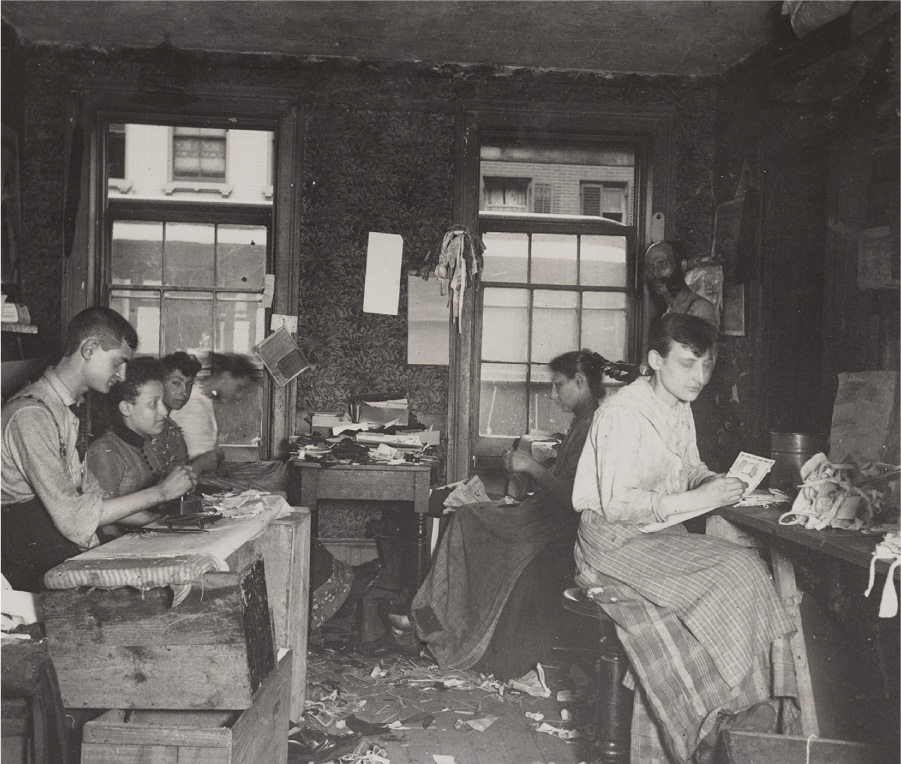
Necktie workshop in a Division Street tenement — Jacob A. Riis, circa 1889; Library of Congress, 2002710291. Public Domain. · Public Domain
Figure 10.16 Jacob A. Riis, an American social reformer and documentary photographer, often took photographs depicting urban life, such as this image of men and women sewing and ironing in a tenement factory around 1889. (credit: “Necktie workshop in a Division Street tenement” by Jacob A. Riis/Library of Congress, Public Domain)
図10.16 アメリカの社会改革家で記録写真家のジェイコブ・A・リースは、1889年ごろ、集合住宅内の工場で男女が縫製やアイロンがけをするこの写真のように、都市生活をしばしば撮影した。(クレジット:「Necktie workshop in a Division Street tenement」、ジェイコブ・A・リース/アメリカ議会図書館)
Many politicians at both the local and national levels also realized that protecting workers’ health and welfare made the nation stronger. Sick workers were unproductive, and travelers avoided cities suffering epidemics. Numerous laws were passed to combat disease and render cities clean. In 1848, Britain took a step forward by passing the Public Health Act, which created the National Board of Health to regulate such matters as the dumping of sewage. In 1863, Britain’s Alkali Act sought to reduce hydrogen chloride emissions by empowering investigators to suggest changes to factory owners, though without the power to compel obedience. In the 1880s, several American cities, including Chicago, Pittsburgh, and Cincinnati, passed ordinances to limit smoke emissions. None of these laws were very successful. Businesses ignored them, and cities usually did not enforce them.
英語のヒント
地方と国の多くの政治家は、労働者の健康と福祉を守れば国家が強くなることも理解した。病気の労働者は生産性が低く、旅行者は疫病流行中の都市を避けた。病気に対処し、都市を清潔にするため、多くの法律が成立した。1848年、イギリスは公衆衛生法を成立させて一歩前進し、下水の投棄などを規制する全国衛生委員会を設けた。1863年のアルカリ法は、塩化水素の排出を減らすため、調査員に工場主への改善提案の権限を与えたが、従わせる権限は与えなかった。1880年代にはシカゴ、ピッツバーグ、シンシナティなどアメリカの都市が、煙の排出を制限する条例を定めた。いずれもあまり成功しなかった。企業は無視し、都市も通常は執行しなかったからである。
Housing also became a concern of governments during the Second Industrial Revolution. Regulations often outlawed dangers such as apartments without windows or ventilation, where infectious diseases rapidly bred. Some municipalities built housing for the poor or tore down slums and relocated workers to other parts of the city. Between 1853 and 1870, Baron Georges-Eugène Haussmann redesigned Paris; as part of these efforts, workers’ dwellings in the center of the city were razed. Naples, Italy, was rebuilt between 1889 and 1918 to prevent the return of cholera. In the 1880s and 1890s, Japanese officials in Tokyo and Osaka also tried to clear slums and remove the poor from districts inhabited by the middle class. These efforts were often unsuccessful, however, and poor neighborhoods often abutted even the most prestigious ones. In 1906, one Japanese newspaper reported that the emperor’s palace was affected when the poor neighborhood adjacent to it flooded.
英語のヒント
第二次産業革命期には、住宅も政府の関心事となった。規制によって、感染症が急速に広がる窓も換気もない住戸など、危険な住居が禁じられることが多かった。自治体によっては貧しい人々の住宅を建てたり、スラムを取り壊して労働者を都市の別地区へ移したりした。1853~1870年、ジョルジュ=ウジェーヌ・オスマン男爵はパリを再設計し、その一環で中心部の労働者住宅を取り壊した。イタリアのナポリはコレラの再発を防ぐため1889~1918年に再建された。1880~1890年代、日本でも東京や大阪の官僚が、スラムを取り除き、中産階級の住む地区から貧民を移そうとした。しかし失敗することが多く、最も高級な地区にも貧しい地区が隣接することがよくあった。1906年の日本のある新聞は、隣の貧困地区の洪水で皇居にも被害が及んだと報じた。
In 1883, Germany passed the Health Insurance Law, requiring that employers provide health insurance for their employees, using money drawn from workers’ pay and added to employers’ contributions. In 1889, the German government extended insurance to the elderly and those with disabilities. In 1898, France also provided insurance to those injured at work. In 1911, Britain’s National Insurance Act provided for the health care of about one-third of British workers. In 1912, Russia passed a similar law.
英語のヒント
1883年、ドイツは健康保険法を成立させ、労働者の賃金から拠出した金に雇用者の負担を加え、従業員へ健康保険を提供することを雇用者に義務づけた。1889年には保険を高齢者と障害者にも拡大した。1898年、フランスも労災で負傷した人々に保険を提供した。1911年のイギリスの国民保険法は、労働者の約3分の1に医療を保障した。1912年、ロシアも同様の法律を成立させた。
Concern for safety in the industrial workplace, especially of women and children, also inspired much legislation. Early laws applied to only certain industries like textiles and mining. Factory Acts passed in Britain in the 1860s through the 1880s expanded the types of businesses covered by the older laws. In 1860, the Coal Mines Regulation Act made twelve years the minimum age for boys to work in mines, and in 1891, Britain made eleven years the minimum age for factory work.
英語のヒント
工業の職場、とりわけ女性や子供の安全への懸念も、多くの立法を促した。初期の法律は、織物や鉱業など特定の業種にしか適用されなかった。1860~1880年代のイギリスの工場法は、それまでの法律が対象とする事業の種類を広げた。1860年の炭鉱規制法は、少年が鉱山で働ける最低年齢を12歳とし、1891年にはイギリスは工場労働の最低年齢を11歳とした。
Many U.S. states passed laws limiting work hours for women in strenuous industries like laundry. Employers challenged these actions, though, and courts, favoring a policy of laissez-faire, commonly overturned protective legislation. Limiting adults’ working hours was thought to deprive them of their freedom of contract as well as burdening employers. Many efforts to limit hours or ban women and children from certain jobs altogether were also often resented by the working class. For those commonly paid by the hour or the piece, more time in the workplace meant more money, and people who were desperate often had to take the only jobs they could find.
英語のヒント
アメリカの多くの州は、洗濯業などの重労働で女性の労働時間を制限する法律を成立させた。しかし雇用者は異議を申し立て、自由放任政策を支持する裁判所は、保護立法を無効とすることが多かった。成人の労働時間を制限するのは、雇用者の負担になるだけでなく、成人自身の契約の自由を奪うと考えられた。労働時間を制限したり、女性と子供を特定の仕事から全面的に排除したりする多くの試みは、労働者階級にも反感を持たれることが多かった。時間給や出来高払いが一般的な人々には、職場で過ごす時間が長いほど収入が増え、追い詰められた人は、見つかる唯一の仕事を受けねばならないことが多かった。
The creation of urban parks was the goal of reformers who saw green spaces as a solution to the dirt and chaos of the city. The nineteenth-century middle and upper-middle classes, like good Romantics, believed in the redemptive power of nature. Not only was fresh air good for city dwellers’ lungs, but the very sight of green grass, trees, and flowers was thought to be a source of moral uplift. Politicians were swayed by their claims. New York City built Central Park in 1858. The government of Japan decreed in 1873 that parks be built in urban areas (Figure 10.17). German emperor Wilhelm I ceded his rights to the Tiergarten, a royal hunting park, and made it part of the city of Berlin in 1881. The middle class sometimes feared the working class would behave inappropriately in parks, and places like Central Park often prohibited visitors from picnicking on the grass, picking flowers, and playing games on the lawn.
英語のヒント
都市の汚れと混乱を解決するのは緑地だと考えた改革者は、都市公園の創設を目標とした。19世紀の中産階級やその上層は、ロマン主義者らしく、自然に人を救う力があると信じた。新鮮な空気は都市住民の肺によいだけでなく、緑の草木や花を目にすること自体が、道徳性を高める源だと考えられた。政治家はその主張に動かされ、ニューヨーク市は1858年にセントラルパークを造った。日本政府は1873年、都市に公園を設けるよう布告した(図10.17)。ドイツ皇帝ヴィルヘルム1世は王室の狩猟公園ティーアガルテンの権利を譲り、1881年にベルリン市の一部とした。中産階級は労働者階級が公園で不適切に振る舞うことを恐れる場合もあり、セントラルパークなどでは芝生でのピクニック、花摘み、芝の上での遊戯を禁止することが多かった。
Tsuruma Park.鶴舞公園。
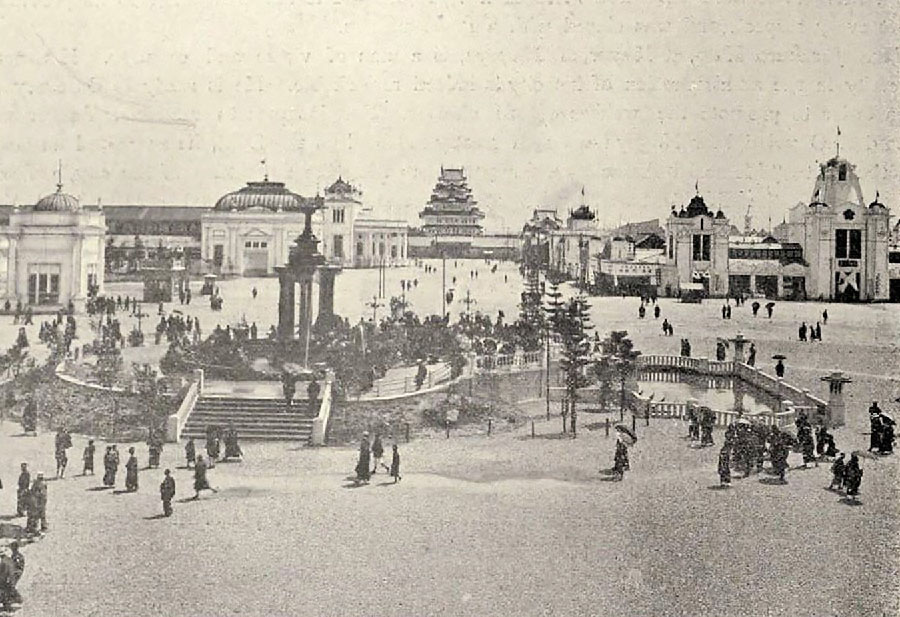
(credit: “Tsurumai Park 1910” by Japan to-day/Wikimedia Commons, Public Domain) · Public Domain
Figure 10.17 In 1873, the government of Japan decreed that public parks be established in the cities. Tsuruma Park opened in Nagoya in 1909. In its center is a European-style bandstand, shown here. (credit: “Tsurumai Park 1910” by Japan to-day/Wikimedia Commons, Public Domain)
図10.17 1873年、日本政府は都市に公共公園を設けるよう布告した。名古屋の鶴舞公園は1909年に開園し、中央には、この写真のようなヨーロッパ式の野外音楽堂がある。(クレジット:「Tsurumai Park 1910」、『Japan to-day』/Wikimedia Commons、パブリックドメイン)
Regulations and laws sometimes failed to yield the improvements many social activists thought were necessary. Reform movements arose both to change private behaviors the middle class believed harmful or immoral, such as drinking or having extramarital sex, and to pressure governments to make broader changes. Sometimes they were successful. In the United States, for example, prostitution was made illegal in many cities. In other countries such as France, prostitution was not prohibited, and new laws attempted to regulate it and prevent the spread of venereal disease.
英語のヒント
規制や法律は、社会活動家の多くが必要と考える改善を生み出せないこともあった。改革運動は、飲酒や婚外の性関係など、中産階級が有害・不道徳と考える個人の行動を変え、同時に政府へ広い変革を迫るために生まれた。成功することもあった。たとえばアメリカでは多くの都市が売春を違法にした。フランスなど他国では売春自体は禁止されず、新法によって規制し、性病の拡大を防ごうとした。
The excessive consumption of alcohol was another problem addressed primarily through reform efforts. The middle class blamed drinking for myriad problems including poverty, street crime, worker absenteeism, workplace accidents, and domestic violence. Efforts to address these generally took one of two approaches—temperance, which forbade hard liquor and encouraged moderate consumption of other alcoholic beverages, and prohibition, which attempted to ban the manufacture and consumption of all alcoholic beverages.
英語のヒント
過度の飲酒も、主に改革運動を通じて対処された問題だった。中産階級は、貧困、街頭犯罪、欠勤、労災、家庭内暴力など無数の問題の原因を飲酒に求めた。通常、取り組みは二つに分かれた。節酒は蒸留酒を禁じ、他の酒類は適量に抑えることを勧めた。禁酒は、あらゆる酒類の製造と消費を禁止しようとした。
Temperance and prohibition movements made the greatest headway in countries with large Protestant populations, such as the United States, England, Denmark, Sweden, and Finland. The United Kingdom Alliance for the Total and Immediate Suppression of the Liquor Traffic by the Will of the People, usually referred to simply as the United Kingdom Alliance, intended to prohibit the trade in alcohol entirely. In the United States, the Anti-Saloon League attempted to close places where alcohol was served, including by physically destroying barrooms.
英語のヒント
節酒・禁酒運動が最も進展したのは、アメリカ、イングランド、デンマーク、スウェーデン、フィンランドなど、プロテスタント人口の多い国だった。「人民の意思による酒類取引の全面的かつ即時の抑止を求める連合王国同盟」、通称連合王国同盟は、酒類取引の完全禁止を目指した。アメリカの反酒場連盟は、酒場を物理的に破壊することも含め、酒を提供する場所を閉鎖しようとした。
Women played crucial roles in many of these reform movements; such activism was considered an appropriate occupation for wealthy or middle-class women and directly related to their interests at the time. Husbands who visited prostitutes could bring disease home. Alcoholic men could leave families in financial ruin, and drunken husbands and fathers physically abused wives and children. Cleaning up the city was often equated to cleaning up the home.
英語のヒント
女性は、これらの改革運動の多くで重要な役割を果たした。このような活動は、富裕層や中産階級の女性にふさわしい仕事と考えられ、当時の女性の利害にも直接結びついていた。売春婦のもとを訪れる夫は、病気を家庭に持ち込むおそれがあった。アルコール依存症の男性は家族を経済的破滅に陥れることがあり、酔った夫や父親は妻や子どもに身体的暴力を加えた。都市を浄化することは、しばしば家庭を浄化することと同一視された。
The women engaged in reform movements usually realized they could be more effective if they had the right to vote, run for public office, or control property. Access to university education and the professions would also boost their ability to improve society. Many were therefore also active in women’s rights movements.
英語のヒント
改革運動に参加する女性は通常、投票し、公職に立候補し、財産を管理する権利があれば、より効果的に活動できると気づいた。大学教育や専門職への道が開かれることも、社会を改善する能力を高めるはずだった。そのため多くの女性は、女性の権利運動にも積極的に参加した。
Reformers often regarded problems like poverty and drunkenness as the result of a lack of self-discipline and of a strong moral compass. The poor could best be helped, they believed, through moral uplift. The Scottish writer Samuel Smiles, for example, believed morality was the key to success. Adopting that attitude, charitable societies and religious organizations often established missions in poor neighborhoods through which they hoped to encourage the working class to change their ways.
英語のヒント
改革者は、貧困や泥酔といった問題を、自制心や確かな道徳的指針の欠如が生んだ結果とみなすことが多かった。貧しい人々を最もよく助ける方法は、道徳性の向上だと考えたのである。たとえば、スコットランドの著述家サミュエル・スマイルズは、道徳こそ成功の鍵だと考えた。慈善団体や宗教組織はこの姿勢を採用し、貧困地区に伝道所を設けて、労働者階級が生活態度を変えるよう促そうとすることが多かった。
Nineteenth-century reformers also insisted the poor not become dependent on charity. British housing reformer Octavia Hill was an advocate of this position. She worked with art critic John Ruskin to provide attractive housing for the poor, but the housing was not free, and while rents were low, those who failed to pay on time risked eviction. Hill also evicted tenants who allowed their homes to become overcrowded or failed to send their children to school.
英語のヒント
19世紀の改革者は、貧しい人々が慈善に依存するようになってはならないとも主張した。イギリスの住宅改革者オクタヴィア・ヒルは、この立場の支持者だった。美術評論家ジョン・ラスキンと協力して貧しい人々に魅力的な住宅を提供したが、住宅は無料ではなかった。家賃は安くても、期限までに払わなければ立ち退きを迫られるおそれがあった。ヒルはまた、住居を過密状態にしたり、子どもを学校に通わせなかったりした借家人も立ち退かせた。
Others believed the poor were irredeemable and that their personal traits, many of which were thought to be hereditary, made change impossible. Thus, attempts at charity and moral uplift were seen to do no good. Social Darwinism, a pseudoscientific belief that some people were better equipped for survival than others, was advocated by British sociologist Herbert Spencer. Spencer believed it was useless to help the poor because they were destined to die out. He regarded them as having “lost” the competition of life because they did not possess the traits necessary to rise to the top. He did not believe the poor should be helped to survive and opposed offering them financial assistance.
英語のヒント
貧しい人々は救いようがなく、その個人的特質の多くは遺伝性と考えられるため、変化は不可能だと考える人々もいた。したがって、慈善や道徳的向上を目指す試みは無益とみなされた。ある人々は他の人々より生存に適しているという疑似科学的な信念である社会ダーウィニズムは、イギリスの社会学者ハーバート・スペンサーが唱えた。スペンサーは、貧しい人々は絶滅する運命にあるため、助けても無駄だと考えた。頂点に上り詰めるのに必要な特質を持たないため、人生の競争に「負けた」人々とみなしたのである。貧しい人々の生存を助けるべきだとは考えず、経済的援助を与えることに反対した。