第10章工業化世界の生活と労働Life and Labor in the Industrial World
The Industrial Home工業化時代の家庭
Industrialization brought profound changes to countries like Britain, France, Germany, and the United States. In the latter nineteenth century, western nations like these, already skilled in the production of textiles and iron rails, applied machine technology to the mass-production of consumer goods, the new availability of which changed people’s lives.
英語のヒント
工業化はイギリス・フランス・ドイツ・アメリカなどの国々に根本的な変化をもたらした。19世紀後半、すでに織物と鉄のレールの生産技術を持っていたこれらの西洋諸国は、機械技術を消費財の大量生産に応用した。それらの品が新たに手に入りやすくなることで、人々の暮らしは変わった。
The wealthy and the middle class consisted of professionals such as doctors and lawyers as well as factory managers, bank employees, salespeople, engineers, and scientists. They had always been able to afford the handmade products of skilled dressmakers, tailors, shoemakers, jewelers, and cabinetmakers that were beyond the reach of simple laborers. Now, however, factories produced clothing, shoes, cookware, furniture, soap, toys, books, musical instruments, and costume jewelry in such quantities that they could be sold at prices the working class could afford. Working families could buy bedsteads, tables, and chairs that imitated in style those of the middle class. They could decorate their homes with inexpensive prints of famous works of art. Soap, not easily made by city dwellers because the required animal fat was not always available, was now mass-produced and simple to buy. City dwellers could readily keep themselves and their clothes clean, which in turn improved personal health and comfort. By the end of the nineteenth century in industrialized countries, workers’ real wages, wages measured in terms of the amount of goods and services they can purchase, had risen so that most people could buy the consumer goods turned out by European and American factories.
英語のヒント
富裕層と中産階級には、医師・弁護士などの専門職に加え、工場管理者、銀行員、販売員、技師、科学者がいた。彼らは以前から、熟練した婦人服仕立人、紳士服仕立人、靴職人、宝石職人、家具職人の手作り品を買う余裕があったが、それらは一般の労働者には手の届かない品だった。しかし今や工場は、衣服、靴、調理器具、家具、石鹸、玩具、書籍、楽器、模造宝飾品を大量に生産し、労働者階級にも買える価格で売れるようになった。労働者の家庭は、中産階級の様式をまねたベッドの枠、テーブル、椅子を買えた。有名な美術作品の安価な複製で家を飾ることもできた。石鹸は、必要な動物性脂肪が常に手に入るわけではないため都市住民には作りにくかったが、今や大量生産され、簡単に買えた。都市住民は自分の身体と衣服を容易に清潔に保てるようになり、それが個人の健康と快適さを改善した。19世紀末までに、工業国では労働者の実質賃金、すなわち購入できる財やサービスの量で測る賃金が上昇し、大半の人がヨーロッパやアメリカの工場の消費財を買えるようになった。
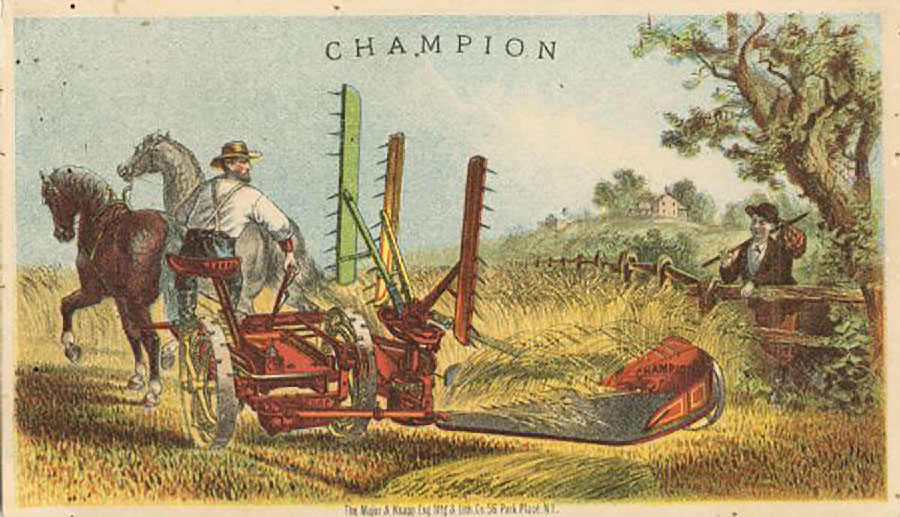
An abundance of food was produced on farms and ranches that employed mass-produced agricultural machinery (Figure 10.5). This food was then transported to cities in refrigerated railcars and processed in urban factories, slaughterhouses, and canneries, giving people access to canned meat, fish, fruits, and vegetables all year round. Sugar obtained from colonial possessions was inexpensive and plentiful, and sweet treats were widely available.
英語のヒント
大量生産された農業機械を使う農場や牧場では、豊富な食料が生産された(図10.5)。その食料は冷蔵貨車で都市へ運ばれ、都市の工場、食肉処理場、缶詰工場で加工されたため、人々は一年中、肉・魚・果物・野菜の缶詰を手に入れられた。植民地領土から得られる砂糖は安価で豊富で、甘い菓子が広く出回った。
Mechanical Reaper.機械式刈取機。
(credit: “Champion Trade Card, 1875” by Wisconsin Historical Society/Wikimedia Commons, Public Domain) · Public Domain
Figure 10.5 An advertisement from 1875 promotes the use of the mechanical reaper to harvest grain. (credit: “Champion Trade Card, 1875” by Wisconsin Historical Society/Wikimedia Commons, Public Domain)
図10.5 1875年の広告が、穀物収穫に機械式刈取機を使うことを宣伝している。(クレジット:「Champion Trade Card, 1875」、ウィスコンシン歴史協会/Wikimedia Commons、パブリックドメイン)
This food was sometimes a mixed blessing. The slaughterhouses in which meat was processed were often filthy, and canned meat was sometimes found to contain maggots. To keep vegetables bright and colorful in the can, dyes were added; green dye was made with arsenic and was notoriously poisonous. Mass-produced bread from an urban bakery might contain chalk dust or alum for bulk. Undoubtedly, fresh and unadulterated food would have been healthier and tastier, but packaged and processed foods at least provided the calories necessary for survival, and many workers did not have to settle for the bare necessities. A study of American laborers in 1874 revealed that they ate fresh meat every day. Just before the start of World War I in 1914, members of the German working class protested the increase of food prices in Berlin because it threatened their regular consumption of meat and wheat bread, which was considered superior to bread made with other grains.
英語のヒント
こうした食料は、ときに良いことばかりではなかった。食肉を処理する施設はしばしば不潔で、肉の缶詰にうじが見つかることもあった。缶の中でも野菜の鮮やかな色を保つため染料が加えられたが、緑色の染料はヒ素で作られ、毒性が強いことで知られていた。都市のパン工場で大量生産されたパンには、かさ増しのためにチョークの粉やミョウバンが含まれることもあった。新鮮で混ぜ物のない食べ物の方が健康によくおいしかったことは疑いないが、包装・加工食品は少なくとも生存に必要なカロリーを与え、多くの労働者は最低限の必需品だけで我慢する必要もなくなった。1874年のアメリカの労働者を対象とした調査は、彼らが毎日新鮮な肉を食べていたことを明らかにした。1914年の第一次世界大戦の直前、ドイツの労働者階級は、ベルリンの食料価格上昇に抗議した。日常的に食べていた肉や、他の穀物のパンより上等とされた小麦パンが買えなくなりかねなかったためである。
Advances in science and technology contributed to survival. New medical instruments and processes, such as the ophthalmoscope and the x-ray, improved the diagnosis of injury and disease. Pharmaceuticals and anesthetics arrived, such as aspirin to relieve pain and fever and mass-produced quinine to treat malaria. The discovery by Robert Koch and Louis Pasteur of the first disease-causing pathogens, or “germs,” led to new vaccines that protected animals against anthrax and rabies, and humans against cholera and diphtheria. Pasteur’s discoveries also led to the pasteurization of milk beginning in the 1860s, making it safer to drink by heating it to destroy pathogens. The development of the antiseptic method by Joseph Lister in the 1860s and the identification of human blood types in 1901, which made safe blood transfusions possible, transformed the practice of surgery.
英語のヒント
科学技術の進歩は生存に寄与した。検眼鏡やX線などの新しい医療機器・手法は、けがや病気の診断を改善した。痛みや発熱を抑えるアスピリン、マラリアを治療する大量生産のキニーネなどの医薬品や、麻酔薬が登場した。ロベルト・コッホとルイ・パスツールによる、病気を起こす最初の病原体、すなわち「病原菌」の発見は、動物を炭疽病や狂犬病から、人間をコレラやジフテリアから守る新たなワクチンにつながった。パスツールの発見は、1860年代に始まる牛乳の低温殺菌にもつながり、加熱して病原体を殺すことで、安全に飲めるようにした。1860年代のジョゼフ・リスターによる消毒法の開発と、安全な輸血を可能にした1901年の人間の血液型の発見は、外科手術のあり方を変えた。
Changes in sanitation also improved the cleanliness, comfort, and health of people of all classes. Water pipes brought fresh water to cities from the surrounding countryside and into the homes of the wealthy and middle class. This access to clean water dramatically reduced the incidence of diseases such as cholera and typhoid fever. Mass-produced bathroom fixtures made it easier for the wealthy and the middle class to stay clean, and the development of flush toilets and the laying of sewer pipe made homes, streets, and cities more sanitary.
英語のヒント
衛生面の変化も、あらゆる階級の人々の清潔さ、快適さ、健康を改善した。水道管が周辺の農村から新鮮な水を都市へ、さらに富裕層と中産階級の家庭へ運んだ。清潔な水が使えることで、コレラや腸チフスなどの病気の発生率は大きく低下した。大量生産された浴室設備によって富裕層や中産階級は清潔を保ちやすくなり、水洗便所の開発と下水管の敷設は、家屋、街路、都市をより衛生的にした。
The Second Industrial Revolution introduced new methods of illumination. At the beginning of the century, candles and kerosene lamps lit homes and workplaces, and gas lighting was still new. London installed its first gas streetlights in 1807, and by midcentury, more cities had adopted them; in 1860 Berlin had 250. Many wealthy and middle-class homes, as well as some working-class homes, had indoor gas fixtures as well. By the 1880s, most British families could rely on gas both to illuminate and heat their homes and to cook their food.
英語のヒント
第二次産業革命は新しい照明方法をもたらした。世紀初めには、ろうそくと灯油ランプが家や職場を照らし、ガス照明はまだ新しかった。ロンドンは1807年に初めてガス街灯を設け、世紀半ばまでに採用する都市が増えた。1860年のベルリンには250基あった。多くの富裕層・中産階級の家庭に加え、一部の労働者階級の家庭にも屋内ガス設備があった。1880年代までには、イギリスの大半の家庭が、照明、暖房、調理にガスを利用できた。
Gas had a number of drawbacks, however. It produced a relatively dim light, and it smelled. Gas lines had a dangerous tendency to explode, and if people blew out the flames of gas lights without remembering to also stop the flow of gas from the line, entire households could be suffocated as they slept.
英語のヒント
しかしガスにはいくつもの欠点があった。明かりは比較的薄暗く、臭いもした。ガス管は爆発しやすい危険があり、ガス灯の炎を吹き消す際に管からのガスも止めるのを忘れると、一家全員が眠っている間に窒息しかねなかった。
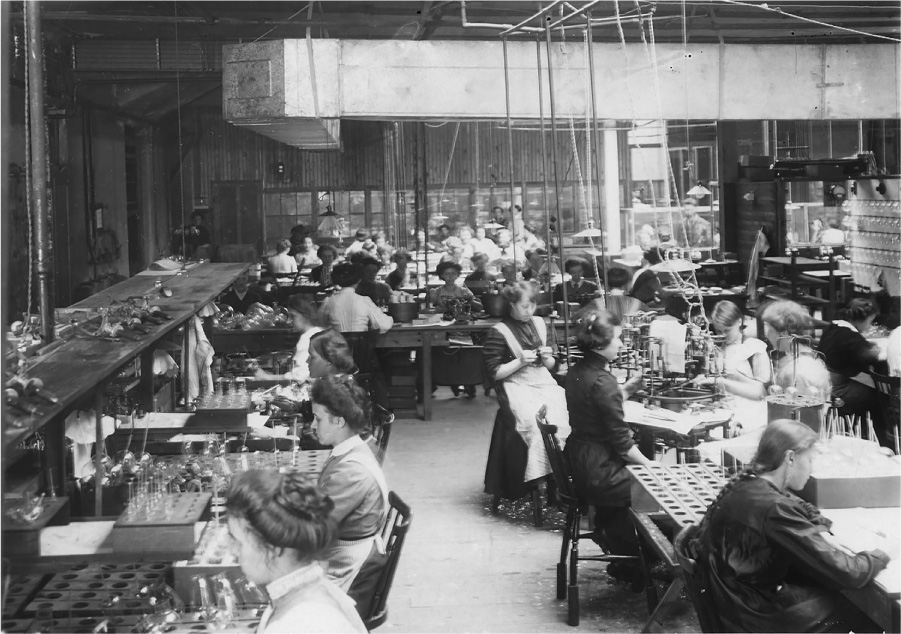
Electricity transformed everything (Figure 10.6). Electric light was clear, bright, and relatively safe. People could stay up in the evenings to read or study. Night life became possible. Paris installed electric streetlights in 1875, Berlin in 1882, and Mexico City in 1897. Brightly lit amusement parks and urban pleasure gardens were magical places for city dwellers to enjoy.
英語のヒント
電気はすべてを変えた(図10.6)。電灯の光は澄んで明るく、比較的安全だった。人々は夜も起きて読書や勉強ができた。夜の娯楽も可能になった。パリは1875年、ベルリンは1882年、メキシコシティは1897年に電気街灯を設けた。明るく照らされた遊園地や都市の遊楽庭園は、都市住民が楽しめる魔法のような場所となった。
Lamp Factory.電灯工場。
(credit: “Stockholms glödlampfabrik” by Tekniska museet/Wikimedia Commons, CC0 1.0) · CC0 1.0
Figure 10.6 This photograph shows women in a Swedish factory making parts for lamps at the beginning of the twentieth century. As electricity became more common, electric fixtures and electrical appliances were in greater demand. (credit: “Stockholms glödlampfabrik” by Tekniska museet/Wikimedia Commons, CC0 1.0)
図10.6 この写真は、20世紀初めにスウェーデンの工場で電灯の部品を作る女性たちを示す。電気が普及するにつれ、電気設備や電気器具の需要が増えた。(クレジット:「Stockholms glödlampfabrik」、Tekniska museet/Wikimedia Commons、CC0 1.0)
The combination of readily available mass-produced goods, running water, and gas and electricity improved the standard of living for many people. A new cult of cleanliness developed among the middle class because indoor plumbing and improved heating made bathing easier. By the beginning of the twentieth century, more middle-class homes had rooms set aside for bathing.
英語のヒント
手に入りやすい大量生産品、水道、ガス、電気が組み合わさり、多くの人々の生活水準が向上した。屋内配管と暖房の改善で入浴が容易になると、中産階級では清潔さを強く重視する新しい風潮が生まれた。20世紀初めまでに、入浴専用の部屋を設ける中産階級の家庭が増えた。
New and improved appliances also changed life at home. Cookstoves with ovens and surfaces that could be heated to different temperatures made it possible to prepare multiple dishes at the same time. Built-in reservoirs in stoves kept water hot, and improved washing machines (e.g., mangles that used rollers to squeeze out water) made it easier to launder clothes. In the early twentieth century, motor-powered vacuum cleaners made it easier to clean floors. These developments undoubtedly contributed to the comfort of the middle class, but they also raised expectations for middle-class women, whose chief job was to care for the home. Now that elaborate meals could be prepared every day, they became the expectation. Now that it was easier to clean the family’s clothes and home, it was unacceptable for them to be dirty.
英語のヒント
新型・改良型の家庭器具も、家庭生活を変えた。オーブンと、異なる温度に加熱できる調理面を備えたコンロによって、複数の料理を同時に準備できた。コンロ内蔵の貯水槽は湯を保ち、ローラーで水を絞るマングルなどの改良された洗濯機は、洗濯を楽にした。20世紀初めには、モーター式の掃除機で床を掃除しやすくなった。こうした進歩は中産階級の快適さに確かに貢献したが、家の世話を主な仕事とする中産階級女性への期待も高めた。手の込んだ食事を毎日用意できるようになると、それが当然の期待になった。家族の衣服や住まいをきれいにしやすくなると、それらが汚れていることは許容されなくなった。
In the late eighteenth and early nineteenth centuries, the stresses caused by infectious disease and poor diets—the results of low wages and unsanitary living conditions—reduced life expectancy and increased infant mortality rates. However, in the second half of the nineteenth century, life expectancies increased, and infant mortality decreased. For example, in Germany, which began to industrialize in the middle of the nineteenth century, infant mortality rates first increased as the country began to industrialize but then started to decline in the 1870s. Other changes also revealed the benefits that industrialization could bring. Between 1876 and 1901, life expectancy for a German man rose from thirty-four to forty-five years. A German woman born in 1876 could expect to live until she was thirty-seven years old; the average German woman born in 1901 lived to be forty-eight years old.
英語のヒント
18世紀後半から19世紀初めには、低賃金と不衛生な生活環境の結果である感染症や貧しい食事がもたらす負担によって、平均寿命が縮まり、乳児死亡率が上がった。しかし19世紀後半には、平均寿命が延び、乳児死亡率は下がった。たとえば19世紀半ばに工業化を始めたドイツでは、工業化の開始時には乳児死亡率が上がったが、1870年代に下がり始めた。他の変化も、工業化がもたらしうる利点を示した。1876~1901年に、ドイツ男性の平均寿命は34歳から45歳へ伸びた。1876年生まれのドイツ女性が期待できた寿命は37歳だったが、1901年生まれの平均的なドイツ女性は48歳まで生きた。
Taken together, improved sanitation, reliable access to food, and better medical care reduced death rates and made life more comfortable in industrialized nations. Although the wealthy and the middle class were best situated to take advantage, the working class benefited as well. Workers could afford inexpensive food and clothing, and in many places free clinics provided the poor with health care. While workers might not all have running water and flush toilets in their homes, by the end of the nineteenth century, water taps in the street or in the basements of apartment houses, shared hallway sinks, and communal toilets allowed the working class to benefit from clean water and more sanitary streets. Although usually only the wealthy and the middle class could afford electric lighting in their homes, electricity illuminated city streets and protected the working class as they peddled wares at night or returned home from work at late hours.
英語のヒント
衛生の改善、安定した食料入手、よりよい医療が合わさって、工業国では死亡率が下がり、暮らしが快適になった。富裕層と中産階級が最も恩恵を受けやすかったが、労働者階級も利益を得た。労働者は安価な食品と衣服を買え、多くの地域では無料診療所が貧しい人々に医療を提供した。すべての労働者の家に水道や水洗便所があったわけではないが、19世紀末までに、街路や集合住宅の地下の水栓、廊下の共同流し、共同便所によって、労働者階級も清潔な水とより衛生的な街路の恩恵を受けられた。通常、家庭の電灯を買う余裕があったのは富裕層と中産階級だけだったが、電気は都市の街路を照らし、夜に商品を売り歩いたり、遅く仕事から帰宅したりする労働者階級を守った。