第10章工業化世界の生活と労働Life and Labor in the Industrial World
Penal Labor囚人労働
Forced labor assigned as punishment to those convicted of crimes, known as penal labor, was also employed in the second half of the nineteenth century. From 1788 to 1868, British convicts, most of whom had been found guilty of nonviolent crimes, were given the choice of languishing in a cell or being transported to the colony of Australia. If they chose Australia, after an ocean journey that might last eight months, they had to endure seven to ten years of labor. The unlucky might be assigned to work gangs, building roads or constructing government buildings. Others went to work for farmers or merchants. After they had served their sentences, they were free to remain in Australia as settlers or return to England.
英語のヒント
犯罪で有罪となった人々に刑罰として課す強制労働、すなわち囚人労働も、19世紀後半に用いられた。1788~1868年、イギリスの受刑者は、大半が非暴力犯罪で有罪となった人々だったが、独房で衰弱して過ごすか、オーストラリア植民地へ移送されるかを選ばされた。オーストラリアを選べば、8か月に及ぶこともある航海の後、7~10年の労働に耐えなければならなかった。不運な者は、道路や政府の建物を造る作業班に配属された。他の者は農場主や商人のもとで働いた。刑期を終えれば、入植者としてオーストラリアに残るか、イングランドへ戻るかを自由に選べた。
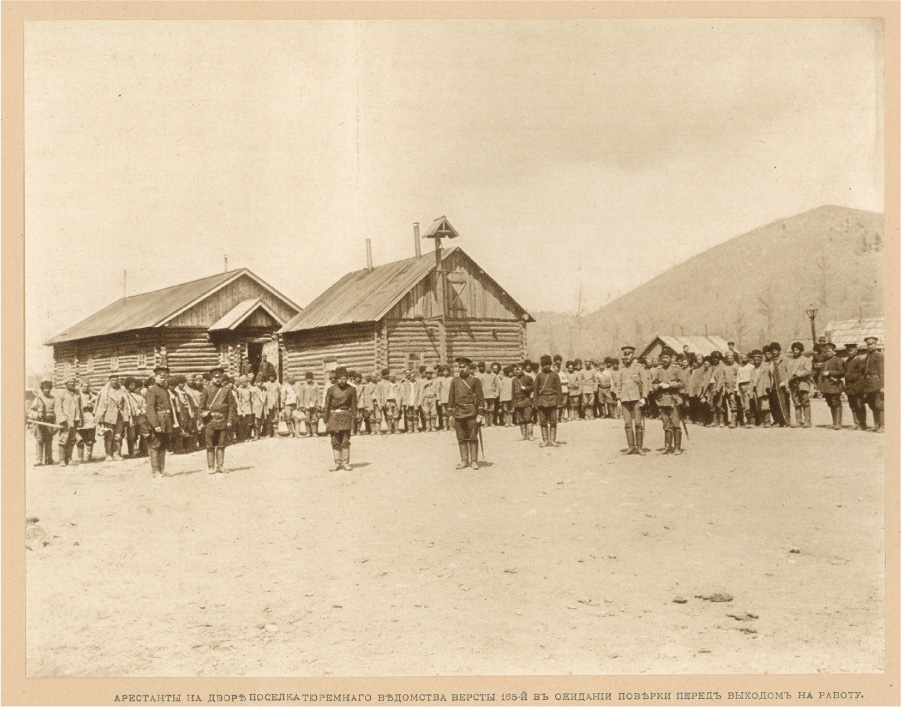
Like Britain, Russia used convicted prisoners to satisfy the need for labor in distant parts of the empire, where it was difficult to attract voluntary settlers. The katorga system sent prisoners to Siberia and the Russian Far East (Figure 10.14). The men, often political prisoners, typically felled timber or worked in mines. Sometimes they were rented out to private employers.
英語のヒント
イギリスと同様、ロシアは、自発的な入植者を集めにくい帝国の遠隔地の労働力需要を満たすため、有罪判決を受けた囚人を使った。カートルガ制度は囚人をシベリアやロシア極東へ送った(図10.14)。男性たちは政治犯であることも多く、通常は木を伐採したり、鉱山で働いたりした。民間の雇用者へ貸し出される場合もあった。
The Katorga System.カートルガ制度。
(credit: “Russian prisoners of Amur Railway” by Library of Congress/Wikimedia Commons, Public Domain) · Public Domain
Figure 10.14 Prisoners building the Amur Cart Road through an isolated part of Russia in the early twentieth century pose for a photograph. The railway extended for hundreds of miles through forests and swamps. (credit: “Russian prisoners of Amur Railway” by Library of Congress/Wikimedia Commons, Public Domain)
図10.14 20世紀初め、ロシアの孤立した地域を通るアムール馬車道を建設する囚人たちが写真に収まる。鉄道は森と沼地を抜け、数百マイルにわたって延びた。(クレジット:「Russian prisoners of Amur Railway」、アメリカ議会図書館/Wikimedia Commons、パブリックドメイン)
Many other countries, such as the United States, also used convicts for labor or rented them for use by private citizens. After the abolition of slavery, the southern U.S. states often required African American men to sign yearly contracts with White employers. A man who did not have such a contract could be arrested for vagrancy and then forced to sign a labor contract and work in agriculture. People found guilty of and imprisoned for actual crimes were also often required to perform free labor, either inside or outside the prison. Prisoners were often used to build roads in the southern United States.
英語のヒント
アメリカなど他の多くの国も、囚人を労働に使ったり、私人へ貸し出したりした。奴隷制廃止後、アメリカ南部の州は、アフリカ系アメリカ人男性に白人雇用者との一年ごとの契約を求めることが多かった。その契約を持たない男性は浮浪罪で逮捕され、その後、労働契約を結んで農業で働くよう強制されることがあった。実際の犯罪で有罪となって投獄された人々も、監獄の内外で無償労働を求められることが多かった。アメリカ南部では囚人が道路建設によく使われた。
Section Summary節のまとめ
Although working-class people in industrialized nations had limited choices about the place and terms of their employment, many other workers did not have even this small degree of freedom. Slavery continued into the second half of the nineteenth century in the United States and Brazil, as did serfdom in Russia. In other forms of unfree labor, contract laborers and indentured servants performed agricultural and other work on every one of the six inhabited continents. Debt bondage also trapped many people, including African American sharecroppers in the United States and female textile workers in Japan. Prisoners were also often sentenced to perform labor as part of their punishment. These systems of coerced and semicoerced labor remained intact throughout the nineteenth century in various parts of the world.
英語のヒント
工業国の労働者階級は雇用先や条件について限られた選択肢を持っていたが、他の多くの労働者には、そのわずかな自由さえなかった。アメリカとブラジルでは19世紀後半まで奴隷制が続き、ロシアでは農奴制が続いた。別の不自由な労働形態では、人間の住む六つの大陸すべてで、契約労働者や年季奉公人が農業などに従事した。債務労働も、アメリカのアフリカ系分益小作人や日本の女性織物労働者など、多くの人々を縛った。囚人も、刑罰の一部として労働を命じられることが多かった。こうした強制・半強制労働の制度は、19世紀を通じて世界各地で存続した。