第10章工業化世界の生活と労働Life and Labor in the Industrial World
Asian Exodusアジアからの大量移住
In the nineteenth century, many people of East Asia and India left home to seek work abroad, just as many Europeans did. Most who left China were escaping poverty. Primarily men, they came largely from the southern provinces, especially Fujian, where the quality of the land had always made agriculture difficult, and Guangdong. In the middle of the nineteenth century, many Chinese people fled hardships occasioned by the deadliest civil war in the history of the world. From 1850 to 1864, more than twenty million Chinese people died in the Taiping Rebellion, an uprising led by Hong Xiuquan, who believed himself to be “God’s Chinese son” and sought to impose a new moral order on society. The war’s destruction of towns, farms, livestock, and crops left millions dead or dying from famine.
英語のヒント
19世紀、東アジアやインドの多くの人々も、ヨーロッパ人と同様、海外に仕事を求めて故郷を離れた。中国を去る人の大半は貧困を逃れようとしていた。主に男性で、多くは南部の省、とりわけ土地の質のため昔から農業が難しかった福建省や、広東省から来た。19世紀半ばには、多くの中国人が世界史上最も死者の多い内戦による苦難から逃れた。1850~1864年の太平天国の乱では、中国人2000万人以上が死んだ。この蜂起を率いた洪秀全は、自らを「神の中国人の息子」と信じ、社会に新たな道徳秩序を強いようとした。戦争による町・農場・家畜・作物の破壊で、数百万人が飢饉のため死亡し、あるいは死に瀕した。
The Chinese diaspora in the nineteenth century was perhaps the widest of any ethnic group, dispersing emigrants around the globe. Chinese laborers came to the Kingdom of Hawaii to work on sugarcane plantations. They sought work in the United States building railroads, mining, and working as agricultural laborers and in service occupations. Thousands of Chinese people performed similar jobs in the Canadian province of British Columbia. Chinese people also immigrated to Europe, primarily Britain, as well as to Indonesia, Malaysia, Australia, and South Africa. They were hired as contract laborers in South African gold mines when the owners realized they would work longer hours for lower wages than would native Africans, who often left the mines after a few years.
英語のヒント
19世紀の中国人のディアスポラは、おそらくどの民族集団よりも広範で、移民は世界中へ散らばった。中国人労働者は、ハワイ王国のサトウキビ農園へ働きに来た。アメリカでは鉄道建設、鉱業、農業労働、サービス業の仕事を求めた。カナダのブリティッシュコロンビア州でも、数千人が同様の仕事に就いた。中国人はヨーロッパ、主にイギリスに加え、インドネシア、マレーシア、オーストラリア、南アフリカにも移住した。南アフリカの金鉱では、数年で鉱山を離れることが多い現地のアフリカ人より、中国人の方が長時間、低賃金で働くと所有者が気づき、契約労働者として雇った。
Large numbers of Chinese people also sought opportunities in South America and the Caribbean. In Peru, the abolition of slavery in 1854 left the country desperate for workers, and the government subsidized the importation of laborers. Approximately 100,000 Chinese people immigrated as contract laborers between 1849 and 1874 to fill the need for workers to mine guano (bird and bat excrement used as fertilizer), build railroads, and toil on sugarcane and cotton plantations. Their contracts typically bound them to work for four to eight years. During that time, they were subjected to harsh punishments, including whipping and confinement in plantation jails. When their contracts ended, those who did not find themselves trapped in debt bondage often moved to the cities.
英語のヒント
多くの中国人は南米やカリブ海にも機会を求めた。ペルーは1854年の奴隷制廃止によって深刻な労働者不足となり、政府が労働者の導入に補助金を出した。1849~1874年に約10万人の中国人が契約労働者として移住し、肥料となる鳥やコウモリの糞、グアノの採掘、鉄道建設、サトウキビ・綿花農園の苦役を担った。契約は通常4~8年の労働を義務づけ、その間は鞭打ちや農園内の牢への監禁など、厳しい罰を受けた。契約が終わると、債務労働に縛られなかった人々は都市へ移ることが多かった。
Chinese people emigrated to other places in Latin America and the Caribbean as well. Many built railroads in the Spanish colony of Cuba; concerned that they were being mistreated, China signed a treaty with Spain in 1896 to end all labor contracts that bound Chinese laborers. In the 1870s, Mexico’s president Porfirio Diaz encouraged Chinese people to immigrate to Mexico and settle in the northern part of the country. Diaz had first invited European and White U.S. settlers to Mexico to build railroads as part of a plan to “civilize” the northern part of the country, with its largely Native American and mestizo (biracial European and Native American) population. When these laborers found life in the desert undesirable, Diaz invited the Chinese to settle instead.
英語のヒント
中国人はラテンアメリカやカリブ海の他地域にも移住した。多くはスペイン植民地キューバで鉄道を建設した。中国は彼らへの虐待を懸念し、1896年にスペインと条約を結び、中国人労働者を拘束するすべての労働契約を終了させた。1870年代、メキシコのポルフィリオ・ディアス大統領は、中国人にメキシコ北部への移住・定住を促した。ディアスは当初、主に先住民とメスティーソ(ヨーロッパ人と先住民の混血)が住む北部を「文明化」する計画の一環として、鉄道建設のためヨーロッパ人や白人アメリカ人を招いた。しかし彼らが砂漠の暮らしを望ましくないと考えると、代わりに中国人の定住を求めた。
In Japan, economic depression also led many young men and women to seek their fortunes abroad. Unable to pay their taxes or purchase food because of a decrease in the price of their rice, farmers were desperate. One response was to allow sons, and sometimes daughters, to go to the city to look for work that, if found, paid wages too low to live on, let alone send to families left behind in rural villages. In the eyes of many Japanese, leaving the country completely for a new life elsewhere made more sense. For families that had to sell their farms to pay their debts, it may have seemed the only choice.
英語のヒント
日本でも不況によって、多くの若い男女が海外で成功を求めた。米価の下落で税を払えず、食料も買えない農民は、追い詰められていた。一つの対応は、息子、ときには娘を都市へ仕事探しに行かせることだったが、仕事が見つかっても賃金は低く、農村に残る家族への送金どころか、自分の生活にも足りなかった。多くの日本人には、国を完全に離れ、他の場所で新しい人生を始める方が理にかなって見えた。借金返済のため農地を売らねばならない家族には、それが唯一の選択肢と思えたかもしれない。
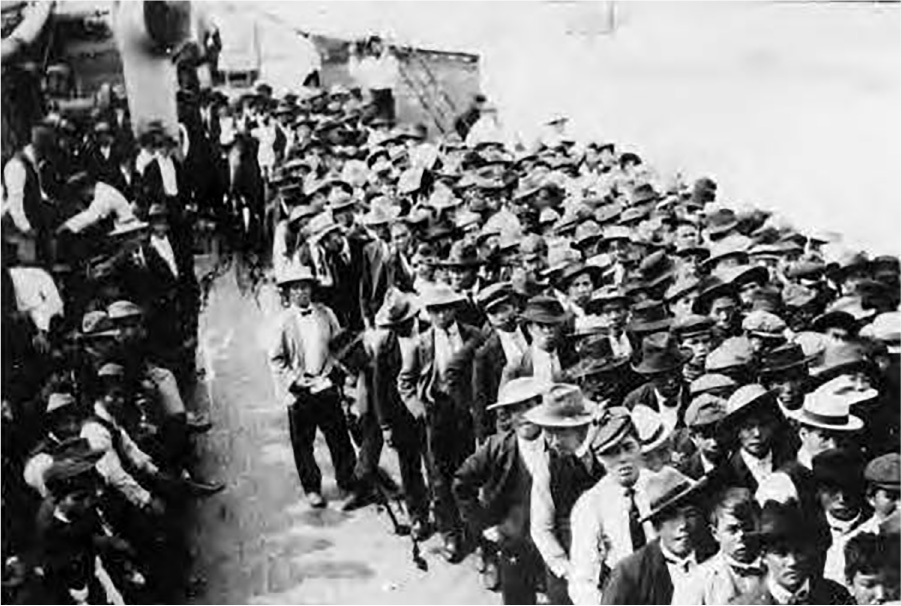
The Japanese government encouraged emigration and entered into contractual agreements with other countries to provide labor. In 1885, it selected men and women most likely to promote Japan’s reputation as a respected, civilized nation and instructed them on how to behave when abroad. Japanese immigration was largely confined to the Pacific region and to the Americas. In 1868, Japanese contract laborers were sent to Guam and the Kingdom of Hawaii. Others went to Australia and the Philippines. Hawaii remained a major destination after it was annexed by the United States, because the owners of sugarcane plantations sought laborers. Many Japanese also settled on the West Coast of the United States and in the Canadian province of British Columbia (Figure 10.15).
英語のヒント
日本政府は移住を奨励し、労働力を供給する契約を他国と結んだ。1885年には、尊敬される文明国としての日本の評判を高める可能性の高い男女を選び、海外での振る舞い方を教えた。日本人の移住先は、主に太平洋地域と南北アメリカに限られた。1868年、日本人契約労働者はグアムとハワイ王国へ送られた。他にオーストラリアやフィリピンへ行く者もいた。ハワイはアメリカに併合された後も、サトウキビ農園主が労働者を求めたため、主要な移住先であり続けた。多くの日本人は、アメリカ西海岸やカナダのブリティッシュコロンビア州にも定住した(図10.15)。
Japanese Emigration to Canada.カナダへの日本人移住。
(credit: “Passengers arriving in Vancouver” by UBC Library Digital Collections/Wikimedia Commons, Public Domain) · Public Domain
Figure 10.15 In the late nineteenth and early twentieth centuries, Canada attracted many Japanese laborers. These men waiting to debark on Vancouver Island would most likely have sent for their wives to join them later. The marriages were arranged for them by their parents in Japan. (credit: “Passengers arriving in Vancouver” by UBC Library Digital Collections/Wikimedia Commons, Public Domain)
図10.15 19世紀後半から20世紀初め、カナダは多くの日本人労働者を引きつけた。バンクーバー島で下船を待つこの男性たちは、おそらく後に妻を呼び寄せたことだろう。結婚は日本にいる親が取り決めた。(クレジット:「Passengers arriving in Vancouver」、UBC図書館デジタルコレクション/Wikimedia Commons、パブリックドメイン)
Like the Chinese emigrants, Japanese emigrants also went to South America in substantial numbers. Japanese immigration to Peru began in 1899. In 1907, Japan reached an agreement with the United States to limit the influx of Japanese people to that country. The Japanese government then signed an agreement with Brazil in 1908 allowing for the immigration of laborers to work on coffee plantations. Brazil had initially sought Italian laborers in an effort to make its population more White, much as Diaz had done in Mexico, but the Italians and other European workers found the wages too low and the living conditions too difficult. Many early Japanese immigrants to Brazil had sought to earn money and then return home, but they often found themselves trapped in debt bondage to their employers and so remained even after their contracts expired. In the twenty-first century, the largest concentrations of Japanese people outside Japan are in Brazil and Peru.
英語のヒント
中国人移民と同様、多くの日本人も南米へ渡った。ペルーへの日本人移住は1899年に始まった。1907年、日本はアメリカと、日本人の流入を制限する合意を結んだ。日本政府はその後1908年にブラジルと協定を結び、コーヒー農園で働く労働者の移住を認めた。ブラジルは当初、メキシコのディアスと同様、人口を白人化するためイタリア人労働者を求めたが、イタリア人や他のヨーロッパ人は、賃金が低すぎ、生活条件が厳しすぎると感じた。初期の日本人移民の多くは、金を稼いで帰国しようとしたが、雇い主への債務労働に縛られ、契約終了後も残ることが多かった。21世紀、日本国外で日本人が最も集中するのはブラジルとペルーである。
Indians also found their labor in high demand during the Second Industrial Revolution, and many were driven by poverty to become indentured laborers, primarily on plantations growing sugarcane. Some 3.5 million Indians worked on plantations in Africa. In East Africa, Indians also built railroads. They grew cash crops in South America and the Caribbean, to which they brought cannabis, called ganja, which they preferred to alcohol as a means for relaxation. They also became part of the labor force in other island nations. In 1879, the first Indian laborers entered Fiji to grow sugarcane; so many immigrated there that they now form a substantial portion of the country’s population.
英語のヒント
第二次産業革命期にはインド人の労働も強く求められ、多くが貧困に押されて、主にサトウキビ農園の年季労働者となった。約350万人のインド人がアフリカの農園で働き、東アフリカでは鉄道も建設した。南米やカリブ海では換金作物を栽培し、くつろぐ手段として酒より好んだ、ガンジャと呼ぶ大麻を持ち込んだ。他の島国でも労働力の一部となった。1879年、最初のインド人労働者がサトウキビ栽培のためフィジーに入った。その後の移住者は非常に多く、今では同国の人口のかなりの部分を占める。
Asian immigrants found themselves more unwelcome than European immigrants were. In 1882, the United States passed the Chinese Exclusion Act, which prevented all Chinese laborers from immigrating to the country. The Johnson-Reed Act banned all immigration from Asia, with the exception of people coming from U.S. territories in the Pacific. Although Canada did not ban Asian immigration, in 1885 it placed a tax of $50 on all Chinese people entering the country to work. Students, scientists, merchants, and government officials were exempt, but in subsequent years, the tax was raised.
英語のヒント
アジア人移民は、ヨーロッパ人移民以上に歓迎されなかった。1882年、アメリカは中国人排斥法を成立させ、中国人労働者の移住をすべて禁止した。ジョンソン=リード法は、太平洋のアメリカ領から来る人々を除き、アジアからの移住を全面的に禁じた。カナダはアジア移民を禁止しなかったが、1885年、働くため入国するすべての中国人に50ドルの税を課した。学生、科学者、商人、政府官僚は免除されたが、その後、税額は引き上げられた。
Asian immigrants to South America also faced hostility. Violent attacks on Chinese people took place in Peru in the nineteenth century, as they had in the United States before Chinese immigration was banned. Portuguese-speaking Brazilians regarded the Japanese people, who resisted becoming bilingual and maintained schools and newspapers in their own language, as unassimilable, and in 1923 the government imposed a strict quota on immigrants from Japan.
英語のヒント
南米へのアジア人移民も敵意に直面した。19世紀のペルーでは、アメリカで中国人移民が禁じられる前と同様、中国人への暴力的攻撃が起きた。ポルトガル語を話すブラジル人は、二言語使用を受け入れず、自分たちの言語の学校や新聞を維持する日本人を、同化できない人々とみなした。1923年、政府は日本からの移民に厳しい人数枠を設けた。
By the beginning of the twentieth century, Australia also wished to limit immigration to only Europeans. In the 1850s, it tried to discourage the entry of Chinese people by prohibiting the arrival of the families of those already in the country. It also imposed a tax on Chinese immigrants. At the urging of members of the working class, who believed the willingness of the Chinese people to work for low wages hurt them, Australia required that all furniture made by Chinese workers bear a label stating that fact. All this was part of the White Australia Policy, a movement to exclude Asians and Pacific Islanders from the country.
英語のヒント
20世紀初めまでに、オーストラリアも移民をヨーロッパ人だけに限ろうとした。1850年代には、すでに国内にいる中国人の家族の入国を禁じ、中国人の流入を抑えようとした。中国人移民には税も課した。中国人が低賃金で働くことが自分たちを害すると考える労働者階級の要求を受け、中国人労働者が作った家具すべてに、その事実を記したラベルを付けるよう義務づけた。これらはすべて、アジア人と太平洋諸島民を排除する運動、白豪主義政策の一部だった。
The White Australia Policy culminated in the passage of the Immigration Restriction Act in 1901, excluding anyone who could not pass a dictation test administered in a European language. This specification automatically disadvantaged Asians and Pacific Islanders, which the Japanese people heartily protested. Since the law gave them the discretion, examiners were also careful to choose languages that test takers were unlikely to know.
英語のヒント
白豪主義政策は1901年の移民制限法の成立に結実し、ヨーロッパの言語で行う書き取り試験に合格できない者を排除した。この条件はアジア人や太平洋諸島民を自動的に不利にし、日本人は強く抗議した。法律が裁量を認めたため、試験官は、受験者が知っている可能性の低い言語を注意深く選ぶこともできた。