第10章工業化世界の生活と労働Life and Labor in the Industrial World
10.1 Inventions, Innovations, and Mechanization10.1 発明、革新、機械化
Learning Objectives学習の目標
By the end of this section, you will be able to:
この節を読み終えると、次のことができるようになる。
Describe the effects on everyday life of the major innovations of the late nineteenth and early twentieth centuries
19世紀後半から20世紀初めの主な革新が、日常生活に与えた影響を説明する
Analyze the ways in which technology and mechanization affected the industrial work experience
技術と機械化が工業労働の経験に与えた影響を分析する
Explain how the working-class family changed because of industrialization
工業化によって労働者階級の家族がどう変わったかを説明する
Before the nineteenth century, life changed little from one era to the next. Generations of people worked on farms, rising when the sun did and going to sleep when it set. They had relatively little in the way of material possessions: clothing, furniture, tools. If they did not live on isolated farms, they inhabited small villages and usually did not venture far from the place where they were born. They raised enough food to feed themselves and sold any surplus in market towns, using their earnings to buy only the handcrafted goods they could not make for themselves. They had just a few years of schooling, if that. When they fell ill, they prayed because they knew there was little doctors could do. In the world’s few large cities like London and Paris, scientific discoveries were made, but they had little effect on the majority of the population. Beautiful works of art were sculpted or painted, music composed, and poems written, but before the Industrial Revolution, most ordinary people never saw, heard, or read them. All that changed in the nineteenth century, as new forms of technology and new sources of power transformed the way people in industrialized nations lived.
英語のヒント
19世紀以前、暮らしは時代が移ってもほとんど変わらなかった。人々は何世代にもわたり農場で働き、日の出とともに起き、日が沈むと眠った。衣服・家具・道具などの所有物は比較的少なかった。孤立した農場でなければ小さな村に住み、生まれた場所から遠くへ出かけることは通常なかった。自分たちを養うだけの食料を育て、余剰は市場町で売り、その収入では自分で作れない手工芸品だけを買った。学校教育は受けても数年、そこまで受けないこともあった。病気になれば、医師にできることがほとんどないと知っていたので祈った。ロンドンやパリなど世界に数少ない大都市では科学的発見があったが、人口の大半にはほとんど影響しなかった。美しい彫刻や絵画が作られ、音楽が作曲され、詩が書かれたが、産業革命以前の一般の人々の大半は、それを見たり、聴いたり、読んだりすることがなかった。19世紀、新しい技術と動力源が工業国の人々の暮らし方を変えると、そうした状況はすべて変わった。
The Industrial Workplace工業の職場
Some of the most profound changes brought by industrialization were those that affected the workplace, bringing new challenges while also transforming the nature of labor. During the Second Industrial Revolution, new forms of energy were harnessed, transportation and communication became faster, and industrialized nations mass-produced not only steel and industrial machinery, which had been the focus of prior industrial efforts, but also consumer goods such as clothing, furniture, shoes, and packaged foods.
英語のヒント
工業化がもたらした最も深い変化の一部は、職場に関わるものだった。労働の性質を変えると同時に、新たな課題をもたらした。第二次産業革命では、新しいエネルギーが利用され、輸送と通信が速くなり、工業国は、それまで工業化の中心だった鉄鋼や産業機械だけでなく、衣服・家具・靴・包装食品などの消費財も大量生産した。
Perhaps the greatest change was the development of a new source of energy—electricity. Water power had earlier replaced animal power, and steam engines fueled by burning coal had driven the machinery of the late eighteenth and early nineteenth centuries. So too did electricity supplant steam by the end of the nineteenth century. Electricity ran machinery on the factory floors, as did internal combustion engines powered by petroleum. Electricity also turned night into day. When first oil lamps and then gas lights had illuminated the workplace, workdays in the winter were often short. Dependent on daylight to see what they were doing, workers were commonly allowed to go home after dark. With electric lights, though, the factory floor could be lit twenty-four hours a day, and workers could labor long into the night in all seasons.
英語のヒント
おそらく最大の変化は、新たなエネルギー源、電気の開発だった。以前は水力が畜力に取って代わり、18世紀後半から19世紀初めの機械は、石炭を燃やす蒸気機関で動いていた。同じように、19世紀末までには電気が蒸気に取って代わった。工場の機械は電気で動き、石油を燃料とする内燃機関も使われた。電気は夜を昼にも変えた。初めに石油ランプ、次にガス灯が職場を照らした時代には、冬の労働日はしばしば短かった。作業を見るのに日光が必要だったため、日が暮れれば帰宅できるのが普通だった。しかし電灯があれば工場の作業場を24時間照らせるため、季節を問わず、労働者は夜遅くまで働けるようになった。
Electricity also powered factories’ moving assembly lines. As conveyor belts brought interchangeable parts from station to station, working-class employees added parts or made other adjustments until the product was finished. The adoption of moving assembly lines made the close supervision of workers necessary. If anyone slowed down or was missing, the entire production process could suffer. It was therefore vital that everyone be present at the time the process began and maintain the same pace of work all day. While in earlier factories a laborer might command a work gang composed of family members, in late nineteenth-century factories, these male heads of family were replaced by paid foremen who were sometimes promoted from among the ranks of the laborers.
英語のヒント
電気は、工場の動く組立ラインも動かした。ベルトコンベヤーが交換可能な部品を作業場所から次の作業場所へ運ぶと、労働者階級の従業員は部品を追加したり調整を行ったりし、製品を完成させた。動く組立ラインの導入は、労働者の厳密な監督を必要にした。誰か一人でも遅れたり欠けたりすれば、生産工程全体が損なわれるおそれがあった。そのため、工程開始時に全員がそろい、一日中同じ速さで働くことが不可欠だった。以前の工場では、労働者が家族で構成された作業班を指揮することもあったが、19世紀後半の工場では、この男性の家長に代わって、労働者の中から昇進することもある有給の職長が指揮した。
Assembly lines and the mechanization of each step of the manufacturing process meant that, for the most part, factory work was unskilled in nature. Laborers lived with the knowledge that should they give their wealthy employer reason to be displeased with their performance, they could be replaced at any moment. Some work, like the repairing of machines, was skilled, and workers who possessed such knowledge received higher wages. Most, though, performed repetitive tasks that anyone could master with a bit of instruction. The assembly line reduced employees’ sense of contribution to the finished process and rendered work boring and repetitive, almost transforming workers into machines themselves.
英語のヒント
組立ラインと製造工程の各段階の機械化によって、工場労働の大部分は熟練を必要としないものとなった。労働者は、裕福な雇い主が自分の働きぶりに不満を持つ理由を少しでも与えれば、いつでも交代させられうると承知しながら暮らした。機械の修理のような仕事には熟練が必要で、その知識を持つ労働者は高い賃金を得た。しかし大半は、少し指導を受ければ誰でも覚えられる反復的な作業を行った。組立ラインは、完成までの過程に自分が貢献するという従業員の感覚を薄め、仕事を退屈で反復的なものにし、労働者自身をほとんど機械に変えた。
In addition to feeling alienated from the product of their labor, industrial employees worked long hours and earned low wages. As industrialization spread throughout North America, Europe, and Japan, business owners, driven by their hunger for profit, responded to increased competition by forcing their employees to produce more, tending more machines for lower pay.
英語のヒント
工業労働者は、自分の労働の成果から疎外される感覚に加え、長時間働いて低賃金しか得られなかった。工業化が北米・ヨーロッパ・日本に広がるにつれ、利益への渇望に駆られた経営者は、競争の激化に対して、低い賃金でより多くの機械の世話をさせ、従業員にさらに多く生産するよう強いることで応じた。
Nineteenth-century workers commonly toiled ten to twelve hours a day, six days a week. In 1897 in Russia, reform laws reduced the workday from fourteen hours (and sometimes as many as eighteen) to only eleven and a half. During night shifts and on Saturdays and the days before feast days, workers could stop after ten hours. Luckily for the subjects of the tsar, the majority of Russian factory workers could look forward to nearly one hundred holidays per year. They would have been envied by Japan’s cotton spinners, teenaged women who often worked for seventeen-hour stretches punctuated only by short breaks.
英語のヒント
19世紀の労働者は一般に、一日10~12時間、週6日働いた。1897年のロシアでは改革法によって、労働時間は14時間、場合によっては18時間から、わずか11時間半へ短縮された。夜勤、土曜日、祝祭日の前日には、10時間で仕事を終えられた。ツァーリの臣民にとって幸いなことに、ロシアの工場労働者の大半は、年に100日近い休日を期待できた。短い休憩だけを挟み、17時間続けて働くことも多い10代の女性、日本の綿紡績工女から見れば、うらやましかったことだろう。
Adult men were the most highly paid workers. Adult women earned about half as much, and children less than adults, often only a quarter of an adult male’s pay. Work was not always steady; workplaces sometimes shut down unexpectedly when raw materials or work orders fell short. This meant that low pay was often accompanied by periodic unemployment, for which workers had no safety net. Most governments did not provide unemployment insurance, and government-subsidized housing for the poor did not exist. When workers lost their jobs, they were forced to turn to religious institutions or private charities for money for food and rent.
英語のヒント
成人男性は最も高い賃金を得た。成人女性はその約半分、子供は大人より少なく、しばしば成人男性の4分の1だけだった。仕事は常に安定していたわけではなく、原材料や受注が不足すると、職場が突然閉鎖されることもあった。つまり低賃金に加えて周期的な失業が生じ、労働者にはそれを支える安全網がなかった。ほとんどの政府は失業保険を設けず、貧しい人々のために政府が補助する住宅もなかった。職を失うと、労働者は食費や家賃を得るため、宗教団体や民間の慈善団体に頼らざるをえなかった。
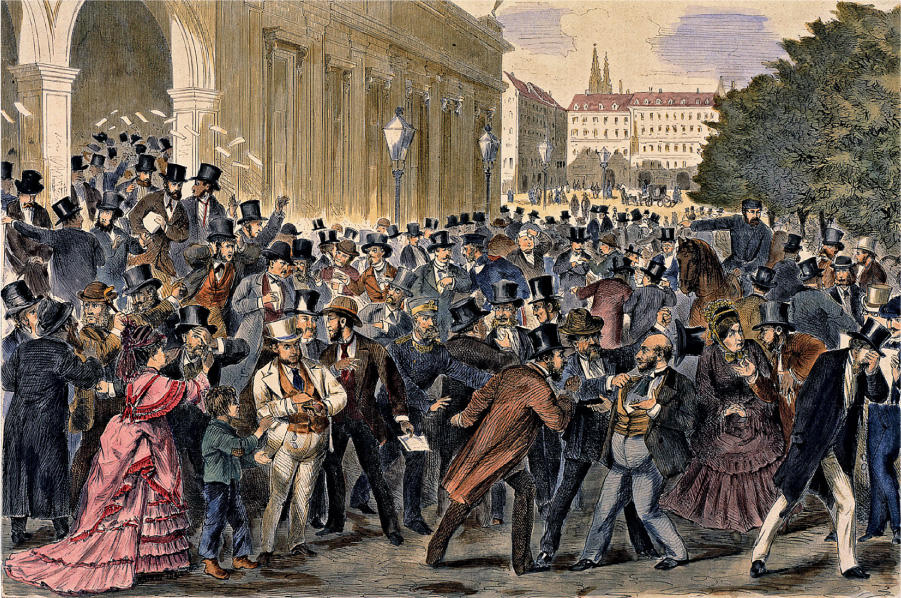
In addition to periodic shutdowns, international economic crises sometimes jeopardized the livelihoods of workers across the globe. In 1873, for example, a fall in the value of silver set off a worldwide financial panic, beginning a period known as the Long Depression. Banks failed, and more than one hundred railroads went out of business in the United States in the first year alone. The economies—and the workers—of Germany, France, Austria-Hungary, Britain, and Russia suffered as well. In May 1873, the Vienna Stock Exchange collapsed (Figure 10.3). Railroads failed in Germany. Unemployment rates in Britain’s coal, iron, steel, and shipbuilding industries soared. Between 1873 and the end of the century, periodic recessions and depressions alternated with boom periods, rocking economies around the world.
英語のヒント
周期的な操業停止に加え、国際経済危機が世界中の労働者の生計を脅かすこともあった。たとえば1873年には、銀の価格下落が世界的な金融恐慌を引き起こし、長期不況と呼ばれる時代が始まった。銀行が破綻し、アメリカでは初年度だけで100社を超える鉄道会社が倒産した。ドイツ・フランス・オーストリア=ハンガリー・イギリス・ロシアの経済も、その労働者も苦しんだ。1873年5月、ウィーン証券取引所が暴落した(図10.3)。ドイツでは鉄道会社が破綻した。イギリスの石炭・鉄・鉄鋼・造船業では失業率が急上昇した。1873年から世紀末まで、周期的な景気後退や不況と好況が交互に訪れ、世界の経済を揺さぶった。
Black Friday.暗黒の金曜日。
(credit: “Black Friday on May 9, 1873” by Die Presse Edition/Wikimedia Commons, Public Domain) · Public Domain
Figure 10.3 On May 9, 1873, dubbed “Black Friday,” the Vienna stock market collapsed, causing widespread panic as illustrated by this wood engraving made that year. (credit: “Black Friday on May 9, 1873” by Die Presse Edition/Wikimedia Commons, Public Domain)
図10.3 「暗黒の金曜日」と呼ばれる1873年5月9日、ウィーンの株式市場が暴落した。その年に作られたこの木版画が描くように、広範な恐慌を引き起こした。(クレジット:「Black Friday on May 9, 1873」、『Die Presse Edition』/Wikimedia Commons、パブリックドメイン)
Despite such economic swings, industrial production increased overall, and factory owners faced a growing number of competitors. They responded by increasing the pace of work. Employees often tended several machines at a time, which kept them constantly on their feet. In the late nineteenth century, new methods were introduced to speed work even more. The principles of scientific management, introduced by Frederick Winslow Taylor in 1911 and often referred to as Taylorism, sought to improve productivity by reducing wasteful movements. One scientific management proponent, Harrington Emerson, claimed that U.S. railroads could save $1 million per day (about $13 million today) if they adopted these principles.
英語のヒント
こうした経済変動にもかかわらず、工業生産は全体として増え、工場主はますます多くの競争相手に直面した。彼らは作業速度を上げることで対処した。従業員はしばしば複数の機械を同時に受け持ち、絶えず立ち働かされた。19世紀後半には、仕事をさらに速める新しい方法が導入された。フレデリック・ウィンスロー・テイラーが1911年に提示し、テイラー主義とも呼ばれる科学的管理法の原則は、無駄な動作を減らして生産性を高めようとするものだった。提唱者の一人ハリントン・エマーソンは、アメリカの鉄道がこの原則を採用すれば、一日100万ドル(現在の約1300万ドル)を節約できると主張した。
Discovering how workers could perform more efficiently often meant timing their movements with stopwatches to make sure they did not attach parts or move levers inefficiently. Even in workplaces that had not been Taylorized, the emphasis was on paying strict attention to work and speeding up the production process. Some factories forbade workers to talk to one another or to sit at their machines, even if they could. Workers greatly resented such controls.
英語のヒント
労働者がより効率よく働く方法を見つけるため、部品の取り付けやレバーの操作に無駄がないか確かめるよう、ストップウォッチで動作を計ることがよくあった。テイラー方式を導入していない職場でも、仕事に厳密な注意を払い、生産工程を速めることが重視された。工場によっては、労働者同士が話すことや、座って作業できる場合であっても機械の前に座ることを禁じた。労働者はこうした統制に強く反発した。
The pace and long hours of mechanized labor took a toll on workers’ health and safety. Injuries were common. Fingers and hands were often lost to moving machine parts. Constant standing resulted in back problems, swollen feet, and miscarriages. In textile factories, inhaled fibers caused breathing problems that left workers permanently disabled. The constant noise of machinery led to hearing loss. Summer temperatures combined with the heat generated by machinery and moving bodies left workers on the brink of heat exhaustion. Laborers in Japan’s silk industry were often scalded while boiling silkworm cocoons. Toxic chemicals used in largely unregulated production processes also played havoc with workers’ health and safety. In some places, workers, especially women, were beaten by their supervisors; young women sent to work in the Japanese cotton industry by their impoverished parents were often caned or whipped.
英語のヒント
機械化された労働の速さと長時間労働は、労働者の健康と安全を損なった。負傷は珍しくなく、動く機械部品で指や手を失うことがよくあった。立ち続けることは背中の障害、足の腫れ、流産を引き起こした。織物工場では吸い込んだ繊維が呼吸障害を起こし、労働者に永久的な障害を残した。絶え間ない機械音は聴力の喪失につながった。夏の暑さに機械や動く身体が生む熱が加わり、労働者は熱疲労の寸前に置かれた。日本の製糸労働者は、繭を煮る際にしばしば熱湯や蒸気でやけどを負った。ほとんど規制のない製造工程で使う有毒化学物質も、健康と安全を著しく損なった。監督者に殴られる労働者、とりわけ女性がいる職場もあった。貧しい親に日本の綿紡績業へ働きに出された若い女性は、棒や鞭で打たれることが多かった。
Despite low pay, long hours, and difficult conditions of factory work, many working-class people preferred it to other types of available labor. Jobs like driving wagons and unloading ships were also low-paying jobs but required working outside in all kinds of weather. Railroad workers were vulnerable to incapacitating injuries from being caught between railcars or falling under their wheels. Miners toiled in dark, cramped environments, where temperatures sometimes rose so high they had to work naked to keep from passing out. Cave-ins were a constant threat. Industrial labor, regardless of the type, was also more highly paid than agricultural labor. For example, in London in the 1860s, a male common laborer who possessed no particular skills could earn about twenty shillings a week. In industries not yet mechanized, skilled crafts workers, all men, earned thirty shillings a week. A male English farmhand at the time would have earned approximately fourteen shillings a week.
英語のヒント
工場の仕事は低賃金、長時間、厳しい条件だったが、多くの労働者階級の人々は、他に得られる仕事よりそれを好んだ。荷馬車の運転や船の荷下ろしも低賃金で、しかもどんな天候でも屋外で働く必要があった。鉄道労働者は車両の間に挟まれたり車輪の下へ落ちたりして、働けなくなるほどのけがを負う危険があった。鉱山労働者は暗く狭い環境で苦役し、気絶を避けるため裸で働かねばならないほど気温が上がることもあった。落盤は常に脅威だった。どの種類であれ、工業労働は農業労働より賃金も高かった。たとえば1860年代のロンドンでは、特別な技能のない一般の男性労働者が週に約20シリングを得られた。まだ機械化されていない業種の熟練職人はすべて男性で、週30シリングを得た。同時期のイングランドの男性農業労働者なら、週約14シリングだった。
Factory work was especially desirable to unmarried women, whose most common alternative was domestic service. Living in their employers’ homes, domestic workers were expected to be available at all times of the day and night, were constantly watched, and made very little money. Factory workers put in fewer hours, and after work their time was their own. Their freedom was sometimes dearly bought, however. On the factory floor, unmarried young women might be sexually harassed by male employers, supervisors, or coworkers.
英語のヒント
工場労働は、とりわけ未婚女性にとって望ましかった。彼女たちの最も一般的な別の選択肢は、家事使用人の仕事だったからである。雇い主の家に住み込む使用人は、昼夜いつでも働けることを求められ、常に監視され、収入はごくわずかだった。工場労働者は労働時間が短く、仕事が終われば自分の時間を持てた。しかし、その自由には高い代償が伴うこともあった。工場では未婚の若い女性が、男性の雇い主、監督者、同僚から性的嫌がらせを受けることがあった。
Because women were paid less than men, unmarried women did not earn enough to live independently. They tended to live at home, where they were expected to give their wages to their parents and accept a small allowance in return. Even if they rented living quarters with other female workers and shared expenses, they might grant sexual favors to young men in exchange for meals or clothes, a form of casual prostitution known as “treating.” Nevertheless, many young female factory workers enjoyed relative independence before marriage, free evenings and Sundays when the factories were closed, and the inexpensive entertainment found in industrial cities.
英語のヒント
女性の賃金は男性より低かったため、未婚女性は独立して暮らすだけの収入を得られなかった。実家に住む傾向があり、賃金を親に渡し、代わりに少額の小遣いを受け取ることが期待された。他の女性労働者と部屋を借り、生活費を分担していても、食事や衣服と引き換えに若い男性へ性的な行為を提供する場合があり、この臨時的な売春の一形態は「トリーティング」と呼ばれた。それでも、多くの若い女性工場労働者は、結婚前の比較的自由な生活、仕事後の夕方や工場が休む日曜日の自由時間、工業都市で得られる安価な娯楽を楽しんだ。