第10章工業化世界の生活と労働Life and Labor in the Industrial World
The Challenges of Life in the Industrial City工業都市で暮らす課題
Although city life brought many benefits, it also posed challenges for people of all classes. The first was finding a place to live. Urban populations grew quickly in the second half of the nineteenth century as people flocked to the industrial city from the countryside and abroad. By the middle of the century, more British people lived in cities and towns than in rural areas. Housing construction did not keep up, and cities and living spaces were often cramped and crowded.
英語のヒント
都市生活は多くの利点をもたらしたが、あらゆる階級の人々に課題も突きつけた。第一は住む場所を見つけることだった。19世紀後半には、人々が農村や海外から工業都市へ殺到し、都市人口は急増した。世紀半ばまでに、イギリスでは農村より都市や町に住む人の方が多くなった。住宅建設は追いつかず、都市も住居も狭く過密になりがちだった。
Many of the middle class moved to the new suburbs that sprang up around cities, using horse-drawn or electrified streetcars to travel to work. For working-class people, options were more limited. Laborers with families often attempted to live on the edges of cities like London, away from the dirt, crowds, and noise. As urban areas grew, however, these neighborhoods were often absorbed into the city proper. If you could not afford to live far away from the city, soon enough the city would find you.
英語のヒント
中産階級の多くは、都市の周囲に生まれた新しい郊外へ移り、馬車鉄道や電車で通勤した。労働者階級の選択肢はもっと限られた。家族のある労働者は、汚れ、混雑、騒音から離れようと、ロンドンなどの都市の周辺部に住もうとすることが多かった。しかし市街地が拡大すると、その地区もしばしば都市本体に取り込まれた。都市から遠く離れて暮らす余裕がなければ、やがて都市の方が追いかけてくるのだった。
Regardless of the city, housing was problematic and usually in short supply. Families with children might find themselves occupying only two or three rooms. Cooking, eating, working, and socializing frequently took place in the same space. Separate areas might be reserved for sleeping and for visiting, but they were cramped as well. A bed for yourself—let alone a room—was an unrealizable dream for members of the working class. Family members might even share a bed with boarders.
英語のヒント
どの都市でも住居は問題を抱え、通常は不足していた。子供のいる家族が、わずか2~3室だけで暮らすこともあった。調理、食事、仕事、交流が、同じ場所で行われることも多かった。寝る場所や客を迎える場所を別に確保しても、そこも狭かった。労働者階級にとって、自分専用の部屋はおろか、ベッドでさえ実現できない夢だった。家族が下宿人とベッドを共用する場合さえあった。
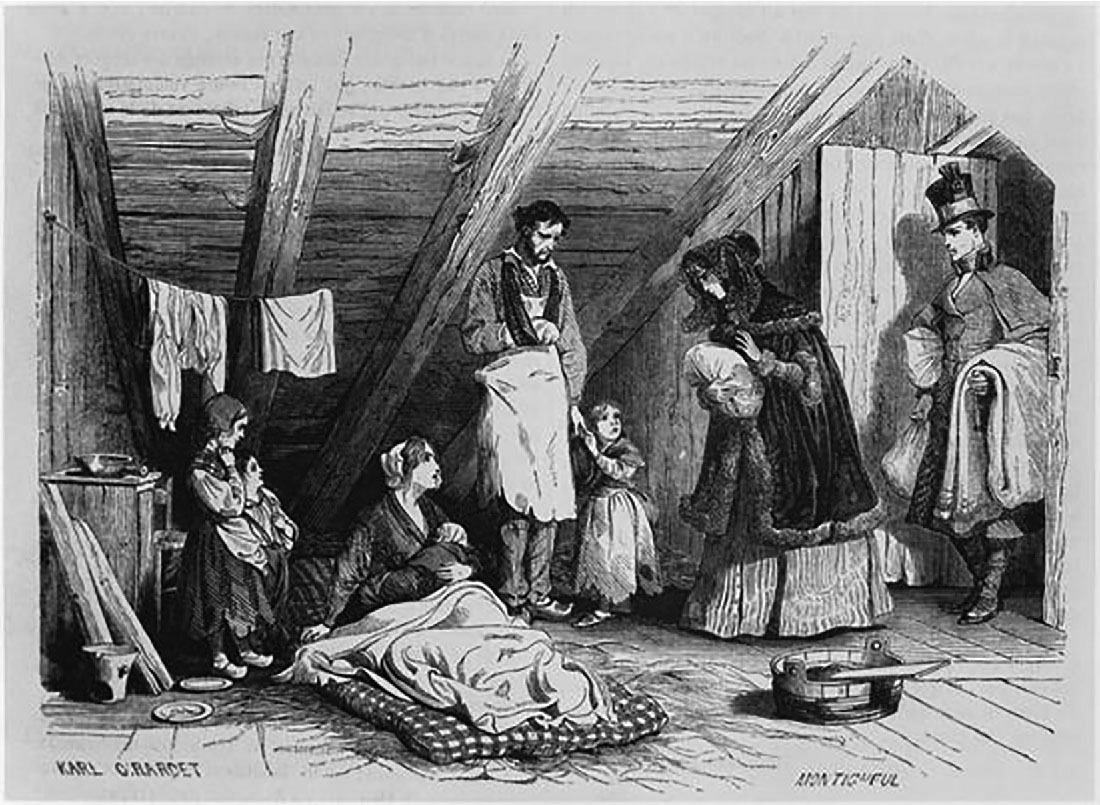
Housing configurations varied according to place. In British cities, the preference was for single-family dwellings; houses were narrow, with one room on the ground floor, another on top, and perhaps a third above that. Skilled workers might be able to afford houses with two rooms on the bottom floor and more above. They might even have a small garden. In France and the United States, the preference was for apartment buildings. In the United States, these might be built side by side with several apartments per floor; each working-class family occupied two or three rooms, and apartments on the inside walls might lack fresh air and daylight. In France, the working class might inhabit the same apartment houses as middle-class families but not the same floors. The middle class lived on the second floor (the étage noble), and other families lived above them in descending order of rank as they approached the roof; the very poorest lived in the attic where they baked in the summer, froze in the winter, and were regularly rained upon (Figure 10.10).
英語のヒント
住宅の形は場所によって異なった。イギリスの都市では一世帯用の住居が好まれた。家は細長く、地上階に一室、その上にも一室、場合によってはさらにもう一室があった。熟練労働者なら、下の階に二室、上にも複数の部屋がある家を買ったり借りたりできた。小さな庭まで付くこともあった。フランスとアメリカでは集合住宅が好まれた。アメリカでは、各階に数戸のアパートを設けた建物が隣り合って建ち、労働者家庭はそれぞれ2~3室を使った。内側の壁に面する住戸では、新鮮な空気や日光が不足することがあった。フランスでは、労働者階級が中産階級と同じ集合住宅に住むこともあったが、階は別だった。中産階級は2階(エタージュ・ノーブル)に住み、その上では、屋根に近づくほど家族の階層が低くなった。最も貧しい人々は屋根裏に住み、夏には焼かれるように暑く、冬には凍え、いつも雨漏りにさらされた(図10.10)。
Parisian Attic Dwelling.パリの屋根裏住居。
(credit: “Visiting the poor” by Le Magasin Pittoresque/Wikimedia Commons, Public Domain) · Public Domain
Figure 10.10 A picture from an 1844 French pictorial magazine shows members of the middle class bringing charity to a poor family in a Parisian attic. (credit: “Visiting the poor” by Le Magasin Pittoresque/Wikimedia Commons, Public Domain)
図10.10 1844年のフランスの絵入り雑誌の挿絵は、パリの屋根裏に住む貧しい家族へ、中産階級の人々が施しを届ける様子を示す。(クレジット:「Visiting the poor」、『Le Magasin Pittoresque』/Wikimedia Commons、パブリックドメイン)
The very worst-off might live in dark basement apartments that flooded when it rained. Others might occupy a single room in what was once a large middle-class home and was now an apartment house occupied by numerous families. Sometimes living spaces were so small as to be almost unimaginable. In 1901, an unskilled kozukai (errand man) in Tokyo shared a 100-square-foot room with his wife and two teenage children. Other Japanese lived in even smaller spaces. The poorest laborers rented floor space by the night in a common sleeping room and had to battle other sleepers for the privilege. Bedding was provided only for a fee, and bedbugs and lice were abundant.
英語のヒント
最も貧しい人々は、雨が降ると水浸しになる暗い地下住居に暮らすこともあった。かつては大きな中産階級の家だった建物が、多数の世帯の住む集合住宅となり、その一室を占める場合もあった。居住空間は想像しがたいほど小さいこともあった。1901年、東京の非熟練の小使(使い走りの仕事をする男性)は、妻と10代の子供2人とともに、100平方フィートの部屋で暮らした。さらに狭い場所に住む日本人もいた。最も貧しい労働者は共同寝室の床を一晩ごとに借り、その場所を得るため他の宿泊者と争わねばならなかった。寝具には別料金がかかり、トコジラミやシラミが大量にいた。
Some members of the working class might be provided with housing by their employers. The American railroad car manufacturer George Pullman built a model town for his employees in 1884, on the south side of Chicago near the plant where his famous sleeping cars were produced. Workers were not required to live in the town, but it provided amenities they would likely not have been able to afford elsewhere. There were parks, a store, a church, a school, a library, and a theater. Employees used their wages to pay their rent and to buy what they needed at the store. Each worker’s home featured gas lighting and indoor plumbing, and trash was collected every day. Pullman believed that housing his workers in a clean, orderly environment would make them more productive. He also believed that by providing them with a decent standard of living, he could prevent strikes or worse forms of unrest. By 1893, about twelve thousand people lived in the town.
英語のヒント
労働者階級の中には、雇い主から住居を提供される人々もいた。アメリカの鉄道車両製造業者ジョージ・プルマンは、1884年、有名な寝台車を製造する工場に近いシカゴ南部に、従業員のための模範的な町を造った。労働者はそこに住む義務はなかったが、他の場所ではおそらく手の届かない設備がそろっていた。公園、商店、教会、学校、図書館、劇場があった。従業員は賃金から家賃を払い、店で必要なものを買った。各住宅にはガス照明と屋内給排水設備があり、ごみは毎日回収された。プルマンは、清潔で秩序ある環境に労働者を住まわせれば、生産性が上がると信じた。また、適切な生活水準を与えれば、ストライキや、さらに激しい騒動を防げるとも考えた。1893年までに、この町には約1万2000人が暮らしていた。
There were problems, however. Workers were never allowed to purchase their homes, which Pullman’s agents inspected at random to make sure they were kept clean and well maintained. Workers who lost their jobs were evicted with their families. All were expected to attend church on Sundays. Pullman chose the books to be kept in the library and the plays to be performed in the theater. There was no saloon. In 1894, Pullman cut employees’ wages in the wake of an economic depression and laid off many workers. However, he refused to lower their rents, which were already higher than those in the surrounding area. The workers saw no alternative but to go on strike. Other U.S. business owners, like chocolate king Milton Hershey and piano manufacturer Henry Steinway, also built model towns for their employees for the same reasons Pullman had.
英語のヒント
しかし問題もあった。労働者は住宅を買うことを決して認められず、清潔でよく維持されているか確かめるため、プルマンの代理人が無作為に点検した。失職した労働者は、家族とともに退去させられた。全員が日曜に教会へ行くことを期待された。プルマンは図書館の蔵書も劇場で上演する演劇も選んだ。酒場はなかった。1894年、不況の余波でプルマンは賃金を下げ、多くの労働者を解雇した。しかし、周辺よりすでに高かった家賃を下げることは拒んだ。労働者はストライキ以外に道がないと考えた。チョコレート王ミルトン・ハーシーやピアノ製造業者ヘンリー・スタインウェイなど、他のアメリカの経営者も、プルマンと同じ理由で従業員のための模範的な町を建設した。
European employers also provided towns for their workers. The first such towns were Copley and Saltaire, in Britain, both founded in the middle of the nineteenth century. In northern Italy, the Crespi family built the town of Crespi d’Adda in 1878 for workers at its textile factory. In addition to single-family houses with gardens, the town had a school, a clinic, a church, and a theater. To encourage a sense of equality among the workers, all the houses were the same except those belonging to the factory manager, the clinic’s doctor, and the priest. Towns for miners and factory workers were also established in Germany, Denmark, Sweden, Finland, and northeastern Spain. Some were intended simply to provide housing for workers employed by mines or mills located in rural areas. Others, like Port Sunlight and Bourneville in England, were meant to provide not just a place to live but a model community for the working class.
英語のヒント
ヨーロッパの雇用者も、労働者のために町を用意した。最初の例は、19世紀半ばに設立されたイギリスのコプリーとソルテアだった。イタリア北部ではクレスピ家が1878年、織物工場の労働者のためにクレスピ・ダッダの町を築いた。庭付きの一世帯用住宅に加え、学校、診療所、教会、劇場があった。労働者の間に平等の感覚を育てるため、工場管理者、診療所の医師、司祭の家以外は、すべて同じ住宅だった。鉱山や工場の労働者の町は、ドイツ、デンマーク、スウェーデン、フィンランド、スペイン北東部にも設けられた。農村に位置する鉱山や工場の従業員に、単に住居を提供する目的の町もあった。イングランドのポート・サンライトやボーンヴィルのように、住む場所だけでなく労働者階級の模範的な共同体を提供しようとする町もあった。
Some laborers were housed in the factories at which they worked. Workers in the Japanese textile industry, most of whom were young unmarried women and teenage girls, lived in dormitories owned by the factories in places like Osaka. Many Russian workers also lived in barracks in the factories where they labored in Moscow and Saint Petersburg. Several families might share a single room. Single men slept in bunks arranged side by side to the ceiling with no privacy. When factories lacked space, workers might sleep in shifts, and single women and families might sleep in the single men’s dormitories as well.
英語のヒント
働く工場の中に住まわされる労働者もいた。日本の織物業の労働者は、その大半が若い未婚女性や10代の少女で、大阪などでは工場が所有する寄宿舎で暮らした。多くのロシア人労働者も、モスクワやサンクトペテルブルクの勤務先の工場内の宿舎に住んだ。一室を数家族で共用することもあった。独身男性は、横にも縦にも天井まで並べた寝台に寝て、私的な空間はなかった。工場に場所が足りなければ交代で寝ることもあり、独身女性や家族が独身男性用の宿舎に寝泊まりする場合もあった。
Just as great as the challenge of overcrowding and poor housing was the problem of dirt. Some cities had alleviated many aspects of this problem by the end of the nineteenth century, but others remained. The major source of dirt in the nineteenth century was waste—factory waste, human waste, and animal waste, especially horse manure. As cities grew larger, public transportation became a necessity. The solution most cities settled on was horse-drawn streetcars and omnibuses. Thousands of urban dwellers made use of them.
英語のヒント
過密と劣悪な住宅の問題に劣らず大きかったのが、汚れの問題だった。19世紀末までに、その多くの側面を軽減した都市もあったが、残る問題もあった。19世紀の汚れの主な源は廃棄物であり、工場の廃棄物、人の排泄物、そして特に馬糞などの動物の排泄物だった。都市が大きくなると公共交通が必要となり、たいていの都市が選んだのは馬車鉄道や乗合馬車だった。数千人の都市住民がそれらを利用した。
These forms of public transport, however, meant the introduction of more horses, beyond those needed to pull freight wagons and the carriages of the wealthy, and horses fouled the cities’ streets. The average horse produces thirty to fifty pounds of manure each day. In 1878, there were approximately 78,000 horses in Paris. At about this time, horses dropped some 600,000 tons of manure in Chicago’s thoroughfares each year. When they died in harness, their bodies were often left to rot in the streets. To horse manure and carcasses was added the waste of humans who lacked indoor toilets in their homes and did not wish to visit outdoor latrines in the dark. The buckets and chamber pots they filled during the night were often emptied into the streets in the morning along with kitchen waste. The piles of garbage and manure attracted rats and flies.
英語のヒント
しかし、こうした公共交通は、荷車や富裕層の馬車を引く馬に加えて、さらに多くの馬を持ち込むことを意味し、馬は都市の街路を汚した。普通の馬は一日に30~50ポンドの糞を出す。1878年のパリには約7万8000頭の馬がいた。このころ、シカゴの大通りには毎年約60万トンの馬糞が落とされた。仕事中に死んだ馬の死体は、しばしば街路に放置され腐敗した。馬糞と死骸に加わったのが、家に屋内便所がなく、暗闇の中で屋外便所へ行きたがらない人間の排泄物だった。夜間に満たしたバケツやおまるの中身は、朝、台所のごみと一緒に街路へ捨てられることが多かった。ごみと糞の山はネズミやハエを引きつけた。
This problem was somewhat alleviated when new forms of public transportation appeared. Commuter railway lines that transported middle-class people to and from the suburbs actually increased the number of horses in cities at first, because horse-drawn streetcars were needed to transport commuters from rail stations to their destinations within the city. It was only with the electrification of streetcar lines and the building of underground railroads in the late nineteenth century that cities started to become cleaner. New York City introduced electrified streetcars in 1881. Prague did so in 1891, and London in 1901.
英語のヒント
新たな公共交通が現れると、この問題はいくらか軽減された。中産階級を郊外と都市の間で運ぶ通勤鉄道は、当初はむしろ都市の馬を増やした。駅から都市内の目的地まで通勤者を運ぶのに、馬車鉄道が必要だったからである。都市がきれいになり始めたのは、19世紀後半に路面鉄道が電化され、地下鉄が建設されてからだった。ニューヨーク市は1881年、プラハは1891年、ロンドンは1901年に電化された路面電車を導入した。
Although London lagged in introducing electric streetcars, it was a pioneer in building underground railroads, opening the world’s first subway, the Metropolitan line of the London Underground system, in 1863. Other cities quickly followed. Glasgow and Budapest opened their undergrounds in 1896, as did Paris in 1900, New York in 1904, and Buenos Aires in 1913. These modes of transportation also had the benefit of being faster and less expensive than conveyances that traveled on crowded surface streets.
英語のヒント
ロンドンは電気路面電車の導入では遅れたが、地下鉄建設では先駆者だった。1863年、ロンドン地下鉄のメトロポリタン線という世界初の地下鉄を開通させた。他都市もすぐに続き、グラスゴーとブダペストは1896年、パリは1900年、ニューヨークは1904年、ブエノスアイレスは1913年に地下鉄を開いた。これらの交通手段には、混雑した地上の街路を走る乗り物より速く、安いという利点もあった。
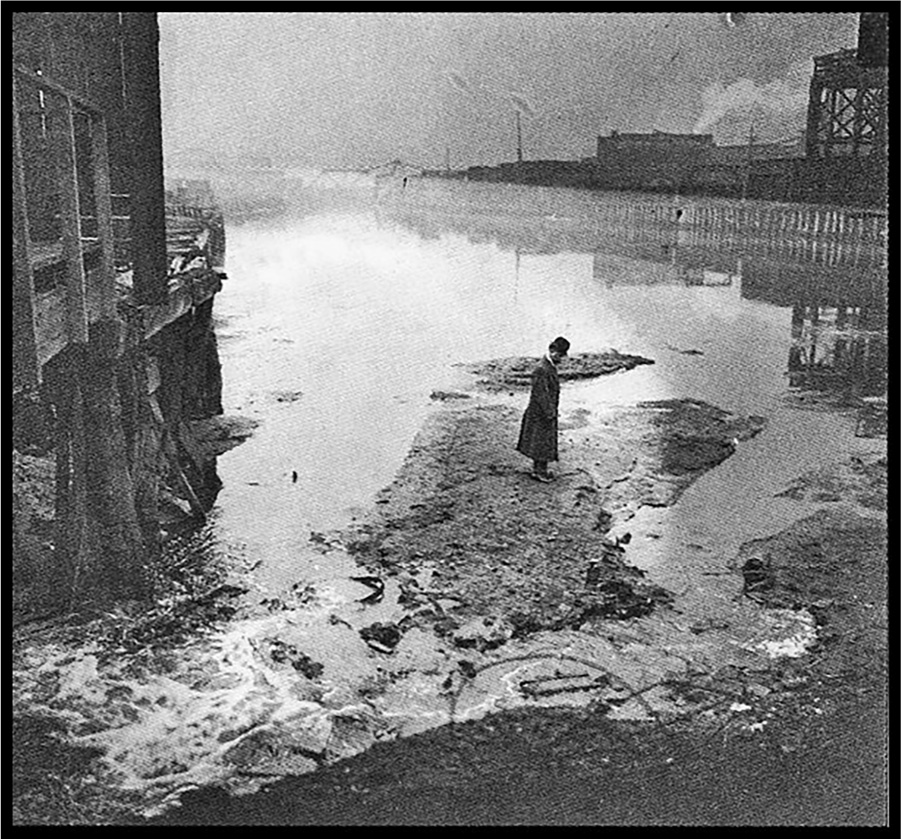
As for water, urban factories, slaughterhouses, and tanneries often dumped waste directly into nearby bodies of water. Through the process of capillary action, contaminated water and liquefying waste, like that deposited in latrines, could travel to the sources of public drinking water. As a result, this water was dirty and sometimes smelled worse than the streets. The stockyards and slaughterhouses of Chicago tossed the manure, blood, and unused organs of cows, sheep, and pigs into a fork of the Chicago River. The methane gases produced from the decomposing organic matter caused bubbles to rise to the surface, giving this stretch of the river the name Bubbly Creek (Figure 10.11). The amount of waste produced by the stockyards and slaughterhouses was so great that people traveling to Chicago by train in the middle of the night reportedly could smell the city long before they saw it.
英語のヒント
水についていえば、都市の工場、食肉処理場、皮なめし工場は、近くの水域へ廃棄物を直接捨てることが多かった。毛細管現象によって、汚染水や便所にたまったものなどの液状化した汚物が、公共の飲料水源へ移動することがあった。そのため水は汚れ、ときには街路よりひどい臭いを放った。シカゴの家畜集積場や食肉処理場は、牛・羊・豚の糞、血、使わない内臓を、シカゴ川の支流へ投げ込んだ。有機物の腐敗で発生したメタンガスの泡が水面に上がり、この川の区間はバブリー・クリーク(泡立つ入り江)と呼ばれるようになった(図10.11)。家畜集積場や食肉処理場の廃棄物はあまりに大量で、真夜中に列車でシカゴへ向かう人々は、市が見えるずっと前からその臭いを感じられたという。
Bubbly Creek.バブリー・クリーク。
(credit: “Bubbly Creek” by Unknown/Wikimedia Commons, Public Domain) · Public Domain
Figure 10.11 In this 1911 photograph, a man stands on an island formed by solidified waste in Chicago’s Bubbly Creek. The waste surrounding the creek was so deep that observers reported seeing chickens sink into it and disappear from sight. (credit: “Bubbly Creek” by Unknown/Wikimedia Commons, Public Domain)
図10.11 1911年のこの写真では、シカゴのバブリー・クリークで、固まった汚物が作った島の上に男が立っている。入り江の周囲の汚物はあまりに深く、ニワトリが沈んで見えなくなるのを見たと、目撃者が報告したほどだった。(クレジット:「Bubbly Creek」、作者不詳/Wikimedia Commons、パブリックドメイン)
Flush toilets prevented human waste from being deposited in backyard latrines or tossed into the streets, but they were only part of the solution. The waste still needed to be disposed of somewhere. In too many cities, household drains simply carried it to sewer systems that ultimately dumped it into the same rivers from which water for drinking and bathing was taken. By 1858, six feet of waste had piled up along the banks of the Thames in London, and the stench was so intense that custodians at the Houses of Parliament covered the windows with curtains soaked in chloride of lime, a disinfectant, to keep the politicians inside from passing out. The smell was dubbed the Great Stink, and carbolic acid, another disinfectant, was poured into the river to alleviate the problem.
英語のヒント
水洗便所は、人の排泄物が裏庭の便所にたまったり、街路に投げ捨てられたりするのを防いだが、解決策の一部にすぎなかった。汚物は依然として、どこかで処分しなければならなかった。あまりに多くの都市で、家庭の排水管はそれを下水道へ送るだけで、その下水道は最終的に、飲料水や入浴用の水を取るのと同じ川へ流し込んだ。1858年までに、ロンドンのテムズ川岸には6フィートの汚物が堆積した。悪臭があまりに強く、国会議事堂の管理人は、議員が気絶しないよう、消毒薬のさらし粉をしみ込ませたカーテンで窓を覆った。その臭いは「大悪臭」と呼ばれ、問題を和らげるため、別の消毒薬である石炭酸が川に注がれた。
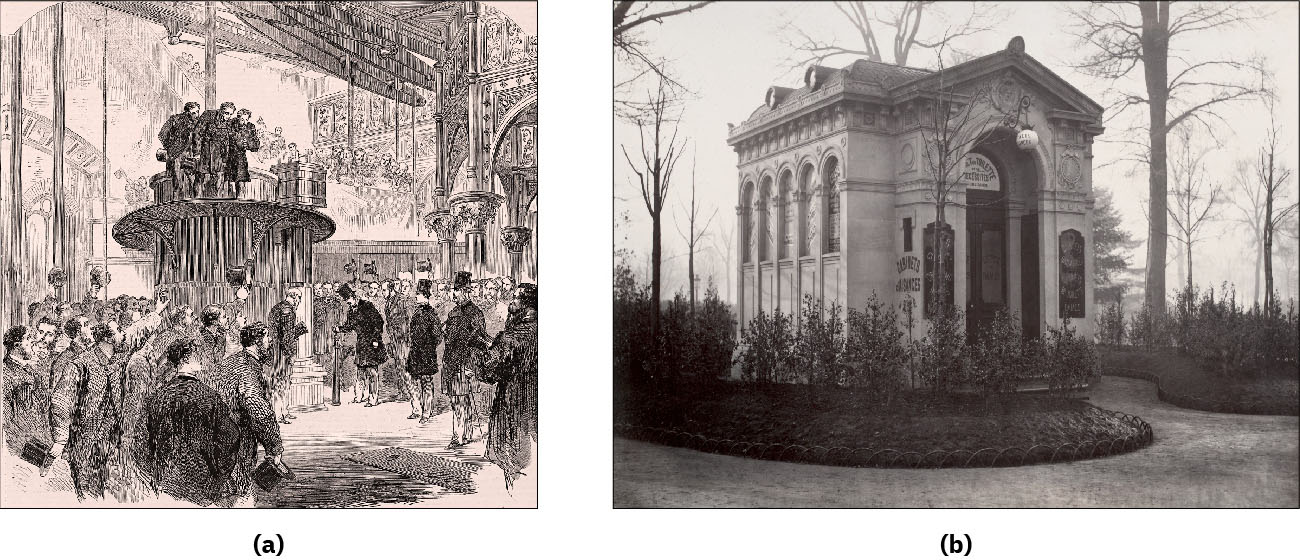
The Great Stink inspired the rebuilding of London’s sewer system by railway engineer Joseph Bazalgette between 1859 and 1875, as shown in Figure 10.12(a). Bazalgette was knighted for his work. The disposal of London’s sewage was further refined when the city began purifying waste at two major pumping systems in the 1880s and then transporting it to be dumped in the North Sea, a process that continued until 1998. Other cities built similar systems over the course of the late nineteenth and early twentieth centuries. Some cities even established public toilets, as shown in Figure 10.12(b).
英語のヒント
大悪臭をきっかけに、鉄道技師ジョゼフ・バザルジェットは1859~1875年にロンドンの下水道を再建した。図10.12(a)はその様子を示す。バザルジェットは功績によってナイトに叙された。1880年代に、市が二つの主要ポンプ施設で汚水の浄化を始め、その後北海へ運んで投棄するようになると、ロンドンの下水処理はさらに改良された。この処理は1998年まで続いた。他の都市も、19世紀後半から20世紀初めに同様の設備を建設した。図10.12(b)のように、公衆便所まで設ける都市もあった。
Sewage System Improvements.下水道の改善。
(credit a: modification of work “The Prince of Wales Opening the Metropolitan Main” by The Illustrated London News/Wikimedia Commons, Public Domain; credit b: modification of work “Cabinets water closets Dorion, Champs-Elysées” by State Library of Victoria/Wikimedia Commons, Public Domain) · Public Domain
Figure 10.12 (a) This engraving shows the Prince of Wales, the heir to the British throne, attending the 1865 opening of Crossness, one of the major pumping stations of Joseph Bazalgette’s new sewer system. (b) A photograph of an elaborately designed nineteenth-century chalet de necessité, a public toilet, in a Parisian park. Such conveniences helped to keep that city clean. (credit a: modification of work “The Prince of Wales Opening the Metropolitan Main” by The Illustrated London News/Wikimedia Commons, Public Domain; credit b: modification of work “Cabinets water closets Dorion, Champs-Elysées” by State Library of Victoria/Wikimedia Commons, Public Domain)
図10.12 (a)この版画は、イギリス王位継承者のウェールズ公が、1865年にクロスネスの開所式へ出席する姿を示す。クロスネスは、ジョゼフ・バザルジェットの新しい下水道の主要ポンプ場の一つだった。(b)パリの公園にある、精巧に設計された19世紀のシャレ・ド・ネセシテ、すなわち公衆便所の写真。こうした設備は都市を清潔に保つのに役立った。(クレジットa:「The Prince of Wales Opening the Metropolitan Main」を改変、『The Illustrated London News』/Wikimedia Commons、パブリックドメイン。クレジットb:「Cabinets water closets Dorion, Champs-Elysées」を改変、ビクトリア州立図書館/Wikimedia Commons、パブリックドメイン)
City air was also dirty in the late nineteenth century. Coal was burned to generate both steam power and electricity, and coal smoke plagued industrial cities as they grew in size. Soot lay upon every surface, including people’s clothing. Anyone who accidentally left windows open found their furniture covered with it. London residents noted how air pollution transformed the color of sunsets. For some this was a mark of pride, and schoolchildren in Osaka, Japan, learned that their hometown was “the City of Smoke.”
英語のヒント
19世紀後半の都市では、空気も汚れていた。蒸気動力にも発電にも石炭が燃やされ、拡大する工業都市は石炭の煙に苦しんだ。すすは人々の衣服を含め、あらゆる表面に積もった。うっかり窓を開けたままにすると、家具がすすに覆われた。ロンドンの住民は、大気汚染が夕焼けの色を変えることに気づいた。それを誇りのしるしとする人もおり、日本の大阪の小学生は、自分の故郷が「煙の都」だと教えられた。