第10章工業化世界の生活と労働Life and Labor in the Industrial World
Hard on the heels of dirty streets, water, and air came disease. Respiratory problems caused by the inhalation of coal smoke affected many in the nineteenth century. Emphysema, chronic bronchitis, and asthma were common. Approximately one-third of child deaths in nineteenth-century England were attributed to respiratory ailments. Throughout the century, waterborne diseases such as cholera and typhoid claimed thousands of lives in the cities. Both these illnesses, which kill through dehydration from vomiting and copious diarrhea, are transmitted through water or food that has come in contact with the feces of infected people.
英語のヒント
汚れた街路、水、空気にすぐ続いて、病気が現れた。19世紀には、石炭の煙を吸い込むことによる呼吸器の問題が多くの人を襲った。肺気腫、慢性気管支炎、喘息は一般的だった。19世紀のイングランドで子供の死因の約3分の1は、呼吸器疾患とされた。この世紀を通じ、コレラや腸チフスなど水を媒介する病気が都市で数千人の命を奪った。両疾患は嘔吐と大量の下痢による脱水で死に至らせ、感染者の糞便に触れた水や食物を通して伝播する。
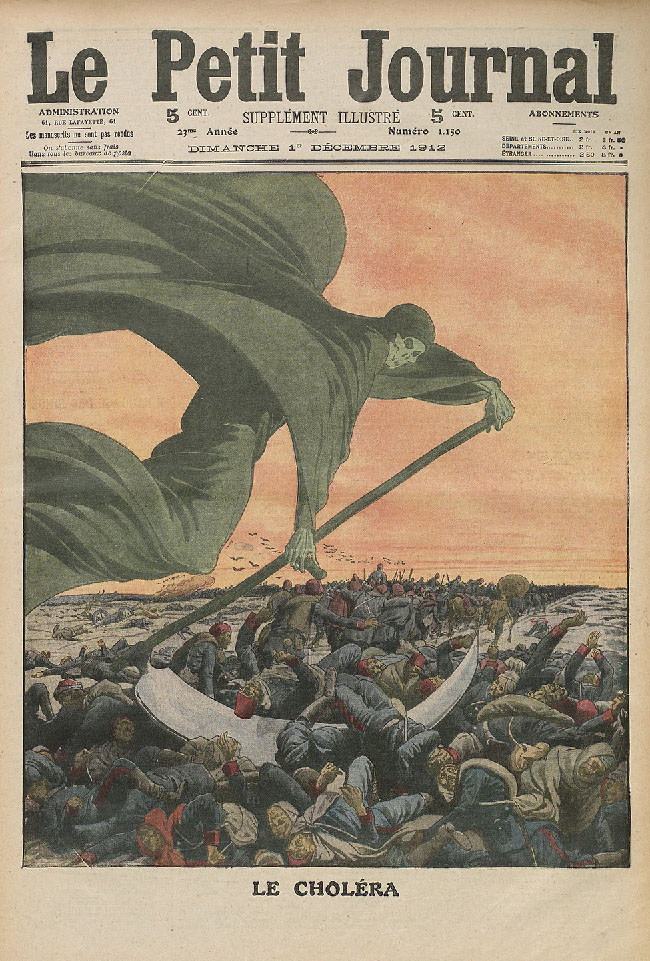
Many cholera pandemics occurred in the first half of the nineteenth century, before industrial technology made the building of secure water and sewer lines possible and good personal hygiene feasible. However, many outbreaks occurred in the second half of the nineteenth century in cities that had not yet modernized their water and sewer systems, and in the poorer neighborhoods of cities that had (Figure 10.13). Three thousand people died of cholera in Vienna within the span of a few months in 1873. In 1892, in the German city of Hamburg, more than eight thousand people died of it. A vaccine was finally developed in 1885.
英語のヒント
19世紀前半にはコレラの世界的流行が何度も起きた。この時期はまだ、工業技術によって安全な上下水道の建設や、良好な個人衛生が可能になる前だった。しかし19世紀後半にも、上下水道がまだ近代化されていない都市や、近代化済みの都市の貧しい地区で、多くの流行が起きた(図10.13)。1873年のウィーンでは、わずか数か月の間に3000人がコレラで死んだ。1892年のドイツのハンブルクでは、8000人以上が死亡した。1885年には、ついにワクチンが開発された。
Cholera Outbreaks.コレラの流行。
(credit: “Cholera” by Le Petit Journal/Wikimedia Commons, Public Domain) · Public Domain
Figure 10.13 The cover of an issue of the French magazine Le Petit Journal from 1912 depicts cholera as the Grim Reaper mowing down populations. (credit: “Cholera” by Le Petit Journal/Wikimedia Commons, Public Domain)
図10.13 フランスの雑誌『Le Petit Journal』の1912年の号の表紙は、コレラを、人々をなぎ倒す死神として描いている。(クレジット:「Cholera」、『Le Petit Journal』/Wikimedia Commons、パブリックドメイン)
Finally, overcrowding also contributed to disease. Although tuberculosis affected people in rural areas too, the overcrowded homes and workplaces of industrial cities encouraged it to spread quickly and claim many lives. All social classes suffered from the disease, but it had its greatest impact on the poor, for whom overcrowding was the worst and whose homes often lacked sunlight, which kills tuberculosis bacilli.
英語のヒント
最後に、過密も病気の一因となった。結核は農村の人々にも影響したが、工業都市の過密な住宅や職場は急速な感染拡大を促し、多くの命を奪った。すべての社会階級がこの病気に苦しんだが、最も大きな影響を受けたのは貧しい人々だった。彼らの過密状態は最もひどく、その住居には、結核菌を殺す日光が欠けていることが多かった。
Although not necessarily fatal, alcoholism was also a significant health problem in nineteenth-century cities, especially among working-class men. Cities contained numerous saloons, taverns, pubs, cafés, and beer halls, and working-class men routinely sought them out after a hard day. Alcohol relieved boredom, calmed frustrations, and eased the physical pain of factory workers, miners, and dock hands. Establishments that served alcohol commonly offered other services as well, including free or inexpensive food, an employment exchange where men might learn of new jobs, and a place to hear the newspaper read or have a letter written. Men also used drinking establishments as places to discuss politics.
英語のヒント
必ずしも死に至るものではないが、アルコール依存症も19世紀の都市、特に労働者階級の男性にとって重大な健康問題だった。都市には酒場、居酒屋、パブ、カフェ、ビアホールが数多くあり、労働者階級の男性は厳しい一日の後、日常的にそこへ向かった。酒は、工場労働者、鉱山労働者、港湾労働者の退屈を紛らわせ、苛立ちを鎮め、身体の痛みを和らげた。酒を出す店は、無料または安価な食事、新しい仕事の情報を得られる職業紹介、新聞を読んでもらったり手紙を書いてもらったりする場所など、他のサービスも提供するのが普通だった。男性は酒場を政治を議論する場所としても利用した。
On Sundays, the only day of rest for European and American workers, alcohol consumption was high as many men spent the day drinking. Supervisors reported that it was not uncommon for men to come to work on Monday mornings hungover or still intoxicated. In an attempt to combat this problem, employers began to cut work hours in half on Saturdays, in the hope that if men started drinking earlier, they would finish earlier. Eventually, and largely owing to significant lobbying from labor unions, workers received two full days off on the weekends.
英語のヒント
ヨーロッパとアメリカの労働者にとって唯一の休日だった日曜日には、多くの男性が一日中飲酒し、酒の消費量が多かった。監督者によれば、月曜の朝、二日酔いやまだ酔った状態で出勤する男性は珍しくなかった。この問題に対処するため、雇用者は土曜の労働時間を半分にし始めた。早く飲み始めれば、早く飲み終わるだろうと期待したのである。やがて、主に労働組合の強力な働きかけによって、労働者は週末に丸2日の休みを得た。
Prostitution, both formal and informal, was common in nineteenth-century cities. Some prostitutes were professionals who lived in brothels, but many others were simply young single women who could not survive on their meager wages alone. Instead of a fee, they might simply want a man to purchase them dinner or new clothing. Even the institution of prostitution modernized in the nineteenth century, and brothels advertised themselves in books of “things to do” in town that could be purchased at railway stations. When asked why they lived such a lifestyle, some women reported that they had been trapped by means of seduction, but many professional prostitutes said the job paid better, required less work, and offered them more privacy than did a job as a factory worker or domestic servant. Sexually transmitted diseases were rampant, however. Many prostitutes and their clients suffered from syphilis, and married men sometimes infected their wives. The result was infertility or babies who were stillborn or blind or had mental disabilities. With no effective cure, syphilis killed its victims after years of agony.
英語のヒント
19世紀の都市では、組織的な売春も非組織的な売春も一般的だった。売春宿に住む専業の娼婦もいたが、わずかな賃金だけでは暮らせない若い独身女性も多かった。料金の代わりに、夕食や新しい服を男性に買ってもらいたいだけの場合もあった。売春という制度さえ19世紀には近代化し、売春宿は駅で買える町の「楽しみ方」の案内本に広告を載せた。なぜその生活をしているか聞かれると、誘惑によって陥れられたと答える女性もいたが、多くの専業の娼婦は、工場労働者や家事使用人より収入がよく、働く量が少なく、私生活の自由も多いと述べた。しかし性感染症が蔓延していた。多くの娼婦と客が梅毒に苦しみ、既婚男性が妻へ感染させることもあった。その結果、不妊、死産、あるいは盲目や知的障害のある子供の出生が起きた。有効な治療法のない梅毒は、何年もの苦痛の後、患者の命を奪った。
Cultural Movements of the Second Industrial Revolution第二次産業革命の文化運動
The industrial city was more than a place for people to live, work, and entertain themselves. It was also the subject of late nineteenth-century art and literature. Industrialization influenced the cultural creations of the time just as much as it did the methods of production and transportation.
英語のヒント
工業都市は、人々が住み、働き、楽しむ場所であるだけではなかった。19世紀後半の芸術や文学の主題でもあった。工業化は、生産や輸送の方法と同じほど、その時代の文化的創作にも影響した。
The first significant cultural response to industrialization began in the late eighteenth and early nineteenth centuries with romanticism, an artistic movement that valued emotion and imagination and took as its subjects the themes of nature, the ordinary person, the exotic, the ancient, and the supernatural. Romantic writers and artists stressed the beauty and awe-inspiring power of nature and decried the effect that cities and industrial development had on people and the physical environment. William Blake’s description of England’s factories as “dark satanic mills” perfectly expressed the romantics’ attitude toward modern life.
英語のヒント
工業化に対する最初の重要な文化的応答は、18世紀後半から19世紀初めのロマン主義だった。この芸術運動は感情と想像力を重んじ、自然、普通の人、異国的なもの、古代、超自然を主題とした。ロマン主義の作家や芸術家は、自然の美と畏怖を起こす力を強調し、都市や工業発展が人々と自然環境に及ぼす影響を非難した。ウィリアム・ブレイクがイングランドの工場を「暗い悪魔の工場」と表現したことは、近代生活に対するロマン主義者の態度を的確に示していた。
Another important artistic and literary movement of the nineteenth century was realism. Realism focused on everyday life in the contemporary world instead of on the exotic, the ancient, and the faraway as romanticism had. Realists depicted life as it was, even if that meant presenting scenes of its uglier side, although some realist painters such as Rosa Bonheur and Jean-François Millet chose to depict life in the countryside and painted rural horse fairs, oxen straining at the plow, and men sowing fields. Modern cities and their inhabitants were the focus of many others such as John Sloan and George Luks, who portrayed the inside of barrooms and the teeming streets of working-class neighborhoods.
英語のヒント
19世紀のもう一つの重要な芸術・文学運動は写実主義だった。写実主義はロマン主義のように異国、古代、遠方を見るのではなく、同時代の世界の日常生活に焦点を当てた。写実主義者は、生活の醜い側面を示すことになっても、ありのままの生活を描いた。ただし、ローザ・ボヌールやジャン=フランソワ・ミレーのように、田舎の暮らしを選び、農村の馬市、鋤を引く牛、畑に種をまく男たちを描く画家もいた。ジョン・スローンやジョージ・ラックスなど他の多くの画家は、近代都市と住民を主題にし、酒場の内部や労働者地区の人であふれる街路を描いた。
Writers also took the city as their subject. One of the greatest realist writers of the nineteenth century was Britain’s Charles Dickens. In his many and widely read novels, Dickens sympathetically depicted the hardscrabble lives of poor, working-class, and middle-class urban dwellers, setting scenes in foundling homes, prisons, impoverished neighborhoods, and dark city streets. Some critics charged him with being unrealistic in his depiction of the virtuous poor, but his portrayals (and his activism) helped raise awareness, especially of the plight of children, and bring about some social change. Other writers focused even more intently on the shabbier side of life. In Russia, novelist Fyodor Dostoyevsky described the streets of St. Petersburg, the rundown quarters in which the poor were condemned to live, and the cheap saloons in which they sought relief. Honoré de Balzac of France depicted the seedy side of life in French cities, often focusing on stories of crime. In Madame Bovary, another French novelist, Gustave Flaubert, wrote of a rural doctor’s young wife whose desire for consumer goods and urban pleasures leads to her ruin. American writer Kate Chopin also addressed the problem of women who felt stifled by married life and the social conventions of the time.
英語のヒント
作家も都市を題材にした。19世紀の最も偉大な写実主義作家の一人は、イギリスのチャールズ・ディケンズだった。彼は広く読まれた数々の小説で、孤児院、監獄、貧しい地区、暗い街路を舞台に、都市の貧民、労働者階級、中産階級の苦しい生活を、同情を込めて描いた。徳のある貧者の描写は非現実的だと批判する者もいたが、その描写と社会活動は、とりわけ子供の窮状への認識を高め、社会の変化を助けた。他の作家は生活のみすぼらしい面をさらに集中して描いた。ロシアの小説家フョードル・ドストエフスキーは、サンクトペテルブルクの街路、貧しい人々が暮らすことを余儀なくされた荒れた地区、慰めを求めて通う安酒場を描いた。フランスのオノレ・ド・バルザックは、しばしば犯罪の物語を中心に、フランス都市のうらぶれた生活を描いた。別のフランス作家ギュスターヴ・フローベールは、『ボヴァリー夫人』で、消費財と都会の享楽への欲望によって破滅する、田舎の医師の若い妻を書いた。アメリカの作家ケイト・ショパンも、結婚生活と当時の社会的慣習に息苦しさを覚える女性の問題を取り上げた。
In the late nineteenth century, realism was joined and surpassed by naturalism, a style that featured detached and impersonal depictions of characters whose actions were molded by their environment in ways they often had no ability to control. The French novelist Émile Zola was the creator of naturalism, and his numerous works depict people trapped by their environment or their heredity into acting in ways for which they cannot be held fully responsible. For example, in Thérèse Raquin, Zola’s first naturalistic novel, which he published in installments in the magazine L’Artiste in 1867, the title character is an orphan forced by the woman who raised her to marry her sickly son, a man Thérèse does not love and eventually murders, with the help of a brutish man to whom she finds herself drawn by irresistible sexual impulses. Literary critics were shocked by Thérèse Raquin, as they also were by later works of naturalism, and decried it as immoral.
英語のヒント
19世紀後半、写実主義に自然主義が加わり、やがてこれをしのいだ。自然主義は、本人には制御できないことの多い環境によって行動を形づくられる人物を、距離を置いた非個人的な描写で表す様式だった。創始者であるフランスの小説家エミール・ゾラの多数の作品は、環境や遺伝に閉じ込められ、全面的には責任を負わせられない行動へ追い込まれる人々を描く。たとえば1867年に雑誌『L’Artiste』へ連載した最初の自然主義小説『テレーズ・ラカン』では、主人公は孤児で、育ての女性から、その病弱な息子との結婚を強いられる。テレーズは夫を愛しておらず、抵抗できない性的衝動で引きつけられた粗暴な男の助けを借り、ついには夫を殺害する。文芸批評家は、後の自然主義作品と同様、『テレーズ・ラカン』にも衝撃を受け、不道徳だと非難した。
American readers were similarly shocked by McTeague, an 1899 novel by Frank Norris. In this story, McTeague, a dentist, marries Trina, with whom his friend was in love. McTeague’s friend works his revenge by destroying his dental practice, leading McTeague to run away after stealing money from Trina. When he returns, having spent all that he had stolen, Trina refuses to help him, and he beats her to death. He then runs from the law with his former friend in pursuit. The novel ends with McTeague stranded in the desert, handcuffed to the body of his friend, whom he has killed. In the world depicted in McTeague, people are greedy, faithless, and violent, and there is no escape from the horrors of life.
英語のヒント
アメリカの読者は、フランク・ノリスの1899年の小説『マクティーグ』にも同じように衝撃を受けた。この物語で、歯科医マクティーグは、友人が愛していたトリナと結婚する。友人は彼の歯科医院を潰して復讐し、マクティーグはトリナから金を盗んで逃げる。盗んだ金を使い果たして戻ると、トリナは援助を拒み、彼は彼女を殴り殺す。その後、かつての友人に追われながら、法の追及から逃れる。小説は、マクティーグが、自分の殺した友人の死体と手錠でつながれ、砂漠で動けなくなって終わる。『マクティーグ』の世界では人々は貪欲で、不実で、暴力的であり、人生の恐怖から逃れるすべはない。