第5章大西洋世界の形成Foundations of the Atlantic World
The Economics of Slavery奴隷制の経済
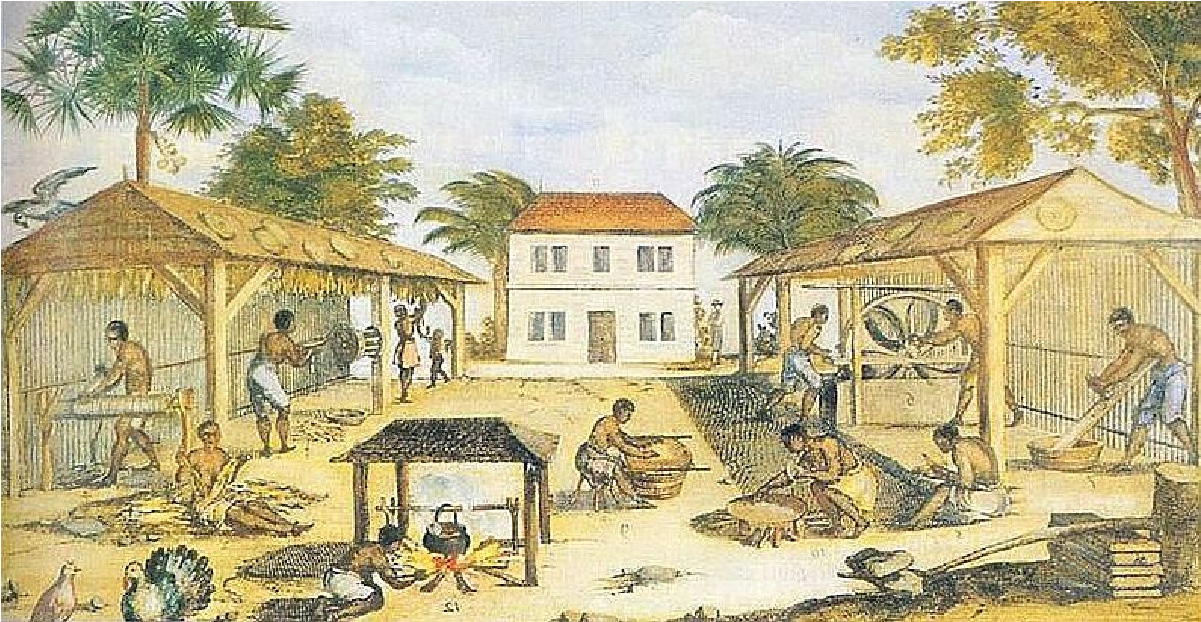
Those who reached their final destination faced an existence as hellish as they had experienced on the Middle Passage. The labor to which they were put was backbreaking and never ending. Most of the crops grown by enslaved Africans in the Americas were labor intensive. At that time, tobacco seeds had to be planted by hand and the seedlings transplanted in the fields. At harvest time, workers stripped tobacco leaves from the plant, hung them to dry, and packed them in large barrels that they then rolled to the coast or a riverbank to be taken on board ship and transported to Europe (Figure 5.22).
英語のヒント
最終的な目的地にたどり着いた人々は、ミドル・パッセージで経験したのと同じほど地獄のような生活に直面した。課された労働は、身体を痛めつけ、終わることがなかった。アメリカ大陸で奴隷化されたアフリカ人が育てた作物のほとんどは、大量の労働を必要とした。当時、タバコの種は手でまかなければならず、苗は畑へ移植する必要があった。収穫期には、労働者は株からタバコの葉を摘み、つるして乾かし、大きな樽へ詰めた。それを海岸や川岸まで転がして運び、船に載せてヨーロッパへ輸送した(図5.22)。
Harvesting Tobacco.タバコの収穫。
(credit: “Tobacco cultivation (Virginia, ca. 1670)” by Unknown/Wikimedia Commons, Public Domain) · Public Domain
Figure 5.22 This 1670 illustration from Virginia shows enslaved Africans at work on a tobacco plantation. In the open shed on the left, tobacco leaves are being hung to dry. (credit: “Tobacco cultivation (Virginia, ca. 1670)” by Unknown/Wikimedia Commons, Public Domain)
図5.22 1670年のヴァージニアのこの挿絵は、タバコ・プランテーションで働く、奴隷化されたアフリカ人を描いている。左の開放された小屋には、乾燥させるタバコの葉がつるされている。(クレジット:作者不明/Wikimedia Commons「タバコ栽培〔ヴァージニア、1670年頃〕」、パブリックドメイン)
Rice cultivation also required the transplanting of seedlings by hand. Enslaved people first cleared the undergrowth from swampland, built earthen dikes, and then flooded the cleared land with water. As they worked in the swampy waters, they were exposed to snakes and mosquitos carrying malaria and yellow fever.
英語のヒント
稲作でも、苗を手で移植する必要があった。奴隷化された人々は、まず湿地の下草を取り除き、土の堤を築き、切り開いた土地に水を張った。湿地の水の中で働く彼らは、ヘビや、マラリアと黄熱を媒介する蚊にさらされた。
Sugar, the most valuable crop grown by enslaved people, also required the most labor, and sugar plantations often contained hundreds of workers. With the exception of the very youngest and the very oldest, all of them toiled all day as part of large work gangs. The labor was grueling and dangerous. Sugar cane was densely planted, and undergrowth in the fields could hide snakes that bit workers. After fertilizing and weeding the cane, workers harvested it by cutting it close to the ground with machetes and then chopping it into smaller pieces to make it easier to remove from the fields. Machetes wielded in tired workers’ sweaty hands often slashed legs and feet. Workers might bleed to death or die when wounds became infected. People who worked too slowly were beaten.
英語のヒント
奴隷化された人々が作る中で最も価値の高い作物だった砂糖は、最も多くの労働を必要ともした。砂糖プランテーションには、数百人の労働者がいることが多かった。ごく幼い者とごく高齢の者を除き、全員が大きな作業班に組み込まれ、一日中苦役に従事した。その労働は過酷で危険だった。サトウキビは密に植えられ、畑の下草には、労働者をかむヘビが潜んでいることもあった。施肥と草取りをした後、労働者はマチェーテという山刀で地面近くを刈り取り、さらに短く切って畑から運び出しやすくした。疲れた労働者の汗ばんだ手が振るう山刀は、しばしば脚や足を切り裂いた。出血で死ぬことも、傷が感染して死ぬこともあった。働き方が遅すぎる人は殴られた。
Laborers then transported the cut cane to a mill to be crushed by heavy rollers that often caught and mangled workers’ hands. This had to be done very quickly, within twenty-four hours of cutting the cane, because the sap evaporated quickly. The workers boiled the crushed cane to extract a liquid that was clarified and crystalized into sugar, a process that required hours of standing next to roaring fires where workers were often scalded. To maximize profits, planters rotated production, so while sugar cane was growing in one field, it was being harvested in another. Because sugar cane rapidly depleted nutrients in the soil, laborers frequently also had to clear land for new fields. In addition to growing and processing sugar cane, enslaved people had to tend to the plantations’ buildings and livestock and cut the wood needed to cook the cane sap.
英語のヒント
労働者は次に、刈り取ったサトウキビを搾汁場へ運び、重いローラーで押しつぶした。このローラーはしばしば労働者の手を巻き込み、ひどく損傷させた。樹液はすぐに蒸発するため、刈り取りから24時間以内に、この作業を大急ぎで行わなければならなかった。労働者は押しつぶしたサトウキビを煮て液を取り出し、澄ませて結晶化させ、砂糖にした。この工程では、猛烈に燃える火のそばに何時間も立つ必要があり、熱湯や蒸気によるやけどを負うことが多かった。利益を最大化するため、農園主は生産を順繰りに行い、一つの畑でサトウキビを育てている間に、別の畑で収穫していた。サトウキビは土壌の養分を急速に消耗させるため、労働者は新たな畑の開墾もしばしば行わなければならなかった。栽培と加工に加え、奴隷化された人々は、プランテーションの建物と家畜の世話をし、サトウキビの汁を煮るための薪も切らなければならなかった。
Slaveholders spent little money on food for the enslaved people, so laborers spent additional time tending their own gardens, fishing, and foraging for wild foods. To give them energy and dull their pain, slaveholders often gave them shots of rum, a plentiful beverage on a sugar plantation.
英語のヒント
奴隷所有者は、奴隷化された人々の食料にほとんど金を使わなかったため、労働者は自分の畑の手入れ、魚捕り、野生の食料探しにも時間を割いた。奴隷所有者は、彼らに活力を与え、痛みを鈍らせるため、しばしばラム酒を少量ずつ飲ませた。砂糖プランテーションでは、ラム酒は豊富にあった。
Infectious disease, overwork, poor diet, and injuries claimed large numbers of lives. Because infant mortality among enslaved people in the Caribbean was rampant, the enslaved population was not self-reproducing, and slaveholders had to buy more people each year to maintain their labor force. Prices were high. A healthy young adult might cost as much as an average European could earn in a year’s worth of labor. In 1684, planters in Santo Domingo (the Dominican Republic) paid six thousand pounds of sugar per enslaved African. Some 2,500 to 3,000 new captives were required each year. This differed substantially from the English North American mainland colonies where, because the work of growing and processing tobacco was less physically grueling, enslaved people did not die in such high numbers, and the population was able to grow through reproduction.
英語のヒント
感染症、過労、粗末な食事、けがが、多くの命を奪った。カリブ海では、奴隷化された人々の乳児死亡が非常に多かったため、奴隷人口は出生によって維持できず、奴隷所有者は労働力を保つために毎年人を買い足す必要があった。価格は高かった。健康な若い成人一人の価格が、平均的なヨーロッパ人の一年分の労働収入に相当することもあった。1684年、サント・ドミンゴ(ドミニカ共和国)の農園主は、奴隷化されたアフリカ人一人当たり砂糖6,000ポンドを支払った。毎年約2,500〜3,000人の新たな捕虜が必要とされた。これは、イングランドの北アメリカ本土植民地とは大きく異なっていた。そちらでは、タバコの栽培・加工が身体的にはそれほど過酷でなかったため、奴隷化された人々の死亡数はそこまで多くなく、出生によって人口を増やすことができた。
Despite the conditions in which they lived, enslaved people in the Americas managed to retain their dignity and humanity. Couples married and produced children, some of whom survived. They formed new kin networks, calling fellow laborers “brother” and “aunt” to replace the relatives from whom they had been taken. They created new religions with elements of various African practices and Christian elements learned from their enslavers. They combined foods brought from Africa with local ingredients to create new cuisines that reminded them of home. The influence of Africa persisted in the music, dance, and stories they created. Enslaved people also resisted the slaveholders’ efforts to exploit them in numerous ways. They damaged tools, sabotaged machinery, and set fire to cane fields and barns full of sugar awaiting export to Europe. They ran away; in the mountains of Jamaica, runaways formed communities and lived in hiding. On several occasions, enslaved people rose up in armed rebellion, killing the slaveholders and overseers.
英語のヒント
そのような生活条件にもかかわらず、アメリカ大陸の奴隷化された人々は、自らの尊厳と人間性を保った。結婚して子をもうけ、生き延びる子どもたちもいた。彼らは新たな親族関係の網をつくり、引き離された親族の代わりに、労働仲間を「兄弟」や「おば」と呼んだ。さまざまなアフリカの慣行と、奴隷所有者から学んだキリスト教の要素を取り入れ、新しい宗教を生み出した。アフリカから持ち込まれた食べ物と現地の食材を組み合わせ、故郷を思い出させる新しい料理をつくった。彼らが生み出した音楽、踊り、物語の中にも、アフリカの影響が残った。奴隷化された人々は、自らを搾取しようとする奴隷所有者に、多くの方法で抵抗もした。道具を壊し、機械の運転を妨害し、サトウキビ畑や、ヨーロッパへの輸出を待つ砂糖でいっぱいの倉庫に火を放った。逃亡もした。ジャマイカの山中では、逃亡者が共同体をつくり、身を隠して暮らした。奴隷化された人々が武装蜂起し、奴隷所有者や監督者を殺したことも、何度かあった。
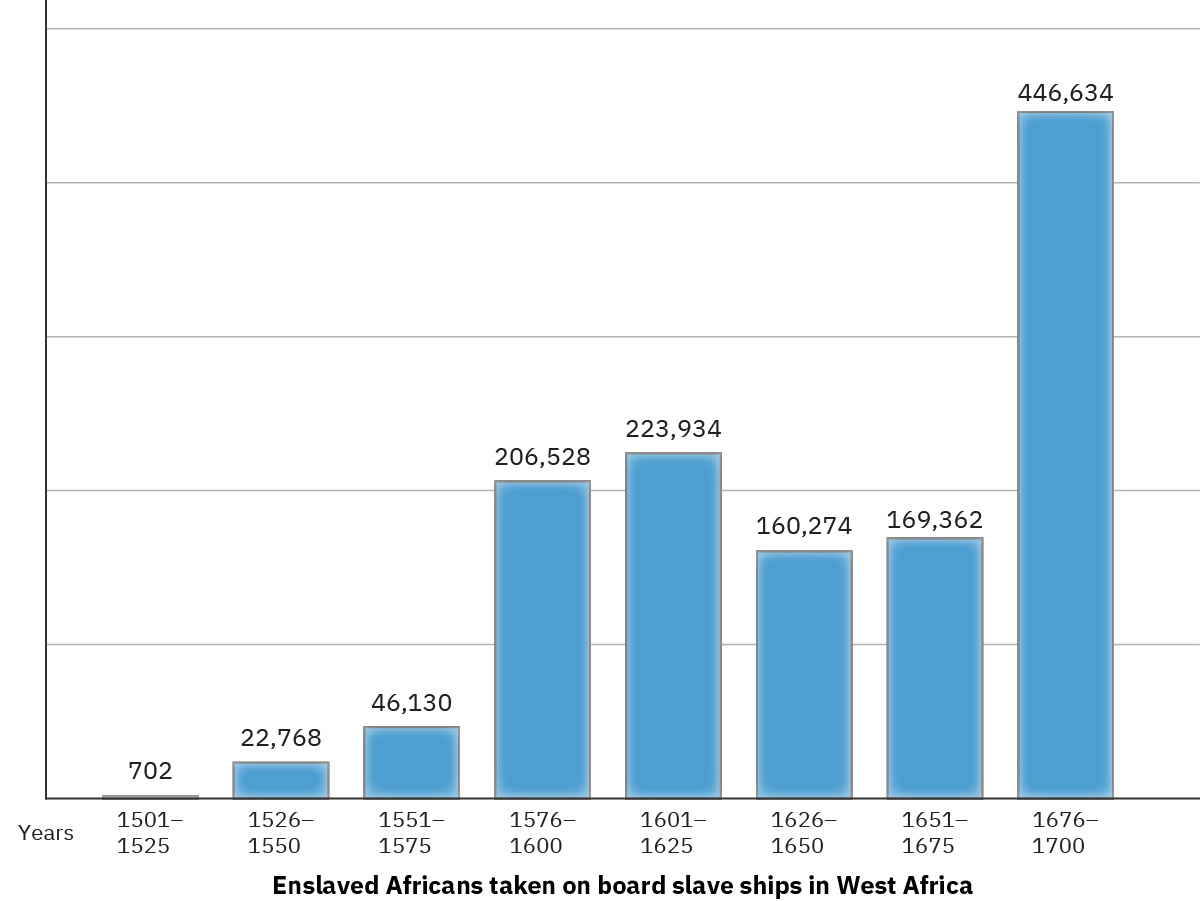
Largely unmoved by the misery of enslaved Africans, Europeans possessed an insatiable appetite for sugar that only grew as time passed. In 1650, planters in Barbados alone shipped about five thousand tons of sugar to England. Fifty years later, that amount had doubled. As the demand for sugar grew, so did the demand for enslaved laborers. Between 1450 and 1600, approximately 2,500 enslaved Africans a year were purchased by Europeans; in the sixteenth century, most of these people were sent to Hispaniola, Cuba, Brazil, and Venezuela. Beginning in the seventeenth century, however, as England, France, the Netherlands, and Denmark established sugar plantations in the Caribbean, the number of enslaved Africans brought to the Americas rose to some 18,680 per year (Figure 5.25). In the eighteenth century, by which time thousands of sugar mills dotted the coast of Brazil and the Caribbean islands, 61,330 people traversed the Middle Passage each year. Forty-two percent were sent to labor in the Caribbean and 38 percent to Brazil. The British colonies of the North American mainland claimed only 4 to 5 percent of the total.
英語のヒント
ヨーロッパ人は奴隷化されたアフリカ人の悲惨さにほとんど心を動かされず、砂糖への飽くことのない欲求を持ち、それは時とともに増すばかりだった。1650年には、バルバドスの農園主だけで、約5,000トンの砂糖をイングランドへ出荷した。50年後には、その量は倍になった。砂糖の需要が増えると、奴隷労働者への需要も増えた。1450年から1600年にかけて、ヨーロッパ人は毎年約2,500人の奴隷化されたアフリカ人を購入した。16世紀には、そのほとんどがイスパニョーラ島、キューバ、ブラジル、ベネズエラへ送られた。しかし17世紀に入ると、イングランド、フランス、オランダ、デンマークがカリブ海に砂糖プランテーションを設けたため、アメリカ大陸へ連れて来られる奴隷化されたアフリカ人は、年間約18,680人に増えた(図5.25)。ブラジル沿岸とカリブ海の島々に数千の製糖所が点在するようになった18世紀には、毎年61,330人がミドル・パッセージを渡った。その42%がカリブ海へ、38%がブラジルへ働かされに送られた。北アメリカ本土のイギリス植民地へ送られたのは、全体のわずか4〜5%だった。
Sugar and the Growth of the Atlantic Slave Trade.砂糖と大西洋奴隷貿易の拡大。
; attribution: Copyright Rice University, OpenStax, under CC BY 4.0 license) · CC BY 4.0
Figure 5.25 As the European demand for sugar increased, so too did the demand for enslaved laborers in Brazil and the Caribbean, which together would account for approximately 80 percent of enslaved Africans brought to the Americas at the turn of the eighteenth century. (data source: Slave Voyages; attribution: Copyright Rice University, OpenStax, under CC BY 4.0 license)
図5.25 ヨーロッパで砂糖の需要が増えると、ブラジルとカリブ海で奴隷労働者への需要も増えた。18世紀への変わり目には、両地域を合わせて、アメリカ大陸へ連れて来られた奴隷化されたアフリカ人の約80%を占めるようになった。(データ出典:Slave Voyages。出典表示:著作権ライス大学、OpenStax、CC BY 4.0ライセンス)
The trade in both sugar and enslaved people sustained numerous industries and employed thousands of people, creating great wealth for some. Shipbuilders, ship captains, and sailors found employment, as did dock workers, freight drivers, customs agents, and workers in sugar refineries. Bakers, pastry cooks, candy makers, and grocers all indirectly made money from sugar. People who made the barrels that held sugar and the other products produced by enslaved people—tobacco, rice, and indigo—profited, as did those who supplied inexpensive clothing, shoes, and foodstuffs like salted fish for enslaved people. Banks and insurance companies earned enormous sums as well, and those who owned large sugar plantations often invested their profits in other industries, built magnificent mansions, or bought luxury goods.
英語のヒント
砂糖と奴隷化された人々の取引は、多数の産業を支え、数千人を雇い、一部の人々に大きな富をもたらした。造船業者、船長、船員が仕事を得たほか、港湾労働者、貨物運搬人、税関職員、製糖所の労働者も同様だった。パン職人、菓子職人、砂糖菓子製造者、食料品商は、皆、砂糖から間接的に利益を得た。砂糖や、奴隷化された人々が生産する他の産品、すなわちタバコ、米、藍を入れる樽の製造者も利益を得た。奴隷化された人々に安価な衣服、靴、塩魚のような食料品を供給する者も同じだった。銀行や保険会社も莫大な金を稼ぎ、大規模な砂糖プランテーションの所有者は、しばしばその利益を他の産業に投資し、豪壮な邸宅を建て、ぜいたく品を買った。
Such wealth was easily transformed into political power. Sugar planters in Britain successfully lobbied Parliament to protect their interests, and many planters went into politics, holding seats in the House of Commons and, by using their wealth to purchase titles and estates, the House of Lords. It was thanks to the sugar lobby in Parliament that the British navy began to give its sailors a daily ration of grog, a mixture of rum, sugar, and lime juice, increasing the profits of British sugar planters even more.
英語のヒント
そのような富は、容易に政治権力へと変わった。イギリスの砂糖農園主は、自らの利益を守るため議会への働き掛けに成功し、多くは政界へ進出した。庶民院に議席を持ち、さらに富を使って爵位と領地を買うことにより、貴族院にも議席を持った。イギリス海軍が船員に、ラム酒、砂糖、ライム果汁を混ぜたグロッグを毎日配給し始め、イギリスの砂糖農園主の利益をいっそう増やしたのは、議会の砂糖業界勢力のおかげだった。