第5章大西洋世界の形成Foundations of the Atlantic World
Mercantilism and the Expansion of Empire重商主義と帝国の拡大
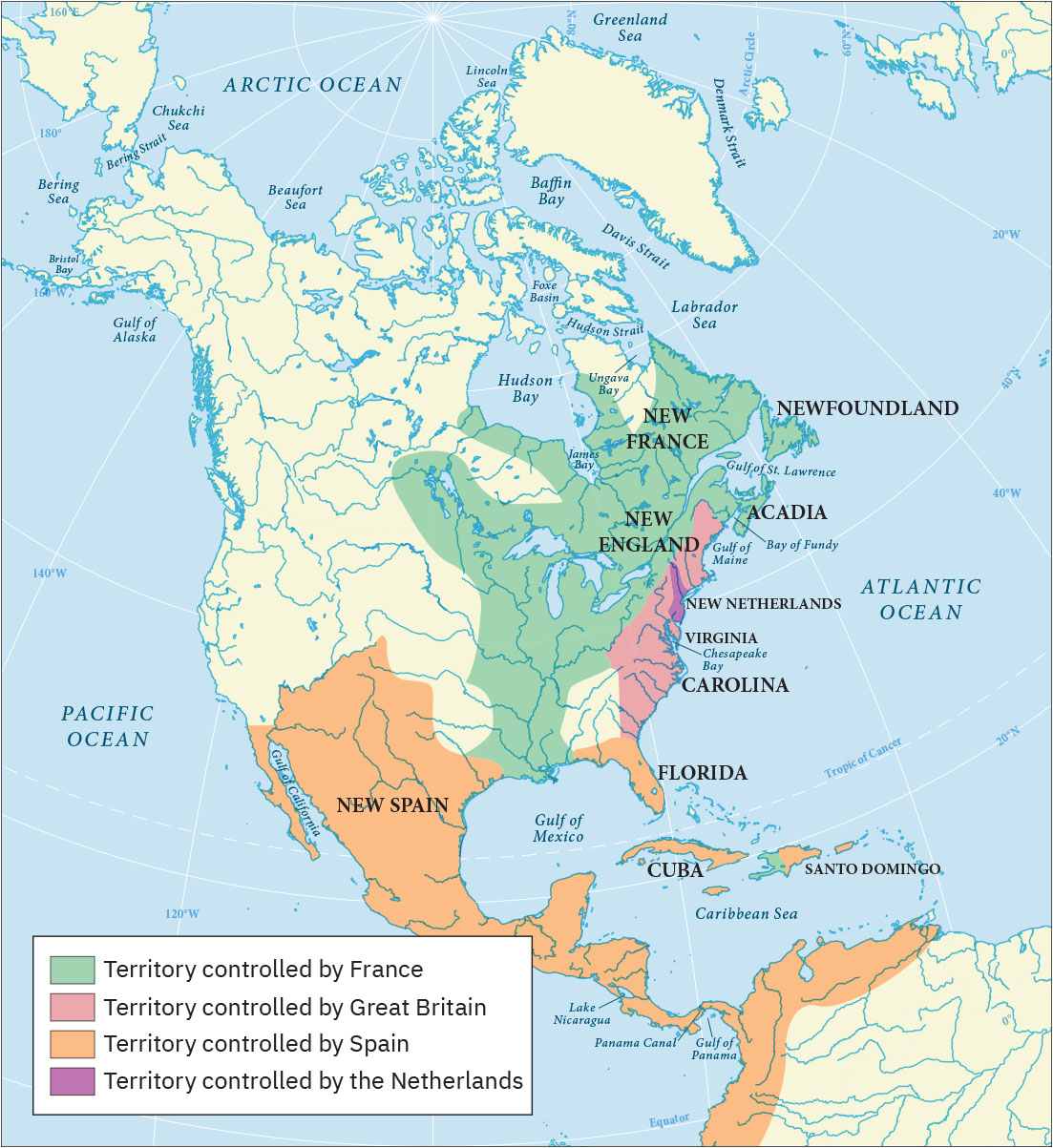
To compete with Spain and Portugal, their rivals England, France, and the Netherlands soon founded communities in North America. England established colonies on the mainland of North America in the sixteenth century, and by the middle of the eighteenth century, they stretched from Newfoundland to Georgia (Figure 5.18). Besides tobacco, they supplied England with a variety of goods ranging from timber, furs, and salted fish from the northern colonies to rice, indigo, and deer hides from the south. The colonies attracted many landless, unemployed young European men and women, too, who traveled to North America as indentured servants, bound by a contract to work for an agreed-upon number of years. After the landowner who paid for their passage had been compensated by their years of labor, indentured servants received their freedom and typically a grant of land as well.
英語のヒント
スペインとポルトガルに対抗するため、競争相手のイングランド、フランス、オランダも、まもなく北アメリカに入植地を設けた。イングランドは16世紀に北アメリカ本土で植民地を建設し、18世紀半ばまでに、その範囲はニューファンドランドからジョージアへ広がった(図5.18)。植民地はタバコのほか、北部の木材、毛皮、塩漬け魚から、南部の米、藍、鹿皮まで、さまざまな商品をイングランドに供給した。また、土地や職のないヨーロッパの若い男女を多数引きつけ、彼らは、合意した年数働く契約に縛られた年季奉公人として北アメリカへ渡った。渡航費を払った地主が、彼らの長年の労働によって費用を回収すると、年季奉公人は自由を得、通常は土地の付与も受けた。
Europe’s Footprint in the Americas.アメリカ大陸におけるヨーロッパの足跡。
(credit: modification of work “Map of North America in 1750” by Bill of Rights Institute/Flickr, CC BY 4.0) · CC BY 4.0
Figure 5.18 By the early seventeenth century, Spain, Portugal, England, France, and the Netherlands all had established colonies in the Americas. Spain’s empire was the largest. (credit: modification of work “Map of North America in 1750” by Bill of Rights Institute/Flickr, CC BY 4.0)
図5.18 17世紀初めまでに、スペイン、ポルトガル、イングランド、フランス、オランダはすべて、アメリカ大陸に植民地を設立していた。最大の帝国はスペインだった。(クレジット:ビル・オブ・ライツ・インスティテュート/Flickr「1750年の北アメリカ地図」を改変、CC BY 4.0)
France and the Netherlands also founded colonies in North America. In 1535, Jacques Cartier claimed Canada, also called New France, in the name of King Francis I. Like England, France was unable to maintain a permanent settlement in North America until the seventeenth century, when Samuel de Champlain founded one at Quebec. The French established further settlements in what is now the state of Maine, on the southern coast of Newfoundland, and in Louisiana (named for King Louis XIV). Animal hides and furs were the main exports to France. A small Dutch colony also briefly flourished in what is now New York and New Jersey before it was ceded to England in 1664. Like the French, the Dutch colonists of New Netherlands were primarily engaged in the fur trade, although many Dutch farmers also settled in the Hudson Valley, in New Jersey, and on Long Island.
英語のヒント
フランスとオランダも北アメリカに植民地を設けた。1535年、ジャック・カルティエはフランソワ1世の名で、ヌーヴェル・フランスとも呼ばれるカナダの領有を主張した。イングランドと同様、フランスも、17世紀にサミュエル・ド・シャンプランがケベックに建設するまで、北アメリカに永続的な入植地を維持できなかった。フランス人はさらに、現在のメイン州、ニューファンドランド南岸、そしてルイ14世にちなんで名付けたルイジアナにも入植地を設けた。フランスへの主要輸出品は動物の皮と毛皮だった。小規模なオランダ植民地も、現在のニューヨークとニュージャージーで一時栄えたが、1664年にイングランドへ割譲された。フランス人と同じく、ニュー・ネーデルラントのオランダ人入植者は、おもに毛皮交易に従事した。ただしハドソン川流域、ニュージャージー、ロングアイランドには、多くのオランダ人農民も定住した。
The European nations intended to extract the greatest possible wealth from their mainland colonies in the form of raw materials such as hides, furs, and agricultural products. France controlled immigration to Canada to ensure that its population remained limited to fur trappers and traders, a small number of farmers to provide them with food, and soldiers to guard them. In 1627, the French government granted a monopoly over the fur trade to the Company of New France. All fur trappers in Canada were to either work directly for the company or sell their furs to it. Traders had to pay the government a 25 percent sales tax. In 1663, Louis XIV placed the company under royal control.
英語のヒント
ヨーロッパ諸国は、皮、毛皮、農産物などの原材料という形で、本土の植民地から最大限の富を引き出そうとした。フランスはカナダへの移住を統制し、人口を、毛皮の猟師と商人、食料を供給する少数の農民、そして彼らを守る兵士に限ろうとした。1627年、政府はヌーヴェル・フランス会社に毛皮交易の独占権を与えた。カナダの猟師は全員、会社のために直接働くか、会社に毛皮を売ることになっていた。商人は政府に25%の売上税を払わなければならなかった。1663年、ルイ14世は会社を王室の管理下に置いた。
Spain exercised the strictest control over colonial commerce. Trade was limited to only a few ports in the Spanish colonies and the port of Seville in Spain, and two trading fleets departed from Seville bound for the Americas each year. The Spanish government forbade trade at other times. In addition, those seeking to engage in trade had to procure a license to do so, at considerable expense. The Spanish government also held a number of monopolies, such as one on all silver produced in its colonies, as well as owning all the mercury produced in the colony of Peru. Spanish colonies that needed mercury, which was used for processing the gold and silver they mined, had to purchase it from Peru.
英語のヒント
植民地商業を最も厳格に統制したのはスペインだった。交易は、植民地のわずかな港とスペインのセビリア港に限られ、毎年二つの交易船団が、アメリカ大陸へ向けてセビリアを出発した。政府はそれ以外の時期の交易を禁じた。さらに交易を望む者は、かなりの費用を払って許可証を得なければならなかった。政府は、植民地で生産される銀すべての独占権など、複数の独占権を持ち、ペルー植民地で生産される水銀もすべて所有していた。採掘した金銀の処理に水銀を必要とするスペイン植民地は、ペルーから買わなければならなかった。
Although the mainland colonies yielded wealth for the European home countries, the chief prizes were the islands of the Caribbean where sugar could be grown. Over the course of the seventeenth century, England, France, and the Netherlands set up colonies throughout the Caribbean on islands either not claimed by Spain or taken from it. The three attempted to found colonies in Central or South America as well, but Spanish and Portuguese dominance there either made these efforts unsuccessful, like the Dutch attempts in Brazil, or they kept the colonies small, such as French Guiana and Dutch Guiana, now Suriname.
英語のヒント
大陸本土の植民地もヨーロッパの本国へ富をもたらしたが、主要な獲物は、砂糖を栽培できるカリブ海の島々だった。17世紀を通じて、イングランド、フランス、オランダは、スペインが領有を主張していない島や、スペインから奪った島に、カリブ海全体で植民地を設けた。三国は中央・南アメリカにも植民地を作ろうとしたが、そこではスペインとポルトガルが優勢だった。そのためブラジルにおけるオランダの試みのように失敗するか、フランス領ギアナや、現在のスリナムであるオランダ領ギアナのように、植民地は小規模にとどまった。
Mercantilism and Its Critics重商主義とその批判者たち
Although European merchants and government ministers enthusiastically relied on mercantilist theory in the building of colonial empires, mercantilism also had many critics. Eighteenth-century Scottish philosopher David Hume argued that as more gold circulated in a country’s economy, prices would rise, eventually becoming so high that no one would purchase goods. Furthermore, Hume maintained, if abundance reduced the value of an item, then the more gold and silver a nation acquired, the less valuable it would be, an idea that undercut the mercantilist emphasis on accumulating precious metals to build wealth.
英語のヒント
ヨーロッパの商人や大臣は、植民地帝国の建設で重商主義理論に熱心に依拠したが、批判者も多かった。18世紀のスコットランドの哲学者デイヴィッド・ヒュームは、一国の経済に金がより多く流通すると物価が上がり、ついには誰も商品を買わないほど高くなると論じた。さらに、豊富にあることが物の価値を下げるなら、国が金銀を多く得れば得るほど、その価値は下がるはずだと主張した。これは、富を築くため貴金属の蓄積を重視する重商主義の考えを掘り崩すものだった。
The eighteenth-century philosopher and economist Adam Smith, also a Scot, criticized mercantilism as well. Smith argued that economic gain for one nation did not mean economic loss for others. Rather, trade could be mutually beneficial for all. One nation could prosper by supplying raw materials to another, which could then convert these materials into finished goods to be sold at profitable prices. Smith also opposed government regulation of the economy. In his view, competition among the producers of goods and the influence of the market (that is, the desires of buyers and sellers) made for a healthy economy. If demand for an item were high, its price would rise. If demand were low or quality poor, price would fall. Although Smith believed government should assist business by, say, building roads and providing for national defense, it should not grant monopolies or subsidize businesses. This would only harm consumers by keeping prices artificially high. Without government assistance, business enterprises would have to learn to operate more efficiently, thus reducing prices, or they would fail.
英語のヒント
同じくスコットランド出身の18世紀の哲学者・経済学者アダム・スミスも、重商主義を批判した。彼は、一国の経済的利益は他国の経済的損失を意味しないと論じた。むしろ貿易は、すべての国に相互の利益をもたらしうる。一国は他国へ原材料を供給して繁栄でき、他国はそれを完成品に加工し、利益の出る価格で売ることができる。スミスは政府の経済規制にも反対した。彼の見方では、生産者間の競争と、市場、すなわち買い手・売り手の欲求の作用が、健全な経済を作る。ある品物への需要が高ければ価格は上がり、需要が低いか品質が悪ければ価格は下がる。政府は、例えば道路建設や国防によって事業を助けるべきだと考えたが、独占権や補助金を与えるべきではないとした。それは価格を人為的に高く保ち、消費者を害するだけだからである。政府の援助がなければ、企業は価格を下げられるよう効率的な運営を学ぶか、さもなければ倒産することになる。
Smith also argued that it made little sense for a nation to produce everything it needed. If Spain could make a particular product better than England could or could make it for less money, England should use the revenue generated by selling those goods it excelled at making to buy the Spanish product. England could produce textiles more efficiently than Spain, and Spain could make wine more cheaply than England. It was thus more efficient, Smith explained, for England to buy wine from Spain and Spain to buy cloth from England than for each country to produce both the wine and the cloth they required.
英語のヒント
スミスは、自国に必要なすべてを一国で生産するのは、ほとんど意味がないとも論じた。スペインがある製品をイングランドより上手に、あるいはより安く作れるなら、イングランドは得意な商品の販売収入を使って、スペイン製品を買うべきだとした。イングランドはスペインより効率よく織物を生産でき、スペインはイングランドより安くワインを作れた。したがって両国がそれぞれ必要なワインと布を両方作るより、イングランドがスペインからワインを買い、スペインがイングランドから布を買うほうが、効率的だとスミスは説明した。
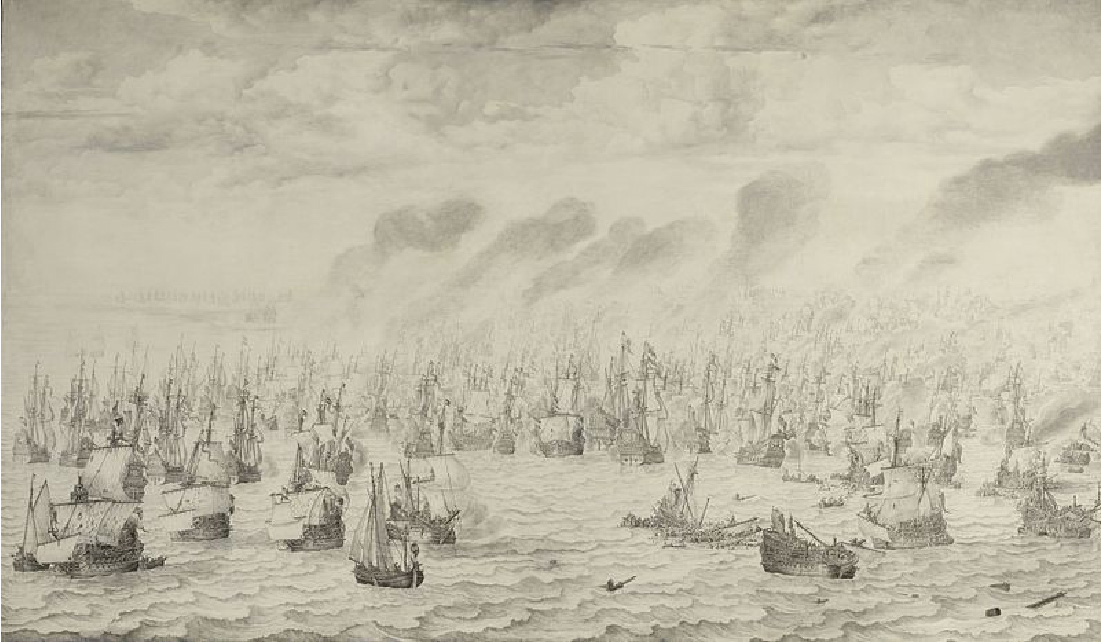
Because mercantilist theory saw economic gain for one nation as necessarily a loss for others, European nations engaged in trade wars as each tried to use tariffs to bar others from its markets. At times, real wars accompanied trade wars. England and the Netherlands fought four wars over the course of the seventeenth and eighteenth centuries, partially to gain control of transatlantic trade (Figure 5.19). England also fought France for access to the markets of India.
英語のヒント
重商主義理論は、一国の経済的利益が必ず他国の損失になると考えたため、ヨーロッパ諸国は、それぞれ関税によって他国を自国市場から締め出そうとし、貿易戦争を行った。ときには、本当の戦争も伴った。イングランドとオランダは、部分的には大西洋交易を支配するため、17〜18世紀に4回の戦争を戦った(図5.19)。イングランドは、インド市場への進出をめぐってフランスとも戦った。
A Battle for Trade.交易をめぐる海戦。
(credit: “The Battle of Terheide” by Rijksmuseum/Wikipedia, Public Domain) · Public Domain
Figure 5.19 England and the Netherlands fought four wars for control of transatlantic trade in the seventeenth and eighteenth centuries. This 1657 ink and oil painting by Willem van de Velde the Elder depicts the 1653 Battle of Scheveningen, a Dutch victory. (credit: “The Battle of Terheide” by Rijksmuseum/Wikipedia, Public Domain)
図5.19 イングランドとオランダは、17〜18世紀に大西洋交易の支配をめぐって4回戦争をした。ウィレム・ファン・デ・フェルデ(父)による1657年のインク・油彩画は、オランダの勝利だった1653年のスヘフェニンゲンの海戦を描く。(クレジット:アムステルダム国立美術館/Wikipedia「テルヘイデの海戦」、パブリックドメイン)
Mercantilism affected the relationship not only between countries but also between classes. For instance, it elevated the interests of merchants and manufacturers over those of workers and consumers by arguing that wages should be kept low. More money would thus remain in employers’ hands, and people would be discouraged (or prevented) from buying luxury goods that could instead be exported for profit. Mercantilists also advocated high taxes to enrich governments. The perceived need to extract raw materials from colonies to benefit the home country’s interests often led governments to restrict colonies’ economic growth and harshly punish people who sought to evade trade restrictions. The desire to exploit the American colonies also led to the abuse of Indigenous populations and enslaved Africans in efforts to extract as much wealth as possible.
英語のヒント
重商主義は、国同士だけでなく階級間の関係にも影響した。例えば、賃金を低く抑えるべきだと主張し、労働者や消費者よりも商人や製造業者の利益を優先した。そうすれば、より多くの金が雇用主の手に残り、人々が奢侈品を買うことを抑制、あるいは阻止でき、その品を代わりに輸出して利益を得られるとした。重商主義者は、政府を豊かにする高い税も唱えた。本国の利益のため植民地から原材料を引き出す必要があるという認識は、しばしば政府に植民地の経済成長を制限させ、交易制限を逃れようとする人々を厳しく処罰させた。アメリカ植民地を搾取したいという欲望は、可能なかぎり多くの富を取り立てようとする中で、先住民と奴隷化されたアフリカ人への虐待にもつながった。