第5章大西洋世界の形成Foundations of the Atlantic World
5.3 The Mercantilist Economy5.3 重商主義の経済
Learning Objectives学習の目標
By the end of this section, you will be able to:
この節を学ぶと、次のことができるようになる。
Describe the theory of mercantilism
重商主義の理論を説明する。
Explain the role of colonies in mercantilism
重商主義における植民地の役割を説明する。
Identify the major criticisms of mercantilism
重商主義に対するおもな批判を挙げる。
The success of Spain and Portugal in establishing settlements in the Americas, and more importantly, the profits they derived from those settlements, inspired other European nations to emulate them. The English, French, and Dutch all ventured across the Atlantic with the goal of founding colonies whose resources they could exploit in order to dominate rival powers.
英語のヒント
スペインとポルトガルがアメリカ大陸で入植に成功し、さらに重要なことに、その入植地から利益を得たことは、他のヨーロッパ諸国に模倣を促した。イングランド、フランス、オランダはいずれも、競争相手の国々を圧倒するために資源を利用できる植民地を築くことを目指し、大西洋を渡った。
The Rise of Mercantilism重商主義の台頭
Much European exploration was driven by an economic theory known as mercantilism, a name given to the theory by later historians. According to this theory, a nation’s power depended on the amount of gold and silver it held. The wealthier the nation, the larger the armies and navies it could support in its conflicts with rival powers. Amassing national wealth, in turn, depended on maintaining a favorable balance of trade, a situation in which a country exports goods of greater value than it imports. Mercantilism also assumed that the world’s wealth as measured in gold and silver was finite, so a gain for one nation was a loss for another. To surpass other nations in power, a country must possess more gold and silver than others. According to mercantilism, there could be only one victor in economic competition.
英語のヒント
ヨーロッパの探検の多くを動かしたのは、後の歴史家が重商主義と名付けた経済理論だった。この理論によると、国力は保有する金銀の量に依存した。国が豊かであるほど、競合する国々との紛争で、より大きな陸海軍を維持できた。国家の富を蓄積するには、今度は貿易黒字、すなわち輸入する商品よりも高い価値の商品を輸出する状態を維持する必要があった。また重商主義は、金銀で測る世界の富が有限であり、ある国の利益は他国の損失であると想定した。他国を力で上回るには、より多くの金銀を保有しなければならない。重商主義によれば、経済競争の勝者は一国しかありえなかった。
When a nation sold goods abroad, it accumulated gold and silver, but when it imported foreign products, it had to transfer gold and silver to other nations as payment. Thus, at the heart of mercantilism lay the need for a nation to maximize its exports and minimize its imports. Indeed, the ideal was to import nothing and produce everything in the home country, including agricultural produce. A nation that could not supply all its own needs should import raw materials, transform them into finished products, and sell them abroad for more money than it had cost to produce them. Any raw materials a nation possessed should be reserved for domestic manufacturing.
英語のヒント
国は外国へ商品を売れば金銀を蓄積したが、外国製品を輸入すると、支払いとして他国へ金銀を移さなければならなかった。したがって重商主義の中心には、輸出を最大化し、輸入を最小化する必要があった。理想は、何も輸入せず、農産物も含め、すべてを本国で生産することだった。自国の必要をすべて賄えない国は、原材料を輸入して完成品に加工し、生産にかかった費用より高い金額で外国へ売るべきだとされた。自国が持つ原材料は、すべて国内製造業のために確保するべきだった。
In the sixteenth and seventeenth centuries, mercantilist theory was embraced by most European nations, especially France and England. Perhaps as much as religious fervor and a thirst for knowledge, this premise drove exploration and the establishment of colonies. Mercantilists believed a colonial empire was necessary for economic domination. Colonies could supply raw materials for domestic consumption, so there was no need to purchase these resources from others. Colonial populations, in turn, provided a ready market for goods made in the home country. To ensure that colonies added to their national wealth, European countries that established them usually required that they trade only with the home country. Thus, for example, England’s colonies in North America could sell what they produced only in England.
英語のヒント
16〜17世紀、重商主義理論はヨーロッパの大半の国、特にフランスとイングランドで採用された。おそらく宗教的熱情や知識への渇望と同じほど、この前提が探検と植民地建設を駆り立てた。重商主義者は、経済的な優位には植民地帝国が必要だと信じた。植民地が国内消費用の原材料を供給すれば、他国からそれらを買う必要がなくなる。そして植民地の住民は、本国製品のすでにある市場になった。植民地が国家の富を増やすよう、ヨーロッパの宗主国は通常、本国とのみ交易することを植民地に求めた。そのため、例えば北アメリカのイングランド植民地は、生産物をイングランドでしか売れなかった。
Most mercantilist theorists believed government regulation of the economy was necessary to maximize wealth. Governments commonly prohibited certain imports to prevent them from competing with domestic industry. In 1539, for example, to protect domestic textile manufacturing, France banned the import of goods made of wool. Governments also imposed high tariffs, or taxes on imported goods. These made foreign products more expensive and thus promoted development of a nation’s own industries. Governments might also grant firms monopolies over certain kinds of domestic production, establish and provide financial support for certain industries to ensure domestic self-sufficiency, and pay for internal improvements, such as new roads, to promote domestic manufacturing and commerce. They also maintained large navies to protect international trade and defend foreign colonies.
英語のヒント
重商主義の理論家の大半は、富を最大化するには政府による経済規制が必要だと信じた。政府は通常、国内産業と競合しないように、特定の輸入を禁じた。例えば1539年、フランスは国内の織物生産を守るため、羊毛製品の輸入を禁止した。政府は輸入品への税、すなわち高い関税も課した。それは外国製品を高くし、自国産業の発展を促した。また政府は、特定の国内生産に対する独占権を企業に与えたり、国内自給を確保するため特定産業を設立して資金援助したり、新しい道路など国内の施設整備に支出して製造業と商業を促進したりすることもあった。国際貿易と海外植民地を守るため、大規模な海軍も維持した。
France provides perhaps the preeminent example of the mercantilist theory in practice. France was an absolute monarchy. Absolute monarchies appeared in Europe in the sixteenth and seventeenth centuries as feudalism declined and new countries arose from medieval kingdoms. These new nation-states were characterized by centralized administrations and codified laws. They were guarded by professional standing armies, not noble vassals at the head of their own private armies.
英語のヒント
フランスはおそらく、重商主義理論の実践における最も顕著な例である。フランスは絶対王政だった。絶対王政は、封建制が衰え、中世の諸王国から新しい国家が生まれた16〜17世紀のヨーロッパに現れた。こうした新しい国民国家は、中央集権的な行政と成文化された法を特徴とした。防衛を担ったのは職業的な常備軍であり、独自の私兵を率いる貴族の家臣ではなかった。
At the head of the state stood a monarch (usually a king) who claimed a divine right to rule. The medieval concept of monarchy had regarded kings as subservient to the pope, but absolute monarchs considered themselves subordinate to no one. They could rule as they wished with no need to confer with or seek the consent of others, or to share power with the noble class as medieval monarchs had done. Absolute monarchs proclaimed their own laws, formulated foreign policy, administered justice (or appointed those who did so), and imposed taxes as they wished. They were the sole source of authority in their lands and often took steps to weaken the power of their nobles so they did not pose a threat to their rule.
英語のヒント
国家の頂点には、神から統治権を与えられたと主張する君主、通常は国王が立った。中世の王政観では国王は教皇に従属するとされたが、絶対君主は、自分は誰にも従属しないと考えた。他者と協議したり、同意を求めたり、中世の君主のように貴族階級と権力を分けたりする必要なく、自分の望むままに統治できた。絶対君主は、自らの法を宣言し、外交政策を立て、司法を行い、またはその担当者を任命し、望むままに課税した。領内の権威の唯一の源であり、貴族が自分の統治の脅威とならないよう、しばしばその権力を弱める措置を取った。
The most powerful of the absolute monarchies was France, and Louis XIV, who became king of France in 1643, was the epitome of a divine-right monarch. Unwilling to share power with the higher-ranked members of the French nobility, who had been responsible for numerous revolts against the French monarchy in the decades before he came to the throne, Louis deprived them of any role in governing or administering the state. He required that they live with him at his magnificent palace in Versailles, where they were invited to spend their time and money (which might otherwise have been used to plot revolts) in putting on displays of ostentatious living and competing with one another for the king’s favor—favor that might mean they were allowed to hold the king’s shirt as he dressed in the morning. All state matters were rigorously scrutinized by Louis, and he spent hours planning troop movements, overseeing the building of roads and canals, and promulgating legal codes for France’s colonies. “L’état, c’est moi” (“I am the state”), he once famously proclaimed.
英語のヒント
最も強力な絶対王政はフランスであり、1643年にフランス王になったルイ14世は、王権神授説に基づく君主の典型だった。彼の即位前の数十年に、王権への多数の反乱を起こしてきた上級貴族と権力を分ける気はなく、国家の統治・行政における彼らの役割をすべて奪った。壮麗なヴェルサイユ宮殿で自分とともに暮らすことを求め、時間と金を、見せびらかすような贅沢な暮らしや、国王の寵愛を得る競争に費やすように仕向けた。それらの時間と金は、そうしなければ反乱の計画に使われたかもしれない。得られる寵愛とは、国王が朝に身支度をするとき、そのシャツを持つことを許される、といったものだった。あらゆる国務はルイが厳しく精査し、兵の移動を計画し、道路や運河の建設を監督し、フランス植民地の法典を公布するのに、何時間も費やした。彼はかつて、「国家、それは私である」と宣言したことで有名である。
France’s absolute monarchy made it possible for the nation to regulate economic life as countries with less powerful rulers and less centralized governments could not. France embraced mercantilism under the guidance of Jean-Baptiste Colbert, who became Louis XIV’s chief minister in 1661. As the controller-general of finances, Colbert sought to promote French manufacturing and foreign trade and decrease imports. Under his direction, the government increased tariffs on foreign-made goods and completely banned the importation of some such as lace. Colbert established royal manufacturing and glass works and granted private companies monopolies on lace manufacture (Figure 5.17). Reasoning that the higher the quality of a product, the more could be charged for it, Colbert enacted strict quality-control standards so French products would bring high prices overseas, and he punished those who tried to avoid these regulations. To increase the government’s wealth, he also sought to tax the French nobility, though unsuccessfully.
英語のヒント
フランスの絶対王政は、支配者の力や政府の中央集権性が弱い国にはできない形で、経済生活を規制することを可能にした。1661年にルイ14世の首席大臣となったジャン=バティスト・コルベールの指導下で、フランスは重商主義を採用した。財務総監として、彼はフランスの製造業と対外貿易を振興し、輸入を減らそうとした。政府はその指示で外国製品の関税を上げ、レースなど一部の輸入を全面禁止した。コルベールは王立の製造工場やガラス工場を設立し、民間企業にレース製造の独占権を与えた(図5.17)。製品の質が高いほど高値を付けられると考え、フランス製品が海外で高価格を得るよう厳格な品質管理基準を制定し、規則を逃れようとする者を処罰した。政府の富を増やすため、フランス貴族への課税も試みたが、成功しなかった。
Protecting Domestic Industry under Mercantilism.重商主義下の国内産業保護。
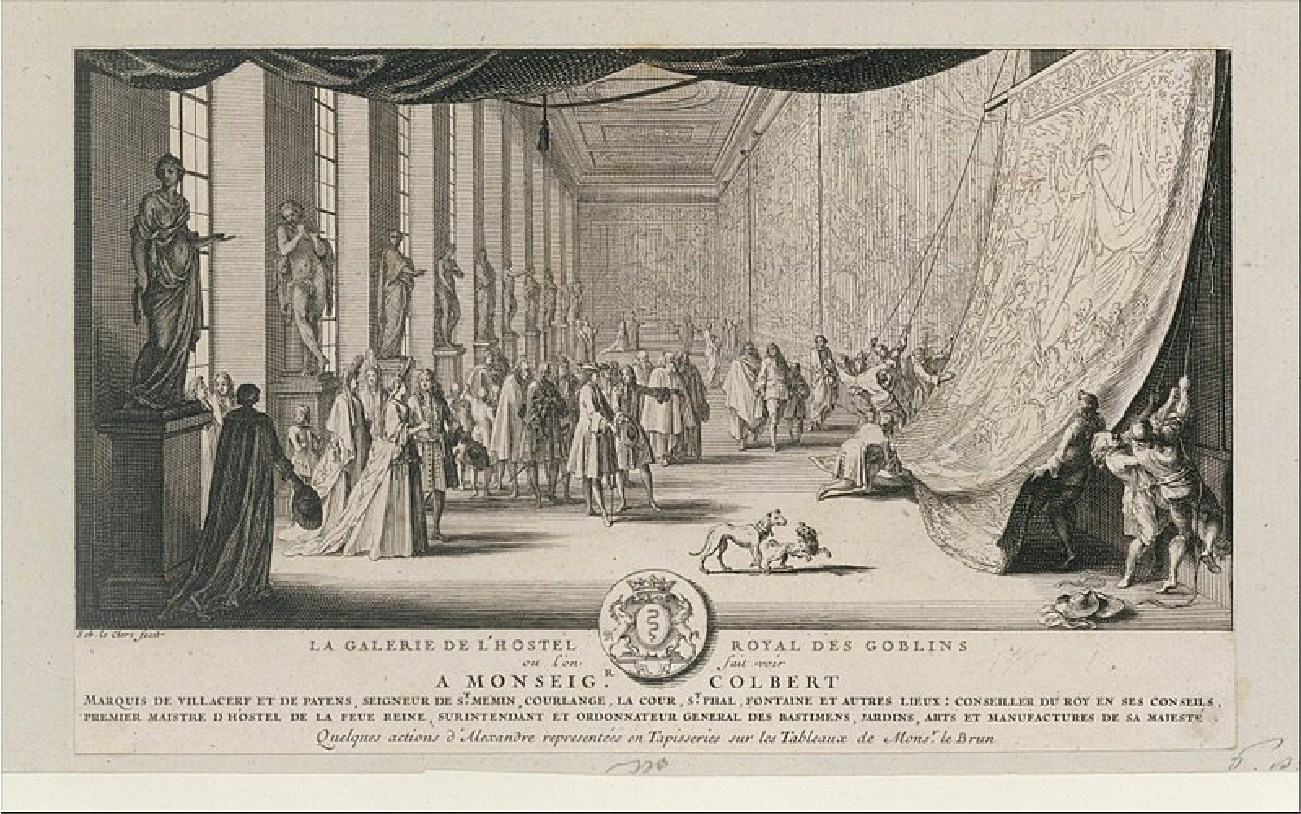
(credit: “Colbert Visiting the Gobelins” by Metropolitan Museum of Art, Harris Brisbane Dick Fund, 1953/Wikimedia Commons, CC0 1.0) · CC0 1.0
Figure 5.17 Under King Louis XIV and his chief minister Jean-Baptiste Colbert, the Gobelins fine furnishings factory began operating on behalf of the Crown in 1662. This etching from a few years later shows Colbert visiting the factory’s tapestry-making operation. (credit: “Colbert Visiting the Gobelins” by Metropolitan Museum of Art, Harris Brisbane Dick Fund, 1953/Wikimedia Commons, CC0 1.0)
図5.17 ルイ14世と首席大臣ジャン=バティスト・コルベールの下で、ゴブラン高級調度品工場は1662年に王室のための操業を始めた。数年後のこのエッチングは、コルベールがタペストリー製作を視察する様子を示す。(クレジット:メトロポリタン美術館、ハリス・ブリスベン・ディック基金、1953年/Wikimedia Commons「ゴブランを訪れるコルベール」、CC0 1.0)
Colbert established a merchant marine to carry French goods abroad for trade, reducing the nation’s reliance on ships from other countries. By ensuring that the pay for transporting these goods went to the ships’ French captains and owners, he helped to keep wealth within the nation. Because the merchant marine could be called upon in time of war, Colbert had thus also strengthened France’s ability to engage in armed conflict with foreign powers.
英語のヒント
コルベールはフランス製品を海外へ運んで交易する商船隊を整備し、他国の船舶への依存を減らした。輸送の代金をフランス人船長や船主に渡るようにすることで、富を国内にとどめる助けとしたのである。商船隊は戦時に動員することもできたため、これによってフランスが外国勢力と武力紛争を行う能力も強めた。
Mercantilist theory influenced England and the Netherlands too. Although England’s Parliament did not exert as much control over its economy as the monarchy exerted in France, it nevertheless took steps to promote English trade and discourage the importation of foreign goods. Tariffs were placed on foreign products, and in the second half of the seventeenth century, laws were passed requiring that all ships bringing goods to England have English owners and a predominantly English crew. The Dutch adopted the mercantilist strategy of exporting high-quality goods, especially cloth, iron tools, and guns, to make up for the money the resource-poor country spent on raw materials supplied by other nations.
英語のヒント
重商主義理論はイングランドとオランダにも影響した。イングランド議会の経済統制力は、フランス王権ほど強くはなかったが、それでも自国の交易を振興し、外国品の輸入を抑える措置を取った。外国製品に関税が課され、17世紀後半には、イングランドへ物資を運ぶすべての船について、船主がイングランド人で、乗組員の大多数もイングランド人であることを求める法律が制定された。資源の乏しいオランダは、他国の原材料に費やす金を埋め合わせるため、特に布、鉄製道具、銃などの高品質品を輸出する重商主義的戦略を採った。
Like France, both England and the Netherlands granted monopolies on foreign trade to private companies—the British East India Company and the Dutch East India Company. The purpose was to prevent competition among merchants that might drive up the prices they were willing to pay for foreign goods and drive down the prices they charged for domestic goods sold abroad. To increase their access to raw materials and establish new markets for their goods, the Dutch, English, and French, noting the success of Spain and Portugal, also set out to establish colonies in the Americas. A colonial empire seemed essential to securing national wealth and power.
英語のヒント
フランスと同じく、イングランドとオランダも、対外貿易の独占権を民間企業、すなわちイギリス東インド会社とオランダ東インド会社に与えた。目的は、商人同士の競争を防ぐことだった。競争があれば、外国の商品に払おうとする価格が上がり、海外で売る自国商品に付ける価格が下がりかねなかった。原材料をより多く入手し、商品に新たな市場を設けるため、オランダ、イングランド、フランスも、スペインとポルトガルの成功に注目してアメリカ大陸の植民地建設に乗り出した。植民地帝国は、国家の富と力を確保するために不可欠と思われた。