第5章大西洋世界の形成Foundations of the Atlantic World
5.2 Crossing the Atlantic5.2 大西洋を渡る
Learning Objectives学習の目標
By the end of this section, you will be able to:
この節を学ぶと、次のことができるようになる。
Explain how technological innovations in the fifteenth century made transatlantic journeys possible
15世紀の技術革新が、大西洋横断の航海をどのように可能にしたか説明する。
Discuss the motives for Spanish and Portuguese exploration in the Americas
アメリカ大陸におけるスペインとポルトガルの探検の動機を論じる。
Analyze the impact of the Treaty of Tordesillas on the Atlantic World
トルデシリャス条約が大西洋世界に与えた影響を分析する。
Describe the physical and cultural ramifications of the Columbian Exchange
コロンブス交換がもたらした、物理的・文化的な波及効果を説明する。
During the European Middle Ages, the Middle East and North Africa entered a golden age of learning. As Europeans increasingly made connections with peoples across the Mediterranean and in Central and East Asia, ideas from this golden age trickled back to them that influenced sailors, explorers, and shipbuilders. Then, in the fifteenth and sixteenth centuries, innovators in navigation and exploration pushed Europeans to expand their trade networks across the globe and connect with new places and peoples. The most notable voyages of this period, known as the Age of Exploration, were the transatlantic voyages of Genoese explorer Christopher Columbus in the 1490s, underwritten by King Ferdinand and Queen Isabella of Spain.
英語のヒント
ヨーロッパの中世に、中東と北アフリカは学問の黄金時代を迎えた。ヨーロッパ人が地中海の向こうや中央・東アジアの人々とのつながりを深めるにつれ、この黄金時代の思想が少しずつ伝わり、船乗り、探検家、造船業者に影響を与えた。そして15〜16世紀、航海術や探検の革新者たちは、ヨーロッパ人が交易網を地球全体へ広げ、新しい土地や人々と結びつくのを促した。大航海時代と呼ばれるこの時期で最も注目すべき航海は、1490年代にジェノヴァ出身の探検家クリストファー・コロンブスが行った大西洋横断である。資金はスペインのフェルナンド王とイサベル女王が負担した。
The Rise of Maritime Nations海洋国家の台頭
Christopher Columbus’s 1492 voyage did not represent the first contact between European explorers and Indigenous peoples on the North American continent. Through archaeological and historical research, historians can now date that contact to nearly five hundred years before Columbus reached his first stop in the Caribbean.
英語のヒント
1492年のクリストファー・コロンブスの航海は、ヨーロッパの探検家と北アメリカ大陸の先住民の最初の接触ではなかった。考古学的・歴史学的研究によって、歴史家は現在、その接触を、コロンブスがカリブ海の最初の寄港地に到達する約500年前に位置づけることができる。
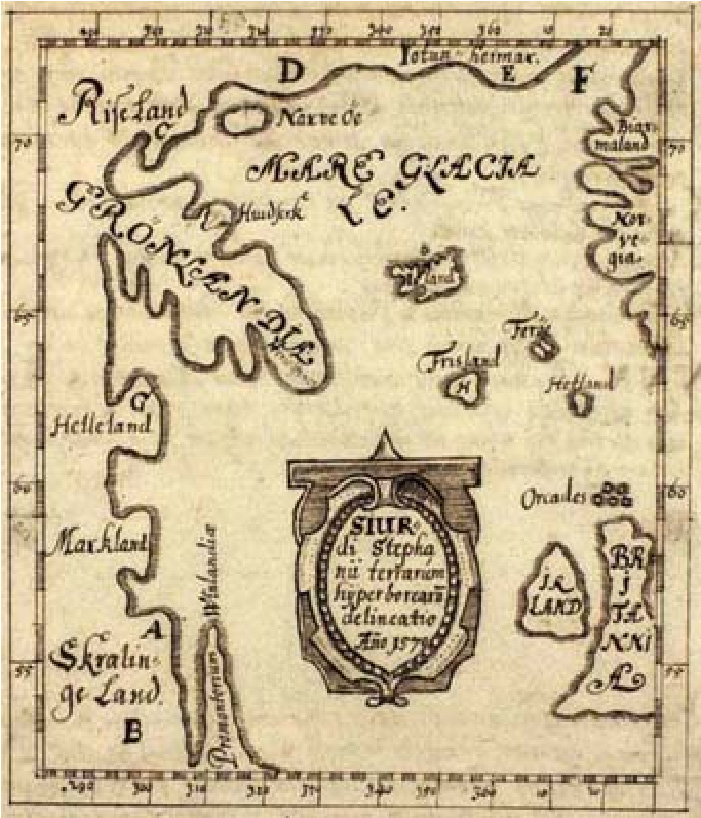
In the early 1000s, Leif Erikson, a Viking explorer living in Greenland, heard from fellow explorer Bjarni Herjólfsson that another land lay only a few hundred miles to the west. In a journey during which he was blown off course, Erikson found a land to the west that he called Vinland, for the grapes that grew near its shores. He stayed there only through the winter, never making direct contact with the Indigenous peoples and returning to Greenland in the spring. His brother Thorvald was the first to make contact, which ended in violent conflict and the deaths of several Native Americans and Thorvald himself. In a third exploration, men and women of Erikson’s family encountered the Indigenous people of Vinland again but maintained peace, creating a small but steady relationship with them based on trade (Figure 5.6).
英語のヒント
1000年代初め、グリーンランドに暮らすヴァイキングの探検家レイフ・エリクソンは、仲間の探検家ビャルニ・ヘルヨルフソンから、西へわずか数百マイルの所に別の土地があると聞いた。航海中に風で針路を外れたエリクソンは、西の土地を見つけ、海岸近くにブドウが育っていたことから、ヴィンランドと名付けた。彼は冬の間だけ滞在し、先住民と直接接触することなく、春にグリーンランドへ戻った。最初に接触したのは兄弟のトールヴァルドであったが、暴力的な衝突に終わり、数人の先住民とトールヴァルド自身が死亡した。三度目の探検では、エリクソンの一族の男女が再びヴィンランドの先住民に出会ったが、平和を保ち、交易を基盤に小規模ながら安定した関係を築いた(図5.6)。
North America as Seen by the Norse.ノース人から見た北アメリカ。
(credit: “Skálholt-map” by Sigurd Stefánsson/Wikimedia Commons, Public Domain) · Public Domain
Figure 5.6 An Icelandic map from 1690 shows North America with Norse (medieval Scandinavian) place names, like Markland (Labrador Peninsula) and Helluland (Baffin Island). (credit: “Skálholt-map” by Sigurd Stefánsson/Wikimedia Commons, Public Domain)
図5.6 1690年のアイスランドの地図には、マルクランド(ラブラドル半島)、ヘルルランド(バフィン島)など、ノース人、すなわち中世スカンディナヴィアの人々の地名で北アメリカが示されている。(クレジット:シグルズ・ステファーンソン/Wikimedia Commons「スカールホルト地図」、パブリックドメイン)
The Viking explorers referred to these Indigenous peoples as Skraelings. Scholars are not sure which Indigenous group they belonged to, but twentieth-century archaeological digs in Nova Scotia have verified much of the information found in the Icelandic sagas of Vinland. In the 1960s, explorers Helge and Anne Ingstad discovered in Newfoundland, Canada, the buried ruins of a Viking camp from around the time of Erikson’s explorations, in a place called L’Anse aux Meadows. This find definitively proved at last that the Norse had traveled to the Americas before Columbus. Over the years, it has been suggested that other people besides the Vikings also discovered the Americas before Columbus, including Irish monks, African sailors, and Chinese members of Admiral Zheng He’s treasure fleet. There is no widely accepted proof of any of these voyages, however.
英語のヒント
ヴァイキングの探検家たちは、これらの先住民をスクレリングと呼んだ。どの先住民集団だったかは学者にも確かではないが、20世紀のノヴァスコシアでの考古学的発掘は、ヴィンランドについてのアイスランドのサガに見られる情報の多くを裏付けた。1960年代、探検家ヘルゲとアン・イングスタッドは、カナダのニューファンドランドのランス・オ・メドーと呼ばれる場所で、エリクソンの探検のころにさかのぼる、地中に埋もれたヴァイキングの野営地跡を発見した。この発見は、ノース人がコロンブスより前にアメリカ大陸へ渡ったことを、ついに決定的に証明した。これまで、アイルランドの修道士、アフリカの船乗り、鄭和の宝船艦隊の中国人乗組員など、ヴァイキング以外の人々もコロンブスより先にアメリカ大陸を発見したという説が出されてきた。しかし、これらの航海を裏付ける、広く認められた証拠はない。
The settlements in Newfoundland never became permanent, likely because Indigenous groups developed an increasing hostility toward the often-violent Vikings. By the 1400s, the frontier colonies of Greenland populated by Norse peoples had also all but disappeared. But knowledge of a land farther west survived in the Norse sagas, and it is possible that it trickled across Europe into Italy and Spain and eventually into the mind of a young Christopher Columbus.
英語のヒント
ニューファンドランドの入植地は、永続的なものにはならなかった。しばしば暴力的だったヴァイキングに対し、先住民集団の敵意が増したためと考えられる。1400年代までには、ノース人の暮らすグリーンランドの辺境植民地も、ほぼ姿を消していた。しかし、さらに西に土地があるという知識はノース人のサガに残り、ヨーロッパを少しずつ伝わってイタリアやスペインへ達し、やがて若いクリストファー・コロンブスの頭に入った可能性がある。
In the meantime, with the collapse of Constantinople and the fall of the Byzantine Empire to the Ottomans in 1453, many Europeans felt a sense of doom. Not only had they lost a bastion of Christian power, but Muslims now controlled their tenuous overland connections to South and East Asia. As a result, they now had to go through Muslim intermediaries to purchase valuable spices such as cinnamon, pepper, cloves, and nutmeg that grew in only a few key locations. European nations, therefore, wanted to find an all-water passage to India and the chain of sparsely populated Indonesian islands known as the Spice Islands.
英語のヒント
一方、1453年にコンスタンティノープルが陥落し、ビザンツ帝国がオスマン帝国に滅ぼされると、多くのヨーロッパ人は破滅の予感を抱いた。キリスト教勢力の砦を失っただけでなく、南・東アジアとの細い陸上のつながりを、今やムスリムが支配したのである。その結果、シナモン、コショウ、クローブ、ナツメグなど、限られた産地でしか育たない貴重な香辛料を買うには、ムスリムの仲介者を通さなければならなくなった。そのためヨーロッパ諸国は、インドと、香料諸島として知られる人口のまばらなインドネシアの島々へ、すべて海で行ける航路を見つけようとした。
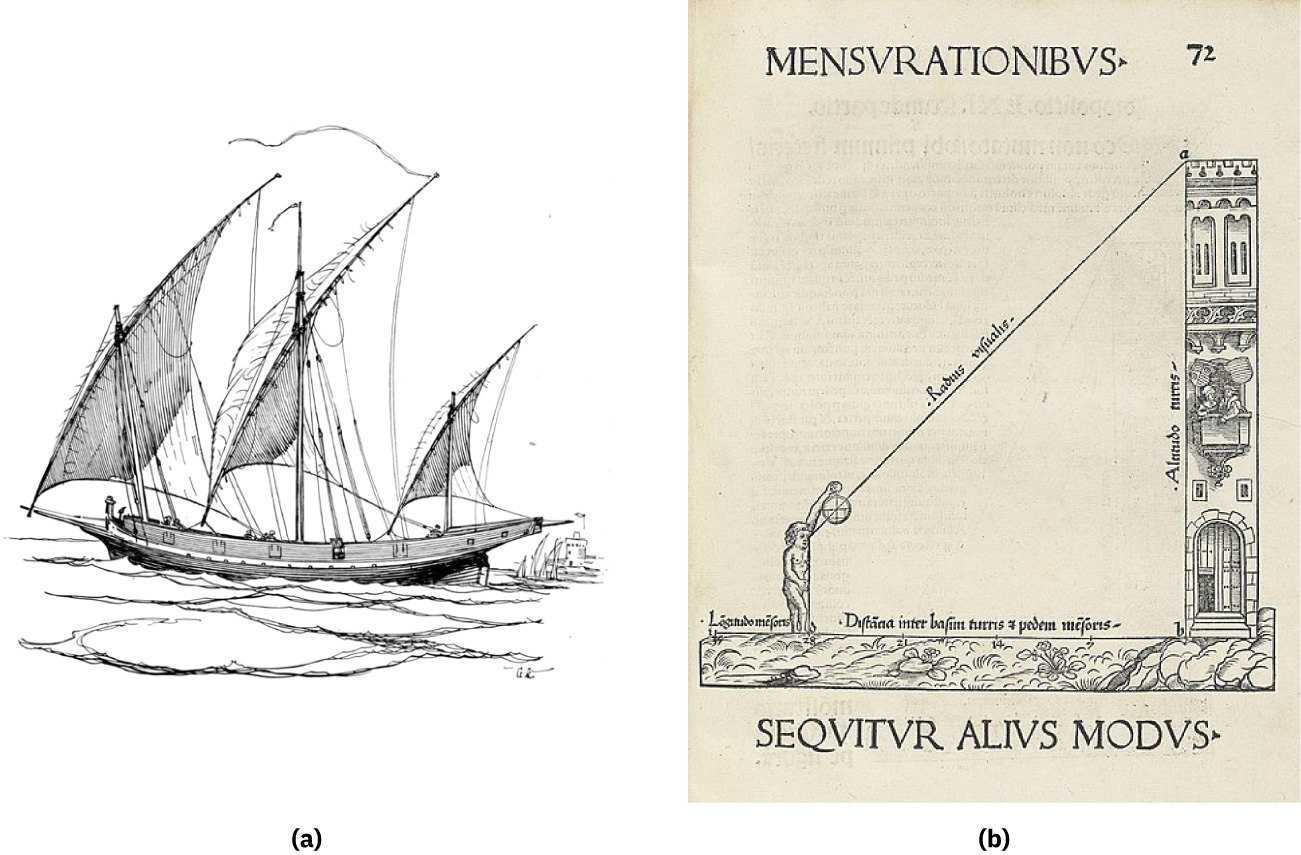
In the fifteenth century, Europe experienced a timely navigational revolution as a result of adopting new non-Western maritime technologies. In the first millennium CE, Arab sailors in the Middle East had created the lateen sail, a triangular sail that allowed ships to travel against the wind. The square European sail gave ships power, but the lateen sail increased their ability to maneuver. When Europeans combined the two kinds of sail on three-masted ships, they could navigate confidently in any direction. The sternpost rudder, created in China in the thirteenth century, also allowed for steering against the currents. For directional guidance, the ancient Greek astrolabe, which used constellations as a guide and enabled mariners to find their north–south position on the earth’s surface, came to Europe after being refined in the Middle East (Figure 5.7). The magnetic compass also came to Europe in the fifteenth century, making its way from China where it was guiding ships by 1100 CE. The adoption of these inventions allowed Europeans to abandon their long-standing practice of navigating by sailing along a coastline. Now they could venture into the open ocean, beyond sight of land.
英語のヒント
15世紀のヨーロッパでは、非西洋の新しい海洋技術を採り入れたことで、時宜にかなった航海上の革命が起きた。西暦1〜1000年の間に、中東のアラブの船乗りは、風に逆らって進むことを可能にする三角形のラテン帆を作っていた。ヨーロッパの四角い帆は推進力を与えたが、ラテン帆は操船の自由度を高めた。ヨーロッパ人が3本マストの船で両種の帆を組み合わせると、どの方向にも確信を持って航行できるようになった。13世紀の中国で作られた船尾舵も、流れに逆らってかじを取ることを可能にした。方向を知る道具としては、古代ギリシアのアストロラーベが、中東で改良された後、ヨーロッパへ伝わった。これは星座を手がかりに、地表での南北方向の位置を船乗りが知ることを可能にした(図5.7)。磁気羅針盤も15世紀にヨーロッパへ届いた。1100年までには船を導くのに使われていた中国から伝わったのである。これらの発明の採用により、ヨーロッパ人は海岸沿いに船を進めて航海する長年の慣行を捨てることができた。今や、陸が見えない外洋へ乗り出せるようになった。
Technological Advances in Navigation.航海技術の進歩。
(credit a: modification of work “Lateen Sails” by Pearson Scott Foresman/Wikimedia Commons, Public Domain; credit b: modification of work “Elucidatio fabricae usuque astrolabii ... Ex secunda autoris recognition” by Johannes Stöffler/ Wikimedia Commons, Public Domain) · Public Domain
Figure 5.7 (a) Lateen sails like the ones in this drawing enabled ships to sail into the wind. (b) Astrolabes, instruments used for measuring slope and elevation, aided in navigation. In this sixteenth-century illustration, a man measures the height of a building using an astrolabe. (credit a: modification of work “Lateen Sails” by Pearson Scott Foresman/Wikimedia Commons, Public Domain; credit b: modification of work “Elucidatio fabricae usuque astrolabii ... Ex secunda autoris recognition” by Johannes Stöffler/ Wikimedia Commons, Public Domain)
図5.7 (a) 図のようなラテン帆は、風に向かって航行することを可能にした。(b) 傾斜や高度を測る器具であるアストロラーベは、航海を助けた。この16世紀の図では、男性がアストロラーベで建物の高さを測っている。(a:ピアソン・スコット・フォアズマン/Wikimedia Commons「ラテン帆」を改変、パブリックドメイン。b:ヨハネス・シュテフラー/Wikimedia Commons「アストロラーベの製作と使用の解説……著者による第2次改訂版」を改変、パブリックドメイン)
However, technological advancements and a desire for expanded trade and territory could take explorers only so far without financial backing. The commercial empire that funded European overseas exploration began in the Italian city-states of the Middle Ages, but the investment system on which it was based did not originate there. This system, called commenda, established a sort of financial patronage by which investors funded merchants to expand their trading enterprises and earned a more extensive business network in the process. Like many of the technologies that drove European ships, the commenda was first developed by Muslim merchants.
英語のヒント
しかし、資金の裏付けがなければ、技術の進歩や交易・領土拡張への願望だけで探検家が進める距離には限界があった。ヨーロッパの海外探検に資金を供給した商業的な勢力は、中世のイタリア都市国家に始まったが、その基盤となる投資制度は、そこで生まれたわけではなかった。コメンダと呼ばれたこの制度は、一種の資金援助の仕組みを設けた。投資家は商人の交易事業の拡張に資金を出し、その過程で、より広い商業ネットワークを獲得した。ヨーロッパの船を動かした多くの技術と同様、コメンダを最初に発達させたのもムスリム商人であった。
By the late fifteenth century, Italian city-states were supporting a variety of small family-owned businesses and large companies. Capital was concentrated in land and commerce rather than in industrial pursuits, but credit was widely used. Across Europe, risk-sharing business ventures and joint investment schemes were already commonplace among merchants. Spain, which Muslim rulers had conquered and settled, had connections across the Mediterranean to Africa and the Middle East, while northern and central Europe wielded a sprawling maritime exchange across the North and Baltic Seas.
英語のヒント
15世紀末までに、イタリアの都市国家は、さまざまな小規模の家族経営事業や大企業を支えていた。資本は工業活動よりも土地と商業に集中していたが、信用取引は広く使われていた。ヨーロッパ各地の商人の間では、危険を分担する事業や共同投資の仕組みが、すでに普通になっていた。ムスリムの支配者が征服・定住したスペインは、地中海を越えてアフリカや中東とのつながりを持っていた。一方、北・中央ヨーロッパは、北海とバルト海にまたがる広範な海上交易を展開していた。