第5章大西洋世界の形成Foundations of the Atlantic World
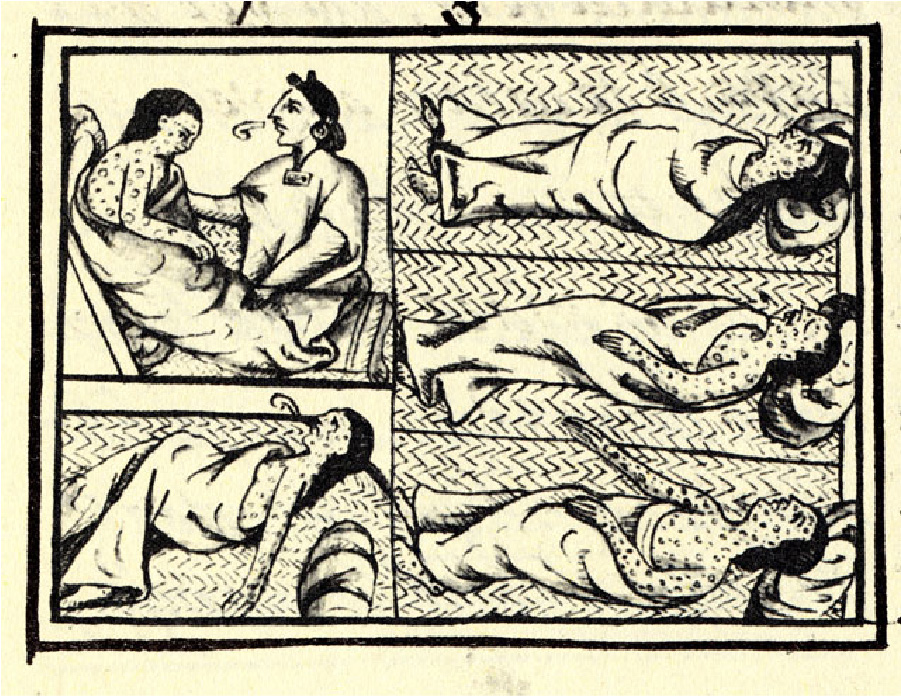
Deadly pathogens also made the crossing to the Americas and caused one of the worst disease-based disasters in history. Given limited understanding of epidemic science, no one realized that native peoples had virtually none of the resistance and immunity Europeans had developed to infectious diseases, because the animals that originally spawned them (and from which they had jumped to humans) simply did not exist in the Americas (Figure 5.15). When these diseases were brought by Europeans and the enslaved Africans who often accompanied them, native peoples without natural immunity who contracted them experienced a death rate that some scholars estimate was as high as 95 percent.
英語のヒント
致死的な病原体もアメリカ大陸へ渡り、歴史上最悪級の、病気による災厄を引き起こした。感染症の流行についての科学的理解が限られていたため、ヨーロッパ人が身につけていた感染症への抵抗力や免疫を、先住民がほとんど持たないことには誰も気づかなかった。感染症をもともと生み、人間への感染源となった動物が、アメリカ大陸には存在しなかったからである(図5.15)。ヨーロッパ人と、しばしば彼らに伴った奴隷化されたアフリカ人が病気を持ち込むと、自然免疫のない先住民の感染者は、一部の学者の推定では95%にも達する死亡率を経験した。
The Spread of Disease in the Americas.アメリカ大陸での病気の蔓延。
(credit: “Florentine Codex BK12 F54 smallpox” by Biblioteca Medicea Laurenziana, Florence/Wikimedia Commons, Public Domain) · Public Domain
Figure 5.15 This fifteenth-century image from the Florentine Codex captures the misery experienced by the Indigenous peoples of Mexico following the spread of infectious disease. (credit: “Florentine Codex BK12 F54 smallpox” by Biblioteca Medicea Laurenziana, Florence/Wikimedia Commons, Public Domain)
図5.15 『フィレンツェ絵文書』のこの15世紀の図は、感染症の広がりの後、メキシコの先住民が経験した苦難をとらえている。(クレジット:フィレンツェのメディチ・ラウレンツィアーナ図書館/Wikimedia Commons「フィレンツェ絵文書、第12書54葉、天然痘」、パブリックドメイン)
Lack of exposure to European livestock or European diseases is not the sole reason the Indigenous peoples of the Americas died in such large numbers, however. Smallpox, typhus, measles, bubonic plague, influenza, salmonella, and other diseases took the lives of millions of people throughout the Americas because of the destruction wrought by Europeans. European settlers often allowed their livestock to roam loose, and these animals, especially hogs, wreaked havoc on the crops planted by Indigenous peoples. In places where the Spanish conducted slave raids, Indigenous people often went into hiding, refusing to venture out to farm, fish, or tend their fields for fear of being captured. The resulting malnutrition weakened their immune systems, making it harder for them to fight off infectious diseases, even those with which their bodies were familiar. In heavily settled, densely populated regions, infectious diseases spread rapidly. Bodies weakened by one disease easily succumbed to subsequent infections.
英語のヒント
しかし、ヨーロッパの家畜や病気に接したことがなかったことだけが、アメリカ先住民の大量死の理由ではない。天然痘、発疹チフス、はしか、腺ペスト、インフルエンザ、サルモネラ症、その他の病気がアメリカ大陸全体で何百万人もの命を奪ったのは、ヨーロッパ人がもたらした破壊のためでもあった。ヨーロッパ人入植者はしばしば家畜を放し飼いにし、その動物、特に豚が、先住民の植えた作物を荒らし回った。スペイン人が奴隷狩りを行う場所では、先住民はしばしば身を隠し、捕らえられることを恐れて、耕作、漁、畑の手入れに外へ出ようとしなかった。その結果の栄養失調が免疫系を弱め、体になじみのある病気でさえ、感染症を撃退することを難しくした。入植が進み人口が密集した地域では、感染症は急速に広まった。一つの病気で弱った体は、その後の感染症に容易に屈した。
Other factors also contributed to depopulation across the Western continents. Groups intent on colonizing, such as the Spanish in New Spain, wanted to establish economies that exported wealth and materials to the home country. To that end, the infrastructure they built intentionally depleted local environments and deprived Indigenous peoples of the natural resources within their lands, including fertile soil, water, timber, and precious metals. When Indigenous populations did not accept these economic conditions, they were met with violence against themselves and their families.
英語のヒント
西半球の大陸全体の人口減少には、他の要因も寄与した。ヌエバ・エスパーニャのスペイン人など、植民地化を目指す集団は、富と物資を本国へ輸出する経済を築こうとした。その目的で建設した基盤施設は、意図的に現地の環境を消耗させ、肥沃な土壌、水、木材、貴金属など、領内の天然資源を先住民から奪った。先住民がこうした経済条件を受け入れないと、本人や家族に対する暴力で応じられた。
Given violence, exile, enslavement, and a high death rate from disease, the original inhabitants of the Western Hemisphere experienced a cataclysm during the sixteenth century. They still resisted European incursions, however, beginning a centuries-long struggle with echoes in the present day. Within a few months of his exploring the Caribbean region, for example, Native leaders began directing Columbus to other islands, deflecting the negative consequences that followed the arrival of Europeans. Sometimes Indigenous groups chose violence to resist European violence.
英語のヒント
暴力、追放、奴隷化、病気による高い死亡率によって、西半球のもともとの住民は16世紀に大災厄を経験した。それでも彼らはヨーロッパ人の侵入に抵抗し、今日にも影響が響く、何世紀にもわたる闘争を始めた。例えば、コロンブスがカリブ海を探検し始めて数か月以内に、先住民の指導者たちは彼を他の島へ誘導し始めた。ヨーロッパ人の到来に伴う悪影響を、そちらへそらすためである。ときには、先住民集団はヨーロッパ人の暴力に抵抗するため、暴力を選んだ。
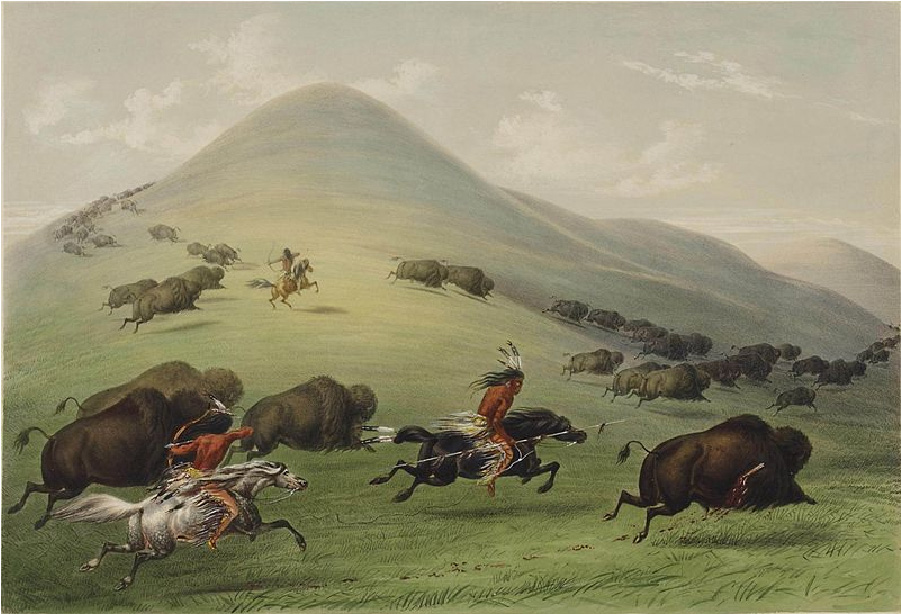
Not all Indigenous peoples reacted with violence, however. During the often-brutal colonization of the Western Hemisphere, many systems of gender, religious beliefs, and societal organization that existed in the Americas did collapse, while others merged or changed, creating new hybrid societies across the American continents and the Caribbean islands. But many Indigenous groups chose to incorporate facets of European material culture, such as tools and weapons, into their own in ways that allowed for their survival. For example, the Comanche, a largely hunter-gatherer group, adopted the Spanish horses brought by the conquistadors (Figure 5.16). Within a few generations, the combination of horses and metal weaponry transformed the Comanche into an empire that negotiated as equals with the Spanish, the British, and the French.
英語のヒント
しかし、すべての先住民が暴力で反応したわけではない。西半球の、しばしば残虐な植民地化の間に、アメリカ大陸にあったジェンダー、宗教信仰、社会組織の多くの制度は確かに崩壊した。一方で、融合・変化し、アメリカ大陸各地とカリブ海の島々に新たな混合社会を作ったものもあった。しかし多くの先住民集団は、道具や武器などヨーロッパの物質文化の側面を、自らの生存を可能にする形で、自分たちの文化に取り込むことを選んだ。例えば、おもに狩猟採集を行うコマンチは、コンキスタドールが持ち込んだスペインの馬を採用した(図5.16)。数世代のうちに、馬と金属兵器の組み合わせはコマンチを一つの帝国に変え、スペイン、イギリス、フランスと対等に交渉するまでになった。
Hunting Bison on Horseback.馬上でバイソンを狩る。
(credit: “Buffalo hunt” by Catlin's North American Indian Portfolio/Wikimedia Commons, Public Domain) · Public Domain
Figure 5.16 In this 1844 hand-colored lithograph by George Catlin, North American Plains Indians pursue bison on horseback. Before the arrival of horses with the Spanish, a life on the Great Plains based entirely on the hunting of bison had not been possible. (credit: “Buffalo hunt” by Catlin's North American Indian Portfolio/Wikimedia Commons, Public Domain)
図5.16 ジョージ・カトリンによる1844年の手彩色石版画で、北アメリカの平原インディアンが馬でバイソンを追っている。スペイン人とともに馬が到来する前には、バイソン猟だけを基盤にグレートプレーンズで暮らすことは不可能だった。(クレジット:カトリン『北アメリカ・インディアン図集』/Wikimedia Commons「バッファロー狩り」、パブリックドメイン)
Finally, not all Atlantic commerce and settlement flowed from east to west. Indigenous people also took advantage of the Columbian Exchange and traveled to Europe seeking ways to help themselves and their people. By the seventeenth century, dozens of Indigenous negotiators had gone to Europe to appeal directly to the monarchs for aid and for military and economic benefits. Their efforts reveal the ways in which Indigenous groups all over the Atlantic World hoped to shape their future on their own terms.
英語のヒント
最後に、大西洋の商業と移住がすべて東から西へ流れたわけではない。先住民もコロンブス交換を利用し、自分や自らの民を助ける方法を求めてヨーロッパへ渡った。17世紀までに何十人もの先住民交渉者がヨーロッパへ赴き、君主たちに、援助や軍事的・経済的利益を直接訴えた。その努力は、大西洋世界全体の先住民集団が、自分たちの条件で未来を形作ろうと望んだ、その方法を明らかにしている。
Section Summary節のまとめ
With the fall of Constantinople to the Ottomans in 1453, Europeans found themselves forced to deal with Muslim middlemen to access the prized goods of South and East Asia. European countries thus began seeking an all-water route to the eastern lands they called the Indies, aided by navigational technologies from the Middle East and motivated by religious zeal and desire for profit. The Portuguese were the first to explore the Atlantic, claiming islands off the coast of Africa and voyaging down its western shore. In 1488, the Portuguese explorer Bartolomeu Dias rounded the Cape of Good Hope at the southern tip of Africa.
英語のヒント
1453年にコンスタンティノープルがオスマン帝国へ陥落すると、ヨーロッパ人は南・東アジアの珍重された品々を得るために、ムスリムの仲介商人と取引せざるを得なくなった。そのためヨーロッパ諸国は、中東の航海技術に助けられ、宗教的熱意と利益への欲求を動機として、インディーズと呼ぶ東方の土地へすべて海路で行く道を探し始めた。最初に大西洋を探検したのはポルトガル人で、アフリカ沖の島々の領有を主張し、アフリカ西岸を南下した。1488年、ポルトガルの探検家バルトロメウ・ディアスは、アフリカ南端の喜望峰を回った。
The Spanish monarchs Isabella I of Castille and Ferdinand II of Aragon financed the voyages of Christopher Columbus, who landed in the Caribbean in 1492 believing it was part of the Indies. He did not find great wealth there, but Spanish exploration continued. Hernán Cortés conquered the wealthy Aztec Empire in Mexico and Francisco Pizarro the silver-rich Inca Empire in Peru.
英語のヒント
スペインの君主、カスティーリャのイサベル1世とアラゴンのフェルナンド2世は、クリストファー・コロンブスの航海に資金を提供した。彼は1492年にカリブ海へ上陸し、そこをインディーズの一部と信じた。大きな富は見つからなかったが、スペインの探検は続いた。エルナン・コルテスはメキシコの富裕なアステカ帝国を、フランシスコ・ピサロはペルーの銀の豊かなインカ帝国を征服した。
To protect their respective interests, in 1494 Spain and Portugal negotiated the Treaty of Tordesillas, which drew a line through the Atlantic awarding the Americas, with the exception of Brazil, to Spain. Animals, foods, and other resources flowed in both directions along the Columbian Exchange, forever altering the culture and economies of North and South America, Europe, Asia, and Africa. Diseases also traveled west with the Europeans and wiped out as much as 95 percent of the Indigenous peoples in the Western Hemisphere. Both Europeans and Indigenous peoples had developed rich, diverse, and vastly different cultures, societies, and religions prior to contact.
英語のヒント
それぞれの利益を守るため、1494年、スペインとポルトガルはトルデシリャス条約を交渉した。条約は大西洋に線を引き、ブラジルを除くアメリカ大陸をスペインに与えた。動物、食物、その他の資源は、コロンブス交換を通じて双方向に流れ、南北アメリカ、ヨーロッパ、アジア、アフリカの文化と経済を永久に変えた。病気もヨーロッパ人とともに西へ渡り、西半球の先住民の最大95%を死に至らせた。接触以前から、ヨーロッパ人も先住民も、それぞれ豊かで多様で、互いに大きく異なる文化、社会、宗教を発達させていた。