第5章大西洋世界の形成Foundations of the Atlantic World
Portuguese Explorationポルトガルの探検
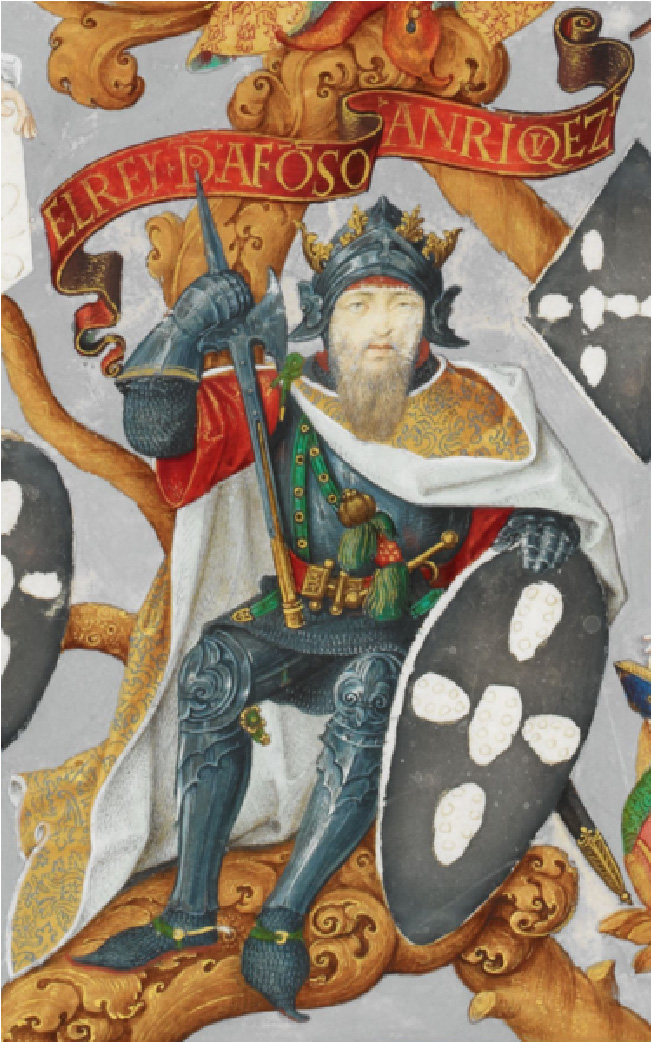
In the late 1400s, both Portugal and Spain were emerging from centuries of rule by North African Muslim states. Portugal had become an independent country by the twelfth century (Figure 5.8). At the beginning of the fifteenth century, it was a small country with poor soil. However, it did have one advantage—a geographical location that lent itself to exploration, specifically down the African coastline and across the Atlantic. Portugal also had plenty of coves and natural harbors suited for shipping, and speedy crosswinds and currents that gave it a shipping superhighway of sorts between northern and southern Europe. Various nearby islands such as the Azores also teemed with untapped fishing potential.
英語のヒント
1400年代末、ポルトガルとスペインはともに、北アフリカのムスリム諸国家による何世紀もの支配から抜け出しつつあった。ポルトガルは12世紀までに独立国となっていた(図5.8)。15世紀初めには、土壌の痩せた小国だった。しかし一つの利点は確かにあった。特にアフリカ沿岸を南下し、大西洋を横断する探検に適した地理的位置である。海運に向く入り江や天然の良港も多く、速い横風と海流が、北ヨーロッパと南ヨーロッパの間に、いわば海運の高速道路を与えた。アゾレス諸島など近隣の島々も、まだ利用されていない豊かな漁業の可能性に満ちていた。
Afonso Henriques.アフォンソ・エンリケス。
(credit: “King Afonso Henriques, first King of Portugal, in a 16th century miniature” in The Portuguese Genealogy (Genealogia dos Reis de Portugal)/British Library/Wikimedia Commons, Public Domain) · Public Domain
Figure 5.8 In this detail from a page in an illuminated manuscript of the 1530s, Afonso Henriques declares himself king of the independent country of Portugal following his victory over Muslim forces at the Battle of Ourique in 1139. (credit: “King Afonso Henriques, first King of Portugal, in a 16th century miniature” in The Portuguese Genealogy (Genealogia dos Reis de Portugal)/British Library/Wikimedia Commons, Public Domain)
図5.8 1530年代の彩飾写本の一ページの部分図。1139年のオーリケの戦いでムスリム軍を破った後、独立国ポルトガルの王であると宣言するアフォンソ・エンリケスを描く。(クレジット:『ポルトガル王家の系譜』/大英図書館/Wikimedia Commons「16世紀の細密画に描かれたポルトガル初代王アフォンソ・エンリケス」、パブリックドメイン)
In the 1340s, King Afonso IV of Portugal raised public funds to build a commercial fleet that by the fifteenth century had transformed the nation into a maritime power. In 1341, the Portuguese sailed to the Canary Islands in the Atlantic. This was only the beginning of their exploration and conquest. In 1415, John I, grandson of Afonso IV, dispatched Portuguese forces to capture the city of Ceuta in Morocco. John hoped that control of a port on the North African coast would open that continent to both conquest and trade. To further cement his control of the region, he requested papal recognition of his efforts. In April 1418, Pope Martin V granted the Portuguese king the right to all African lands taken from Muslim rulers.
英語のヒント
1340年代、ポルトガル王アフォンソ4世は公的資金を集めて商船隊を建設した。この船隊は、15世紀までに国を海洋勢力へと変えていた。1341年、ポルトガル人は大西洋のカナリア諸島へ航海した。これは探検と征服の始まりにすぎなかった。1415年、アフォンソ4世の孫ジョアン1世は、モロッコの都市セウタを占領するため、ポルトガル軍を派遣した。彼は、北アフリカ沿岸の港を支配すれば、その大陸を征服と交易の両方に開けると期待した。さらに地域支配を固めるため、取り組みに対する教皇の承認を求めた。1418年4月、教皇マルティヌス5世は、ムスリム支配者から奪ったアフリカのすべての土地に対する権利を、ポルトガル王に与えた。
Under John’s son Prince Henry, dubbed “the Navigator” by historians, Portuguese explorers claimed the Madeira Islands, the Azores, and the Cape Verde Islands off the coast of Africa. They also sailed down the western coast of Africa as far as today’s Sierra Leone. Eventually, Portuguese expeditions reached the southern tip of Africa, and in 1488, Bartolomeu Dias, who had participated in the Battle of Ceuta, sailed around the Cape of Good Hope to reach the eastern side of the continent.
英語のヒント
歴史家から「航海王子」と呼ばれたジョアンの息子エンリケの下で、ポルトガルの探検家は、マデイラ諸島、アゾレス諸島、アフリカ沖のカーボヴェルデ諸島の領有を主張した。また、アフリカ西岸を現在のシエラレオネまで南下した。やがてポルトガルの探検隊はアフリカ南端に達し、1488年には、セウタの戦いに参加したことのあるバルトロメウ・ディアスが、喜望峰を回って大陸東側へ到達した。
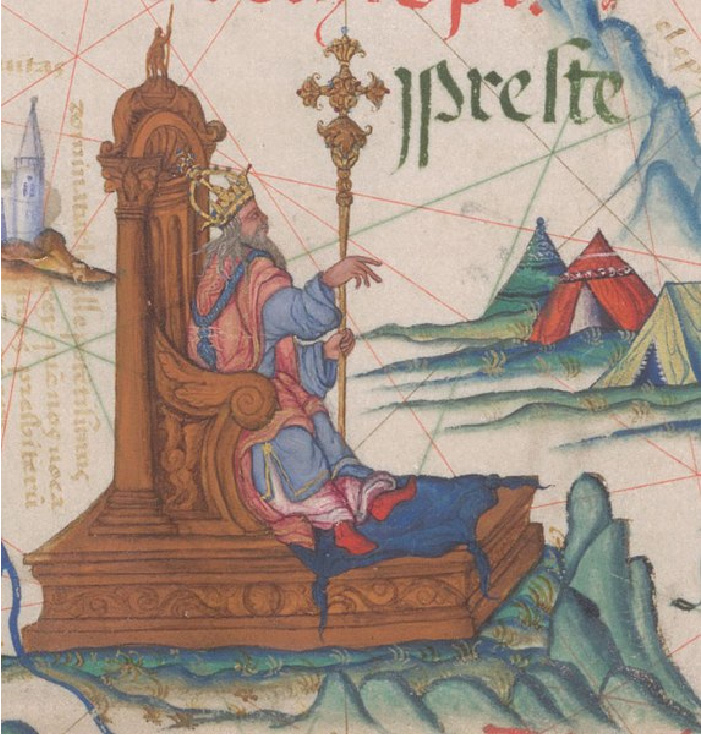
The Portuguese were driven by both religious fervor and a desire for wealth. Since the Middle Ages, they, like other Europeans, had been intrigued by stories of a lost Christian kingdom somewhere in Africa or Asia, ruled by a legendary king named Prester John (Figure 5.9). By the 1400s, they had come to believe his lands were located in Africa, and their hope of forming an alliance with him to defeat the forces of Islam helped motivate their exploration there.
英語のヒント
ポルトガル人を駆り立てたのは、宗教的な熱意と富への欲求の両方だった。中世以来、他のヨーロッパ人と同じく、彼らはアフリカかアジアのどこかにある、失われたキリスト教王国の話に魅了されていた。その王国を治めるのは、プレスター・ジョンという伝説の王だった(図5.9)。1400年代までに、その国はアフリカにあると信じるようになっていた。そして、彼と同盟を結び、イスラーム勢力を破りたいという望みが、アフリカ探検の動機の一つになった。
Prester John.プレスター・ジョン。
(credit: “East Africa with Prester John enthroned” by British Library/Wikimedia Commons, Public Domain) · Public Domain
Figure 5.9 This image of the mythical Christian ruler Prester John is a detail from an atlas created in the late 1550s by the Portuguese mapmaker Diogo Homem. (credit: “East Africa with Prester John enthroned” by British Library/Wikimedia Commons, Public Domain)
図5.9 伝説上のキリスト教支配者プレスター・ジョンのこの姿は、1550年代末にポルトガルの地図製作者ディオゴ・オーメンが作った地図帳の部分図である。(クレジット:大英図書館/Wikimedia Commons「玉座のプレスター・ジョンを配した東アフリカ」、パブリックドメイン)
The Portuguese also hoped to gain access to the wealth of Africa. As they moved southward along the continent’s coast, they established citadels on land leased from local rulers, like the fortress of Elmina, located on the coast of present-day Ghana. From there, they bartered for gold, ivory, and enslaved people. The first shipment of enslaved Africans arrived in Portugal in 1441. To further its economic interests, Portugal also established relations with the African kingdoms of Benin and Kongo. Its connection to Kongo, in what is now Angola, was particularly close. Members of Kongo’s ruling family and nobility converted to Roman Catholicism and adopted Portuguese names. Kongo became an important source of enslaved laborers, and its kings readily assisted the Portuguese in taking captives from enemy tribes. The Portuguese claim to the riches of African trade was affirmed in 1455 in the Romanus Pontifex, a papal decree issued by Pope Nicholas V that granted Portugal exclusive rights to trade in Africa south of Cape Bojador, on the coast of Morocco. The interests of the Africans who controlled these lands were not considered.
英語のヒント
ポルトガル人は、アフリカの富を手に入れることも望んだ。大陸の沿岸を南下しながら、現地支配者から借りた土地に砦を築いた。現在のガーナ沿岸のエルミナ要塞もその一つである。そこを拠点に、金、象牙、奴隷化された人々を物々交換で得た。奴隷化されたアフリカ人の最初の一団がポルトガルへ到着したのは、1441年だった。経済的利益をさらに拡大するため、ポルトガルはアフリカのベニン王国とコンゴ王国とも関係を結んだ。現在のアンゴラにあるコンゴとのつながりは特に密接だった。コンゴの王族や貴族はローマ・カトリックに改宗し、ポルトガル風の名を採用した。コンゴは奴隷労働者の重要な供給地となり、その王たちは、敵対する部族から捕虜を取るポルトガル人を積極的に助けた。アフリカ交易の富に対するポルトガルの権利の主張は、1455年に教皇ニコラウス5世が出した教皇勅書『ロマーヌス・ポンティフェクス』で確認された。この勅書は、モロッコ沿岸のボジャドール岬以南のアフリカで交易する独占的権利を、ポルトガルに与えた。これらの土地を支配していたアフリカ人の利益は考慮されなかった。
Spanish Explorationスペインの探検
Despite the Romanus Pontifex, the Spanish monarchs Isabella I of Castille and Ferdinand II of Aragon were not willing to allow Portugal to take the lead in establishing maritime trade with places outside Europe. By 1492, the final Muslim stronghold on the Iberian Peninsula had been defeated, and, no longer worried about the threat posed by the Muslim presence, Isabella and Ferdinand could turn to matters beyond the peninsula. In 1486, the Genoese navigator Christopher Columbus approached them with a request for funds for exploration. Columbus proposed that he could reach Asia by sailing westward across the Atlantic Ocean. Eager to find an all-water route to Asia to compete with the Portuguese, Isabella and Ferdinand agreed to his request. Like the Portuguese monarchs, they were also dedicated to spreading Christianity and combating the spread of Islam. Indeed, they regarded themselves as Europe’s foremost defenders of Roman Catholicism.
英語のヒント
『ロマーヌス・ポンティフェクス』にもかかわらず、スペインの君主、カスティーリャのイサベル1世とアラゴンのフェルナンド2世は、ヨーロッパ外との海上交易の確立でポルトガルが先行するのを、黙認するつもりはなかった。1492年までにイベリア半島最後のムスリム拠点が敗れ、その存在による脅威を心配する必要がなくなった二人は、半島外の問題へ目を向けられた。1486年、ジェノヴァの航海者クリストファー・コロンブスが、探検資金の提供を求めて二人に接近していた。彼は大西洋を西へ航海すればアジアに到達できると提案した。ポルトガルに対抗するため、アジアへすべて海路で行く道を見つけたかった二人は、その要請を受け入れた。ポルトガルの君主と同じく、キリスト教の布教とイスラームの拡大を防ぐことにも献身していた。実際、二人は自らを、ヨーロッパで最も重要なローマ・カトリックの擁護者と考えていた。
On August 3, 1492, Columbus set sail from Spain with three ships. After stopping briefly in the Canary Islands, he set off again on September 6. Five weeks later, he reached the Bahamas, which he believed were a part of Southeast Asia called the Indies. From there, he sailed to Cuba and an island Columbus named Hispaniola (meaning “little Spain”), the island now divided between the Dominican Republic and Haiti. Columbus made contact with the inhabitants of Hispaniola, whom he called “Indians.” Some welcomed the Europeans, who attempted to learn whether the inhabitants had gold, but one group, perhaps mistrusting the newcomers, engaged them in battle.
英語のヒント
1492年8月3日、コロンブスは3隻の船でスペインを出航した。カナリア諸島に短期間寄港した後、9月6日に再び船出した。5週間後にバハマ諸島へ達したが、彼はそこを、インディーズと呼ばれる東南アジアの一部だと信じた。そこからキューバ、そして自らイスパニョーラ、すなわち「小スペイン」と名付けた島へ航海した。この島は現在、ドミニカ共和国とハイチに分かれている。コロンブスはイスパニョーラの住民と接触し、彼らを「インディアン」と呼んだ。ヨーロッパ人は住民が金を持っているかを探ろうとし、住民の一部は彼らを歓迎した。しかし、ある集団は、おそらく新来者を信用せず、彼らと戦った。
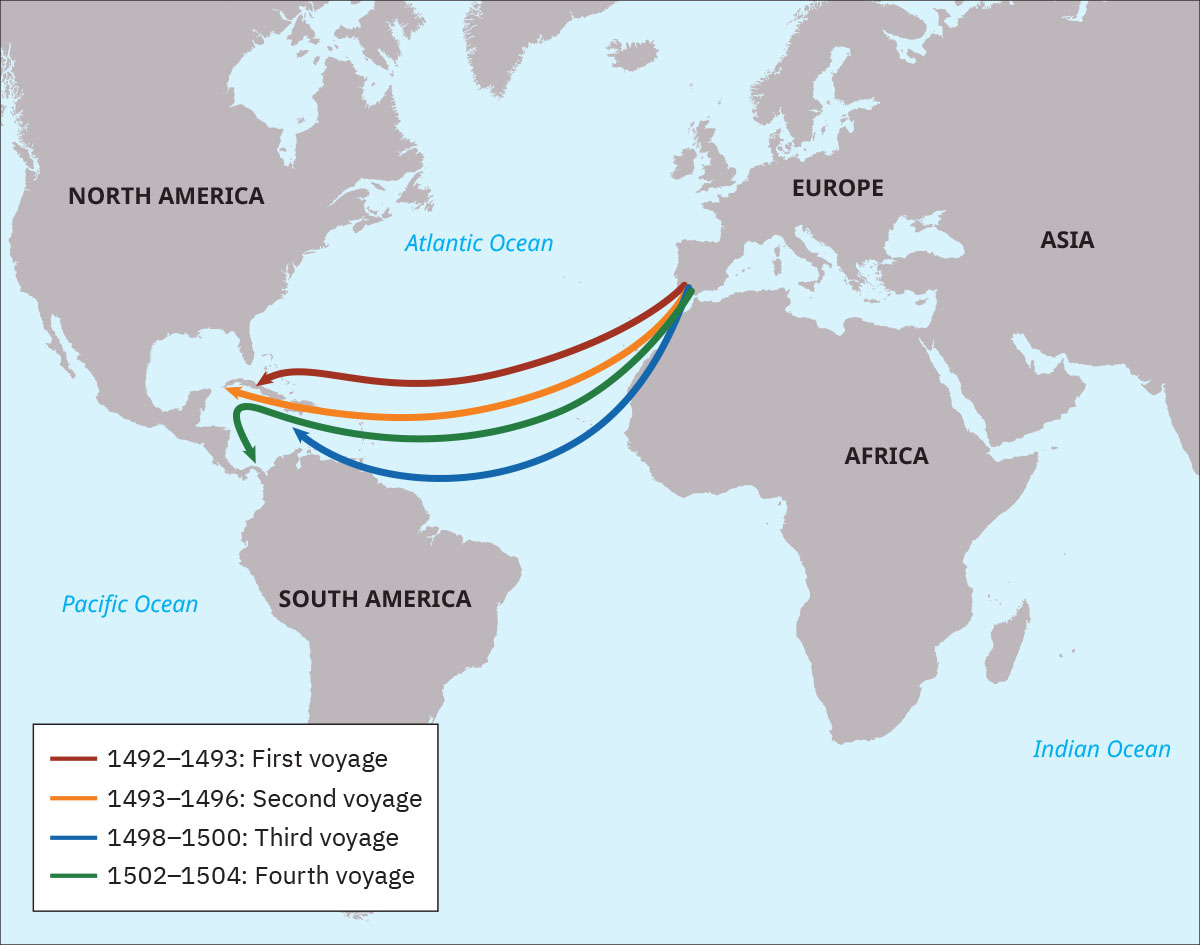
Leaving behind a handful of men to found a settlement on Hispaniola, Columbus and his crew departed for Europe, taking with them some Arawak people they had kidnapped. They arrived in Spain in 1493, with Columbus believing he had succeeded in reaching the Indies. He returned to the Americas three more times (Figure 5.10). On the third voyage, he explored the coast of Venezuela, which he was certain was part of the Asian mainland.
英語のヒント
イスパニョーラに入植地を設けるため少人数の男たちを残し、コロンブスと乗組員は、誘拐したアラワク人の数人を連れてヨーロッパへ出発した。1493年にスペインに到着したときも、コロンブスはインディーズへの到達に成功したと信じていた。その後、さらに3回アメリカ大陸へ戻った(図5.10)。3回目の航海ではベネズエラの海岸を探検し、それをアジア大陸の一部だと確信した。
The Voyages of Columbus.コロンブスの航海。
(attribution: Copyright Rice University, OpenStax, under CC BY 4.0 license) · CC BY 4.0
Figure 5.10 Christopher Columbus made four voyages between 1492 and 1504, all to the Caribbean. He continued to believe he had found a route to Asia. (attribution: Copyright Rice University, OpenStax, under CC BY 4.0 license)
図5.10 クリストファー・コロンブスは、1492〜1504年に4回航海し、いずれもカリブ海へ到達した。彼はアジアへの航路を発見したと信じ続けた。(出典表示:著作権ライス大学、OpenStax、CC BY 4.0ライセンス)
Soon, however, Europeans came to realize that the lands Columbus had found were new continents, which were then named the Americas after the Italian mapmaker Amerigo Vespucci, who accompanied later Spanish and Portuguese voyages to South America. This was the beginning of European colonialism in the Americas. Colonialism is a practice in which one group of people attempts to establish control over another, usually for purposes of economic exploitation. The lands in the Americas to which the Spanish, Portuguese, and other European nations laid claim in the fifteenth and sixteenth centuries were incorporated into the colonial empires these countries were beginning to build.
英語のヒント
しかしまもなく、ヨーロッパ人は、コロンブスが見つけた土地が新しい大陸であると気づくようになった。その大陸は、後のスペインやポルトガルの南アメリカ航海に同行したイタリアの地図製作者アメリゴ・ヴェスプッチにちなみ、アメリカと名付けられた。これがアメリカ大陸におけるヨーロッパの植民地主義の始まりだった。植民地主義とは、通常は経済的搾取を目的として、ある集団が別の集団を支配しようとする実践である。15〜16世紀にスペイン、ポルトガル、その他のヨーロッパ諸国が領有を主張したアメリカ大陸の土地は、それらの国が築き始めていた植民地帝国に組み込まれた。
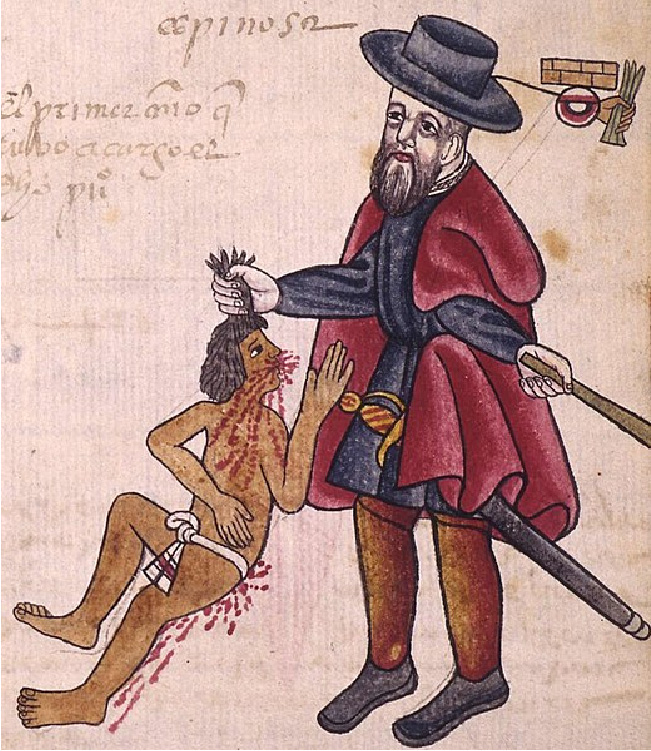
Columbus’s expeditions did not produce the riches the Spanish monarchs had hoped for. Nevertheless, Spain’s exploration of the new continents continued, led by conquistadors. Some of these explorers were nobles or had military training and had fought against the Muslims in Spain; others were landless and wished to improve their lot in life. One instrument by which the Spanish government compensated conquistadors was the encomienda, a hereditary grant that entitled the holder, called an encomendero, to the labor of a specified number of conquered people, or to a tribute of precious metals or agricultural produce. Although the Crown forbade the enslavement of Indigenous peoples, the encomienda system enabled their abuse at the hands of Spanish settlers who hoped to profit from their labor (Figure 5.11).
英語のヒント
コロンブスの探検は、スペインの君主が期待した富をもたらさなかった。それでも新大陸の探検は、コンキスタドールたちに率いられて続いた。これらの探検家には、貴族や軍事訓練を受け、スペインでムスリムと戦った者もいれば、土地を持たず、境遇を改善したい者もいた。スペイン政府がコンキスタドールに報酬を与える手段の一つが、エンコミエンダだった。これは世襲の付与権で、その保有者であるエンコメンデロに、征服された一定人数の労働、または貴金属や農産物の貢納を受ける権利を与えた。王室は先住民の奴隷化を禁じていたが、エンコミエンダ制度は、先住民の労働から利益を得ようとするスペイン人入植者による虐待を可能にした(図5.11)。
Abuses under the Encomienda System.エンコミエンダ制度下の虐待。
(credit: “An indigenous Mexican complaint against an abusive encomendero” by Codex Kingsborough/Wikimedia Commons, Public Domain) · Public Domain
Figure 5.11 This image is from the Codex Tepetlaoztoc (also known as the Codex Kingsborough), a sixteenth-century pictorial account by an Indigenous chronicler. It shows a Spanish encomienda holder beating an Indigenous man. The image was used as evidence in a lawsuit brought by Indigenous workers against the encomenderos. (credit: “An indigenous Mexican complaint against an abusive encomendero” by Codex Kingsborough/Wikimedia Commons, Public Domain)
図5.11 この図は、先住民の年代記作者による16世紀の絵画記録『テペトラオストク絵文書』、別名『キングズバラ絵文書』の一部である。スペイン人のエンコミエンダ保有者が先住民男性を殴る姿を示す。この図は、先住民労働者がエンコメンデロを訴えた裁判の証拠として使われた。(クレジット:『キングズバラ絵文書』/Wikimedia Commons「虐待するエンコメンデロに対するメキシコ先住民の訴え」、パブリックドメイン)
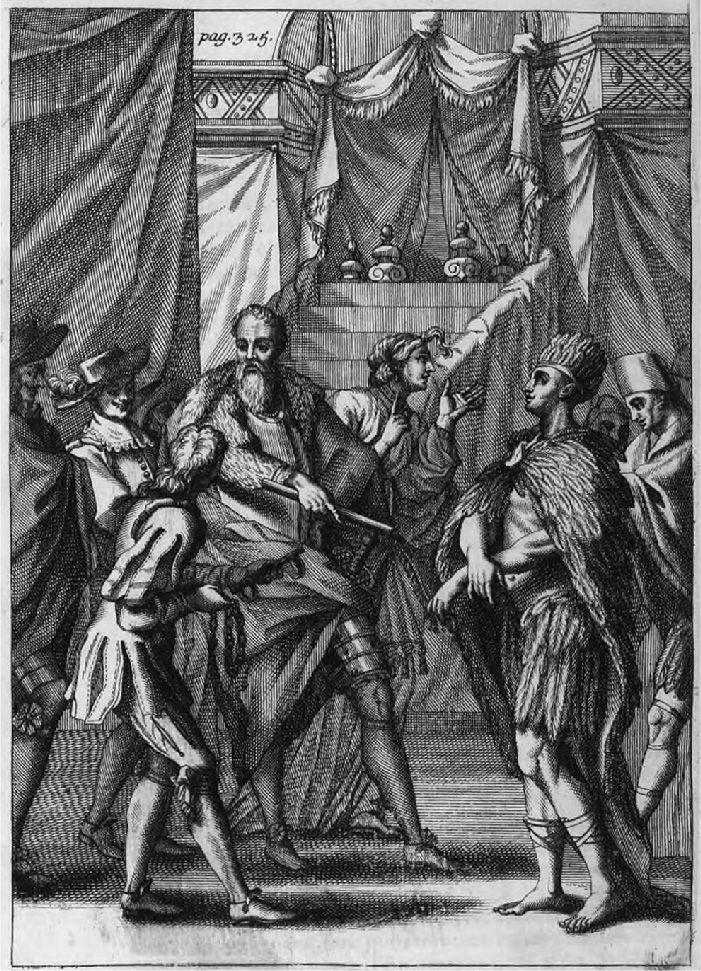
The great prizes the Spanish hoped to find were soon discovered in Mexico. In 1519, the conquistador Hernán Cortés landed at Potonchan on the Yucatán Peninsula and marched north to the interior of Mexico, where he encountered the powerful Aztec Empire. The wealth of the Aztecs and the sophistication of their capital city of Tenochtitlán dazzled the Spanish. At first the Aztec emperor Moctezuma II welcomed them and presented them with gifts. Cortés, however, took Moctezuma prisoner and used him as a puppet to attempt to control his people. Conflict erupted in 1520 when the Spanish killed participants in an Aztec religious ritual, and the residents of Tenochtitlán attacked the conquistadors. In the chaos Moctezuma II was killed, possibly by his own people who felt he had betrayed them, and the Spanish, facing destruction, fled Tenochtitlán for the nearby city of Tlaxcala, a rival of Tenochtitlán (Figure 5.12).
英語のヒント
スペイン人が求めていた大きな獲物は、まもなくメキシコで見つかった。1519年、コンキスタドールのエルナン・コルテスはユカタン半島のポトンチャンに上陸し、メキシコ内陸へ北上して、強力なアステカ帝国に遭遇した。アステカの富と首都テノチティトランの高度な洗練は、スペイン人の目をくらませた。初め、皇帝モクテスマ2世は彼らを歓迎し、贈り物を与えた。しかしコルテスはモクテスマを捕虜にし、住民を支配するための操り人形として利用しようとした。1520年、スペイン人がアステカの宗教儀礼の参加者を殺すと、紛争が勃発し、テノチティトランの住民がコンキスタドールを攻撃した。混乱の中でモクテスマ2世は殺された。裏切られたと感じた自らの民が殺した可能性もある。壊滅の危機に直面したスペイン人は、テノチティトランから、その競争相手である近隣の都市トラスカラへ逃れた(図5.12)。
Moctezuma II.モクテスマ2世。
(credit: modification of work “Moctezuma imprisoned by Cortés - Copper-plate engraving from Van Beecq” by Illustrations de Histoire de la conquête du Mexique ou de la Nouvelle Espagne (Gallica-BNF)/Wikimedia Commons, Public Domain) · Public Domain
Figure 5.12 This engraving by seventeenth-century artist Jan Karel Donatus van Beecq depicts Hernán Cortés ordering the imprisonment of the Aztec emperor Moctezuma II, seen at the right wearing a feather headdress and cape. Moctezuma died in Spanish custody, but it is unknown whether the Spanish or the Aztecs killed him. (credit: modification of work “Moctezuma imprisoned by Cortés - Copper-plate engraving from Van Beecq” by Illustrations de Histoire de la conquête du Mexique ou de la Nouvelle Espagne (Gallica-BNF)/Wikimedia Commons, Public Domain)
図5.12 17世紀の画家ヤン・カレル・ドナトゥス・ファン・ベークの版画は、エルナン・コルテスがアステカ皇帝モクテスマ2世の投獄を命じる様子を描く。モクテスマは右側で羽の頭飾りと外套を着けている。彼はスペイン側の拘束下で死んだが、スペイン人が殺したのか、アステカ人が殺したのかは不明である。(クレジット:『メキシコまたはヌエバ・エスパーニャ征服史』挿絵、Gallica・フランス国立図書館/Wikimedia Commons「コルテスに投獄されるモクテスマ――ファン・ベークの銅版画」を改変、パブリックドメイン)
Cortés and his Tlaxcalan allies returned to Tenochtitlán in May 1521. By this time, the Aztecs were beginning to suffer from infectious diseases brought by the Spanish. Smallpox was a likely culprit, but other diseases may have been spreading as well. (For example, evidence exists that an outbreak of salmonella in 1540 also took many Aztec lives.) Badly weakened, the Aztecs could not defeat Cortés and his Indigenous allies. After a siege of three months, Tenochtitlán fell to the Spanish, who began converting the Aztecs to Christianity. Although some Aztecs converted voluntarily, many were forced. Aztec temples were destroyed, and Catholic Churches were built on top of them. The Spanish renamed Tenochtitlán Mexico City, and it became the capital of the colony of New Spain. The colony eventually provided Spanish monarchs with the wealth they craved in the form of rich silver deposits.
英語のヒント
コルテスと同盟するトラスカラ人は、1521年5月にテノチティトランへ戻った。このころ、アステカ人はスペイン人が持ち込んだ感染症に苦しみ始めていた。天然痘が有力な原因と考えられるが、他の病気も広がっていた可能性がある。(例えば1540年のサルモネラ流行も、アステカ人の多くの命を奪ったという証拠がある。)ひどく弱体化したアステカ人は、コルテスとその先住民同盟者を破れなかった。3か月の包囲の後、テノチティトランはスペイン側に陥落し、スペイン人はアステカ人のキリスト教への改宗を始めた。自発的に改宗した者もいたが、多くは強制された。アステカの神殿は破壊され、その上にカトリック教会が建てられた。スペイン人はテノチティトランをメキシコシティと改名し、ヌエバ・エスパーニャ植民地の首都とした。やがてこの植民地は、豊かな銀鉱床という形で、スペインの君主が渇望した富を提供した。
Cortés’s exploits in Mexico were soon matched by those of another Spanish adventurer, Francisco Pizarro, who conquered the Inca Empire in South America. In January 1530, Pizarro sailed from the Canary Islands on an expedition to conquer Peru, which he had heard was rich in precious metals. His conquest had been authorized in 1529 by Queen Isabella of Portugal, the wife of Holy Roman emperor Charles V, who was also king of Spain. The Inca ruler had recently died of smallpox, and rival heirs to the throne were at war. Pizarro took advantage of the chaos and the fact that the Inca forces had been depleted by years of fighting. In 1532, he captured Atahualpa, one of the parties in the civil war; the following year, the Spanish executed him, despite his promises to fill an entire room with gold and two with silver if Pizarro set him free. Pizarro then seized control of Cuzco, the Inca capital. Peru, which like Mexico had extensive silver deposits, was reduced to a Spanish colony.
英語のヒント
メキシコでのコルテスの征服に匹敵する事業が、まもなく別のスペイン人冒険者フランシスコ・ピサロによって行われた。彼は南アメリカのインカ帝国を征服した。1530年1月、ピサロは、貴金属が豊富だと聞いたペルーを征服する遠征のため、カナリア諸島を出航した。征服は1529年、スペイン王でもあった神聖ローマ皇帝カール5世の妻、ポルトガル出身の王妃イサベルに許可されていた。インカの支配者は最近天然痘で死亡しており、王位を争う後継者たちは戦争中だった。ピサロはその混乱と、長年の戦闘でインカ軍が疲弊していたことにつけ込んだ。1532年、内戦の一方の当事者アタワルパを捕らえた。アタワルパは解放されれば一部屋を金、二部屋を銀で満たすと約束したが、スペイン人は翌年彼を処刑した。ピサロは次いで首都クスコの支配を奪った。メキシコと同様に広大な銀鉱床を持つペルーは、スペインの植民地に落とされた。
The Inca did not passively accept Spanish rule. Under the leader Manco Inca, about 100,000 Incas lay siege to Cuzco in 1536. They lacked the gunpowder weapons of the Spanish, however, and could not drive the Europeans out. The Spanish divided the Inca Empire into four regions, each with a Spanish governor, and Pizarro was given the territory that corresponds to the modern country of Peru.
英語のヒント
インカの人々は、スペインの支配を受動的に受け入れたわけではない。1536年、指導者マンコ・インカの下で、約10万人がクスコを包囲した。しかし、スペイン人の持つ火薬兵器を欠いていたため、ヨーロッパ人を追い出すことはできなかった。スペイン人はインカ帝国を四つの地域に分け、それぞれにスペイン人総督を置いた。ピサロには、現代のペルーに相当する領土が与えられた。