第13章第二次世界大戦の原因と結果The Causes and Consequences of World War II
Along with becoming a theater of battle in its northern lands, Africa was also drawn into World War II when Africans were enlisted into the armies fighting fascism. More than a million African soldiers fought in Europe, North Africa, Southeast Asia, and the Pacific or provided labor for colonial forces during the war. Most were forcibly recruited and paid far less than White European soldiers. The colonial holdings of the European powers throughout the continent meant that Africa’s resources were available for the war effort. African labor, for instance, was essential in maintaining the production of such strategic materials as coal, tin, rubber, and food. Mobilizing African comunities for support forced colonial regimes to deal with resentments associated with rising prices, increased taxes, inflation, and control of the economies. Increased urbanization of the continent also offered populations greater freedom of action and expression, calling colonialism into question. Brazzaville was the capital of Free France (France’s collected colonial territories) under Charles de Gaulle, and issues of subjugation and racism came into stark relief. Many Africans saw their loyal contribution to the Allies as a down payment for greater self-determination and independence after the war.
英語のヒント
アフリカは、北部が戦場となっただけでなく、アフリカ人がファシズムと戦う軍隊に組み込まれたことで、第二次世界大戦に引き込まれた。戦争中、100万人以上のアフリカ人兵士が、ヨーロッパ、北アフリカ、東南アジア、太平洋で戦うか、植民地軍のために労働を提供した。大半は強制的に徴集され、給与は白人のヨーロッパ兵よりはるかに少なかった。ヨーロッパ列強が大陸各地を植民地として持っていたため、アフリカの資源は戦争遂行に使えた。たとえば石炭、スズ、ゴム、食料といった戦略物資の生産を維持するには、アフリカ人の労働が欠かせなかった。支援のためにアフリカの共同体を動員した植民地政権は、物価上昇、増税、インフレ、経済統制に伴う不満に対処せざるを得なくなった。大陸で進む都市化も、人々に行動と表現の自由を広げ、植民地主義を問い直すきっかけとなった。ブラザヴィルは、シャルル・ド・ゴールの下でフランスの植民地領土をまとめた「自由フランス」の首都となり、従属と人種差別の問題が鮮明に浮かび上がった。多くのアフリカ人は、連合国への忠実な貢献を、戦後により大きな自決権と独立を得るための先払いと考えた。
Women Mobilized for War戦争に動員された女性たち
The status and roles of women underwent seismic shifts around the world because of the war. In belligerent nations, with so many men sent to the far-flung fronts, women represented a large available pool of labor that could be tapped, and they increased their participation in their nation’s economies significantly.
英語のヒント
戦争によって、世界各地で女性の地位と役割に地殻変動のような大きな変化が起こった。交戦国では非常に多くの男性が遠方の戦線へ送られたため、女性は動員可能な大きな労働力の集まりとなり、自国の経済への参加を大幅に増やした。
In 1939, women made up 37 percent of the German workforce, but because the Nazis encouraged them to be homemakers and resisted recruiting them to work, their participation in labor declined between 1939 and 1941. In 1942 when Germany geared up for war, however, more women went into the factories, and their share of the workforce climbed to about 50 percent. From its initial rise to power, the German Nazi regime had also promoted schemes to increase marriages and births, for which economic incentives were offered, while birth control was outlawed.
英語のヒント
1939年、女性はドイツの労働力の37パーセントを占めていた。しかしナチスが女性に家庭を守る役割を勧め、労働への動員に消極的だったため、女性の労働参加は1939年から1941年にかけて減った。ところが、ドイツが戦争のために生産を加速させた1942年には、より多くの女性が工場へ入り、労働力に占める割合は約50パーセントに上がった。ドイツのナチ政権は、政権獲得の当初から結婚と出生を増やす計画も進め、経済的な奨励措置を設ける一方、避妊を違法とした。
By 1945, women in the Soviet Union constituted 55 percent of the total workforce. In addition, about 800,000 women served in frontline combat positions, mostly as medical workers. Lyudmila Pavlichenko was a sniper credited with killing 309 enemies. The Soviet women’s air unit called the Night Witches conducted more than twenty-three thousand bombing runs during the war. The war years led to the death of as many as twenty-five million Soviet citizens. Therefore, the role of motherhood also gained new importance during the war. In July 1944, the Presidium of the Supreme Soviet created the Order of Maternal Glory and the title of Mother-Hero. There were financial incentives for having two or more children.
英語のヒント
1945年までに、ソ連では女性が総労働力の55パーセントを占めた。加えて約80万人が前線の戦闘配置に就き、その大半は医療従事者だった。狙撃兵リュドミラ・パヴリチェンコは、敵309人を倒したと認められている。「夜の魔女たち」と呼ばれたソ連の女性航空部隊は、戦争中に2万3000回を超える爆撃任務を行った。戦争によって、ソ連国民は最大2500万人が死亡した。そのため、母親としての役割も戦時中に新たな重要性を持った。1944年7月、ソ連最高会議幹部会は「母性栄誉勲章」と「英雄母」の称号を創設した。2人以上の子どもを持つことに対して、経済的な奨励措置も設けられた。
The Japanese also rewarded women for having children. The 1940, National Eugenics Law prohibited abortion or sterilization for any reason except eugenics (a discredited strategy that focused on cultivating desirable characteristics in a population). Women were encouraged to marry young, have many children, and fulfill their natural role as mothers. Those who did were rewarded, but women aged eighteen to twenty-five were also conscripted into the labor force beginning in 1943.
英語のヒント
日本も、子どもを産む女性に報奨を与えた。1940年の国民優生法は、優生学的な理由以外での中絶や不妊手術を禁じた。優生学とは、集団の中に望ましいとされた性質を育てようとする、現在では正当性を失った考え方である。女性は若く結婚し、多くの子どもを持ち、母としての自然な役割を果たすよう奨励された。そうした女性は報われたが、同時に1943年からは、18〜25歳の女性が労働力として徴用された。
The Japanese military held views about the needs of men and the subservience of women that led to a vast system of forced prostitution and sexual slavery. Korean and Chinese women were the first to suffer, but the system spread wherever Japanese troops were, victimizing perhaps as many as 400,000 women from China, Korea, and elsewhere in the Greater East Asia Co-Prosperity Sphere. This type of treatment helped spur many women to embrace the activism encouraged by the Chinese Communist Party and to celebrate anti-Japanese actions. The nature and scope of the crimes against these “comfort women” remain controversial long after the war.
英語のヒント
日本軍は、男性の欲求と女性の従属についての考えから、強制売春と性的奴隷制の大規模な仕組みを作った。初めに被害を受けたのは朝鮮人と中国人の女性だったが、この仕組みは日本軍がいる各地へ広がり、中国、朝鮮、大東亜共栄圏のほかの地域の女性、最大で40万人ほどが被害を受けた可能性がある。このような扱いは、多くの女性が中国共産党の勧める運動を受け入れ、抗日行動を歓迎する一因となった。これらの「慰安婦」に対する犯罪の性質と規模は、戦争が終わって長い年月が過ぎても、論争の対象であり続けている。
In 1941, all British women between eighteen and fifty years old were declared available for national service. The Women’s Land Army recruited eighty thousand women for agricultural work on Britain’s farms, and 400,000 served in some other form of civil defense. Eventually, eight million women participated in the British war effort.
英語のヒント
1941年、18〜50歳のイギリス女性全員が、国家への奉仕に動員可能とされた。女性農耕部隊は、国内の農場で農作業を行うため8万人を募集し、40万人がほかの形の民間防衛活動に従事した。最終的に800万人の女性が、イギリスの戦争遂行に参加した。
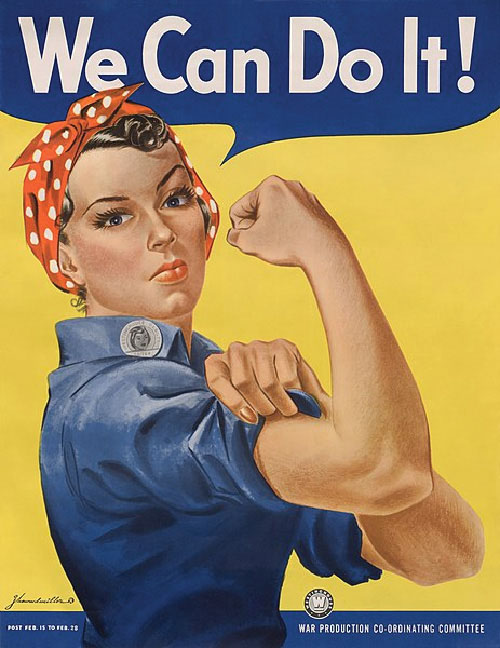
Encouraged by their government to think of all jobs as war jobs, six and a half million American women entered the labor force during the conflict and made up 50 percent of it by the war’s end. Three million members of the Women’s Land Army planted and harvested food. Women also took their places behind desks in hundreds of thousands of government and office jobs and in industries where few women had made inroads in the past. By 1944, for instance, the number of women in the banking industry had doubled to about 130,000 employees. The now-famous “Rosie the Riveter” poster expressed the commitment and competence of women stepping into industrial jobs to replace the men who had gone to war (Figure 13.16). Nearly 350,000 women also served in some branch of the U.S. military during the war.
英語のヒント
政府から、すべての仕事を戦争に役立つ仕事と考えるよう促された米国の女性は、戦争中に650万人が労働市場へ入り、終戦時には労働力の50パーセントを占めた。女性農耕部隊の300万人が、作物を植え、収穫した。女性はまた、何十万もの政府や事務所の仕事に就き、以前はほとんど進出していなかった産業でも働くようになった。たとえば1944年までに、銀行業で働く女性の数は倍増し、約13万人になった。現在よく知られる「リベット工のロージー」のポスターは、戦争へ行った男性に代わって工業の仕事に入る女性たちの献身と能力を表していた(図13.16)。戦争中、約35万人の女性が、米軍のいずれかの部門でも勤務した。
Women on the Home Front.銃後の女性たち
(credit: “We can do it!” by U.S. National Archives and Records Administration/Wikimedia Commons, Public Domain) · Public Domain
Figure 13.16 The famous poster of “Rosie the Riveter” symbolized the many women in the United States who were rolling up their sleeves to serve the nation during the war. (credit: “We can do it!” by U.S. National Archives and Records Administration/Wikimedia Commons, Public Domain)
図13.16 有名な「リベット工のロージー」のポスターは、戦時中、袖をまくって国に尽くした米国の多くの女性を象徴した。(クレジット:米国国立公文書記録管理院/Wikimedia Commons「We can do it!」。パブリックドメイン)