第13章第二次世界大戦の原因と結果The Causes and Consequences of World War II
13.1 An Unstable Peace13.1 不安定な平和
Learning Objectives学習の目標
By the end of this section, you will be able to:
この節を学ぶと、次のことができるようになる。
Analyze Japan’s efforts to expand its empire in Asia and the Pacific
アジアと太平洋で帝国を拡張しようとした日本の取り組みを分析する。
Discuss Hitler’s actions in the 1930s and how they led to World War II
1930年代のヒトラーの行動と、それがどのように第二次世界大戦へつながったかを論じる。
Explain how and why the United States was less engaged in responding to threats to peace in the 1930s
1930年代、平和を脅かす動きへの対応に米国があまり関与しなかった状況と、その理由を説明する。
Discuss why Japan eventually decided to attack the United States
日本が最終的に米国への攻撃を決断した理由を論じる。
The attempts by Western nations to build a structure of world peace with the Treaty of Versailles and the League of Nations ultimately unraveled during the 1930s. National and international grievances, competing ideologies, and economic self-interest all hammered away at the fragile international order.
英語のヒント
ヴェルサイユ条約と国際連盟によって世界平和の枠組みを築こうとした西洋諸国の試みは、1930年代に入るとついに崩れた。国内外の不満、競合する思想、経済的な自国の利益が、脆弱な国際秩序を絶えず揺さぶった。
Asia for Asiansアジア人のためのアジア
The fight between Japan and China in the 1930s lit the fuse that made World War II a global conflict. The spark may have been Japan’s long-standing perception of Western racism, dating back to the nineteenth century and shown more recently in the rejection of Japan’s proposed racial equality amendment to the Treaty of Versailles. This had been done at the insistence of Australia and the British delegation. Part of Japan’s underlying thinking was to rid Asia of Western colonial influences, although it also clearly saw itself as the new leader of the region.
英語のヒント
1930年代の日本と中国の戦いは、第二次世界大戦を世界規模の紛争にする導火線に火を付けた。その火種は、19世紀以来、日本が西洋の人種差別を強く意識していたことにあったのかもしれない。より最近の例としては、日本がヴェルサイユ条約に加えるよう提案した人種平等条項の否決がある。これはオーストラリアとイギリス代表団の強い要求によるものだった。日本の基本的な考えには、アジアから西洋の植民地勢力の影響を取り除くという面があったが、同時に日本は、自らをこの地域の新たな指導者と明確に位置づけていた。
Since the end of the Russo-Japanese War in 1905, Japan had held the right to lease the South Manchuria Railway in northeastern China, a privilege previously held by Russia. However, Japan now claimed rights to control extensive territory in northeastern China outside the railway zone and stationed its troops in the region. In 1931, these troops detonated explosives along the track of the South Manchuria Railway and blamed the act on Chinese saboteurs. This gave Japan an excuse to invade and annex Manchuria (also called Manchukuo) on the pretext that it was defending Japanese interests. To deflect international attention from this incident, commonly known as the Mukden Incident, the Japanese provoked some sharp clashes with Chinese troops in Shanghai. A cease-fire on May 5, 1932, concluded the First Shanghai Incident.
英語のヒント
1905年に日露戦争が終わって以来、日本は中国東北部の南満州鉄道を租借する権利を有していた。これは以前ロシアが持っていた権益である。ところが日本は、鉄道附属地の外に広がる中国東北部の広大な領域についても支配権を主張し、軍隊を駐留させた。1931年、この部隊は南満州鉄道の線路沿いで爆薬を爆発させ、その行為を中国人の破壊工作員の仕業だとした。日本はこれを口実に、日本の権益を守るのだと主張して満州に侵攻し、併合した。満州は満州国とも呼ばれた。一般に満州事変として知られるこの事件から国際社会の注意をそらすため、日本側は上海で中国軍との激しい衝突を引き起こした。1932年5月5日の停戦によって、第一次上海事変は終結した。
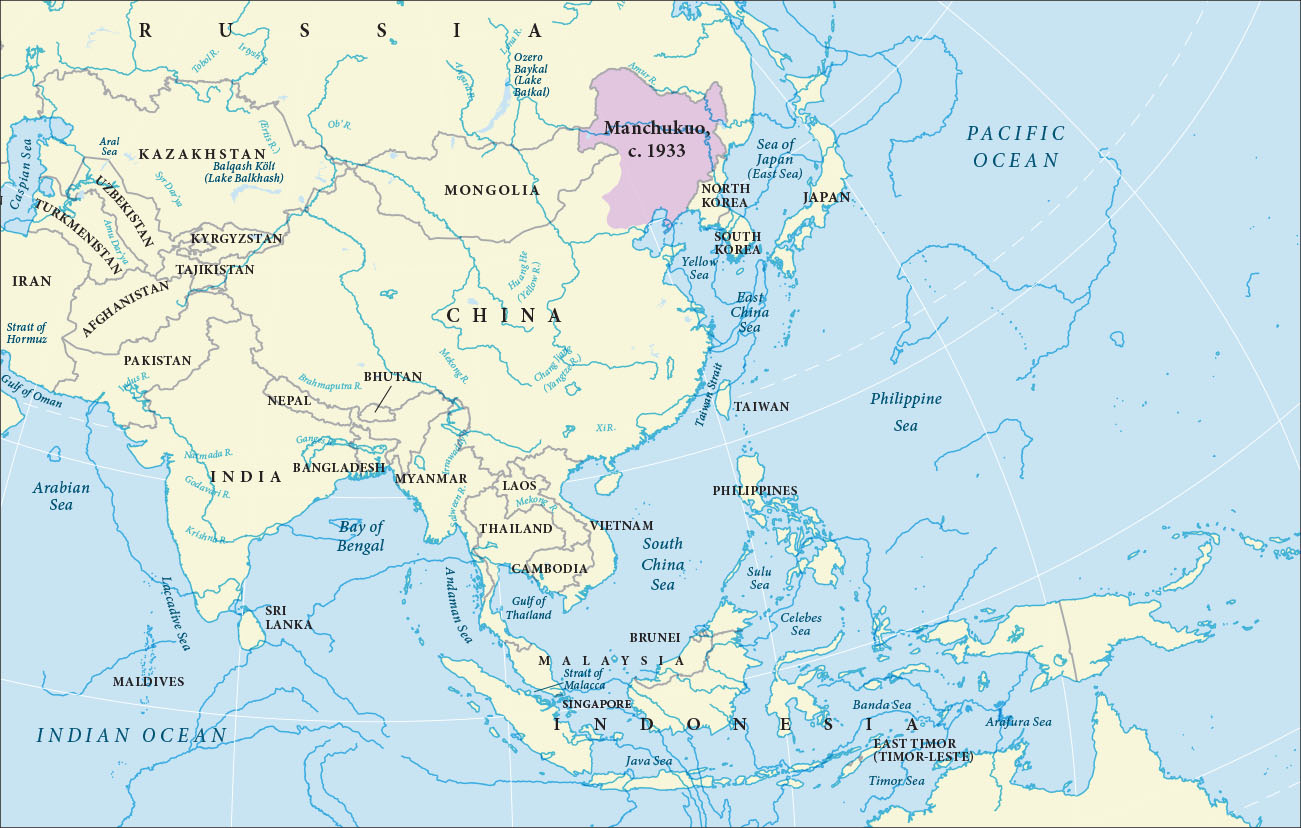
Simultaneously, the Imperial Japanese Kwantung Army in Manchukuo continued to expand its operations and control. The army pushed southward to the Great Wall, absorbing more Chinese territory into its zone of control. Eventually, on May 22, 1933, the Japanese and China’s Guomindang government (GMD, also spelled “Kuomintang”) concluded the Tanggu Truce, forming a demilitarized zone that stretched one hundred kilometers south of the Great Wall and essentially detached Manchukuo from the nation of China. Thereafter, Manchukuo, which had rich coal and iron ore deposits, was developed as an economic engine for the Japanese Empire, securing North China, countering any spread of communism or Soviet influence, and preparing the way for a wider conflict (Figure 13.4).
英語のヒント
同時に、満州国の日本帝国陸軍関東軍は、作戦と支配領域を拡大し続けた。関東軍は万里の長城へ向かって南下し、中国の領土をさらに支配圏へ取り込んだ。やがて1933年5月22日、日本側と中国国民党政府(GMD。英語では Kuomintang とも表記する)は塘沽停戦協定を結んだ。長城から南へ100キロメートルに及ぶ非武装地帯を設け、実質的に満州国を中国から切り離したのである。その後、石炭と鉄鉱石の豊富な鉱床を持つ満州国は、日本帝国の経済を動かす拠点として開発された。それは華北を確保し、共産主義やソ連の影響力の拡大を抑え、より広範な戦争への準備を整えるものだった(図13.4)。
A Disputed Territory.争われた領土
(attribution: Copyright Rice University, OpenStax, under CC BY 4.0 license) · CC BY 4.0
Figure 13.4 Beginning in 1933, the Tanggu Truce between China and Japan allowed Manchukuo (Manchuria) to be developed as an economic engine for Japan. (attribution: Copyright Rice University, OpenStax, under CC BY 4.0 license)
図13.4 1933年の日中間の塘沽停戦協定を境に、満州国(満州)は日本の経済を動かす拠点として開発されていった。(出典:著作権者ライス大学、OpenStax。CC BY 4.0ライセンス)
The nationalist GMD government and the Chinese Communist Party (CCP) had been fighting a civil war since 1927. In 1934, GMD troops displaced from Manchukuo by the Japanese had repositioned themselves south of the Great Wall when President Chiang Kai-shek (Jiang Jieshi) When Chinese words are written using the English-language alphabet, one of two systems is typically used: pinyin or Wade-Giles. The pinyin system is preferred by the People’s Republic of China, and most Chinese names in this textbook are written in pinyin. In the case of Chiang Kai-shek, the textbook’s editors decided to make an exception and spell his name according to the Wade-Giles system because this is how his name appears in most other history textbooks. Jiang Jieshi is how his name would be written in pinyin. ordered them to attack the Chinese communists under Mao Zedong at their nearby base in Yan’an, Shaanxi Province. Chinese public opinion rejected the idea of Chinese fighting Chinese in the face of Japan’s aggression. In December 1936, during the so-called Xian Incident, Chiang Kai-shek was taken prisoner in Xian, China, by Manchurian forces and forced to negotiate a cessation of the Civil War and the creation of the Second United Front—unifying the GMD and the CCP against Japan.
英語のヒント
国民党政府と中国共産党(CCP)は、1927年以来、内戦を戦っていた。1934年、日本軍によって満州国を追われた国民党軍が万里の長城の南へ移動していたところ、蒋介石は、近くの陝西省延安を根拠地とする毛沢東率いる中国共産党軍への攻撃を命じた。日本の侵略を前に、中国人同士が戦うことに中国の世論は反対した。1936年12月のいわゆる西安事件では、蒋介石が中国の西安で満州出身の軍隊に拘束され、内戦の停止と第二次国共合作の結成を交渉するよう強いられた。こうして国民党と共産党は、日本に対抗するために協力することになった。原注:中国語を英語のアルファベットで表す際には、通常、拼音かウェード式のいずれかを用いる。中華人民共和国は拼音を採用しており、本書の中国人名の大半も拼音表記である。蒋介石については、ほかの多くの歴史教科書の表記に合わせるため、編集者は例外的にウェード式の Chiang Kai-shek を用いることにした。拼音では Jiang Jieshi となる。
Tensions in North China escalated early in July 1937, as Japanese troops were conducting night exercises near the Marco Polo Bridge ten miles west of Beijing and firefights erupted between them and Chinese troops. The Japanese quickly overcame the Chinese forces and secured their control of the area around Beijing and Tianjin.
英語のヒント
1937年7月初め、日本軍が北京から西へ10マイルの盧溝橋付近で夜間演習を行っていたところ、中国軍との間で銃撃戦が発生し、華北の緊張は高まった。日本軍は短期間で中国軍を制し、北京と天津周辺の支配を固めた。
Chiang Kai-shek then decided to shift the fighting to the Shanghai region, where he had better forces and a seeming numerical advantage. The Japanese responded by mounting a major offensive, and by November 1937, the GMD forces had been badly mauled. After losing 250,000 troops, they retreated westward to China’s capital in Nanjing. Japanese forces closed in on Nanjing, and Chinese troops continued to retreat westward. On December 12, 1937, Chinese resistance at Nanjing ceased, and Japanese troops entered the defenseless city, commencing a terrifying seven-week reign of terror and plunder. Foreign witnesses in the city estimated that twenty thousand Chinese women and girls were raped. Some thirty thousand Chinese soldiers who could not be evacuated were executed, and perhaps as many as twelve thousand civilians were also killed. Other historians put the number of dead at 300,000. (Such discrepancies in numbers occur because historians may disagree on which deaths can be attributed to an event.) The tragedy became known as the “Rape of Nanking” (the older spelling of Nanjing) and was taken up at the Tokyo War Crimes trials after the war.
英語のヒント
蒋介石は次に、より強力な部隊を持ち、兵力でも優位に見えた上海地域へ戦場を移すことを決めた。日本軍は大規模な攻勢で応じ、1937年11月までに国民党軍は甚大な打撃を受けた。25万人の兵を失った国民党軍は、西方の中国の首都、南京へ撤退した。日本軍が南京に迫ると、中国軍はさらに西へ退却した。1937年12月12日、南京での中国側の抵抗が終わり、日本軍は防備を失った市内に入った。そこから恐怖と略奪に満ちた7週間が始まった。市内にいた外国人の目撃者は、強姦された中国人の女性・少女を2万人と推定した。避難できなかった約3万人の中国兵が処刑され、民間人も最大で約1万2000人が殺された可能性がある。死者を30万人とする歴史家もいる。歴史家の間で、どの死をその出来事によるものと数えるかについて意見が分かれるため、こうした数値の差が生じる。この悲劇は「南京大虐殺」(Rape of Nanking。Nanking は南京の旧綴り)として知られるようになり、戦後の東京裁判でも取り上げられた。
Japan redoubled its efforts to subdue China. Having retreated farther west to defend the GMD’s new provisional capital at Chongqing, some GMD armies put up stiff resistance in places, but by 1938, they had been pushed back significantly. To prevent further Japanese advances, Chiang Kai-shek ordered the opening of the dikes on the Yellow River, flooding large portions of central China, killing an estimated 400,000 people and dislocating ten million more. In December 1937, the Japanese sank the USS Panay, a gunboat on the Yangtze River that was extracting American and Chinese civilians from Nanjing at the time. The Japanese government accepted responsibility and apologized for the Panay incident, paying restitution of more than $2 million (at least $37 million in today’s money). Through all this, public opinion in the United States, while increasingly shifting in favor of China, was still undecided about entering any war.
英語のヒント
日本は中国を屈服させようと、さらに攻勢を強めた。国民党軍は新たな臨時首都、重慶を守るためにいっそう西へ退き、一部の部隊は各地で激しく抵抗したが、1938年までには大きく後退させられていた。日本軍のさらなる進撃を阻むため、蒋介石は黄河の堤防を決壊させるよう命じた。中国中部の広い範囲が水没し、推定40万人が死亡、さらに1000万人が住まいを追われた。1937年12月には、日本軍が長江上の米国の砲艦パナイ号を沈めた。同艦は当時、南京から米国人と中国人の民間人を避難させていた。日本政府は責任を認めてパナイ号事件を謝罪し、200万ドルを超える賠償金を支払った。現在の価値では少なくとも3700万ドルに相当する。一連の出来事を経て、米国の世論は次第に中国寄りになったが、それでも戦争への参加については態度を決めかねていた。
The Great Depression and the rise of fascism in Europe seemed to signal the decline of the older Western-dominated world order. Japanese intellectuals, politicians, military leaders, and mass media envisioned that Japan could fashion a “new order” of regional supremacy for itself. In an August 1940 radio address, Japanese foreign minister Yosuke Matsuoka broached his vision for a Greater East Asia Co-Prosperity Sphere as a blueprint for Japan’s ascent to world-power status. A year later, he published a book further developing his ideas for liberating Asians from European domination and expelling the “white race bloc” suppressing Asia’s destiny. By 1941, creating the Greater East Asia Co-Prosperity Sphere had become the publicly articulated objective of Japan’s Asian aggression, and it remained so until Japan’s defeat in 1945.
英語のヒント
世界恐慌とヨーロッパでのファシズムの台頭は、西洋が支配する従来の世界秩序の衰退を示しているように見えた。日本の知識人、政治家、軍指導者、マスメディアは、日本がこの地域で覇権を握る「新秩序」を築けると考えた。1940年8月のラジオ演説で、松岡洋右外相は、日本が世界の大国へ上り詰めるための構想として、大東亜共栄圏の展望を打ち出した。翌年には、アジア人をヨーロッパの支配から解放し、アジアの運命を抑え込んでいる「白人種ブロック」を排除するという考えをさらに展開した本を出版した。1941年までに、大東亜共栄圏の建設は日本のアジア侵略の公然たる目標となり、1945年の敗戦までそうあり続けた。
Eventually, finding themselves in a stalemate in China and needing more natural resources to sustain the war and the goal of creating the Greater East Asia Co-Prosperity Sphere, the Japanese military and civilian governments began to consider a thrust into Southeast Asia. Such a move would inevitably mean a confrontation with the United States and its colony the Philippines. Japan conceived a desperately hopeful plan of war against the United States and an initial knockout strike on the U.S. Pacific Fleet at Pearl Harbor, Hawaii.
英語のヒント
やがて、中国での戦争が膠着状態に陥り、戦争の継続と大東亜共栄圏の建設という目標のために、さらに多くの天然資源が必要になると、日本の軍部と文民政府は東南アジアへの進出を検討し始めた。そのような動きは、必然的に米国およびその植民地フィリピンとの対決を意味した。日本は米国との戦争に向け、ハワイの真珠湾にある米太平洋艦隊を開戦の一撃で戦闘不能にする、切迫した期待にすがる計画を立てた。