第13章第二次世界大戦の原因と結果The Causes and Consequences of World War II
Peace in Our Timeわれわれの時代の平和
In furtherance of his promise to revive Italian glory, Benito Mussolini (popularly known as Il Duce, “the leader”) sought to expand the Italian protectorate of Somali in East Africa. A border dispute with Ethiopia, which Italy had long sought to colonize, arose in November 1934, and the Ethiopians took the matter to the League of Nations on January 5, 1935. When a full-scale Italian invasion of Ethiopia began on October 3 of that year, the League Council immediately declared Italy the aggressor, and fifty-one member nations approved sanctions against Italy. Unwilling to defy Mussolini, however, the British and French undermined the League in a secret agreement permitting Italy to absorb Ethiopia into a special economic zone. In May 1936, Italian forces took the Ethiopian capital Addis Ababa, and shortly thereafter, Italy formally annexed the country. In Italy, Mussolini’s popularity grew, especially among Italian youth.
英語のヒント
イタリアの栄光をよみがえらせるという約束を実現するため、ベニート・ムッソリーニは東アフリカにあるイタリアのソマリ保護領を拡大しようとした。ムッソリーニは一般にイル・ドゥーチェ、すなわち「指導者」と呼ばれていた。1934年11月、イタリアが以前から植民地化を狙っていたエチオピアとの間で国境紛争が起こり、エチオピア側は1935年1月5日、この問題を国際連盟に持ち込んだ。同年10月3日にイタリアのエチオピア全面侵攻が始まると、連盟理事会は直ちにイタリアを侵略国と認定し、加盟51カ国がイタリアへの制裁に賛成した。しかし、ムッソリーニに逆らうことを望まなかったイギリスとフランスは、イタリアがエチオピアを特別な経済圏に取り込むことを認める秘密協定を結び、連盟の立場を損なった。1936年5月、イタリア軍はエチオピアの首都アディスアベバを占領し、その直後、イタリアは正式に同国を併合した。イタリア国内では、特に若者の間でムッソリーニの人気が高まった。
Britain and France were even more reluctant to confront Germany. Adolf Hitler had often pledged to scrap the Treaty of Versailles. His first step came just nine months after becoming chancellor when he conducted referenda to let the German people decide whether they wanted to remain in the League of Nations. The result was predictable, and in October 1933, Germany withdrew from the League.
英語のヒント
イギリスとフランスは、ドイツとの対決にはいっそう消極的だった。アドルフ・ヒトラーは、ヴェルサイユ条約を破棄すると繰り返し公約していた。首相就任からわずか9カ月後、その第一歩として、国際連盟にとどまりたいかどうかをドイツ国民に決めさせる国民投票を実施した。結果は予想どおりで、1933年10月、ドイツは連盟から脱退した。
By the 1930s, some in Britain and elsewhere had come to view Hitler as a deeply patriotic German seeking merely to serve the interests of his battered nation. Others saw him and his politics as potentially dangerous and unsettling to European stability. The British government did, however, negotiate with Germany to contain the size of the German navy, and France sought a Treaty of Mutual Assistance with the Union of Soviet Socialist Republics (USSR). Using the French-Soviet cooperation as an excuse, in March 1935 Hitler publicly announced that Germany had already secretly begun to rearm in defiance of the Treaty of Versailles. On March 2, 1936, about three thousand German troops reoccupied the Rhineland, a part of Germany demilitarized by the Treaty. France feared protesting this too strongly because it did not want and was not ready to fight another war. The British public did not see the move as overtly hostile.
英語のヒント
1930年代になると、イギリスなどでは、ヒトラーを、打ちのめされた祖国の利益に尽くそうとしているだけの、強い愛国心を持つドイツ人と見る人も現れた。一方、ヒトラーとその政治は危険をはらみ、ヨーロッパの安定を乱しかねないと考える人もいた。それでもイギリス政府は、ドイツ海軍の規模を抑えるためにドイツと交渉し、フランスはソビエト社会主義共和国連邦(ソ連)との相互援助条約を求めた。1935年3月、ヒトラーは仏ソ協力を口実に、ドイツはヴェルサイユ条約に背いて、すでに秘密裏に再軍備を始めていたと公表した。1936年3月2日、約3000人のドイツ兵が、条約によって非武装化されていたドイツの一地域、ラインラントへ再進駐した。フランスは、再び戦争をすることを望まず、その準備もできていなかったため、強く抗議することを恐れた。イギリスの世論も、この動きをあからさまに敵対的なものとは見なさなかった。
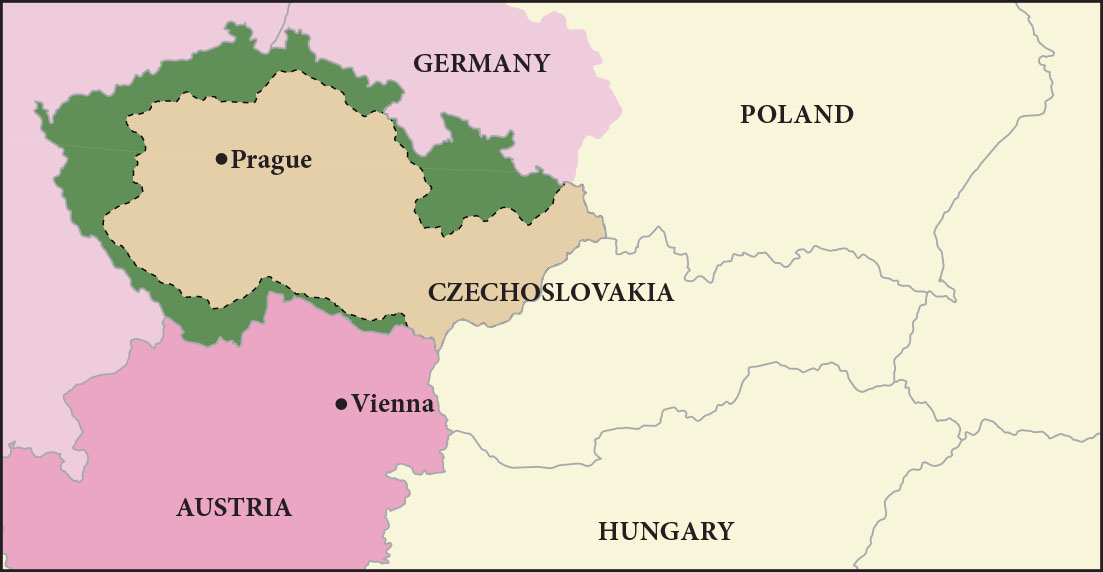
Though the Versailles Treaty specifically prohibited unification of Austria with Germany, Hitler moved to accomplish this anyway. Austria’s prime minister attempted to stave off unification by calling for a referendum in March, but the next day Hitler preemptively sent troops into Austria. When the referendum was held, the people voted for union with Germany. Flush with his victory over Austria, Hitler continued to “gather the German people,” and his eyes turned to those portions of Czechoslovakia called the Sudetenland, containing some three million ethnic Germans, including many who had been folded into that nation by the Treaty of Versailles (Figure 13.5).
英語のヒント
ヴェルサイユ条約はオーストリアとドイツの統合を明確に禁じていたが、ヒトラーはそれを押し切って統合を実現しようと動いた。オーストリアの首相は、3月に国民投票を呼びかけて統合を阻止しようとしたが、翌日、ヒトラーは先手を打ってオーストリアへ軍隊を送った。国民投票が実施されると、国民はドイツとの合邦に賛成した。オーストリアでの勝利に勢いづいたヒトラーは、「ドイツ民族を一つに集める」ことを続け、ズデーテン地方と呼ばれるチェコスロヴァキアの地域へ目を向けた。そこには約300万人のドイツ系住民がおり、その多くはヴェルサイユ条約によってチェコスロヴァキアの国民となった人々だった(図13.5)。
The Sudetenland.ズデーテン地方
(credit: modification of work “Die Ausdehnung des Deutschen Reiches im Jahr 1939” by Demis/Wikimedia Commons, Public Domain) · Public Domain
Figure 13.5 Inhabited largely by German speakers, the Sudetenland wrapped around the northern, western, and southern edges of Czechoslovakia, where that nation bordered Germany and Poland. (credit: modification of work “Die Ausdehnung des Deutschen Reiches im Jahr 1939” by Demis/Wikimedia Commons, Public Domain)
図13.5 主にドイツ語話者が住んでいたズデーテン地方は、チェコスロヴァキアの北・西・南の縁に沿って広がり、同国がドイツやポーランドと接する地域に位置していた。(クレジット:Demis/Wikimedia Commons「Die Ausdehnung des Deutschen Reiches im Jahr 1939」を改変。パブリックドメイン)
The Czechoslovaks, in the only real democracy created by the Treaty of Versailles, pinned their hopes for defense against Germany on the western nations and on treaties for mutual defense signed with France in the 1920s and early 1930s. Sudeten Germans had organized their own Nazi Party, however, and began agitating to join Germany. By 1938, it seemed that Britain and France were most concerned with avoiding another major war, so to defuse the situation, the Czechoslovak government granted the Sudeten Germans self-government. Tensions grew. As Hitler pressed for full inclusion of the Sudetenland in Germany and war seemed on the horizon, British prime minister Neville Chamberlain flew to Germany to meet with him. Hitler seemed prepared for war. Instead, Chamberlain proposed to hold a general conference to address the crisis over the Sudetenland, and Hitler agreed.
英語のヒント
ヴェルサイユ条約によって生まれた唯一の実質的な民主主義国であったチェコスロヴァキアの人々は、ドイツに対する防衛の望みを西側諸国と、1920年代から1930年代初めにかけてフランスと結んだ相互防衛条約に託していた。ところがズデーテン地方のドイツ系住民は独自のナチ党を組織し、ドイツへの合流を求めて運動を始めた。1938年には、イギリスとフランスは何よりも大規模な戦争の再発を避けたがっているように見えた。事態を鎮めるため、チェコスロヴァキア政府はズデーテン地方のドイツ系住民に自治を認めた。それでも緊張は高まった。ヒトラーがズデーテン地方の完全なドイツ編入を強く求め、戦争が迫るように見えると、イギリスのネヴィル・チェンバレン首相はヒトラーに会うためドイツへ飛んだ。ヒトラーは戦争を辞さないように見えた。そこでチェンバレンは、代わりにズデーテン危機を話し合う全体会議の開催を提案し、ヒトラーは同意した。
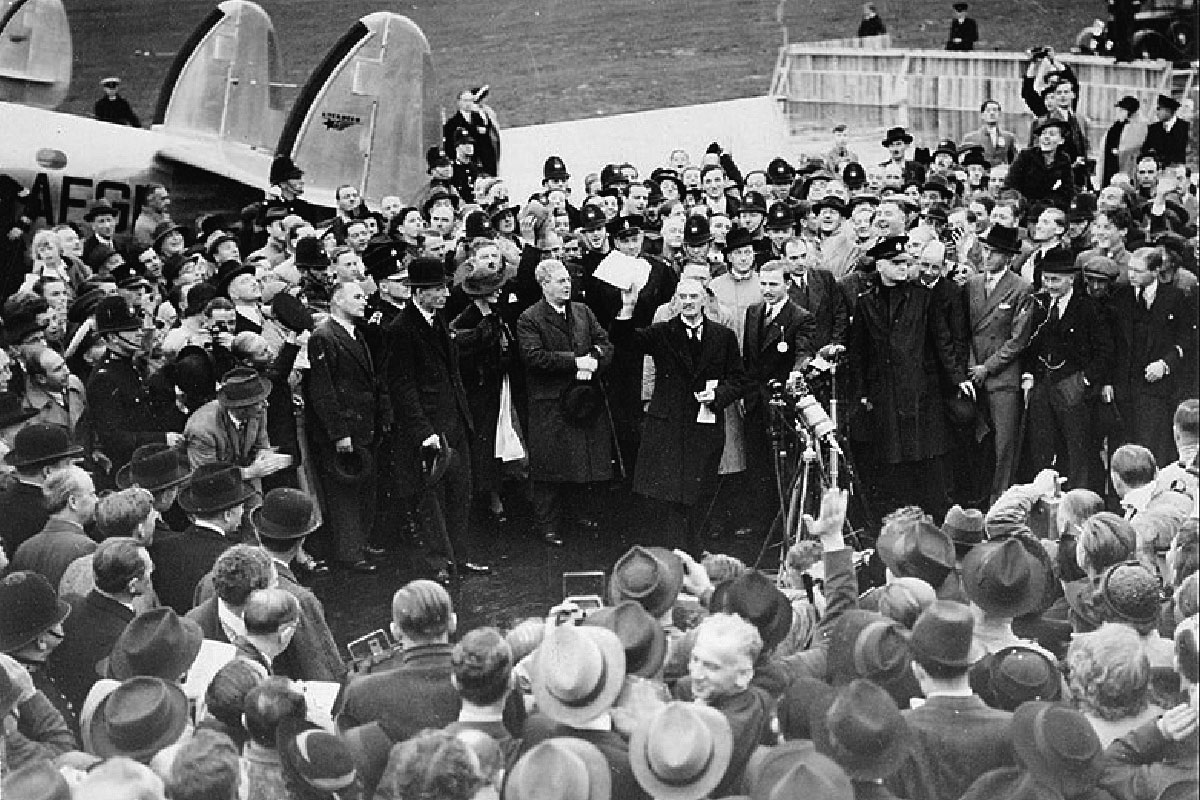
The Munich Conference was attended by Chamberlain, Hitler, French prime minister Édouard Daladier, and Mussolini (ostensibly a neutral party but one who had already assured Hitler of his support). On September 30, they produced the Munich Pact, in which Czechoslovakia granted territorial concessions to Germany, Poland, and Hungary in what has since been called appeasement (Figure 13.6). The hope of Great Britain and France was that Hitler would be satisfied and cease to be aggressive. The alternative meant fighting Germany, which neither government wanted.
英語のヒント
ミュンヘン会談には、チェンバレン、ヒトラー、フランスのエドゥアール・ダラディエ首相、ムッソリーニが出席した。ムッソリーニは表向き中立の立場だったが、すでにヒトラーへの支持を約束していた。9月30日、4人はミュンヘン協定をまとめた。この協定でチェコスロヴァキアはドイツ、ポーランド、ハンガリーに領土上の譲歩を行った。この対応は後に「宥和政策」と呼ばれるようになる(図13.6)。イギリスとフランスは、ヒトラーがこれで満足し、攻撃的な行動をやめることを願っていた。それ以外の選択肢はドイツとの戦争を意味し、両国政府ともそれを望まなかった。
“Peace in Our Time.”「われわれの時代の平和」
(credit: modification of work “Munich Agreement” by Imperial War Museums/Wikimedia Commons, Public Domain) · Public Domain
Figure 13.6 British prime minister Neville Chamberlain (center, waving a paper) presents the Munich Pact upon returning to London on September 30, 1938. (credit: modification of work “Munich Agreement” by Imperial War Museums/Wikimedia Commons, Public Domain)
図13.6 1938年9月30日、ロンドンに戻り、ミュンヘン協定を示すイギリスのネヴィル・チェンバレン首相。中央で紙を振りかざしている。(クレジット:帝国戦争博物館/Wikimedia Commons「Munich Agreement」を改変。パブリックドメイン)
The Western world had not yet decided which was the greater threat to world peace, a fascist Germany or the communist Soviet Union. Some political conservatives in England and France hoped for a German alliance against the Soviets, as did Hitler. The British military was not confident of its preparedness for war, and the isolationist policy of the United States diminished the hope of any aid from Washington. With anxiety growing in London over Britain’s possessions in Asia and Japanese aggressions there, domestic support for negotiated solutions was widespread among liberals, and a bargain with Hitler seemed a reasonable policy. In the ensuing weeks, German troops entered the relinquished areas, and by the spring of 1939, Germany had gone on to absorb the rest of Czechoslovakia.
英語のヒント
西側世界は、ファシズムのドイツと共産主義のソ連のどちらが世界平和にとってより大きな脅威なのか、まだ判断していなかった。イギリスとフランスの一部の保守派は、ソ連に対抗するためドイツと同盟を結びたいと考え、ヒトラーも同じ考えだった。イギリス軍は戦争への備えに自信を持てず、米国の孤立主義政策によって、米政府から援助を得られるという期待も薄れていた。アジアのイギリス領と、その地域での日本の侵略をめぐりロンドンで不安が高まる中、国内の自由主義者の間では交渉による解決を支持する声が広く、ヒトラーとの取引は妥当な政策に見えた。その後の数週間でドイツ軍は譲渡された地域に入り、1939年春までには、さらにチェコスロヴァキアの残りの地域も取り込んだ。
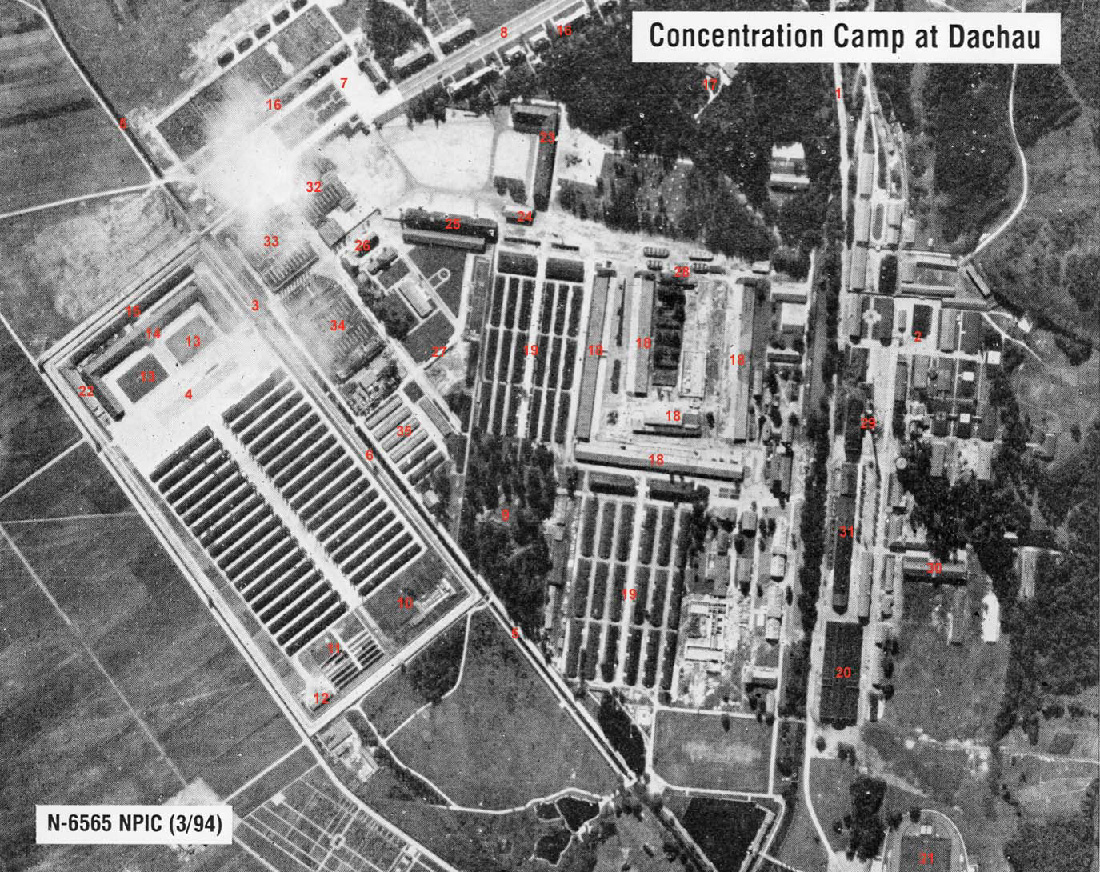
During these years, the Nazis were progressively implementing increasingly severe persecutions of Jewish people. First, a law enacted on April 7, 1933, banned them from positions in the civil service. That same year, the first and longest-surviving Nazi concentration camp, Dachau, was set up near Munich, intended for political prisoners (Figure 13.7). Several laws collectively known as the Nuremberg Laws were promulgated in 1935, institutionalizing Nazi racial theories and discrimination against Jewish people. A Jewish person was defined as anyone with three Jewish grandparents, regardless of whether they were active in the Jewish religious community or how deeply they identified as German. Jewish people were denied citizenship in the new Nazi-led German empire, called the Third Reich, and were forbidden to marry or have sexual relations with ethnic Germans, designated as “Aryans.” They lost the right to vote and most other political rights.
英語のヒント
この間、ナチスはユダヤ人への迫害を段階的に強めていた。まず、1933年4月7日に制定された法律が、ユダヤ人を公務から排除した。同年、ナチス最初の強制収容所で、最も長く存続することになるダッハウ収容所が、政治犯を収容する目的でミュンヘン近郊に設置された(図13.7)。1935年には、ニュルンベルク法と総称される複数の法律が公布され、ナチスの人種理論とユダヤ人差別が制度化された。祖父母のうち3人がユダヤ人である者は、ユダヤ教の共同体に積極的に参加しているかどうか、あるいはどれほど強く自らをドイツ人と認識しているかにかかわらず、ユダヤ人と定義された。第三帝国と呼ばれるナチス主導の新しいドイツ国家で、ユダヤ人は市民権を否定され、「アーリア人」と位置づけられたドイツ民族との結婚や性的関係を禁じられた。選挙権と、ほとんどの政治的権利も奪われた。
The Concentration Camp at Dachau.ダッハウ強制収容所
(credit: “Concentration camp dachau aerial view” by USHMM, courtesy of National Archives and Records Administration, College Park/Wikimedia Commons, Public Domain) · Public Domain
Figure 13.7 This U.S. Army aerial photo shows the concentration camp at Dachau, which was opened in 1933. The numbers on the photo label different parts of the camp. On the far right are barracks, a hospital, and storehouses for the troops who guarded the camp. (credit: “Concentration camp dachau aerial view” by USHMM, courtesy of National Archives and Records Administration, College Park/Wikimedia Commons, Public Domain)
図13.7 1933年に開設されたダッハウ強制収容所を写した米陸軍の航空写真。写真の数字は、収容所の各部分を示す。右端には、収容所を警備する部隊の兵舎、病院、倉庫がある。(クレジット:米国国立公文書記録管理院カレッジパーク提供、米国ホロコースト記念博物館/Wikimedia Commons「Concentration camp dachau aerial view」。パブリックドメイン)
Germany was becoming legally structured as an “us” versus “them” nation, and the treatment of its Jewish people demonstrated the fearsome power of the state. Two days of violent attacks on them in November 1938, ignited by the assassination of a German diplomat in Paris by a Polish Jewish man, became known as Kristallnacht, the “Night of Broken Glass.” Almost every synagogue in Germany was torched during the rampage, as well as 90 percent of Jewish-owned businesses. Some thirty thousand Jewish males were taken into custody and sent to Dachau, which by then had been augmented by camps at Sachsenhausen and Buchenwald. All but about two thousand were released in 1939.
英語のヒント
ドイツでは、「われわれ」と「彼ら」を分ける国家の仕組みが法律によって整えられつつあった。ユダヤ人に対する扱いは、国家権力の恐るべき力を示した。1938年11月、パリでポーランド系ユダヤ人の男性がドイツ外交官を暗殺したことをきっかけに、ユダヤ人に対する2日間の暴力的な襲撃が起こった。これはクリスタルナハト、すなわち「割れたガラスの夜」として知られるようになった。暴動の中でドイツのほぼすべてのシナゴーグと、ユダヤ人経営の商店の90パーセントに火が放たれた。約3万人のユダヤ人男性が拘束され、ダッハウへ送られた。この時までには、ザクセンハウゼンやブーヘンヴァルトにも収容所が増設されていた。約2000人を除く全員が、1939年に釈放された。
Kristallnacht caused a severe deterioration in Germany’s international standing. In Britain, an outraged public pressured Parliament into allowing unaccompanied Jewish children under seventeen to take refuge in England. During the nine months before the war, this Kindertransport may have rescued as many as ten thousand children. Across Europe, many Jewish people became refugees as they fled the oppressive politics of the Nazis. A thirty-two-nation international conference was held in France during the summer of 1938 to solve the Jewish refugee crisis, but no country stepped forward to accept any such immigrants. In February 1939, a bill was introduced into the U.S. Congress to allow ten thousand Jewish children to enter the country in 1939 and another ten thousand in 1940. Though popular, the bill failed due to lukewarm political support.
英語のヒント
クリスタルナハトは、ドイツの国際的な評価を著しく悪化させた。イギリスでは憤った国民が議会に圧力をかけ、17歳未満のユダヤ人の子どもが、保護者を伴わずにイギリスへ避難することを認めさせた。開戦までの9カ月間、このキンダートランスポートは最大で1万人の子どもを救った可能性がある。ヨーロッパ全体で、多くのユダヤ人がナチスの抑圧的な政治から逃れて難民となった。1938年夏、ユダヤ人難民危機を解決するため、フランスで32カ国が参加する国際会議が開かれたが、どの国もこうした移民の受け入れに名乗りを上げなかった。1939年2月には、同年にユダヤ人の子ども1万人、1940年にさらに1万人の入国を認める法案が米国議会に提出された。国民には人気があったものの、政治的な支持が弱く、法案は成立しなかった。
In Asia, Shanghai was an option for Jewish refugees looking for a new home. The city, along with Franco’s Spain, was unconditionally open to Jewish migration. Nominally still a German ally in 1939, the Nationalist government in the southwestern corner of China formulated a plan to provide a haven for European Jewish refugees. It had multiple reasons for doing so, including attracting international Jewish support and gaining favor with Britain and the United States against Japan. A number of schemes were hatched, both by members of the GMD government and by private individuals, one even gaining the support of scientist Albert Einstein. GMD diplomats in Europe like Feng Shan Ho, consul general in Vienna, issued visas to Jewish refugees seeking to relocate to Shanghai. A Jewish community of more than twenty thousand displaced persons had reached the city by the end of the war.
英語のヒント
アジアでは、新たな住まいを求めるユダヤ人難民にとって、上海が移住先の一つだった。上海は、フランコ政権下のスペインとともに、ユダヤ人の移住を無条件で受け入れていた。1939年の時点では名目上まだドイツの同盟国だった、中国南西部の国民党政府も、ヨーロッパのユダヤ人難民に避難先を提供する計画を立てた。そこには、国際的なユダヤ人の支援を引き寄せ、日本に対抗する上でイギリスと米国の好意を得るなど、複数の狙いがあった。国民党政府の関係者と私人の双方がさまざまな計画を練り、そのうち一つは科学者アルベルト・アインシュタインの支持も得た。ウィーンの総領事、何鳳山のようなヨーロッパ駐在の国民党政府の外交官は、上海への移住を希望するユダヤ人難民に査証を発給した。終戦までに、住まいを追われた2万人以上が上海に到着し、ユダヤ人共同体を形成していた。
In May 1939, almost one thousand Jewish refugees escaping Nazi persecution took passage on the MS St. Louis, a German ocean liner, heading for sanctuary in Cuba. But Cuba refused to admit them. The ship’s captain then tried to get Canada or the United States to accept the refugees, but that effort failed as well. While the ship sailed around to no avail, conditions on board deteriorated to the point that it came to be called the “voyage of the damned.” Finally, after a month, the ship was forced to return to Antwerp, Belgium, where most of the passengers disembarked. Ultimately, England accepted about three hundred of them, France took some, and a few more went to Belgium and the Netherlands. Of the original passengers, 70 percent survived the war, but more than two hundred were killed by the Nazis.
英語のヒント
1939年5月、ナチスの迫害から逃れる約1000人のユダヤ人難民が、キューバに安住の地を求めて、ドイツの外洋客船セントルイス号に乗った。しかしキューバは彼らの入国を拒否した。船長は次に、カナダか米国に難民を受け入れてもらおうとしたが、この試みも失敗した。船が行き場なく航行を続ける間、船内の状況は悪化し、「呪われた者たちの航海」とまで呼ばれるようになった。1カ月後、船はついにベルギーのアントウェルペンへ戻らざるを得なくなり、乗客の大半はそこで下船した。最終的にイギリスが約300人を受け入れ、フランスも一部を受け入れた。さらに何人かがベルギーとオランダへ行った。当初の乗客の70パーセントは戦争を生き延びたが、200人以上がナチスによって殺された。
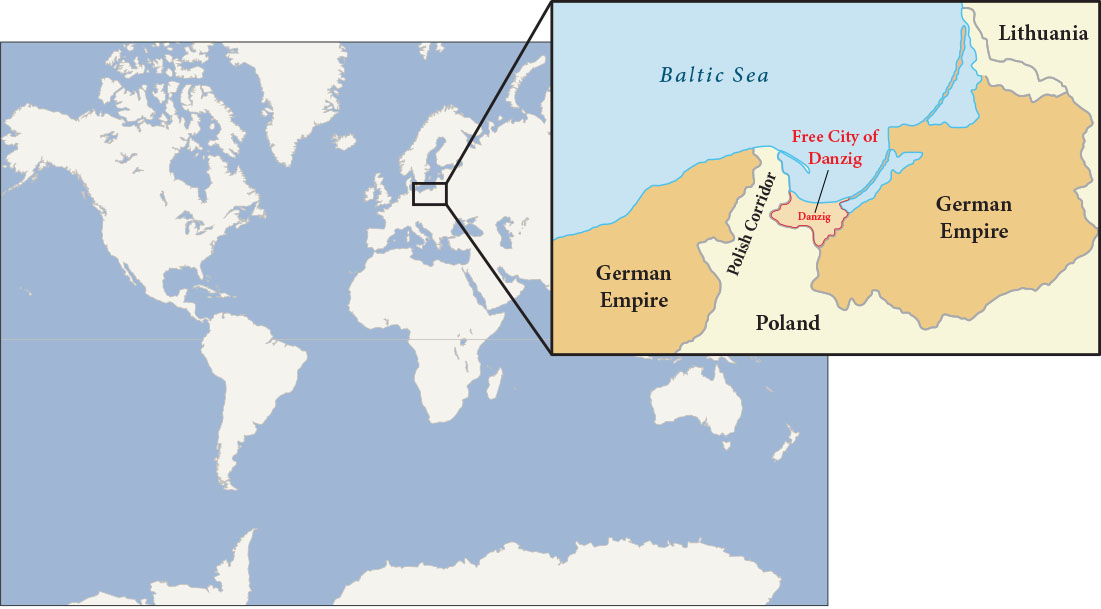
The ambition to expand eastward had motivated Germany for some time. The hunt for Lebensraum, or living space, had fueled its search for overseas colonies in the late 1800s and was an express goal of World War I. In the lands seized from countries in eastern Europe, Hitler envisioned German families settling and producing large numbers of children, supplanting the native Slavic populations. In this way, physically and culturally “superior” Germans would reclaim Europe from “inferior” Jewish and Slavic peoples. Similar ideologies meant to rationalize the displacement of a territory’s residents by a supposedly superior population have appeared in history before, like Manifest Destiny in the United States and Japan’s expansionist policies in Korea and Manchuria. To the east of Germany, the Treaty of Versailles had created an independent Poland and awarded parts of Germany to Poland in the process. This “Polish Corridor,” in an area where many Polish people already lived, was intended to give Poland access to a port, and the German city of Danzig (Gdańsk), bordering it, was made a semi-independent city-state with its own parliament (Figure 13.8). Poland was a prime target of the Nazis as they looked for Lebensraum.
英語のヒント
東へ拡張したいという野心は、以前からドイツを動かしていた。「生存圏」(レーベンスラウム)を求める考えは、19世紀後半に海外植民地を探す動きを促し、第一次世界大戦でも明示的な目標とされた。ヒトラーは、東ヨーロッパ諸国から奪った土地にドイツ人の家族が入植し、多くの子どもを産んで、先住のスラヴ系住民に取って代わることを思い描いていた。このようにして、肉体的・文化的に「優秀」なドイツ人が、「劣等」なユダヤ人やスラヴ人からヨーロッパを取り戻すというのである。ある地域の住民を、優れているとされる別の集団に置き換えることを正当化する同様の思想は、それ以前にも、米国のマニフェスト・デスティニーや、朝鮮・満州での日本の拡張政策などに見られた。ドイツの東では、ヴェルサイユ条約が独立したポーランドを生み、その際、ドイツ領の一部をポーランドに与えた。もともと多くのポーランド人が暮らしていた地域に設けられたこの「ポーランド回廊」は、ポーランドに港への道を確保するためのものだった。その境に位置するドイツの都市ダンツィヒ(グダニスク)は、独自の議会を持つ半独立の都市国家とされた(図13.8)。生存圏を求めるナチスにとって、ポーランドは第一の標的だった。
Access to the Sea.海への道
(credit world map: modification of work “World map blank shorelines” by Maciej Jaros/Wikimedia Commons/Public Domain; attribution close-up map: Copyright Rice University, OpenStax, under CC BY 4.0 license) · Public Domain + CC BY 4.0
Figure 13.8 The twenty-mile-wide Polish Corridor was meant to give Poland access to a port after World War I, separating two parts of Germany in order to do so. (credit world map: modification of work “World map blank shorelines” by Maciej Jaros/Wikimedia Commons/Public Domain; attribution close-up map: Copyright Rice University, OpenStax, under CC BY 4.0 license)
図13.8 幅20マイルのポーランド回廊は、第一次世界大戦後のポーランドに港への道を確保するために設けられ、そのためにドイツの二つの地域を分断した。(世界地図のクレジット:Maciej Jaros/Wikimedia Commons「World map blank shorelines」を改変。パブリックドメイン。拡大図の出典:著作権者ライス大学、OpenStax。CC BY 4.0ライセンス)
The lessons learned from Hitler’s violation of the Munich Pact spurred Britain and France to take action to protect Poland. They have also been invoked by world leaders ever since, whenever the aggression of one nation threatens the sovereignty or the territorial integrity of another. Using the example of Munich to warn against the perils of allowing one nation to invade another without opposition, whether it be Hitler’s Germany or Putin’s Russia, is known as invoking the Munich Analogy.
英語のヒント
ヒトラーによるミュンヘン協定違反から得た教訓は、イギリスとフランスをポーランド防衛へと動かした。その後も、一国の侵略が他国の主権や領土の一体性を脅かすたびに、世界の指導者たちはこの教訓を持ち出してきた。ヒトラーのドイツであれ、プーチンのロシアであれ、ある国による他国侵攻を抵抗せずに許す危険を警告するためにミュンヘンの例を使うことは、「ミュンヘンの類推」を用いることとして知られる。
The key to whether Germany could be boxed in was the attitudes of Stalin and the Soviet Union. As early as the summer of 1938, Stalin began to think of making some sort of deal with Germany. During the following summer, relations between Germany and the Soviet Union began to improve. Stalin, aware of Hitler’s musings in his book Mein Kampf, understood the long-term threat Germany posed and sought to buy time to prepare for possible war. For his part, Hitler wanted to avoid Germany’s World War I mistake of fighting on two fronts simultaneously. The result was the German-Soviet Nonaggression Pact of August 23, 1939. In this pact, Germany and the USSR agreed not to attack one another or to assist other nations in attacking the other. Included in the agreement were secret protocols that essentially divided eastern Europe between Germany and the Soviet Union. Lithuania, Latvia, Estonia, and parts of eastern Poland were allocated to the USSR as a reward for cooperating with Germany in the dismemberment of Poland.
英語のヒント
ドイツを封じ込められるかどうかの鍵は、スターリンとソ連の姿勢にあった。早くも1938年夏、スターリンはドイツとの何らかの取引を考え始めた。翌年の夏には、独ソ関係は改善し始めた。スターリンは、ヒトラーが著書『わが闘争』で述べた考えを知っており、ドイツが長期的な脅威であることを理解していた。そのため、起こりうる戦争への準備時間を稼ごうとした。一方のヒトラーは、第一次世界大戦でドイツが犯した、二つの戦線で同時に戦うという誤りを避けたかった。その結果が、1939年8月23日の独ソ不可侵条約だった。ドイツとソ連は、互いを攻撃せず、他国による相手国への攻撃を援助しないことに同意した。協定には、東ヨーロッパを事実上ドイツとソ連の間で分割する秘密議定書が含まれていた。ポーランド解体でドイツに協力する見返りとして、リトアニア、ラトヴィア、エストニア、ポーランド東部の一部がソ連に割り当てられた。
Seeing the pact as an ominous green light for a German eastward thrust, two days later Britain signed a mutual defense agreement with Poland. All things seemed ready for the German onslaught, which was launched on September 1, 1939. Britain and France fulfilled their commitment to Poland and declared war on Germany, forming the partnership known as the Allies, but not on the Soviet Union. About two weeks later, Soviet forces invaded Poland from the east. Crushed from two sides, Poland essentially ceased to exist. The European fires of World War II had been ignited.
英語のヒント
この条約を、ドイツの東方進出に不吉な青信号をともすものと見たイギリスは、2日後にポーランドと相互防衛協定を結んだ。ドイツの猛攻に向けた準備は整ったかに見え、1939年9月1日、攻撃が始まった。イギリスとフランスはポーランドへの約束を果たしてドイツに宣戦し、「連合国」と呼ばれる協力関係をつくったが、ソ連には宣戦しなかった。約2週間後、ソ連軍が東からポーランドに侵攻した。両側から打ち砕かれたポーランドは、事実上、国家としての存在を失った。ヨーロッパで第二次世界大戦の火が放たれたのである。