第15章現代世界と続く課題The Contemporary World and Ongoing Challenges
Global North and Global Southグローバル・ノースとグローバル・サウス
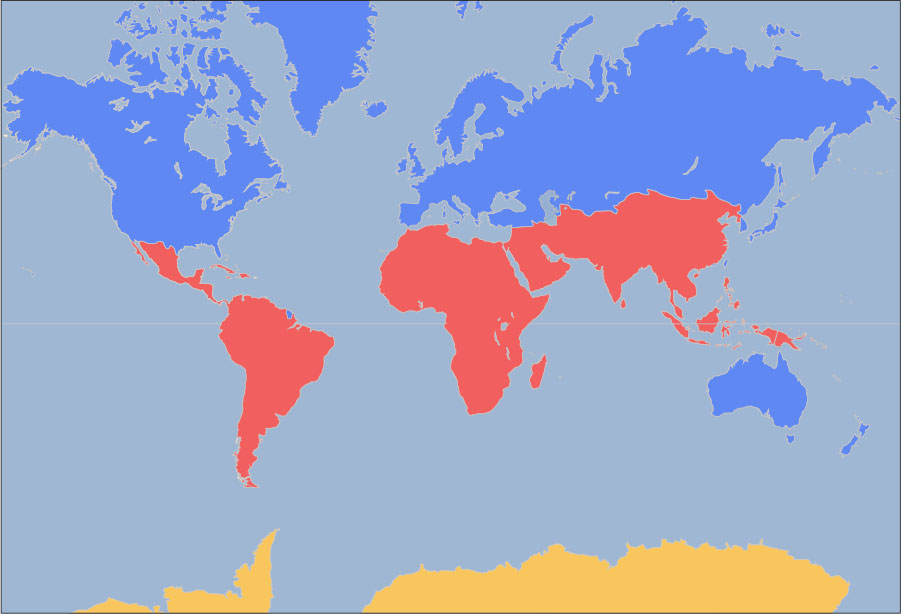
The reality for many people in Africa, Asia, and Latin America is a stark reminder of the wide gulf between what some refer to as the Global North and the Global South. These labels describe the rough geographic pattern evident in the global distribution of the world’s richest and poorest countries. Most of the richest countries, such as the United States, Canada, and the EU countries, are in the north, while poorer countries predominate in the south (Figure 15.34). However, there are also wealthy countries such as Australia, New Zealand, and Singapore in the southern hemisphere, so the terms actually reflect economic realities and not geography. Furthermore, while not all people living in Global South countries are poor, those that are earn only a fraction of what the average person in a Global North country earns. The world is complicated, and complexity resists simple categorizations.
英語のヒント
アフリカ、アジア、ラテンアメリカの多くの人々の現実は、グローバル・ノースとグローバル・サウスと呼ばれるものの間にある大きな溝を、厳しく突き付ける。これらの呼び名は、世界の最も豊かな国と最も貧しい国の分布に見られる、おおまかな地理的傾向を表す。アメリカ、カナダ、EU諸国など、最も豊かな国の大半は北側にあり、南側には貧しい国が多い(図15.34)。しかしオーストラリア、ニュージーランド、シンガポールなど南半球の豊かな国もあるため、これらの語は実際には地理より経済的な現実を反映する。さらに、グローバル・サウスに住む人が全員貧しいわけではないが、貧しい人の所得はグローバル・ノースの平均的な人の所得のほんの一部にすぎない。世界は複雑であり、その複雑さは単純な分類になじまない。
The Global North and the Global South.グローバル・ノースとグローバル・サウス。
(credit: modification of work “World map blank shorelines” by Maciej Jaros/Wikimedia Commons, Public Domain) · Public Domain
Figure 15.34 When people speak of the Global North, shown in blue in this map, they mean mostly wealthy Western countries. With a few exceptions, the Global South, shown in red, means mostly poorer countries, some of which were once colonized by European imperial powers. (credit: modification of work “World map blank shorelines” by Maciej Jaros/Wikimedia Commons, Public Domain)
図15.34 この地図で青く示されるグローバル・ノースとは、主に豊かな西側諸国を指す。赤く示されるグローバル・サウスは、少数の例外を除き、主に貧しい国々を指し、その一部はかつてヨーロッパ帝国の植民地だった。(クレジット:Maciej Jaros/Wikimedia Commons「World map blank shorelines」を改変、パブリックドメイン)
Many of the economic problems in the Global South can be traced to imperial exploitation, sometimes going back centuries. Countries in the Global North, especially in Europe, tended to reap the benefits of this exploitation. The legacy of colonialism and imperialism in Sub-Saharan Africa, Latin America, and southern Asia continues to affect these countries in the form of high levels of government corruption, poorly developed industries, and borders drawn for the benefit of imperialist powers rather than by the groups living there. In Africa, borders charted to benefit imperialist powers often separated members of the same ethnic group into different countries while forcing hostile groups into the same country. Violent ethnic conflict has been a frequent result.
英語のヒント
グローバル・サウスの多くの経済問題は、時には何世紀も前にさかのぼる帝国による搾取に由来する。グローバル・ノース、とりわけヨーロッパの国々は、この搾取の利益を得る傾向にあった。サハラ以南のアフリカ、ラテンアメリカ、南アジアにおける植民地主義と帝国主義の遺産は、深刻な政府の腐敗、未発達の産業、住民集団自身が引いたのではなく帝国主義列強の利益のために引かれた国境という形で、今もこれらの国々に影響する。アフリカでは、帝国主義列強の利益のための国境が、同じ民族の人々を別々の国に分け、敵対する集団を同じ国に押し込むことが多かった。その結果、暴力的な民族紛争が頻繁に生じた。
Even Global South countries that are resource-rich have struggled to develop their economies over the past few decades. Indeed, they often have more difficulty responding to their domestic needs than countries that are relatively resource-poor. This problem, sometimes dubbed the resource curse, a term coined by British economist Richard Auty in 1993, makes resource-rich countries prone to authoritarianism, high rates of conflict, and low rates of economic growth. Resource-poor countries typically use citizens’ taxes for the majority of government funding, resulting in greater public scrutiny over how that money is used and governments that are more responsive to public needs. In contrast, governments in resource-rich countries are able to tap into profit-producing extractive industries like oil production to fund public expenditures. Because that profit is often quite large, opportunities for government corruption abound. Efforts to capture more profit also contribute to conflict and sometimes authoritarian regimes, as politicians use money to reward political supporters and fund security forces that silence opponents and stamp out protest. There is also typically less public scrutiny of potential corruption.
英語のヒント
資源の豊かなグローバル・サウスの国でさえ、過去数十年、経済発展に苦労してきた。実際、資源が比較的乏しい国よりも、国内の必要に応えるのが難しいことが多い。この問題は、イギリスの経済学者リチャード・オーティが1993年に作った語で「資源の呪い」と呼ばれることがあり、資源豊富な国を権威主義、多発する紛争、低い経済成長へと陥りやすくする。資源の乏しい国は通常、政府の資金の大半を国民の税金で賄うため、その使い道に国民の厳しい監視が向き、政府も国民の必要によりよく応える。対して資源の豊かな国の政府は、石油生産などの利益を生む採掘産業から収入を得て、公的支出を賄える。利益は非常に大きいことが多く、政府が腐敗する機会も多い。より多くの利益を獲得しようとすることは紛争、ときには権威主義体制も助長する。政治家が資金を使って支持者に報い、反対者を黙らせ抗議を押しつぶす治安部隊を養うからである。腐敗の可能性に向けられる国民の監視も、通常は弱い。
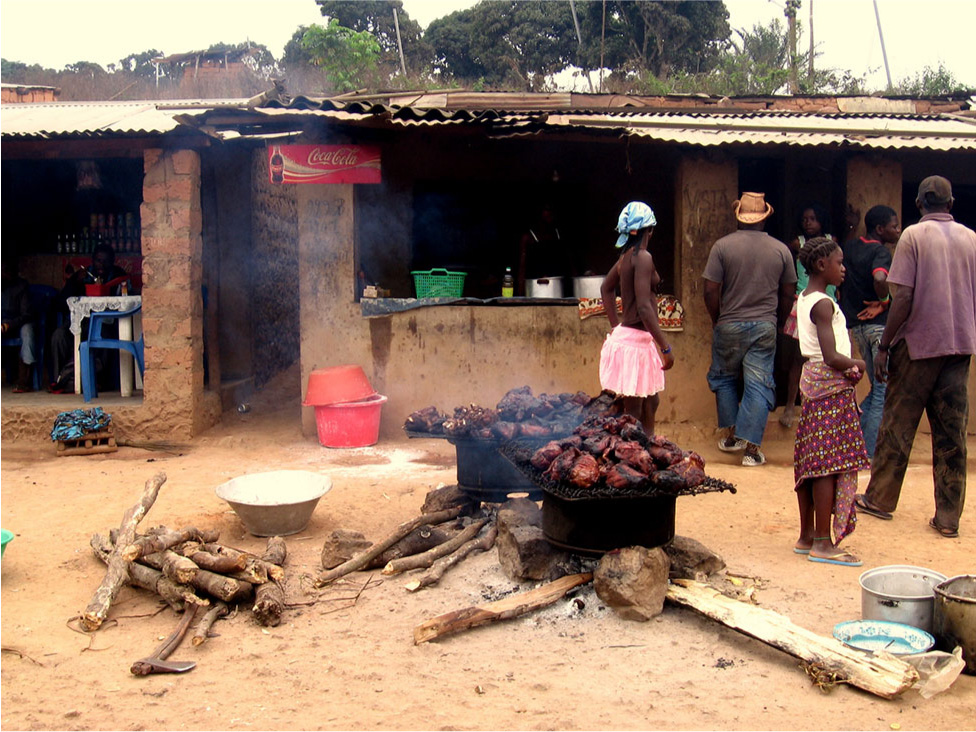
The African country of Angola, rich in diamonds and oil, has struggled with the resource curse. In 2018, oil made up more than 92 percent of its exports, and the oil industry accounted for about a third of its GDP. Since achieving independence from Portugal in 1975, the country has experienced internal wars and massacres. For much of this period, until 2017, Angola was ruled by José Eduardo dos Santos, who was routinely criticized internationally for election fraud, corruption, and authoritarianism. Much of his power was derived from the oil rents paid to him by oil companies operating in Angola, which he used to oppress his opposition, maintain his hold on power, and shower his family and close contacts with favors and money. The oil rents were substantial, but relatively little of this money actually trickled down to the country’s largely impoverished people (Figure 15.35). Strife also weakened Angola’s ability to feed itself. Famine conditions prevailed in the 1980s and 1990s, and many educated and skilled workers left for opportunities abroad. In 2019, the percentage of the population below the national poverty line was 41 percent, 30 percent of adults had not completed primary schooling, and 53 percent of the country had no access to electricity.
英語のヒント
ダイヤモンドと石油の豊かなアフリカの国アンゴラは、資源の呪いに苦しんできた。2018年、石油は輸出の92パーセント以上を占め、石油産業はGDPの約3分の1を占めた。1975年にポルトガルから独立して以来、同国は内戦と虐殺を経験した。この期間の大部分、2017年まで、アンゴラはジョゼ・エドゥアルド・ドス・サントスに支配された。彼は不正選挙、腐敗、権威主義を理由に、国際的に繰り返し批判された。権力の多くは、アンゴラで操業する石油会社が彼に支払う石油利権収入に由来した。彼はそれを、反対勢力の抑圧、権力の維持、家族と親しい関係者への特典と資金の大量提供に使った。石油利権収入は多額だったが、そのうち大部分が貧しい国民に実際に流れた分はごく少なかった(図15.35)。紛争は食料を自給する能力も弱めた。1980年代と1990年代には飢饉状態が広がり、教育や技能のある多くの労働者が国外の機会を求めて去った。2019年、国内の貧困線以下に暮らす人口は41パーセント、初等教育を修了していない成人は30パーセント、電気を利用できない人は国全体の53パーセントだった。
Poverty in Resource-Rich Angola.資源の豊かなアンゴラの貧困。
(credit: “Streetscene Angola village” by Paulo César Santos/Wikimedia Commons, CC0 1.0) · CC0 1.0
Figure 15.35 Despite their enormous natural riches, the people of Angola continue to live in great poverty, as in this typical village in the country. (credit: “Streetscene Angola village” by Paulo César Santos/Wikimedia Commons, CC0 1.0)
図15.35 莫大な天然資源にもかかわらず、アンゴラの人々は、この国の典型的な村のように、深刻な貧困の中で暮らし続ける。(クレジット:Paulo César Santos/Wikimedia Commons「Streetscene Angola village」、CC0 1.0)
While Angola is an extreme case, its problems are generally representative of those in many countries across the Global South, including those unaffected by the resource curse. As of 2015, approximately 85 percent of the world’s extreme poor (those living on less than $1.90 per day) lived in Sub-Saharan Africa and south Asia, and half of them lived in just five countries: India, Bangladesh, Nigeria, the Democratic Republic of the Congo, and Ethiopia. Many lack access to good-quality medical care, infrastructure, educational resources, and communication systems. They face high rates of famine, disease, and death from political instability. They also experience food instability. According to the United Nations, approximately 800 million people faced hunger in 2020, many in the Global South. They are also more vulnerable to natural disasters like hurricanes, earthquakes, tsunamis, and heat waves. Their countries are more likely to experience problems related to environmental and industrial pollution, as well as the many effects of climate change.
英語のヒント
アンゴラは極端な例だが、その問題は、資源の呪いを受けていない国も含め、グローバル・サウスの多くの国におおむね共通する。2015年時点で、世界の極度の貧困層、すなわち1日1.90ドル未満で暮らす人々の約85パーセントが、サハラ以南のアフリカと南アジアに住んでいた。その半数は、インド、バングラデシュ、ナイジェリア、コンゴ民主共和国、エチオピアのわずか5か国に住んでいた。多くは質の良い医療、基盤設備、教育資源、通信システムを利用できない。飢饉や病気、政治的不安定による死の危険に高い頻度でさらされる。食料供給も不安定である。国連によれば2020年に約8億人が飢餓に直面し、その多くはグローバル・サウスにいた。またハリケーン、地震、津波、熱波などの自然災害にも弱い。これらの国は、環境汚染や産業汚染、さらには気候変動のさまざまな影響に関連する問題に直面しやすい。
These difficulties have been at least partially alleviated by the efforts of international organizations like the World Bank and the International Monetary Fund (IMF). The World Bank has encouraged community-driven development by supporting government planning and investments that prioritize a bottom-up approach. It has helped countries manage the problem of persistent natural disasters, such as financing early warning systems for tsunamis in Southeast Asia. And it has provided funds to meet educational needs, to provide infrastructure for clean water, and to combat hunger by boosting agricultural production. Similarly, the IMF has provided a pool of monetary resources countries can access when they fall into financial difficulties.
英語のヒント
これらの困難は、世界銀行や国際通貨基金(IMF)などの国際機関の取り組みによって、少なくとも一部は緩和されてきた。世界銀行は、住民側から積み上げる方法を重視する政府計画や投資を支援し、共同体主導の開発を促してきた。東南アジアの津波の早期警報システムへの融資などを通じ、繰り返される自然災害への対処を各国に支援した。教育上の必要を満たし、清潔な水の基盤設備を整え、農業生産を増やして飢餓と闘うための資金も提供した。同様にIMFも、財政的困難に陥った国が利用できる資金を用意してきた。
While both organizations can point to their many achievements, they have occasionally made problems worse. Critics like the economist Joseph Stiglitz, for instance, point to the many conditions the IMF imposes on countries when it comes to help. These include increased privatization, elimination of protectionist policies, higher interest rates, and austerity measures that reduce government spending. Such conditions, Stiglitz and others have noted, tend to benefit foreign creditors from the Global North and hurt poor workers in the countries the IMF purports to be saving. Similar criticisms have been directed against the World Bank. Many have argued that the organization lacks representation from the Global South, so poor countries have relatively little influence within the organization and on its policies and actions.
英語のヒント
両機関は多くの実績を示せるが、ときには問題を悪化させてきた。たとえば経済学者ジョゼフ・スティグリッツのような批判者は、IMFが支援に来る際、各国に課す多くの条件を指摘する。民営化の拡大、保護主義政策の撤廃、金利引上げ、政府支出を減らす緊縮策などである。スティグリッツらが指摘するように、これらの条件はグローバル・ノースの外国債権者に利益をもたらす傾向があり、IMFが救済すると称する国の貧しい労働者を苦しめる。同様の批判は世界銀行にも向けられている。多くの人は、世界銀行にはグローバル・サウスの代表が不足し、そのため貧しい国々が組織内でも、その政策や行動に対しても、比較的小さな影響力しか持たないと論じてきた。