第15章現代世界と続く課題The Contemporary World and Ongoing Challenges
State Instability and Human Rights Abuses国家の不安定さと人権侵害
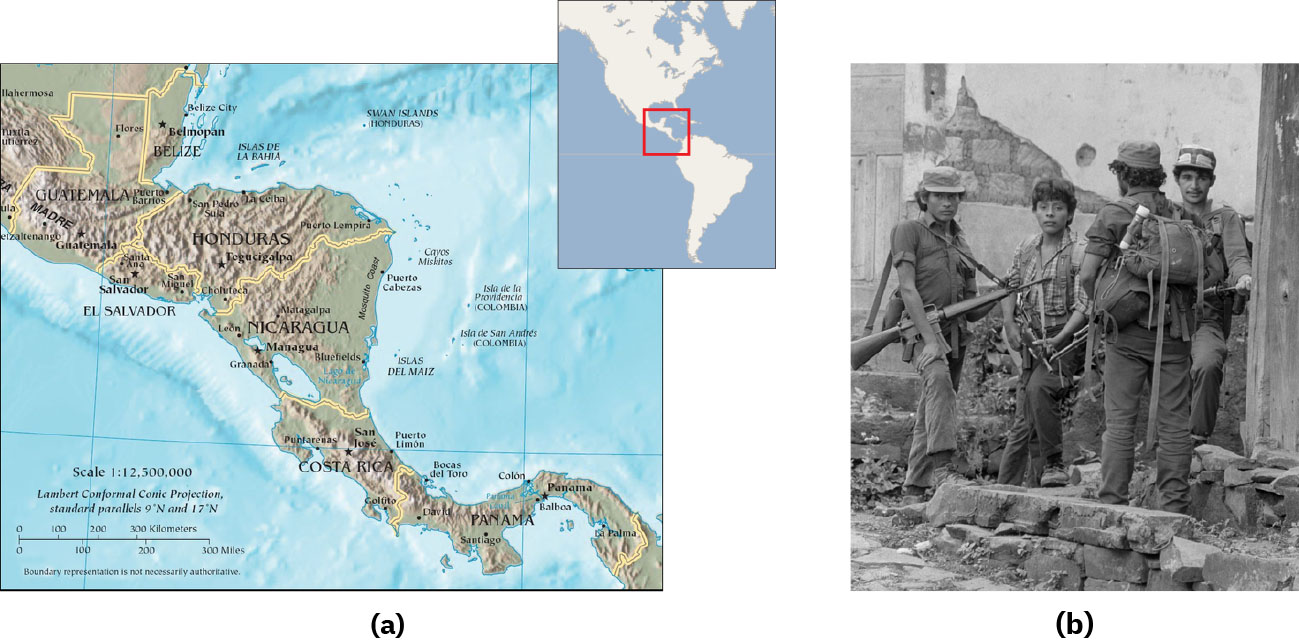
Many of the migrants arriving at the southern border of the United States are fleeing economic and political disorder in their home countries. This pattern goes back many decades. For example, many thousands of Salvadoran migrants have entered the United States each year, especially during and after the El Salvador Civil War (Figure 15.29). That war began in 1979 with a military coup supported by the United States, which feared that radical leftist elements in El Salvador were destabilizing the country and leading it in a direction contrary to U.S. Cold War interests.
英語のヒント
アメリカ南部国境へ来る移民の多くは、母国の経済的・政治的混乱から逃れている。この傾向は何十年も前にさかのぼる。たとえば毎年何千人ものエルサルバドル人がアメリカへ入り、特にエルサルバドル内戦中とその後に多かった(図15.29)。内戦は1979年、アメリカが支援した軍事クーデタで始まった。アメリカは、エルサルバドルの急進左派が同国を不安定にし、冷戦下のアメリカの利益に反する方向へ導いていると恐れた。
El Salvador’s Civil War.エルサルバドル内戦。
(credit a left: modification of work “CIA map of Central America” by CIA The World Factbook – Regional maps/Wikimedia Commons, Public Domain; credit a right: modification of work “World map blank shorelines” by Maciej Jaros/Wikimedia Commons, Public Domain; credit b: modification of work “ERP combatants in Perquín, El Salvador in 1990” by Linda Hess Miller/Wikimedia Commons, CC BY 3.0) · Public Domain + CC BY 3.0
Figure 15.29 (a) The civil war in El Salvador greatly destabilized the country and led to a surge in Salvadorans seeking asylum in the United States. (b) The soldiers in the photo are members of the Ejército Revolucionario del Pueblo (People’s Revolutionary Army), one of five left-wing groups that made up the Farabundo Martí National Liberation Front. (credit a left: modification of work “CIA map of Central America” by CIA The World Factbook – Regional maps/Wikimedia Commons, Public Domain; credit a right: modification of work “World map blank shorelines” by Maciej Jaros/Wikimedia Commons, Public Domain; credit b: modification of work “ERP combatants in Perquín, El Salvador in 1990” by Linda Hess Miller/Wikimedia Commons, CC BY 3.0)
図15.29 (a)エルサルバドル内戦は同国を著しく不安定にし、アメリカで庇護を求めるエルサルバドル人を急増させた。(b)写真の兵士たちは、ファラブンド・マルティ民族解放戦線を構成した五つの左翼集団の一つ、人民革命軍の構成員である。(クレジットa左:CIA The World Factbook – Regional maps/Wikimedia Commons「CIA map of Central America」を改変、パブリックドメイン。a右:Maciej Jaros/Wikimedia Commons「World map blank shorelines」を改変、パブリックドメイン。b:Linda Hess Miller/Wikimedia Commons「ERP combatants in Perquín, El Salvador in 1990」を改変、CC BY 3.0)
By supporting the coup with money, military training, and the sharing of intelligence reports, the United States hoped to return stability to El Salvador, but the opposite occurred. Many in El Salvador felt the military government was illegitimate and staged protests and resistance. The military responded with violence of its own, such as a deadly attack on demonstrators in 1980. There were also rightist paramilitary groups, often referred to as “death squads,” fighting against leftist guerrilla forces in the countryside and committing murders and massacres. As the country descended into chaos, many left and found refuge in the United States. Today these immigrants number about 2.5 million.
英語のヒント
資金、軍事訓練、情報報告の共有によってクーデタを支援し、アメリカはエルサルバドルの安定回復を望んだが、逆のことが起きた。同国の多くの人は軍事政権を正統でないと考え、抗議や抵抗を行った。軍は暴力で応じ、1980年にはデモ参加者を襲撃して死者を出した。「死の部隊」と呼ばれることの多い右翼準軍事集団もおり、地方で左翼ゲリラと戦い、殺人や虐殺を行った。国が混乱に陥る中、多くの人が出国し、アメリカに避難先を見いだした。今日、こうした移民は約250万人に上る。
A similar pattern of civil war and instability in other parts of Central America has also produced human rights abuses and an increase in migration to the United States. The Guatemalan Civil War (1960–1996), for example, led to numerous human rights violations against Guatemalans. These included a reported campaign of violence and terrorism by the government against ethnic Mayans and peasants accused of supporting leftist guerrilla groups. Nicaragua has experienced destabilization since the 1960s as well. Leftist guerrilla organizations fought against the dictatorship of the Somoza family, which ruled until the late 1970s. Then, in 1979, one of the major leftist groups, the Sandinistas, took control. The Sandinistas were socialists, and within months they had opened diplomatic relations with the Soviet Union and later accepted its economic and military assistance. This action alarmed the United States and led it to support resistance to the Sandinista government, which contributed to an escalation of the violence and a number of human rights abuses on both sides.
英語のヒント
中央アメリカの他の地域でも、同様の内戦と不安定さが人権侵害とアメリカへの移民増加を生んだ。たとえばグアテマラ内戦(1960〜1996年)は、グアテマラ人に対する多数の人権侵害をもたらした。政府が、左翼ゲリラを支持しているとされたマヤ系住民や農民に対して、組織的な暴力と恐怖支配を行ったと報告されている。ニカラグアも1960年代以来、不安定化を経験した。左翼ゲリラ組織は、1970年代末まで支配したソモサ一族の独裁と戦った。1979年、主要な左翼集団の一つであるサンディニスタが政権を握った。社会主義者だった彼らは数か月以内にソビエト連邦と国交を開き、後に経済・軍事援助を受け入れた。この行動を警戒したアメリカは、サンディニスタ政府への抵抗を支援した。それは暴力の激化と、双方による多くの人権侵害の一因となった。
While violence in Central America has declined in the last few decades, it persists elsewhere. Venezuela, effectively a one-party state since 2007, has been accused by the United States of a number of human rights abuses. These include murder, imprisonment, torture, and government support of armed groups that commit violence against protestors. Similar accusations have been made against the governments in Colombia, Cuba, Ecuador, Peru, and Chile. Chile’s government committed numerous human rights abuses against its people during the dictatorship of Augusto Pinochet (1973–1990). These included torture, execution, and sexual abuse of leftist political opponents. While Pinochet has since died, human rights organizations claim the abuses continue, particularly against Indigenous groups and those identifying as LGBTQ+.
英語のヒント
中央アメリカの暴力は過去数十年に減少したが、他の地域では続いている。2007年以来、実質的な一党国家であるベネズエラは、アメリカから数多くの人権侵害を非難されている。殺人、投獄、拷問、抗議者に暴力を振るう武装集団への政府の支援などである。同様の非難は、コロンビア、キューバ、エクアドル、ペルー、チリの政府にも向けられてきた。チリ政府は、アウグスト・ピノチェトの独裁期(1973〜1990年)に国民に対する多数の人権侵害を行った。左派の政治的反対者への拷問、処刑、性的虐待も含まれた。ピノチェトはその後死亡したが、人権団体は、特に先住民集団とLGBTQ+を自認する人々への侵害が続いていると主張する。
Similar human rights abuses committed by authoritarian governments are also a persistent reality across much of Africa. Between April and July 1994, nearly 800,000 people were killed in Rwanda when an estimated 200,000 members of the Hutu majority sought to wipe out the minority Tutsi population and any Hutus who tried to protect them. Armed conflicts in countries like Liberia, Burkina Faso, Cameroon, the Democratic Republic of the Congo, Nigeria, and Somalia have also led to many human rights violations. In a number of countries, militant Islamic organizations have committed civilian massacres and targeted killings. These include attacks by Boko Haram, the Islamic State in West Africa, and the Islamic State in the Greater Sahara, which have been responsible for many hundreds of deaths over the last few years. In response, the governments in these countries have committed atrocities of their own. For example, in 2021, government forces in the Central African Republic attacked a mosque and killed fourteen people.
英語のヒント
権威主義的な政府による同様の人権侵害は、アフリカの多くの地域でも続く現実である。1994年4月から7月、ルワンダで多数派フツの推計20万人が、少数派ツチと彼らを守ろうとするフツを皆殺しにしようとし、約80万人が殺害された。リベリア、ブルキナファソ、カメルーン、コンゴ民主共和国、ナイジェリア、ソマリアなどの武力紛争も、多くの人権侵害をもたらした。複数の国では、イスラーム武装組織が民間人の虐殺や特定の標的の殺害を行った。ボコ・ハラム、西アフリカのイスラーム国、大サハラのイスラーム国による攻撃も含まれ、過去数年に数百人もの死者を出した。これに対し、各国政府も残虐行為を行った。たとえば2021年、中央アフリカ共和国の政府軍はモスクを襲撃し、14人を殺害した。
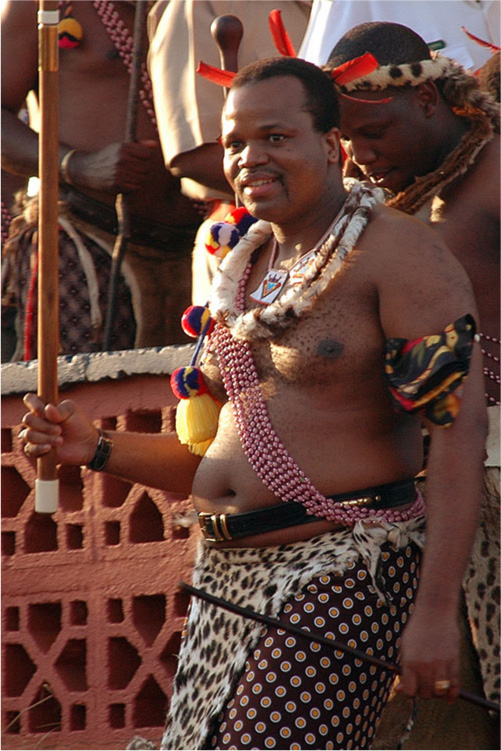
Governments across Africa have often used violence to break up anti-government protests. For example, in the small southern African country of Eswatini (formerly Swaziland), government forces broke up a pro-democracy protest in 2021, killing eighty people and injuring more than two hundred. Many more who protested the regime of the Eswatini king Mswati III were arrested (Figure 15.30). Similar actions against protestors in Sudan that year led to the deaths of fifty-three people. And other government abuses across the continent have resulted in long prison sentences and even death for protestors, whistleblowers, and journalists who have challenged government policies.
英語のヒント
アフリカ各地の政府は、反政府抗議を解散させるため、しばしば暴力を用いてきた。たとえば南部アフリカの小国エスワティニ(旧スワジランド)では、2021年に政府軍が民主化を求める抗議を鎮圧し、80人を殺害、200人以上を負傷させた。エスワティニ国王ムスワティ3世の体制に抗議した、さらに多くの人々も逮捕された(図15.30)。同年のスーダンでも、抗議者に対する同様の行動で53人が死亡した。アフリカ全域のその他の政府による侵害でも、政府の政策に異議を唱えた抗議者、内部告発者、ジャーナリストが、長期の拘禁刑や、さらには死に追いやられた。
King Mswati III of Eswatini.エスワティニ国王ムスワティ3世。
(credit: “King Mswati III, 2006” by “Amada44”/Wikimedia Commons, Public Domain) · Public Domain
Figure 15.30 King Mswati III has been condemned by many international observers as an absolute monarch who rules with an iron fist. As this 2006 photograph shows, he also skillfully uses the symbols of his country to strengthen his hold on power. (credit: “King Mswati III, 2006” by “Amada44”/Wikimedia Commons, Public Domain)
図15.30 ムスワティ3世は、力ずくで支配する絶対君主として多くの国際的な観察者から非難されてきた。2006年のこの写真が示すように、彼は自国の象徴も巧みに使い、権力の掌握を強めている。(クレジット:「Amada44」/Wikimedia Commons「King Mswati III, 2006」、パブリックドメイン)
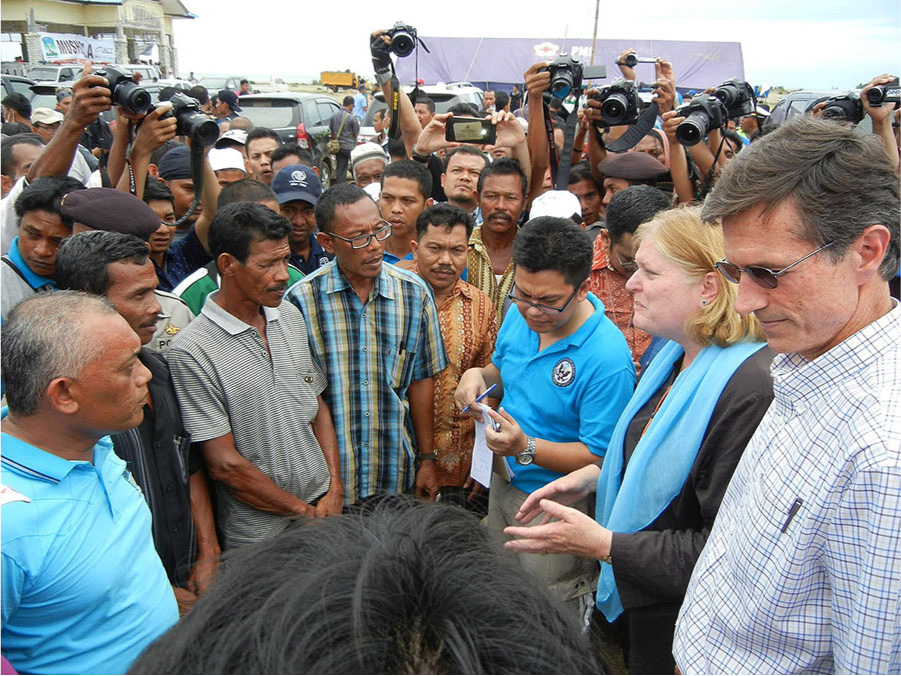
In Asia, Myanmar and China demonstrate that human rights violations can emerge where racial and religious prejudices against minorities are pronounced. The Rohingya people, a Muslim minority living in predominantly Buddhist Myanmar, have faced oppression for generations, including being officially excluded from citizenship in 1982. Because they are a small minority and viewed with suspicion by the larger Buddhist population, they have long been vulnerable to attacks. In 2017, brutality against the Rohingya escalated dramatically and triggered a mass migration of more than 700,000 to neighboring Bangladesh. As of 2022, nearly a million Rohingya people were still living in large refugee camps there (Figure 15.31).
英語のヒント
アジアでは、ミャンマーと中国が、少数派に対する人種的・宗教的偏見が強いところで人権侵害が生じうることを示している。仏教徒が多数を占めるミャンマーに住むムスリム少数派のロヒンギャは、何世代にもわたって抑圧され、1982年には正式に市民権から排除された。少数で、より大きな仏教徒集団から疑いの目で見られるため、長く攻撃を受けやすい立場にあった。2017年、ロヒンギャへの残虐行為が急激に激化し、70万人以上が隣国バングラデシュへ大量に移動した。2022年時点でも、約100万人のロヒンギャが同国の大規模な難民キャンプで暮らしていた(図15.31)。
Rohingya Refugees.ロヒンギャ難民。
(credit: “Assistant Secretary for Population, Migration, and Refugees Anne C. Richard Visiting Rohingya Refugee Camp in Aceh” by U.S. Embassy, Jakarta/Flickr, Public Domain) · Public Domain
Figure 15.31 Rohingya refugees from Myanmar have struggled to draw global attention to their plight. In 2015, their representatives at a Sumatra refugee camp spoke with Anne C. Richards, the Obama administration’s assistant secretary of state for population, refugees, and migration. (credit: “Assistant Secretary for Population, Migration, and Refugees Anne C. Richard Visiting Rohingya Refugee Camp in Aceh” by U.S. Embassy, Jakarta/Flickr, Public Domain)
図15.31 ミャンマーからのロヒンギャ難民は、自分たちの苦境に世界の関心を集めようと努めてきた。2015年、スマトラの難民キャンプで、代表者たちがオバマ政権の人口・難民・移民担当国務次官補アン・C・リチャーズと話した。(クレジット:U.S. Embassy, Jakarta/Flickr「Assistant Secretary for Population, Migration, and Refugees Anne C. Richard Visiting Rohingya Refugee Camp in Aceh」、パブリックドメイン)
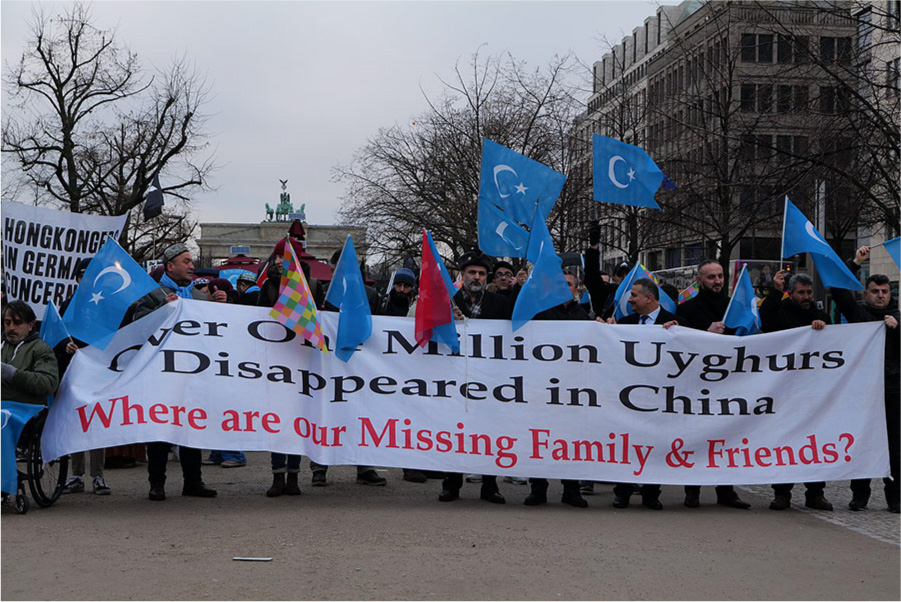
Another case of state-sponsored abuse against an ethnic minority is the oppression of the Uyghurs of China (Figure 15.32). The Uyghurs number about eleven million and are a mostly Muslim ethnic group of Turkic origin living in northwestern Xinjiang. The Chinese government has repressed them for decades, claiming that many hold extremist ideas about carving out their own Islamic state, which China views as a threat to its territorial integrity. Chinese policy has been to compel the Uyghurs to conform their religious beliefs more thoroughly to the state’s nationalist message and to eliminate separatist movements. Since at least as early as 2017, China has rounded up several hundred thousand Uyghurs and placed them in what it calls vocational training centers. Human rights groups, however, have described these as reeducation camps intended to compel the Uyghurs to renounce Islam and become loyal Chinese citizens. Relatively little is known about the many camps because the state controls information and denies that abuse occurs within them.
英語のヒント
民族的少数派への国家による侵害のもう一つの例が、中国のウイグル人に対する抑圧である(図15.32)。ウイグル人は約1,100万人で、北西部の新疆に住む、主にムスリムのテュルク系民族である。中国政府は何十年も彼らを抑圧し、多くの人が独自のイスラーム国家を切り出そうとする過激思想を持っていると主張してきた。中国はそれを領土的一体性への脅威とみなす。中国の政策は、ウイグル人の宗教的信念を国家の民族主義的な方針にさらに徹底して合わせさせ、分離独立運動をなくすことだった。遅くとも2017年以降、中国は数十万人のウイグル人を一斉に拘束し、職業訓練センターと呼ぶ施設に収容してきた。しかし人権団体は、それらを、イスラームを捨てて忠実な中国国民となるようウイグル人に強制する再教育収容所と説明している。国家が情報を統制し、内部で侵害が起きていることを否定するため、多数の収容所について分かっていることは比較的少ない。
Support for China’s Uyghur People.中国のウイグル人への支援。
(credit: “Demonstration for the rights of the Uyghurs in Berlin 2020-01-19 09” by Leonhard Lenz/Wikimedia Commons, CC0 1.0) · CC0 1.0
Figure 15.32 In China, protesting the treatment of Uyghurs is strictly prohibited by the government. These marchers in Germany called attention to their plight in 2020. (credit: “Demonstration for the rights of the Uyghurs in Berlin 2020-01-19 09” by Leonhard Lenz/Wikimedia Commons, CC0 1.0)
図15.32 中国では、ウイグル人の扱いへの抗議を政府が厳しく禁じている。ドイツのこれらの行進参加者は、2020年にウイグル人の苦境への関心を呼びかけた。(クレジット:Leonhard Lenz/Wikimedia Commons「Demonstration for the rights of the Uyghurs in Berlin 2020-01-19 09」、CC0 1.0)
Women and girls often face the brunt of violence when instability reigns or when states sponsor oppression against minorities. Both Rohingya and Uyghur women have described sexual abuse perpetrated by the state or with its tacit approval. In 2014, the world condemned the Islamic terrorist group Boko Haram’s attack on a girl’s high school in Nigeria and its kidnapping of 276 mostly Christian female students, many of whom were forced into marriages with Boko Haram members or sold into sexual slavery. Those who escaped have described beatings, sexual assaults, and torture. While this event captured global attention, including from First Lady Michelle Obama, many similar kidnappings have occurred before and since with almost no international coverage at all (Figure 15.33).
英語のヒント
不安定な状況が広がるときや、国家が少数派への抑圧を推し進めるとき、女性と少女はしばしば暴力の最も重い被害を受ける。ロヒンギャとウイグルの女性は、国家が直接行った、または黙認した性的虐待を語っている。2014年、世界は、イスラーム系テロ集団ボコ・ハラムがナイジェリアの女子高校を襲い、主にキリスト教徒の女子生徒276人を誘拐したことを非難した。多くはボコ・ハラムの構成員との結婚を強いられたり、性奴隷として売られたりした。脱出した女性は、殴打、性的暴行、拷問について語っている。この事件はミシェル・オバマ大統領夫人を含め世界の注目を集めたが、その前後にも同様の誘拐が多数起き、国際的にはほとんど全く報道されなかった(図15.33)。
A Plea for Boko Haram’s Victims.ボコ・ハラムの被害者のための訴え。
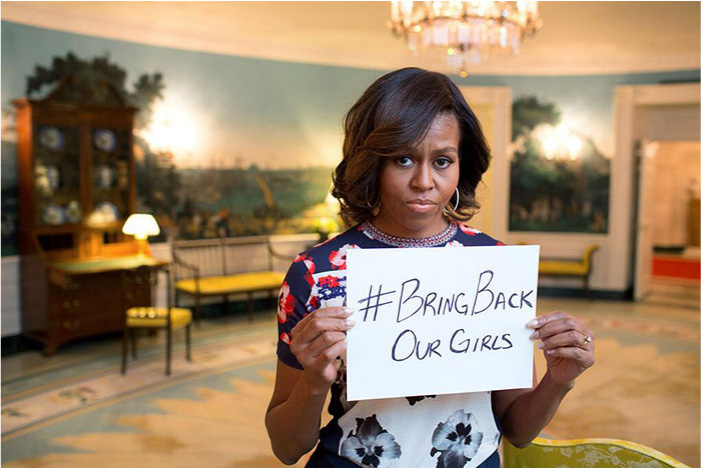
(credit: “First Lady Michelle Obama holding a sign reading "#bringbackourgirls"” by Michelle Obama, Office of the First Lady/Wikimedia Commons, Public Domain) · Public Domain
Figure 15.33 First Lady Michelle Obama brought much-needed attention to the kidnapping of girls in Africa when she posed for this photograph in the Diplomatic Reception Room at the White House in 2014. (credit: “First Lady Michelle Obama holding a sign reading "#bringbackourgirls"” by Michelle Obama, Office of the First Lady/Wikimedia Commons, Public Domain)
図15.33 2014年、ミシェル・オバマ大統領夫人はホワイトハウスの外交応接室でこの写真に収まり、アフリカの少女誘拐に、切実に必要とされていた関心を集めた。(クレジット:Michelle Obama, Office of the First Lady/Wikimedia Commons「First Lady Michelle Obama holding a sign reading "#bringbackourgirls"」、パブリックドメイン)
The situation of women in Afghanistan is particularly dire. Since retaking control of the country in August 2021 following the U.S. military’s departure, the Taliban has rolled back virtually all the once-protected civil rights of women and girls. Afghan women have been denied access to education, health care, and civil rights and the right to free expression, freedom of movement, and freedom of association. They are required to completely cover their bodies while outdoors and are routinely inspected by security officials to ensure they are properly clothed and in the company of a male relative. Because they are now restricted in the types of jobs they can hold, many Afghan women have found it difficult to earn enough money to support themselves or their families as they once did.
英語のヒント
アフガニスタンの女性の状況は、とりわけ悲惨である。アメリカ軍撤退後の2021年8月に国の支配を取り戻して以来、タリバンは、かつて保障されていた女性と少女の市民的権利をほぼすべて後退させた。アフガニスタンの女性は、教育、医療、市民的権利、表現の自由、移動の自由、結社の自由への権利を否定されてきた。屋外では全身を覆わねばならず、適切な服装をし、男性親族を同伴しているか、治安当局者から日常的に検査される。就ける職業が制限されたため、多くのアフガニスタン女性は、以前のように自分や家族を養うだけの収入を得るのが難しくなった。