第15章現代世界と続く課題The Contemporary World and Ongoing Challenges
15.3 Science and Technology for Today’s World15.3 現代世界の科学と技術
Learning Objectives学習の目標
By the end of this section, you will be able to:
この節を学び終えると、次のことができるようになる。
Discuss the development of complex digital computers and their effects on human society
複雑なデジタルコンピュータの発展と人間社会への影響を論じる
Analyze the effects of the internet and social media on society
インターネットとソーシャルメディアの社会への影響を分析する
Describe important medical developments of the last fifty years and current medical challenges
過去50年の重要な医学の発展と、現在の医療上の課題を説明する
World War II brought about a massive technological transformation as countries like Germany and the United States rapidly innovated to avoid destruction and defeat their enemies. In the decades after the war, there was major progress in medical technology, the creation of new vaccines, and the elimination of deadly diseases. All these achievements had profound effects on the way people lived, traveled, and worked. Underlying them were major advancements in the field of information technologies, such as computers. Once the war was over, the development of increasingly powerful computers ushered in a computer revolution as powerful as the nineteenth century’s Industrial Revolution, and with it a digital age.
英語のヒント
第二次世界大戦は、ドイツやアメリカなどが破壊を免れ敵を倒すため急速に革新したことで、大規模な技術変革をもたらした。戦後数十年には、医療技術、新しいワクチン、致死的な病気の根絶に大きな進歩があった。これらすべてが、人々の暮らし、移動、労働の仕方に深い影響を与えた。その基盤には、コンピュータなどの情報技術分野の大きな進展があった。戦争が終わると、ますます強力なコンピュータの開発が、19世紀の産業革命に匹敵するコンピュータ革命をもたらし、デジタル時代を開いた。
The Digital Computer Revolutionデジタルコンピュータ革命
Many of the technological advancements of the 1940s and 1950s came in the form of increasingly powerful analog computers, which analyze a continuous stream of information, much like that recorded on vinyl records. Analog computers worked well for solving big mathematical problems, such as the calculations related to electrical power delivery systems or the study of nuclear physics. However, one of their weaknesses was that they were inefficient at managing large amounts of data. Digital computers, or those that translate information into a complex series of ones and zeros, were far more capable of managing bulk data. Just a few years after the war, digital computing received a huge boost with the invention of the transistor, a device with far more computing potential than its predecessor the vacuum tube. Scientists could amplify this enlarged computing capacity even further by wiring multiple transistors together in increasingly complex ways.
英語のヒント
1940〜1950年代の技術進歩の多くは、より強力なアナログコンピュータという形をとった。アナログコンピュータは、レコード盤に記録されるもののような連続した情報の流れを分析する。送電システムの計算や核物理学の研究のような、大きな数学問題の解決には有効だった。しかし大量のデータ管理には非効率という弱点があった。情報を1と0の複雑な並びへ変換するデジタルコンピュータは、大量のデータをはるかにうまく管理できた。戦争からわずか数年後、真空管に代わって、より大きな計算上の可能性を持つトランジスタが発明され、デジタル計算は大きく前進した。複数のトランジスタをより複雑に配線すれば、増大した計算能力をさらに拡張できた。
The use of multiple transistors for computing purposes was an important step, but it had obvious drawbacks. Making machines capable of processing a great deal of information required connecting many transistors, which took up a great deal of space. Then, in the late 1950s, inventors in the United States developed an innovative solution. Using silicon, they could integrate transistors and capacitors in a way that clumsy wiring could not accomplish. The silicon-based integrated circuit freed computer technology from size constraints and opened the door to additional advancements in computing power.
英語のヒント
計算に複数のトランジスタを使うことは重要な一歩だったが、明らかな欠点もあった。大量の情報を処理できる機械を作るには、多数のトランジスタを接続しなければならず、広い空間を占めた。1950年代末、アメリカの発明家は革新的な解決策を開発した。シリコンを使えば、扱いにくい配線ではできなかった形でトランジスタとコンデンサを集積できた。シリコンの集積回路は、コンピュータ技術を大きさの制約から解放し、さらなる計算能力向上への道を開いた。
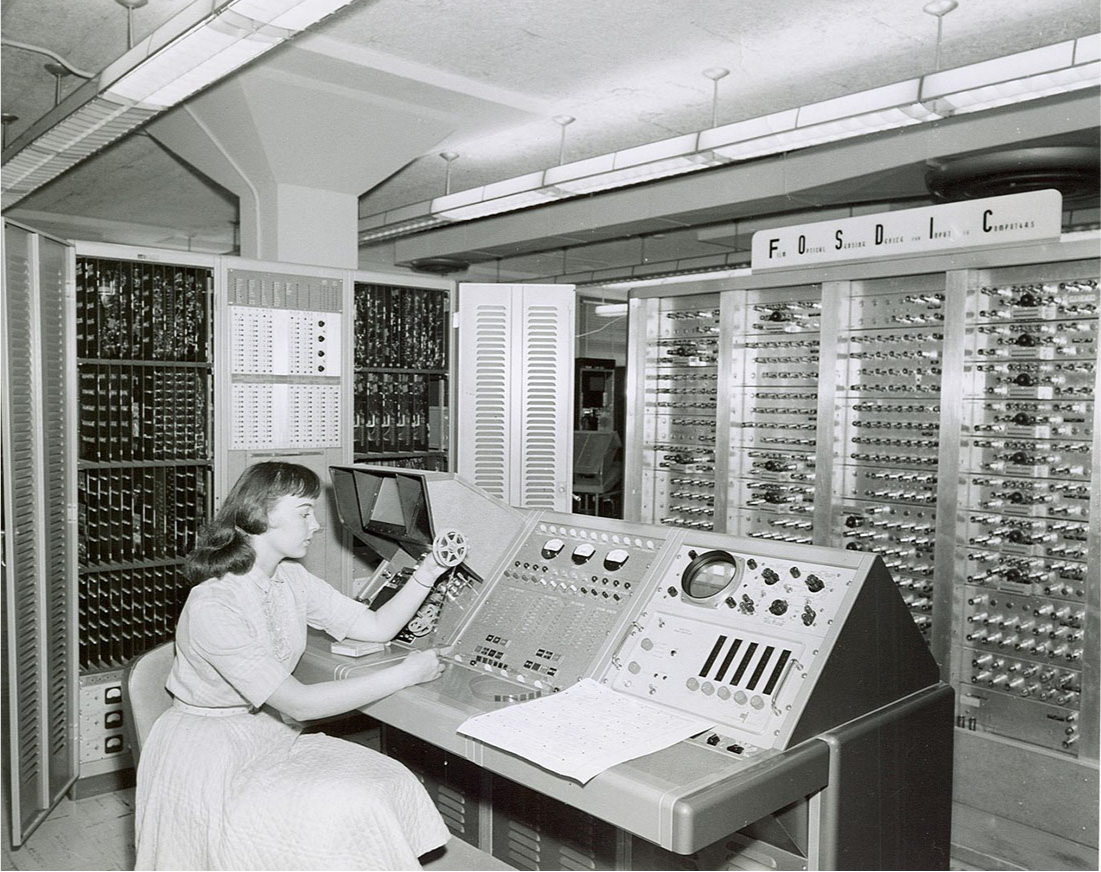
Even so, digital computers remained large, expensive, and complicated to operate, and their use was largely confined to universities and the military. Only gradually over the 1970s did computing technology become more widely available, largely thanks to mass-produced general-purpose computers, sometimes called minicomputers, designed by IBM and the Digital Equipment Company. These served a variety of government and private purposes, such as calculating the Census, managing the flow of tax monies, and processing calculations related to creditworthiness (Figure 15.15). But despite being somewhat cheaper, minicomputers remained out of reach for average users.
英語のヒント
それでもデジタルコンピュータは大きく、高価で、操作が複雑なままで、利用は主に大学と軍に限られていた。1970年代を通じてようやく徐々に普及したのは、主にIBMとデジタル・イクイップメント社が設計した、ミニコンピュータとも呼ばれる量産型の汎用コンピュータのおかげだった。国勢調査の集計、税収の流れの管理、信用力に関する計算など、官民のさまざまな目的に使われた(図15.15)。しかし多少安くなっても、一般の利用者には手の届かないものだった。
Computers, 1950s.1950年代のコンピュータ。
(credit: modification of work “Woman inspecting FOSDIC film” by U. S. Census Bureau/Wikimedia Commons, Public Domain) · Public Domain
Figure 15.15 In the 1950s, computers required complex data management systems to operate. The U.S. Census Bureau used this device to transfer data from paper questionnaires to microfilm to allow for rapid processing by its computers. (credit: modification of work “Woman inspecting FOSDIC film” by U. S. Census Bureau/Wikimedia Commons, Public Domain)
図15.15 1950年代のコンピューターを動かすには、複雑なデータ管理システムが必要だった。アメリカ国勢調査局は、紙の調査票のデータをマイクロフィルムに移し、コンピューターで迅速に処理できるよう、この装置を使った。(クレジット:U. S. Census Bureau/Wikimedia Commons「Woman inspecting FOSDIC film」を改変、パブリックドメイン)
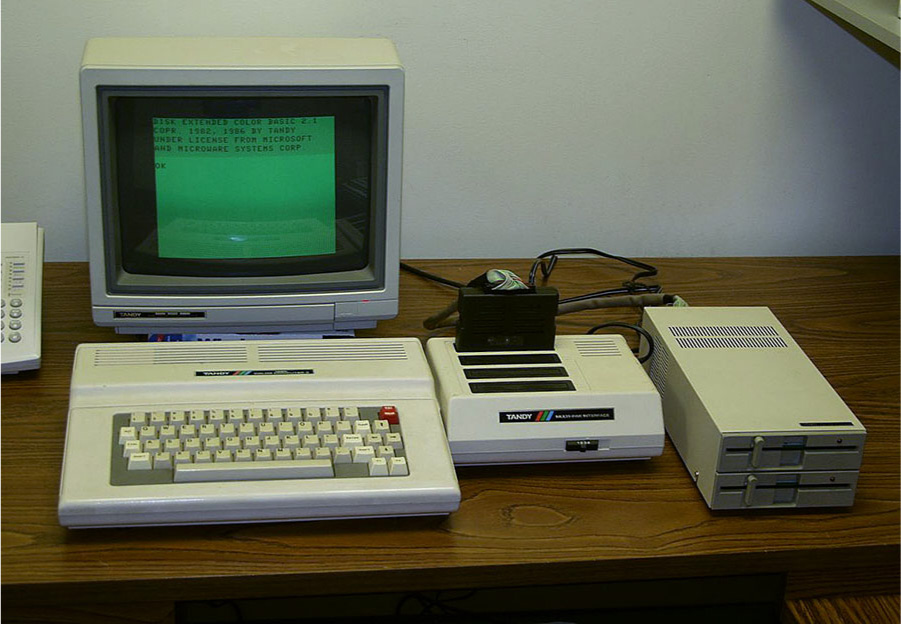
The journey from minicomputers to personal computers began with the Intel Corporation, established in 1968 in Mountain View, California, in a region now commonly called Silicon Valley. During the 1970s, Intel developed a line of integrated circuits that were not only more powerful than their predecessors but also programmable. These became known as microprocessors, and they revolutionized computing by holding all of a computer’s processing power in a single integrated circuit. In 1975, a company in New Mexico released the first marketed personal computer, the Altair 8800. This used an Intel microprocessor and was promoted to computer hobbyists eager to wield a level of computing power once available to only a few. The Altair’s popularity inspired competing products like the Apple, the Commodore, and the Tandy Radio Shack computer (Figure 15.16). These personal computer systems were far easier to use and appealed to a much larger market than just hobbyists.
英語のヒント
ミニコンピューターからパーソナルコンピューターへの道のりは、現在シリコンバレーと呼ばれる地域にあるカリフォルニア州マウンテンビューで、1968年に設立されたインテル社から始まった。1970年代、インテルは従来のものより高性能なだけでなく、プログラム可能でもある一連の集積回路を開発した。それらはマイクロプロセッサーとして知られるようになり、コンピューターの処理能力を一つの集積回路に収めることで、コンピューター技術に革命を起こした。1975年、ニューメキシコ州の企業が、初めて市場で販売されたパーソナルコンピューター、アルテア8800を発売した。これはインテルのマイクロプロセッサーを使用し、かつてはごく少数しか利用できなかった水準の計算能力を自分で使いたいと願うコンピューター愛好家に売り込まれた。アルテアの人気は、アップル、コモドール、タンディ・ラジオシャックのコンピューターといった競合製品の登場を促した(図15.16)。これらのパーソナルコンピューターははるかに使いやすく、愛好家だけにとどまらない、ずっと広い市場の人々を引き付けた。
Personal Computer, 1980s.1980年代のパーソナルコンピューター。
(credit: “CoCo3system” by Unknown/Wikimedia Commons, Public Domain) · Public Domain
Figure 15.16 The Tandy Color Computer 3 shown here, released in 1986 and nicknamed the CoCo 3, was one of many personal computers released in the 1980s that average consumers were able to buy for their homes. (credit: “CoCo3system” by Unknown/Wikimedia Commons, Public Domain)
図15.16 ここに写るタンディ・カラーコンピューター3は1986年に発売され、CoCo 3の愛称で呼ばれた。1980年代に発売され、一般の消費者が家庭用に購入できた数多くのパーソナルコンピューターの一つである。(クレジット:作者不詳/Wikimedia Commons「CoCo3system」、パブリックドメイン)
By 1982, there were 5.5 million personal computers in the United States, and over the next decade, their number and computing power rose exponentially. Computers proliferated in government offices, private firms, and family homes. Then, in 1984, Apple introduced the world to the Macintosh computer, which not only used a mouse but also replaced the standard code-based user interface with one based on graphics and icons. Recognizing the user-friendly possibilities of this graphic interface, competitors followed suit. Before long, the design popularized by Apple had become the norm.
英語のヒント
1982年までに、アメリカには550万台のパーソナルコンピューターがあり、その後の10年間に台数も計算能力も指数関数的に増大した。コンピューターは政府機関の事務所、民間企業、家庭へと広がった。さらに1984年、アップルはマッキントッシュを世に送り出した。それはマウスを使うだけでなく、標準的だったコード入力による利用者向け操作画面を、画像とアイコンによるものに置き換えた。この画像による操作画面が使いやすさを高める可能性を認め、競合企業も追随した。やがてアップルが普及させた設計が標準となった。
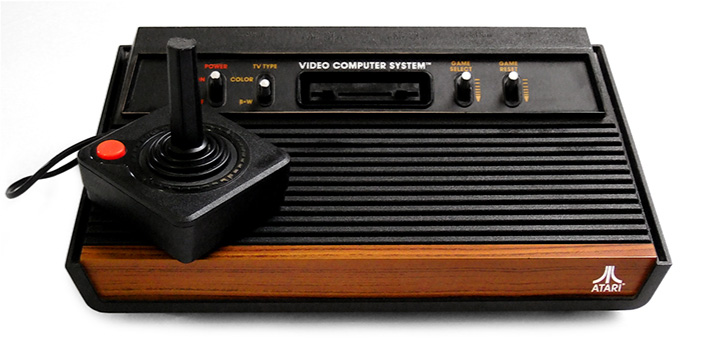
By the end of the 1980s, not only had personal computers become common, but the microprocessor itself could be found everywhere. Microprocessors were incorporated into automobiles, cash registers, televisions, and household appliances and made possible a variety of other electronic devices like videocassette recorders and video game systems (Figure 15.17). Computer systems were created to store and manage financial, educational, and health-care information. In one form or another and whether they realized it or not, by the 1990s, almost everyone in the developed world was interacting with computers.
英語のヒント
1980年代末までに、パーソナルコンピューターが普及しただけでなく、マイクロプロセッサーそのものも至る所で見られるようになった。マイクロプロセッサーは自動車、レジ、テレビ、家庭用電化製品に組み込まれ、ビデオカセットレコーダーやテレビゲーム機など、さまざまな電子機器も可能にした(図15.17)。金融、教育、医療に関する情報を保存・管理するため、コンピューターシステムが作られた。1990年代までに先進世界のほとんどすべての人が、本人の自覚の有無にかかわらず、何らかの形でコンピューターと関わっていた。
The Atari Video Computer System, 1977.1977年のアタリ・ビデオコンピューターシステム。
(credit: “Atari 2600 mit Joystick” by “joho345”/Wikimedia Commons, Public Domain) · Public Domain
Figure 15.17 Released in 1977, the Atari Video Computer System could be connected to almost any television, allowing users to play video games at home. The software was stored on small plastic cartridges that were plugged directly into the machine. (credit: “Atari 2600 mit Joystick” by “joho345”/Wikimedia Commons, Public Domain)
図15.17 1977年に発売されたアタリ・ビデオコンピューターシステムは、ほとんどどのテレビにも接続でき、利用者は自宅でテレビゲームを楽しめた。ソフトウェアは小さなプラスチック製カートリッジに収められ、それを本体に直接差し込んだ。(クレジット:「joho345」/Wikimedia Commons「Atari 2600 mit Joystick」、パブリックドメイン)
Modems were hardly new in the 1990s, but they became much faster and more common with the rise of the internet. The origins of the internet date back to the 1960s and the efforts by government researchers in the United States to use computers to share information. These developments were especially important for the U.S. Department of Defense during the Cold War and resulted in the emergence of the Advanced Research Projects Agency Network (ARPANET). In creating ARPANET, researchers developed many of the technologies that over the next few decades formed the basis for the internet we know today.
英語のヒント
1990年代のモデムは決して新しいものではなかったが、インターネットの発達とともに大幅に高速化し、普及した。インターネットの起源は1960年代、コンピューターを使って情報を共有しようとしたアメリカ政府の研究者たちの取り組みにさかのぼる。こうした開発は冷戦下のアメリカ国防総省にとって特に重要で、アーパネット、すなわち高等研究計画局ネットワーク(ARPANET)の誕生につながった。ARPANETを作る過程で、研究者は多くの技術を開発した。それらはその後数十年をかけて、今日私たちが知るインターネットの基礎となった。