第15章現代世界と続く課題The Contemporary World and Ongoing Challenges
15.1 A Global Economy15.1 グローバル経済
Learning Objectives学習の目標
By the end of this section, you will be able to:
この節を学び終えると、次のことができるようになる。
Explain how trade agreements and attempts to regulate world trade have shaped the global economy since the 1990s
貿易協定と世界貿易を規制する試みが、1990年代以降のグローバル経済をどのように形づくったかを説明する
Analyze the way multinational corporations have affected politics, workers, and the environment in developing nations
多国籍企業が途上国の政治、労働者、環境に与えた影響を分析する
Discuss the way globalization has affected workers around the world
グローバル化が世界の労働者に与えた影響を論じる
In many ways, World Wars I and II were only temporary interruptions in a centuries-long process of global integration. This process is often called globalization, the interconnectedness of societies and economies throughout the world as a result of trade, technology, and the adoption and sharing of elements of culture. Globalization facilitates the movement of goods, people, technologies, and ideas across international borders. Historians of globalization note that it has a very long history. In the days of the Roman Empire and the Han dynasty, Europeans and Asians were connected to one another through trade along the Silk Roads. In the fourteenth century, the Black Death spread from Asia to Europe and North Africa, killing people on all three continents. With the European colonization of the Americas in sixteenth and seventeenth centuries and British colonization of Australia, all of the world’s inhabited continents became enmeshed in exchanges of peoples, products, and ideas that increased in the nineteenth century as the result of both technological developments and the imperialist impulses of industrialized nations. Only the world wars of the twentieth century brought a temporary halt to these exchanges. Furthermore, once the world wars were over, globalization not only resumed its pre–World War I trajectory but even gained speed, despite the Cold War and decolonization efforts in Asia and Africa. As the Cold War came to a close, the United States and increasingly powerful corporations ensured that capitalism and free-market economics would dominate the globe.
英語のヒント
多くの点で、第一次・第二次世界大戦は、数世紀に及ぶ世界統合の過程を一時的に中断したにすぎなかった。この過程はしばしばグローバル化と呼ばれ、貿易、技術、文化要素の採用と共有によって、世界の社会と経済が結びつくことを意味する。グローバル化は、商品、人、技術、思想が国境を越えて動くことを促す。歴史家は、その歴史が非常に長いと指摘する。ローマ帝国と漢王朝の時代、ヨーロッパ人とアジア人はシルクロードの交易でつながっていた。14世紀には黒死病がアジアからヨーロッパと北アフリカへ広がり、三大陸で人命を奪った。16〜17世紀のヨーロッパによるアメリカ大陸の植民地化と、イギリスによるオーストラリアの植民地化により、人が住むすべての大陸は人々、製品、思想の交換に組み込まれた。これらの交換は19世紀に、技術発展と工業国の帝国主義的衝動の両方によって増えた。一時的に止めたのは20世紀の世界大戦だけだった。さらに大戦が終わると、冷戦やアジア・アフリカの脱植民地化にもかかわらず、グローバル化は第一次大戦前の進路に戻っただけでなく、加速した。冷戦が終わると、アメリカ合衆国と力を増す企業は、資本主義と自由市場経済が世界を支配するようにした。
Global Trade世界貿易
Even during the Cold War and decolonization, economic development and industrialization continued around the world. Japan and West Germany, destroyed and defeated in the 1940s, were striking examples. Each dove headlong into postwar rebuilding efforts that paid huge dividends. They invested heavily in their economies and saw industrial production and economic growth skyrocket over the 1950s and 1960s. By 1970, both had become economic powerhouses in their regions.
英語のヒント
冷戦と脱植民地化の最中も、経済発展と工業化は世界各地で続いた。1940年代に破壊され敗北した日本と西ドイツは、その際立つ例だった。両国は戦後復興へ全力を投じ、大きな成果を得た。経済へ巨額を投資し、1950年代と1960年代を通じて工業生産と経済成長が急上昇した。1970年までに、両国はそれぞれの地域の経済大国となった。
Similar, but smaller, economic miracles occurred in other places, especially in Europe. Spain underwent a period of spectacular growth fueled by imported technology, government funding, and increased tourism and industrialization in the 1960s. Italy began even earlier. By the early 1960s, its annual gross domestic product (GDP) growth—the increase in value of all the goods and services the country was producing—had peaked at just over 8 percent. France bounced back from the war years with a rise in population and an impressive new consumer culture that became accustomed to a high standard of living and access to modern conveniences like automobiles, televisions, and household appliances. Comparable growth occurred in Belgium, Greece, and the Netherlands.
英語のヒント
同様だが規模の小さい経済の奇跡は、特にヨーロッパなど他の地域でも起こった。スペインは1960年代に、輸入技術、政府資金、観光業の拡大、工業化に支えられ、目覚ましい成長期を経験した。イタリアはさらに早く始まった。1960年代初めまでに、年間国内総生産(GDP)成長率、すなわち国が生産する全商品・サービスの価値の増加率は、8%強で頂点に達した。フランスは人口増加と、車、テレビ、家庭電化製品などの便利なものを使える高い生活水準に慣れた新たな消費文化によって、戦争から立ち直った。ベルギー、ギリシア、オランダでも同程度の成長が起きた。
Contributing to this postwar economic growth was the emergence of regional economic cooperation in Western Europe. The process began with the creation of the European Coal and Steel Community (ECSC) in 1951. The original member countries of the ECSC were West Germany, France, Italy, the Netherlands, Belgium, and Luxembourg. To both foster economic integration and preserve the peace, these member states agreed to break down trade barriers between them by creating a common market in steel and coal. Across the six countries, these products were allowed to flow without restrictions, like customs duties.
英語のヒント
この戦後の経済成長に寄与したのが、西ヨーロッパの地域的な経済協力の出現だった。その過程は1951年の欧州石炭鉄鋼共同体(ECSC)の創設から始まった。当初の加盟国は西ドイツ、フランス、イタリア、オランダ、ベルギー、ルクセンブルクだった。経済統合の促進と平和の維持の両方を目指し、これらの国々は鉄鋼と石炭の共同市場を作ることで相互の貿易障壁を取り除くことに同意した。6か国間でこれらの製品は、関税などの制限なく移動を認められた。
The success of the ECSC eventually paved the way for further economic integration in Europe with the formation of the European Economic Community (EEC), also called the Common Market, in 1957. The EEC used the economic-cooperation model developed by the ECSC and greatly expanded it to remove trading and investment restrictions across its member states, far beyond just coal and steel. While generally successful, the EEC’s efforts at economic integration occasionally met resistance. Farmers who stood to lose economically protested the way it opened national markets to agricultural products produced more cheaply in other countries and sought protectionist policies. Yet despite these protests and concerns, the EEC continued to expand.
英語のヒント
ECSCの成功は、1957年の欧州経済共同体(EEC)、別名共同市場の創設を通じ、ヨーロッパのさらなる経済統合への道を開いた。EECはECSCの経済協力モデルを大幅に拡張し、石炭と鉄鋼にとどまらず、加盟国間の貿易と投資の制限を撤廃した。概して成功したが、統合の試みは時に抵抗に遭った。経済的損失を被りそうな農民は、他国でより安く作られた農産物に国内市場を開くことへ抗議し、保護主義政策を求めた。それでも、こうした抗議や懸念にもかかわらず、EECは拡大を続けた。
Although Britain supported the EEC’s economic goals, it was initially not interested in the political cooperation the group represented. When it did signal its desire to join, Britain wanted special protections for its agriculture and other exceptions for its Commonwealth connections, such as Canada. This meant negotiating with France, then the EEC’s most powerful member. Since decisions at that time were made unanimously and member countries had the power to unilaterally veto, France’s approval was crucial. President Charles de Gaulle of France did not approve, however, and he cut off negotiations with Britain in 1960. Over the next several years, Britain officially applied for EEC membership twice: in 1961 and again in 1967. Both times de Gaulle worried that admitting Britain, with its strong ties to the United States, would transform the organization into an Atlantic community controlled by Washington. Britain was admitted in 1973 (along with Denmark and Ireland), when de Gaulle was no longer president of France. But many in the United Kingdom had wanted to stay out, especially those in the Conservative Party. It took a UK referendum in 1975 to confirm the country’s EEC membership.
英語のヒント
イギリスはEECの経済的目標を支持したが、当初はそれが示す政治協力には関心がなかった。参加の意向を示すようになったときも、農業の特別保護と、カナダなど英連邦とのつながりに関する例外を求めた。そのため、当時EECで最も強力なフランスと交渉する必要があった。決定は全会一致で、加盟国は単独で拒否権を行使できたため、フランスの承認は不可欠だった。しかしシャルル・ド・ゴール大統領は認めず、1960年にイギリスとの交渉を打ち切った。その後数年間に、イギリスは1961年と1967年の二度、正式に加盟を申請した。ド・ゴールはいずれも、アメリカと強い関係を持つイギリスを入れると、組織がワシントンに支配される大西洋共同体へ変わると懸念した。ド・ゴールが大統領を退いた後の1973年、イギリスはデンマーク、アイルランドとともに加盟を認められた。しかし国内の多くの人々、特に保守党の人々は、参加しないことを望んでいた。EEC加盟を確定するには、1975年の国民投票が必要だった。
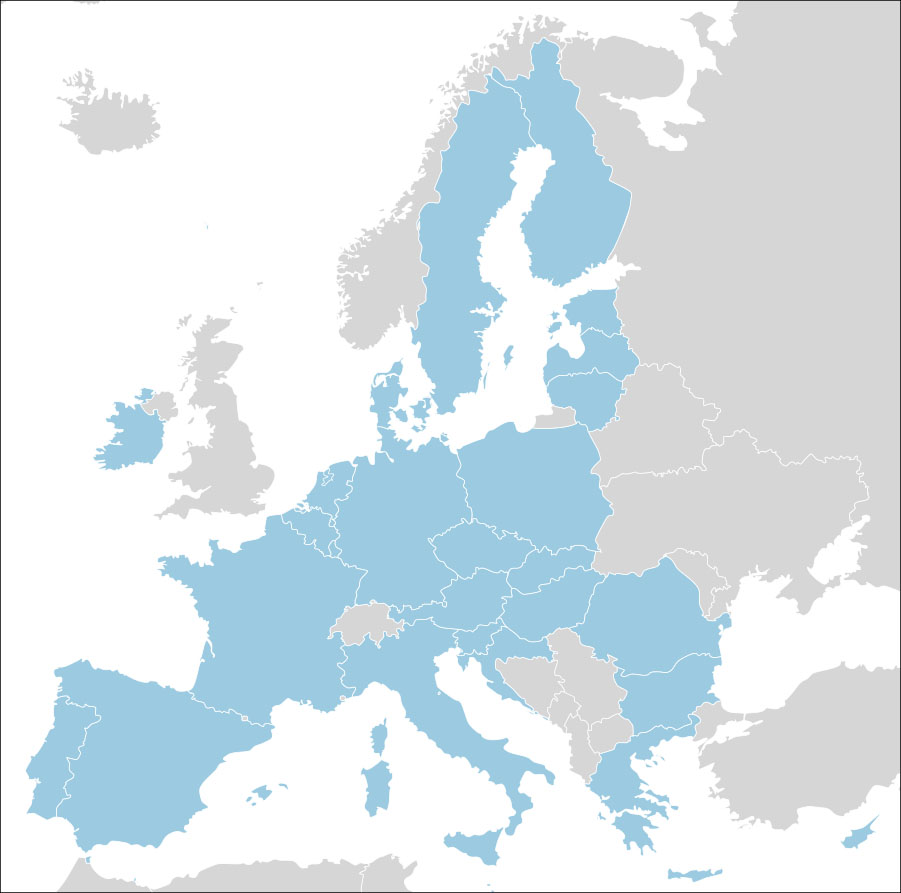
By 1993, the EEC had been integrated into the newly created European Union (EU), which had grown to fifteen member states by 1995 and in 2022 included twenty-seven member states (Figure 15.3). The EU was conceived as a single market for the free movement of goods, services, money, and people. Citizens of member countries can freely move to other EU countries and legally work there, just as they can in their own country. In 1999, the EU introduced its own currency, the euro. Initially used only for commercial and financial transactions in eleven of the EU countries, euro notes and coins had become the legal currency in the majority of EU countries by the start of 2002. The euro was not universally adopted by member states, though. The United Kingdom, Denmark, Sweden, and a few others kept their own currencies. The adoption of the euro was swiftly followed by a major expansion of the EU to include several Central and Eastern European countries including Poland, Hungary, and the Czech Republic.
英語のヒント
1993年までにEECは新設された欧州連合(EU)へ統合され、EUは1995年までに15か国へ拡大し、2022年には27か国から成っていた(図15.3)。EUは商品、サービス、資金、人が自由に移動する単一市場として構想された。加盟国の市民は、自国と同じように他のEU諸国へ自由に移動し、合法的に働ける。1999年、EUは独自通貨ユーロを導入した。当初は11か国で商取引・金融取引にのみ使われたが、2002年初めまでに紙幣と硬貨がEU諸国の過半数で法定通貨となった。ただし全加盟国が採用したわけではなく、イギリス、デンマーク、スウェーデンなどは自国通貨を保った。ユーロ採用後、EUは急速に大幅拡大し、ポーランド、ハンガリー、チェコを含む中・東欧の数か国を加えた。
The European Union.欧州連合。
(credit: modification of work “European Union map” by “Ssolbergj”/Wikimedia Commons, Public Domain) · Public Domain
Figure 15.3 From the six founding states (Belgium, France, West Germany, Italy, Luxembourg, and the Netherlands) that signed the Treaty of Paris in the early 1950s, the European Union has grown to include twenty-seven member states in 2022. (credit: modification of work “European Union map” by “Ssolbergj”/Wikimedia Commons, Public Domain)
図15.3 1950年代初めにパリ条約へ署名した創設6か国、ベルギー、フランス、西ドイツ、イタリア、ルクセンブルク、オランダから、欧州連合は2022年には27加盟国へ拡大した。(出典:「Ssolbergj」/ウィキメディア・コモンズの「European Union map」を改変、パブリックドメイン)
In 2016, however, 52 percent of the citizens of the United Kingdom voted to leave the EU, and Britain officially cut its ties with the organization, its largest trading partner, on January 31, 2020. Some EU opponents in the United Kingdom had claimed the group was economically dysfunctional, especially after the recession of 2008, and that it reduced British sovereignty. Many also disliked the fact that its membership in the EU made it easier for people from elsewhere in Europe, including recent immigrants from the Middle East and Africa, to enter Britain. Those who wanted to stay argued that leaving would hurt British trade with Europe and make Britain poorer. Some also argued that losing the trade advantages that came with belonging to the EU could result in shortages in stores and more expensive products.
英語のヒント
しかし2016年、イギリスの市民の52%がEU離脱に投票し、2020年1月31日、同国は最大の貿易相手である組織との結びつきを正式に断った。国内のEU反対派の一部は、特に2008年の不況後、EUは経済的に機能不全で、イギリスの主権を弱めると主張した。また、加盟によって、中東・アフリカから最近移住した人々も含むヨーロッパの他地域の人々がイギリスへ入りやすくなることを嫌う者も多かった。残留派は、離脱すると対欧貿易が損なわれ、イギリスは貧しくなると論じた。加盟による貿易上の利点を失えば、店での品不足や製品価格の上昇につながると主張する人々もいた。
The breakup, colloquially known as “Brexit,” was hardly amicable. In Britain, many who supported staying in the EU were shocked by the decision and demanded a re-vote, though none was taken. In Europe, the European Parliament, the EU’s legislative body, was angry that Brexit might threaten the entire EU project. To show its displeasure and possibly to deter any other member states from leaving, the European Parliament wanted the separation to be as painful for the United Kingdom as possible, and many member countries supported this hardline stance. In today’s post-Brexit world, there are new regulations on British goods entering the EU and no automatic recognition of British professional licenses in the EU. Britons seeking to make long-term stays in EU countries now must apply for visas.
英語のヒント
通称「ブレグジット」と呼ばれた離別は、決して友好的ではなかった。イギリスでは多くの残留支持者が決定に衝撃を受け、再投票を求めたが、実施されなかった。ヨーロッパでは、EUの立法機関である欧州議会が、ブレグジットはEU全体の構想を脅かすかもしれないと怒りを示した。不快感を表明し、おそらく他国の離脱を思いとどまらせるため、欧州議会はイギリスにとって離脱ができるだけ苦痛なものになることを望み、多くの加盟国がこの強硬姿勢を支持した。今日の離脱後の世界では、EUへ入るイギリス製品に新しい規制があり、イギリスの専門資格はEUで自動承認されない。EU諸国への長期滞在を望むイギリス人は、今やビザを申請しなければならない。
Among the forces driving European economic integration was a desire for Europe to be more independent of the United States. This wish was understandable given the massive economic and political power the United States began wielding after World War II. Not only did the United States possess a huge military force with a global reach and growing installations in Europe and beyond, but its economic strength was the envy of the world. Having experienced the Great Depression in the years before the war, the United States emerged after it as an economic powerhouse with a highly developed industrial sector. More importantly, with the exception of the attack on Pearl Harbor, it had avoided the wartime destruction experienced in Europe and Asia. As a result, not only was it able to provide funds to war-torn nations to rebuild their economies and their infrastructure as part of the Marshall Plan, but U.S.-manufactured goods also flooded into markets around the world. By 1960, U.S. GDP had grown to $543 billion a year (in current dollars). By comparison, the United Kingdom had the second-largest economy with a GDP of $73 billion (in current dollars).
英語のヒント
ヨーロッパの経済統合を促した力の一つに、アメリカからもっと独立したいという願望があった。第二次世界大戦後にアメリカが行使し始めた巨大な経済力と政治力を考えれば、理解できる願いだった。アメリカは世界規模で活動する巨大な軍事力と、ヨーロッパやその外で増え続ける基地を持つだけでなく、その経済力も世界の羨望の的だった。戦前に大恐慌を経験しながら、戦後には高度に発達した工業部門を持つ経済大国となった。さらに、真珠湾攻撃を除き、ヨーロッパとアジアが受けた戦時の破壊を免れていた。その結果、マーシャル・プランの一環として戦災国の経済や社会基盤の再建資金を提供できただけでなく、アメリカ製品が世界各地の市場へ流れ込んだ。1960年までにアメリカのGDPは年間5430億ドル(当年価格)に成長した。比較すると、2番目に大きい経済はイギリスで、GDPは730億ドル(当年価格)だった。
The economic might of the United States brought unprecedented growth and a rise in the population’s standard of living in the decades after the war. With ready access to well-paying industrial jobs, the middle class boomed in the 1950s and 1960s. Their buying having been restrained during the war years because of the rationing of goods, consumers were eager to use their wartime savings to purchase new automobiles, televisions, household appliances, and suburban homes. Many enjoyed steady employment with new union-won benefits like weekends off and paid vacations. They also began sending their children to college in ever-greater numbers. By 1960, about 3.6 million young students were enrolled in higher education, an increase of 140 percent over the previous two decades. For many, access to higher education was the gateway to the middle or upper class.
英語のヒント
アメリカの経済力は、戦後数十年に前例のない成長と生活水準の上昇をもたらした。高賃金の工業の仕事に容易に就けたため、1950年代と1960年代に中産階級は拡大した。戦時中は配給で購入を制限されていた消費者は、貯めた金で新しい自動車、テレビ、家電、郊外の住宅を買うことを熱望した。多くは安定した雇用と、週末休みや有給休暇など組合が獲得した新しい福利厚生を享受した。子どもを大学に送る人数もますます増えた。1960年までに約360万人の若者が高等教育を受け、その前の20年間から140%増えた。多くの人にとって、高等教育は中産・上流階級への入り口だった。
By the 1970s, the U.S. economy began to cool, partially because of domestic inflation and increased competition from abroad. Oil embargoes by Arab nations belonging to the Organization of the Petroleum Exporting Countries, in retaliation for U.S. support of Israel during the 1973 Arab-Israeli war, and a general strategy by oil-producing nations to raise their prices, further stressed the economy by creating gas shortages for consumers. Other countries that had supported Israel, such as the Netherlands, also suffered from the embargo. Once dominant in most major industrial sectors, including the production of steel and automobiles, around the world, by the end of the 1970s, U.S. manufacturers were suffering as a result of competition from Japan and Western Europe. This reality led to a number of difficult economic transformations in the United States. But it also encouraged some national leaders to seek regional international economic integration along lines similar to Western Europe’s achievement. Beginning in the 1980s, the United States and Canada entered into negotiations to create their own regional free-trading zone. This made sense because Canada not only shared a long border with the United States but was also its largest trading partner. In 1988, the two countries agreed to the Canada-U.S. Free Trade Agreement (Canada-US FTA), which eliminated barriers to the movement of goods and services between the two.
英語のヒント
1970年代までに、国内のインフレと海外からの競争の激化もあって、アメリカ経済は減速し始めた。1973年のアラブ・イスラエル戦争でアメリカがイスラエルを支持した報復として、石油輸出国機構に属するアラブ諸国が石油禁輸を行い、産油国全体の値上げ戦略も加わってガソリン不足を招き、経済をさらに圧迫した。オランダなど他のイスラエル支持国も禁輸に苦しんだ。かつて鉄鋼や自動車を含む主要産業の大半で世界を支配したアメリカの製造業者は、1970年代末までに日本や西ヨーロッパとの競争で苦しんだ。この現実は国内の困難な経済転換を数多く引き起こした。同時に、一部の指導者が西ヨーロッパと同様の地域的な国際経済統合を求めるよう促した。1980年代から、アメリカとカナダは独自の地域的な自由貿易圏を作る交渉に入った。長い国境を共有するだけでなく、カナダは最大の貿易相手でもあったため、合理的だった。1988年、両国は加米自由貿易協定に合意し、商品とサービスの移動障壁を撤廃した。
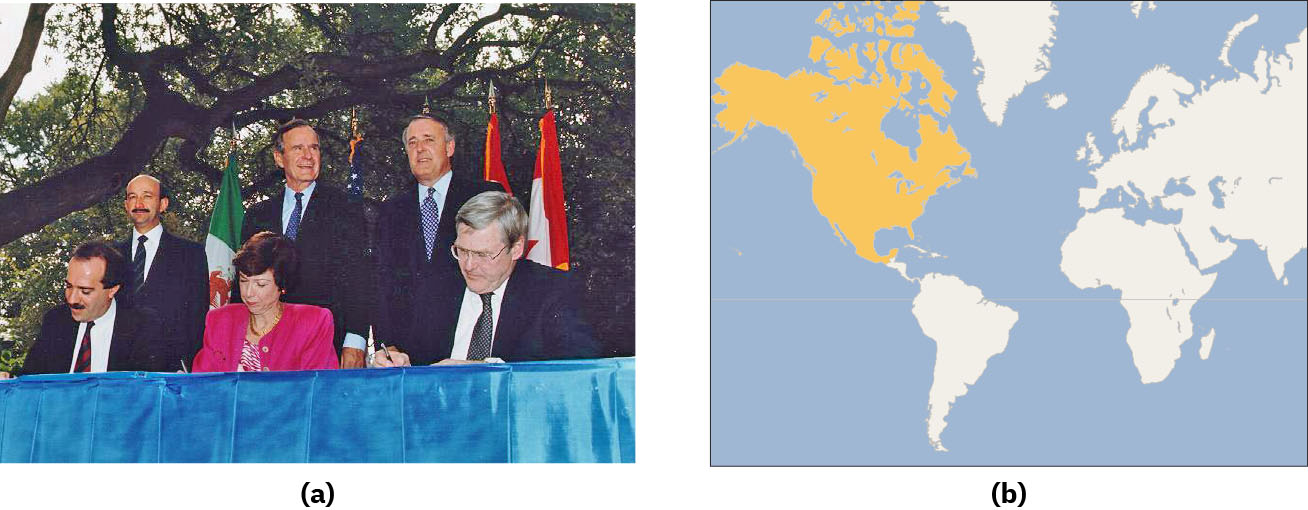
Almost immediately, Mexico signaled its interest in creating a similar free trade agreement with the United States. U.S. president Ronald Reagan had floated the concept during his 1980 election campaign. But successful completion of the Canada-US FTA convinced Mexican leaders that the time was ripe to act on the idea. Ultimately, Canada joined the plan with Mexico as well, and by the end of 1992, all three countries had signed the North American Free Trade Agreement (NAFTA) (Figure 15.4). The intent of NAFTA was to reduce trade barriers and allow goods to flow freely among the three countries. Despite considerable resistance within the United States, largely from industrial workers who feared their factories and jobs would be relocated to Mexico where wages were far lower, the agreement was ratified by all three countries and went into effect in 1994.
英語のヒント
メキシコはほぼ直ちに、アメリカとの同様の自由貿易協定に関心を示した。ロナルド・レーガン大統領は1980年の選挙運動でその構想を提案していたが、加米自由貿易協定の成功によって、メキシコの指導者は実行の機が熟したと確信した。最終的にカナダも計画に加わり、1992年末までに3か国は北米自由貿易協定(NAFTA)へ署名した(図15.4)。目的は貿易障壁を減らし、3か国間で商品を自由に流通させることだった。アメリカでは、賃金のはるかに低いメキシコへ工場や雇用が移ることを恐れる工業労働者を中心に、強い抵抗があった。それでも3か国すべてが批准し、1994年に発効した。
North American Free Trade Agreement.北米自由貿易協定。
(credit a: modification of work “NAFTA Initialing Ceremony, October 1992” by George Bush Presidential Library and Museum/Wikimedia Commons, Public Domain; credit b: “World map blank shorelines” by Maciej Jaros/Wikimedia Commons, Public Domain) · Public Domain
Figure 15.4 (a) At the signing ceremony for NAFTA in October 1992, Mexican president Carlos Salinas de Gortari, U.S. president George H. W. Bush, and Canadian prime minister Brian Mulroney (left to right) stand behind their respective trade secretaries. (b) The three countries had spent several years hammering out the agreement. (credit a: modification of work “NAFTA Initialing Ceremony, October 1992” by George Bush Presidential Library and Museum/Wikimedia Commons, Public Domain; credit b: “World map blank shorelines” by Maciej Jaros/Wikimedia Commons, Public Domain)
図15.4 (a)1992年10月のNAFTA調印式で、メキシコ大統領カルロス・サリナス・デ・ゴルタリ、アメリカ大統領ジョージ・H・W・ブッシュ、カナダ首相ブライアン・マルルーニーが、左から順にそれぞれの貿易担当閣僚の後ろに立つ。(b)3か国は数年間かけて協定を練り上げた。(aの出典:ジョージ・ブッシュ大統領図書館・博物館/ウィキメディア・コモンズの「NAFTA Initialing Ceremony, October 1992」を改変、パブリックドメイン。bの出典:マチェイ・ヤロス/ウィキメディア・コモンズの「World map blank shorelines」、パブリックドメイン)