第15章現代世界と続く課題The Contemporary World and Ongoing Challenges
Radicalism, Refugees, and Resistance急進主義、難民、抵抗
In 2011, the withdrawal of U.S. combat troops from Iraq was completed, eight long years after the invasion. Hopes that peace in Iraq would last were dashed, however, with the rise of the Islamic State of Iraq and the Levant (ISIL), a fundamentalist and militant Islamic group also referred to as the Islamic State. Formed in 1999, ISIL had fought against the U.S.-led coalition that invaded Iraq in 2003. In 2014, it attacked Iraqi security forces and drove them from a number of cities, including Ramadi, Fallujah, and Mosul, and it killed thousands of members of the Yazidi minority group in Iraq’s Sinjar district.
英語のヒント
2011年、侵攻から長い8年を経て、アメリカ戦闘部隊のイラク撤収が完了した。しかしイラクで平和が続くという希望は、イスラーム国とも呼ばれるイスラーム原理主義の武装集団、イラク・レバントのイスラーム国(ISIL)の台頭により打ち砕かれた。1999年に結成されたISILは、2003年にイラクへ侵攻したアメリカ主導の多国籍軍と戦っていた。2014年にはイラクの治安部隊を攻撃して、ラマディ、ファルージャ、モスルなどの都市から追い出し、イラクのシンジャル地区で少数派ヤズィーディ教徒の数千人を殺害した。
ISIL leaders proclaimed themselves the heads of a new caliphate, an Islamic state led by a ruler claiming to be a successor to Muhammad, with religious and political authority over all Muslims. This is a claim most of the world’s Muslims reject. In response, a military coalition led by the United States returned to Iraq following a request by the Iraqi government. Meanwhile, ISIL’s counterpart in Syria, known as the Islamic State of Iraq and Syria, waged war against both the government of Syria and other nonfundamentalist groups that were also seeking to oust Syria’s president Bashar al-Assad. The U.S.-led coalition that returned to Iraq to fight the Islamic State there intervened in Syria as well.
英語のヒント
ISILの指導者は、自分たちを新たなカリフ国の首長と宣言した。カリフ国とは、ムハンマドの後継者と称し、すべてのムスリムに宗教的・政治的権威を及ぼす支配者が率いるイスラーム国家である。世界のムスリムの大多数は、この主張を拒絶している。これを受け、イラク政府の要請に応じて、アメリカ主導の軍事連合がイラクに戻った。その間、イラク・シリアのイスラーム国として知られるシリアのISILの対応組織は、シリア政府とも、同じくバッシャール・アルアサド大統領の追放を目指す他の非原理主義集団とも戦った。イラクでイスラーム国と戦うため戻ったアメリカ主導の連合は、シリアにも介入した。
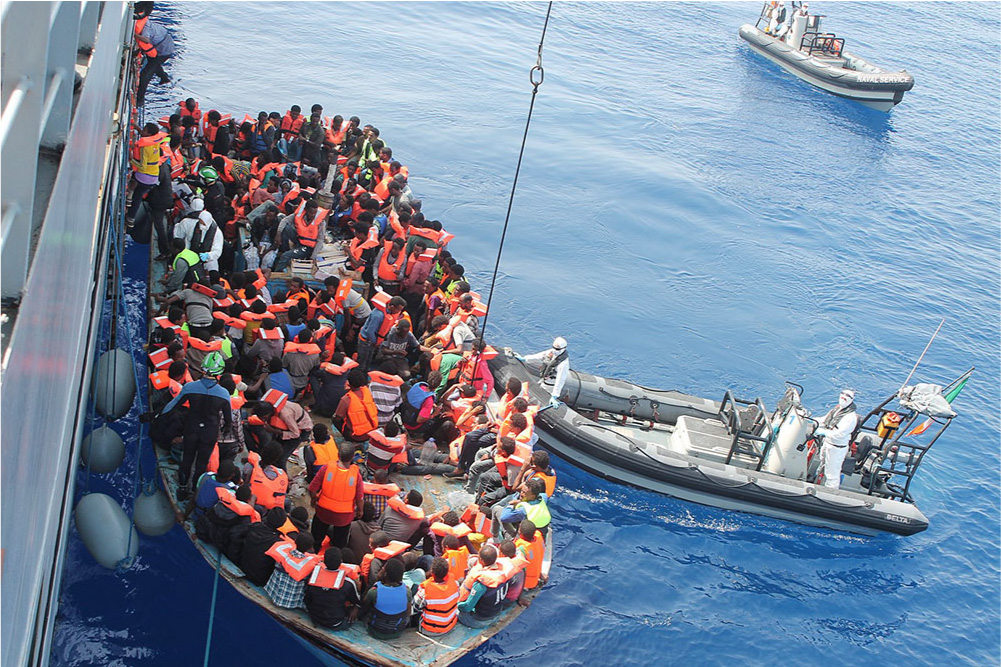
Instability in Iraq and Syria led to a flood of refugees making their way across the Mediterranean to Europe in 2015 (Figure 15.26). Yet more were fleeing genocidal violence in the Darfur region of Sudan, while many others sought to escape failing states and poverty in numerous parts of the Middle East, Africa, and Asia. These refugees and economic migrants felt they would find a better and safer life in the developed countries of the West, particularly Germany, Sweden, Britain, France, and the United States, and many were willing to risk their lives to achieve this.
英語のヒント
イラクとシリアの不安定さにより、2015年には大量の難民が地中海を越えてヨーロッパへ向かった(図15.26)。さらに多くの人々がスーダンのダルフール地域での集団殺害の暴力から逃れ、他にも中東、アフリカ、アジアの各地で、国家機能の崩壊や貧困から逃れようとする人々がいた。これらの難民や経済移民は、西側の先進国、特にドイツ、スウェーデン、イギリス、フランス、アメリカなら、より良く安全な生活が得られると考え、そのために命を危険にさらす覚悟を持つ人も多かった。
Refugee Crisis.難民危機。
(credit: “LE Eithne Operation Triton” by Óglaigh na hÉireann/Flickr, CC BY 2.0) · CC BY 2.0
Figure 15.26 In 2015, Europeans watched in amazement and sometimes fear as large numbers of refugees in small boats made their way across the Mediterranean from the Middle East, Asia, and Africa to Europe’s shores. (credit: “LE Eithne Operation Triton” by Óglaigh na hÉireann/Flickr, CC BY 2.0)
図15.26 2015年、ヨーロッパの人々は、中東、アジア、アフリカから多数の難民が小舟で地中海を越え、ヨーロッパの岸へ向かうのを、驚き、ときには恐れをもって見つめた。(クレジット:Óglaigh na hÉireann/Flickr「LE Eithne Operation Triton」、CC BY 2.0)
Upon arrival, these groups met various responses. While some argued that the refugees had survived trauma and deserved to be welcomed with open arms, others said they were fleeing circumstances outside the host country’s responsibility and would bring too many cultural and religious changes. For example, many Europeans feared that refugees from Islamic countries would reject the values of the largely secular European nations in which they settled. Many others believe that Muslims embrace political extremism or support acts of terrorism. Responding to the developing migrant crisis, German chancellor Angela Merkel declared, “We can do this!” and promised Germany would welcome 800,000 refugees in 2015.
英語のヒント
到着した人々は、さまざまな反応を受けた。難民は心的外傷をもたらす体験を生き延びたのであり、両手を広げて歓迎すべきだという人がいた。他方、彼らが逃れてきた状況は受入国の責任ではなく、彼らは文化や宗教を変えすぎてしまうという人もいた。たとえば多くのヨーロッパ人は、イスラーム諸国からの難民が、定住先の、主として世俗的なヨーロッパ諸国の価値観を拒むと恐れた。また多くの人は、ムスリムが政治的過激主義を受け入れたり、テロ行為を支持したりすると考えている。進行する移民危機に対し、ドイツのアンゲラ・メルケル首相は「私たちにはできる!」と宣言し、2015年にドイツが80万人の難民を受け入れると約束した。
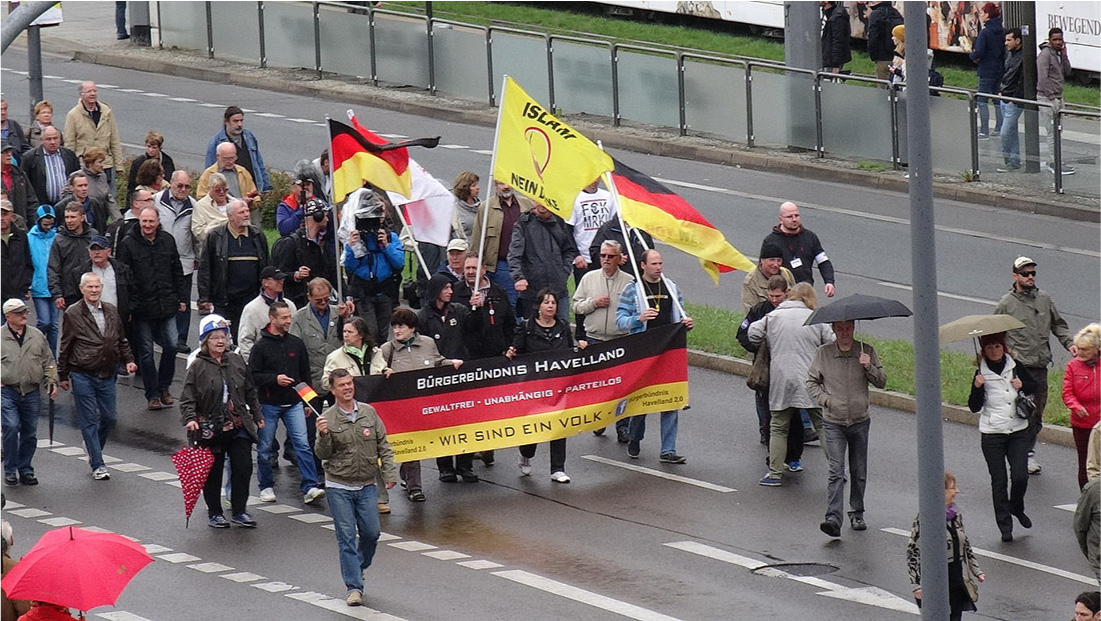
While some were heartened by Merkel’s offer, others throughout Europe felt it was short-sighted. They noted that since Germany was in the European Union, bringing refugees there effectively amounted to bringing them into any other country in the EU. Within Germany itself, there was also resistance. Founded in 2014, the German group Patriotic Europeans Against the Islamization of the West (PEGIDA) began conducting weekly marches in cities like Dresden, declaring that opening the doors to the Islamic world would spell the end of Europe (Figure 15.27). While PEGIDA made a point not to categorically oppose refugees, members continue to openly oppose the presence of the Islamic religion and culture within Germany.
英語のヒント
メルケルの申し出に勇気づけられた人がいた一方で、ヨーロッパ各地の別の人々は、それを近視眼的だと感じた。ドイツは欧州連合に加盟しているため、難民をドイツへ迎えることは、実質的にEUの他のどの国へも迎えることに等しい、と彼らは指摘した。ドイツ国内にも反発があった。2014年に結成された「西洋のイスラーム化に反対する愛国的ヨーロッパ人」(PEGIDA)は、イスラーム世界へ扉を開けばヨーロッパの終わりを招くと宣言し、ドレスデンなどで毎週の行進を始めた(図15.27)。PEGIDAは難民に一律に反対しているわけではないと強調したが、構成員はドイツ国内にイスラームの宗教と文化が存在することに、公然と反対し続けている。
Immigration Protest.移民への抗議。
(credit: “PEGIDA Demonstration Dresden 2016-10-03” by “Chrystalcolor”/Wikimedia Commons, Public Domain) · Public Domain
Figure 15.27 PEGIDA is just one of many European groups that have grown by focusing on European fears about Muslim immigrants and Islamic terrorism. This demonstration by the group took place in Dresden, Germany in 2016. (credit: “PEGIDA Demonstration Dresden 2016-10-03” by “Chrystalcolor”/Wikimedia Commons, Public Domain)
図15.27 PEGIDAは、ムスリム移民とイスラーム系テロに対するヨーロッパ人の恐怖に焦点を当てて成長した、多くのヨーロッパの集団の一つである。このデモは2016年、ドイツのドレスデンで行われた。(クレジット:「Chrystalcolor」/Wikimedia Commons「PEGIDA Demonstration Dresden 2016-10-03」、パブリックドメイン)
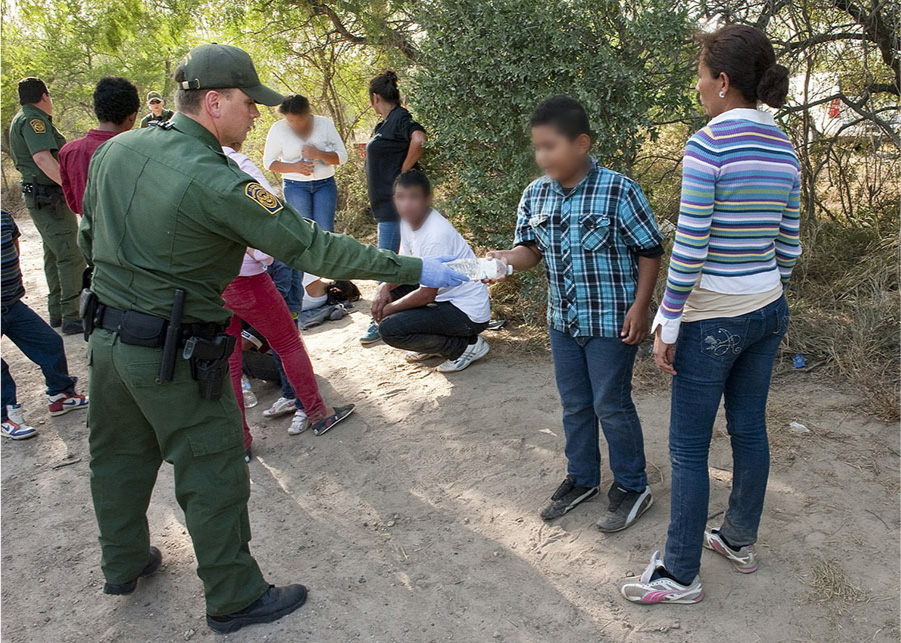
PEGIDA is just one of several ultranationalist movements that support an extreme form of nationalism and often seek to create ethnically homogeneous homelands. Others are Golden Dawn in Greece, the English Defence League in Britain, and the Identitarian Movement of Austria. Such groups advocate the establishment of ethnic-based citizenship, resist non-European immigration, and generally promote more conservative social policies. Europe is not the only continent to see a resurgence of xenophobic political activism in the last few decades. In Japan, Nippon Kaigi (“Japan Conference”) is an ultranationalist organization founded in 1997 that advocates a staunchly nationalist education system, a strong monarchy, and positive interpretation of Japan’s imperial past. The Nationalist Front of Mexico was founded in 2006 and advocates a neofascist ideology and a retreat from globalization. In the United States, the American Freedom Party, American Identity Movement, Patriot Front, National Justice Party, and others promote similar ideas. These groups are especially concerned with preventing immigration to the United States from Latin America (Figure 15.28). They are generally in the neofascist mold and advocate a United States that is overwhelmingly White and European in culture.
英語のヒント
PEGIDAは、極端なナショナリズムを支持し、しばしば民族的に均質な国土を作ろうとする、複数の超国家主義運動の一つである。他にはギリシアの黄金の夜明け、イギリスのイングランド防衛同盟、オーストリアのアイデンティタリアン運動がある。これらの集団は民族に基づく市民権を提唱し、非ヨーロッパ系の移民に反対し、概して保守的な社会政策を推進する。過去数十年に外国人排斥的な政治活動が再び盛んになったのは、ヨーロッパだけではない。日本では、1997年に設立された超国家主義的組織の日本会議が、徹底した国家主義的教育制度、強力な君主制、日本の帝国としての過去の肯定的解釈を主張している。2006年に設立されたメキシコ民族主義戦線は、ネオファシズムの思想とグローバル化からの後退を提唱する。アメリカでは、アメリカ自由党、アメリカ・アイデンティティ運動、愛国戦線、国民正義党などが類似の考えを推進する。これらの集団は、特にラテンアメリカからアメリカへの移民を阻止しようとする(図15.28)。概してネオファシズム的であり、圧倒的に白人が多く、文化的にヨーロッパ的なアメリカを求めている。
Migrants at the U.S. Southern Border.アメリカ南部国境の移民。
(credit: “Border Patrol Agent Provides Water to Unaccompanied Alien Children” by U.S. Customs and Border Protection/Flickr, Public Domain) · Public Domain
Figure 15.28 Many migrants who have crossed the southern border of the United States since 2020 have traveled far from countries including Ecuador, Brazil, Nicaragua, Venezuela, Haiti, and Cuba. Often, like those in this 2014 photo, they are children and arrive alone. (credit: “Border Patrol Agent Provides Water to Unaccompanied Alien Children” by U.S. Customs and Border Protection/Flickr, Public Domain)
図15.28 2020年以降にアメリカ南部国境を越えた移民の多くは、エクアドル、ブラジル、ニカラグア、ベネズエラ、ハイチ、キューバなどから遠い道のりを移動してきた。2014年のこの写真の人々のように、子どもが単独で到着することも多い。(クレジット:U.S. Customs and Border Protection/Flickr「Border Patrol Agent Provides Water to Unaccompanied Alien Children」、パブリックドメイン)